
AI Summary
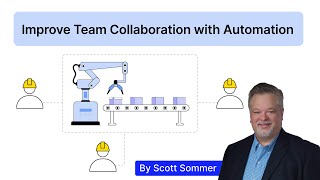
The video explains how modern automation systems, such as DCS, CMMS, and IIoT, enhance team collaboration in industrial environments. It covers the benefits of centralized systems, key features like workflow management and predictive maintenance, and the critical role of training. The video also presents a real-world case study and addresses challenges like resistance to new technology.
Chapters
Teamwork is defined as the combined action of a group. Collaboration between teams is no longer a luxury but a necessity for sustained success.
Modern DCS and PLC systems provide tools for operators and engineers, centralizing systems to streamline communication and coordination.
Team collaboration is the process of individuals working together to achieve a common goal, leading to enhanced problem-solving and innovation.
Effective collaboration improves productivity, gives team members a greater sense of ownership, and often results in reduced downtime and improved operations.
Communication can be lacking or incomplete, especially between departments. Large organizations may create silos of information, and some teams may not buy into shared goals. There can also be resistance to new technologies.
Centralized systems such as DCS, CMMS, and factory-floor-to-cloud IIoT systems bring together engineers, maintenance personnel, and management, allowing real-time data sharing.
Task and workflow management tools allow planning resources to accurately schedule production based on resource and raw material availability. Well-planned workflows can be subjected to 'what-if' analysis to anticipate and mitigate issues.
Predictive maintenance and automated alert systems can be designed to minimize downtime when preventative and predictive maintenance programs are in place.
Dashboards for tracking KPIs can be displayed throughout the plant to provide transparency into performance and efficiency.
A company that designs complex pharmaceutical plants attributes its success to cross-discipline design. Automation teams work closely with Electrical, Mechanical, Process, and Architectural engineers, and use a peer review process before issuing designs.
Monthly Communities of Practice training sessions provide an opportunity for all team members to stay up to date on technologies and keep alignment in project work.
Hands-on workshops and simulations are the most effective training methods, giving participants valuable practice in a safe environment. Other methods, like collaborative training sessions, foster team development and bonding.
Integrating automation systems and training helps in problem identification and resolution, leading to increased productivity, better use of resources, and improved process reliability.
Training costs money and time, and older workers may be hesitant. These challenges can be overcome through investment in employee development, pilot programs, phased implementations, and a collaborative approach to decision-making.
Automation systems and well-designed training programs are powerful levers for breaking down silos, improving communication, and driving organizational excellence. Investing in both technology and people is the key to sustained collaboration and operational success.
Mentioned in this Video
Study Flashcards (9)
What is team collaboration?
easy
Click to reveal answer
What is team collaboration?
The process of individuals working together to achieve a common goal or complete a shared task.
01:01
What are three centralized systems mentioned that improve collaboration?
easy
Click to reveal answer
What are three centralized systems mentioned that improve collaboration?
DCS (Distributed Control System), CMMS (Centralized Maintenance Management System), and IIoT (Industrial Internet of Things) systems.
02:44
What is the purpose of 'what-if' analysis in workflow planning?
medium
Click to reveal answer
What is the purpose of 'what-if' analysis in workflow planning?
To anticipate and mitigate issues that may arise in the production schedule.
03:45
How does predictive maintenance help minimize downtime?
medium
Click to reveal answer
How does predictive maintenance help minimize downtime?
Through preventative and predictive maintenance programs with automated alert systems.
03:59
What does the peer review process involve in the case study?
medium
Click to reveal answer
What does the peer review process involve in the case study?
All disciplines come together in a meeting room to review designs before they are issued to the client.
05:03
What are the most effective training methods mentioned?
easy
Click to reveal answer
What are the most effective training methods mentioned?
Hands-on workshops and simulations.
07:03
What soft skills training helps build team confidence and camaraderie?
easy
Click to reveal answer
What soft skills training helps build team confidence and camaraderie?
Proper communication, teamwork, and conflict resolution training.
06:38
How do pilot programs help overcome resistance to new technology?
medium
Click to reveal answer
How do pilot programs help overcome resistance to new technology?
By introducing technologies gradually and incrementally, which helps increase confidence and acceptance.
09:41
What are the benefits of integrating automation systems and training?
medium
Click to reveal answer
What are the benefits of integrating automation systems and training?
Increased productivity, better use of resources, improved process reliability, and assistance in problem identification and resolution.
08:32
💡 Key Takeaways
Definition of Team Collaboration
Provides a clear, actionable definition that frames the entire discussion.
01:01Centralized Systems Unify Teams
Explains how DCS, CMMS, and IIoT break down silos by giving everyone access to the same real-time data.
02:44Proactive Workflow Planning
Introduces 'what-if' analysis as a concrete technique to anticipate production issues before they happen.
03:45Hands-On Training Wins
Identifies the most effective training method — hands-on workshops and simulations — for building real confidence.
07:03Full Transcript
[00:01] Looking to upskill your team with hands-on industrial automation training? Visit www.realpars.com/business and fill out the form to get started. Teamwork can be defined as the combined action of a group,
[00:18] Collaboration and teamwork are important aspects of achieving operational excellence It has been said that in today’s competitive landscape,
[00:31] collaboration between teams is no longer a luxury. Teamwork is necessary for sustained success. Automation Engineers provide systems that promote teamwork
[00:43] For example, modern DCS and PLC systems provide tools for operators, engineers, Centralized systems help streamline communication and coordination.
[01:01] Team collaboration is defined as the process of individuals working together to achieve a common goal or complete a shared task. there is more opportunity to share knowledge and ideas.
[01:16] which can lead to enhanced problem-solving and innovation. they typically learn much from one another.
[01:29] effective collaboration can lead to improved productivity. Team members can feel a greater sense of ownership of results. These results often lead to reduced downtime and improved operations.
[01:45] But it isn’t always possible to get a team all working in the same direction Sometimes communication is lacking or incomplete, especially between departments.
[02:01] In very large organizations, silos of information can be created, If the teams are large, there can be those who are not aware of
[02:13] or who may not have bought into the shared goals and tasks. Organizations can be resistant to new technologies, who may put up roadblocks to adopting these technologies.
[02:27] but the team leader must be sure that members at different skill levels can contribute to the design and development of complex automation systems. all groups in a manufacturing plant together
[02:44] by developing and designing centralized systems engineers, maintenance personnel, and management. When I refer to centralized systems, I am specifically talking about DCS systems,
[03:01] Centralized Maintenance Management Systems, or CMMS, and factory-floor-to-cloud IIoT systems, to name a few. If you want to get an understanding of DCS and SCADA systems, check out our courses,
[03:17] SCADA Basics and DCS Fundamentals. You can find the links in the description below this video. With these systems, data can be shared in real-time with all groups,
[03:30] allowing for effective data analysis and informed decision-making. So, what features can Automation Engineers design into centralized systems First, task and workflow management tools
[03:45] allow planning resources to accurately plan a production schedule, taking into account resource availability and raw material availability. Well-planned workflows can be subjected to “what-if” analysis,
[03:59] with a goal of anticipating and mitigating issues that may arise. Predictive maintenance and automated alert systems can be designed Downtime can be minimized when preventative and predictive maintenance programs
[04:16] allowing those groups to input to maintenance planning. Finally, dashboards for tracking KPIs can be displayed throughout the plant to provide transparency into performance and efficiency.
[04:31] that successfully used centralized systems to improve collaboration. that designs and builds complex pharmaceutical plants.
[04:46] Our success with on-time performance and client satisfaction can be traced directly to our commitment to cross-discipline design, In Automation, my teams work closely with Electrical, Mechanical, Process,
[05:03] and Architectural engineers every day to ensure that our designs are coordinated. Before designs are issued to the client, all disciplines come together in a meeting room We find the peer review process to be a very useful and beneficial task
[05:21] Every month, we have collaborative Communities of Practice training These sessions provide an opportunity for all and to bring all team members up to date on the technologies we are using
[05:39] My organization understands the importance of training, we strive to keep alignment in our project work.
[05:52] Just as we use training to bring our various engineering disciplines together, in bringing maintenance and operations teams together. helps break down barriers to the adoption of new automation systems.
[06:10] Training is essential to ensure that automation assets, such as centralized systems, are used to their full potential. that enhance collaboration and teamwork.
[06:24] to prepare operations and maintenance groups to use automation and the tools provided by automation systems. Soft skills training, such as proper communication, teamwork,
[06:38] and conflict resolution training, helps build the teams’ confidence and camaraderie. all an understanding of other teams’ roles and challenges.
[06:51] the way that training is delivered is also important. that I have found beneficial for delivering effective training.
[07:03] Hands-on workshops and simulations are the most effective methods. Having participants use the automation tools and systems to be used in the plant gives them valuable practice in a safe environment and helps to build confidence.
[07:19] Not all training is able to be delivered in this manner, so other methods, and collaborative training sessions, can be used to foster team development and bonding.
[07:33] online learning can be powerful when it's designed well. Our Skill Paths in PLC Programming, HMI Design, SCADA,
[07:45] and Industrial IoT offer hands-on practice, real-world simulations, and continuous development, helping you build confidence Check the links in the video description to learn more.
[08:03] With teams engaged with one another, with common training opportunities, continuous communication will naturally result. Shared access to data minimizes miscommunication.
[08:16] The use of automated workflows can help keep tasks on schedule, This is particularly helpful for batch systems and for processes that utilize a kit of parts or are part of an assembly process.
[08:32] I have found that integrating automation systems and training also assists in problem identification and resolution. Well-trained personnel using automated tools lead to increased productivity,
[08:46] better use of resources, and better process reliability. and as company-sponsored continuous training becomes the norm,
[08:58] will naturally develop. It will also allow future technological advancements to be understood Implementing advanced automation systems
[09:13] and introducing new technologies to support operations does come with a few challenges. Obviously, training costs money and time, but the rewards should be evident almost immediately.
[09:27] especially among older workers. I have found that other employees who latch onto new technology can be a positive influence on those who are more hesitant.
[09:41] These challenges can be overcome through investment in employee development. Gradually or incrementally introducing technologies with pilot programs or phased implementations can help increase confidence and acceptance.
[09:56] Also, employing a collaborative approach to decision-making and implementation can help break down barriers to acceptance of new technology. I have discussed the critical role that automation plays in fostering collaboration
[10:11] Along with effective training programs, companies can drive collaboration and positive team dynamics, leading to organizational excellence.
[10:24] Want to dive deeper into technical topics in automation? Check out our growing catalog of courses at www.realpars.com. Invest in your future and commit to a training course today!