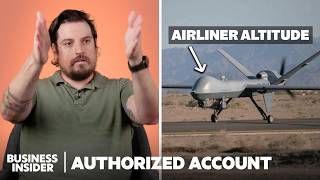

Drone Operator's Darkest Secret
45sThe stark contrast between killing remotely and coming home to daily life is emotionally jarring and highly shareable.
▶ Play Clip"Delivers a detailed, first-hand account that matches the title's promise, though some parts are more personal reflection than technical explanation."
This video features a former US Air Force MQ-9 Reaper sensor operator who shares his firsthand experience with drone warfare, including the technical aspects of operating the aircraft, the emotional and moral toll of remote combat, and the challenges of PTSD. He discusses the chain of command, the precision required for strikes, and the psychological impact of being physically separated from the battlefield.
Nearly 10 years in the US Air Force as an MQ-9 Reaper sensor operator, logged over 3,000 combat hours. Physically separated by 7,500 miles from targets, requiring remote engagement and dealing with the aftermath at home.
Surveillance involved looking for weapons, IEDs, or specific individuals. Trigger events could be as simple as someone digging with a weapon or actively shooting, leading to authorization for a strike.
Sometimes targets were watched for days, weeks, or even months. One target was watched for six years before engagement. Tracking involved observing daily routines and identifying behavioral changes.
Electro-optical (day TV) provided color imagery, useful for detail, while infrared (black and white) revealed heat signatures. For example, a hot wheel on a vehicle could identify it as the target.
Strikes were methodical, with intelligence correlated from multiple sources. Authorization could take hours or seconds, depending on the threat level. Real-time feeds allowed decision-makers anywhere to make calls.
Munitions were laser-guided, with the sensor operator controlling the laser via a reticle. Missile flight times were typically 30-40 seconds, requiring extreme precision in guiding the weapon.
The pilot controls the aircraft and pulls the trigger, while the sensor operator controls the camera and lases the target. It's a two-person crew because the technology isn't advanced enough for one person to do both effectively.
The MQ-9 has a 66-foot wingspan, operates at 20,000-30,000 feet, and is controlled via line of sight or satellite. It sounds like a typical turboprop, often inaudible from the ground.
Recounts a strike with a newer pilot who hesitated after clearance, requiring a prompt to pull the trigger. Emphasizes the need for speed to capitalize on clear situations.
The 'bus full of nuns' concept: always plan for unexpected events. An example of an aborted strike when a vehicle moved toward a gas station, shifting the missile to a field 200 meters away.
To avoid alerting targets, the aircraft is positioned to minimize the missile's sonic boom. Precise angles are critical to ensure the weapon impacts correctly.
Operated from Creech Air Force Base near Las Vegas, in a 30x10 ft container with dim lighting, multiple screens, and electronics. Shift work was grueling, with 8-hour rotations and frequent overtime.
The challenge of transitioning from work to home life, dealing with mundane issues like HOA complaints while carrying the weight of combat decisions.
Enlisted at 18, expecting overwatch for convoys, but realized the 'tip of the spear' nature of the role. Training was extensive, including basic, aircrew fundamentals, and initial qualification.
During training, a call for troops in contact came in, and the instructor swapped in to handle the strike. Highlights the intensity and unpredictability of the job.
First strike on January 28, 2013, at 6:49 AM, targeting a cave. Executed a reattack on a person behind a rock, emphasizing the precision and pressure.
Initially focused on technical execution, but later realized the psychological toll. Recalls a strike where a person was 'saw in half' and his wife dragged him, an image burned into memory.
Despite the difficulty, he is proud of the work. Secrecy prevented discussing emotions, leading to a 'strike the target, move on' mentality.
PTSD often emerges after leaving service. A doctor's comment that 'you didn't deploy' invalidated his trauma. Stigma remains a major issue in the community.
Hawk, a PTSD-trained service dog, helps with anxiety, watches his back, and alerts to potential threats.
Gamers may have transferable skills, but no game prepares for the life-or-death decisions and high-caliber operation required.
Drone operations have changed but remain fundamentally similar. The situation in Ukraine with FPV drones is changing warfare, but human decision-making remains crucial.
Concerned about removing humans from the kill chain. AI making life-or-death decisions is a line that should not be crossed.
Communication and talking about experiences are therapeutic. Recognizing that others share similar struggles helps.
Left in September 2018 due to burnout and low pay ($38,000/year). Moved to North Dakota for contract work, but the mental toll was significant.
PTSD was laughed at 10 years ago, and stigma persists. Many veterans are 'shells of themselves' and struggle to function.
Trauma affects daily life, causing hypervigilance and negative thoughts. Relationships and family life are difficult to maintain.
Founded Remote Warrior to provide resources and education on moral injury and PTSD, including a 'Fog of War Guide' to help people understand their experiences.
The video provides a raw and personal account of the realities of drone warfare, highlighting the technical precision required and the profound psychological and moral challenges faced by operators. It underscores the need for better mental health support and the importance of human oversight in military technology.
What is the role of an MQ-9 Reaper sensor operator?
Controls the camera, tracks targets, and lases weapons.
05:23
How long is the typical flight time of a missile?
30-40 seconds.
04:52
What is the 'bus full of nuns' concept?
Always plan for unexpected events during a strike.
10:35
What is the difference between a drone pilot and a sensor operator?
Pilot controls the aircraft and pulls the trigger; sensor operator controls the camera and lases the target.
05:23
What is the wingspan of the MQ-9?
66 feet.
07:48
What is the typical altitude for MQ-9 operations?
20,000 to 30,000 feet.
08:35
What is the name of the organization founded by the interviewee?
Remote Warrior.
35:49
What is the 'Fog of War Guide'?
A guide that puts plain language to feelings experienced by drone operators.
36:03
What is the interviewee's stance on AI in drone warfare?
Humans must remain in the kill chain; AI should not make life-or-death decisions.
31:44
What was the interviewee's salary in the Air Force?
Around $38,000 per year.
33:39
Combat Hours
Establishes credibility with over 3,000 combat hours.
Six-Year Target Watch
Illustrates the long-term surveillance and patience involved.
01:57Two-Person Crew Necessity
Explains why technology hasn't replaced the human crew.
05:23Bus Full of Nuns
A memorable metaphor for planning for the unplanned.
10:35Emotional Detachment
Reveals the psychological coping mechanism during strikes.
24:53AI Red Line
A clear stance on the ethical limits of autonomous weapons.
31:44[00:00] nearly 10 years in the US Air Force as an MQ-9 Reaper sensor operator. I logged over 3,000 combat hours. This is everything I'm authorized to tell you.
[00:14] Being physically separated, you know, 7500 miles away from the target, you're having to take a life or watch things happen that you have no control over whatsoever. And then you have to go home and deal with dinner and deal with kids birthdays and deal with anniversaries. and you
[00:29] just watched absolutely horrendous things happen on a screen and there's no way to escape it. When we're surveilling the targets, usually there's many many different things we could
[00:43] looking be looking for. Sometimes it was just, hey, does this person have a weapon? Is this person trying to plant an IED on the side of the road? Or is this person, you know, trying to pass a note? Or is it a certain individual that we're looking for? It was
[00:58] dependent on what type of target we were on for the day, but most of the time, you know, there was some type of trigger event. Either it could be someone, all right, if they're actively digging, um, and, you know, we confirm that they have a weapon, uh, and an an IED, uh, then that's enough,
[01:14] you know, to check a box and say, yes, now we can take out that target. Where if all of a sudden they start actively shooting unfriendly forces, that was usually enough to go, yes, you know, we can we can employ uh on this target. Sometimes it could be that short of just someone says, "Hey,
[01:28] there's a person shooting a mortar at a base", and we get eyes on and within 30 seconds we're pulling a trigger. As you can see, mortar tubes light up like a Fourth of July show uh in infrared. So,
[01:40] it's really easy to find an active mortar tube. We don't have any other information. It's just that this is a bad guy. Everything's correlated uh here. There's other times that we would watch people for days, weeks, months. Um, we had one target at our unit that I think we watched for
[01:57] six years uh before we finally happened had the opportunity to take them out. Usually when we were tracking patterns of life um it would be things like you'd watch somebody wake up for the day, go feed their goats, go play with their kids, hug their wife, drive their family somewhere,
[02:14] whatever. But then all of a sudden it turns and they're starting to follow somebody or walk or meet with somebody. Sometimes it was just following somebody through a market building all day, which made it very difficult just because you're in very high density areas with a ton
[02:29] of people, a ton of vehicles. So, you're really trying to pull out details specifically of that target and make sure that you don't lose them. You had a electrooptical uh being the day TV camera that you could see colors and that was obviously very good for targeting and tracking
[02:45] cuz you can pull a lot of detail from, you know, a colored image than you can a black and white image. I always tell people that, you know, I could tell you what color a license plate is. I can't tell you exactly what the license plate says. And then the infrared was black
[02:58] and white. You can gain your own information from pulling out heat signatures and things like that. Sometimes one wheel would run hotter than the other four uh on a vehicle. And so then we knew,
[03:10] all right, that's our vehicle. Um because that back right wheel is hot. So a drone strike uh is carried out in multiple ways. It's like a surgeon. You're preparing and
[03:25] thing all as methodical as possible. The chain of command is going to be you know you're based off your intelligence whether that's what you're collecting whether you're collecting like signals
[03:39] intelligence things like that with it. So there's many people that are within the chain that's that you know pair everything together and say yes because we watched this video of them from three years ago and correlated it with what you're seeing right now along with 10 other things
[03:55] and we're we're 99% confident this is the same person and or it could be as simple as this is an active threat. We need to take him out now. And then usually, you know, we would pass on
[04:08] the information to, you know, our pilot that was the lead for the day. Then they would run through their own chain of command um with it and then essentially come back with authorization saying, "Yes, we authorize you to conduct that strike." Uh sometimes that could take hours, sometimes that
[04:24] could take seconds. Usually the decisions that were being made were done uh you know outside of our room. But that's the beauty of what we did is you could send the real-time feed anywhere in the world to put this information right in front of people and allow them to make realtime calls. With
[04:40] the aircraft, uh you've got, you know, everything, every munition on it for the most part is laser guided. The laser comes from the camera, shines down, and there's a little reticle on the screen,
[04:52] a little crosshairs that wherever I move, the laser is in the middle of. If I drag it to the right, well, then my missile is going to start guiding to the right. Because of that, I had to be extremely precise in that time. And most time of flights of a missile is between 30 and 40 seconds.
[05:07] That was usually um the correlation between the two uh with the laser and the crosshairs was wherever that got moved, that's where the missile went. The difference between a drone pilot and a drone sensor operator is the pilot uh you think of as the person that is controlling the plane flying
[05:23] it to where it needs to be in a point in space. They are utilizing what we call stick and rudder and the sensor operator is one that controls the camera on the aircraft actively following targets, manipulating it to pull out details, contrast, brightness, gain level, things like that.
[05:39] And then the pilot is the one that actively pulls the trigger and employs a weapon, while the sensor operator is the one that is actually lasing in that weapon. Everything is a two-part process. During any strike, my responsibility as a sensor operator was to essentially back the pilot up on
[05:57] the entire strike flow. So making sure that, you know, if they were going to pull a trigger at a certain range um from the target that they were at that range uh and they were holding in the correct
[06:09] place to do that. Once we were nosed to the target and driving in, the pilot would pull the trigger, the weapon would come off the rail, it would cause a screen to go fuzzy. It's good to do with the missile plume. And then once that cleared, if it was a moving vehicle or something like that,
[06:25] I would try to get a track on it. It was again this trying to manipulate the picture, manipulate the camera, um make sure the pilot's doing what they're supposed to be doing, hit the target. And then for the next 30 seconds, it's all on me to make sure that wherever I move
[06:44] my crosshairs, that missiles that missile's going. So, I've got to be insanely steady uh with how I, you know, move those crosshairs so that way I don't miss my target. The reason that the pilot and the sensor operator is a is a twoerson crew um right is one just because at least right now
[07:01] the technology while they've tried it just doesn't work uh it's too it's way too technical especially on the sensor operator side um and needing to be able to make real-time decisions and changes uh and things like that. I mean, they attempted to even put technology in it 20 years ago to say,
[07:17] "Hey, snap to these targets and look here." But because of, you know, magnetic fields and rotational drift and things like that, um, with the Earth itself, it doesn't work that way. You you can't get something to fixate that precisely onto a target,
[07:33] uh, when you have so many moving parts to it. Um, so the technology just really isn't there yet. you can't train a computer to do or you can't train one person to do both jobs.
[07:48] This aircraft has a 66-foot wingspan. So, it's pretty big. It's not the little quadcopters that people see buzzing around and everything else uh out there. This is a, you know, full-size aircraft and it's controlled
[08:03] uh either line of sight, so needing a direct connection to the aircraft or via satellite communication um by bouncing signals uh into the sky off satellites around the curvature of the earth and then getting into um wherever it's operating. The MQ-9 usually
[08:20] sounded like any really other like turborop aircraft. We always joked about the the MQ-1, the smaller one sounding like a lawn mower because of the snowmobile engine it had on it, but the MQ-9 was, you know, was a 900 shaft horsepower engine on it was pretty big size.
[08:35] And so you still had to worry about the sound signature, but it it just sounded like, you know, any other aircraft flying above your head. And because we operate at like 20 to 30,000 ft, you know, typical like airliner altitude, unless you were in the right spot,
[08:49] like being downwind from it, you could pick it up. But most of the time we were so good with our audio signature unless you were really low on the ground. Um, you you never really heard it.
[09:05] I had one strike that uh I was with a newer pilot um that I don't think they had struck before. So this was their first time. You know, I was fairly seasoned at the time. We went got set up on the target. We knew exactly what we were going to do. was a vehicle next to a building out in the
[09:21] open. The guy was just sitting outside his car, pretty about as straightforward as it can come for a target. And it was like, "Okay, let's go ahead and turn in." Um, and right when we got our clear to engage call, um, which is always the call that we were waiting for. Uh, at that point once
[09:37] it came across the radio, the expectation was the trigger was pulled. Um, my laser is already on and then I'm at that point guiding. I waited for that individual to pull the trigger uh when we got the
[09:49] clearance call and they didn't. And then instead I heard, "Okay, is everybody ready?" And I went, "What the heck?" You know, I looked over and I'm like, "Pull the flipping trigger right now." Because that was their responsibility. That was what they were supposed to do in that
[10:04] moment. Because any second we delayed, we let any external factor potentially come into play, right? Whether that's a person showing up or the person just getting into the vehicle and leaving, we didn't know what was going to happen. And so anytime that we it was, you know,
[10:17] a nice clear-cut situation like that, you wanted to move as fast as possible to capitalize on it. bus full of nuns is uh the what we always call the proverbial bus full of nuns saying that any given time when you're employing a weapon you know a bus that is figuratively uh full of uh nuns on it
[10:35] um could be driving into that you know target area things like that so it's essentially comes down to you you always have to plan for the unplanned so needing to focus on on you know what could happen um and while you hope nothing does you always have to be prepared for it we had one time where
[10:51] we had to an abort strike um as all of a sudden the vehicle started moving um and they started driving towards a gas station and we didn't want to obviously have our weapons impact next to a
[11:04] gas station. Uh so we aborted it and you know usually with that is is the rule is you're going 90° off from wherever your target is and you're utilizing maps that you have up to be able to
[11:16] quickly make decisions within split seconds of exactly where I'm going to shift that weapon. hope to God nobody's standing there and hope that you know it's a wide open field. Guess like I said we try to control as much as we can but at the end of the day there's only so much you can. So with
[11:31] that one we shift we shifted uh the missile off to a field and it impacted in the field um you know 200 m away and everything was a-okay. Um sure the person on the ground was like what in
[11:44] the heck? Um but past that uh you know it all went by the book. A lot of the parameters in aborting a strike is set around how important the person is, right? If it's somebody that's super high value,
[11:57] you know, an immediate threat, it's going to take a lot a lot more to abort that strike than there would be if it's just somebody, you know, super low level. There's so many decision makers when an abort gets called. Sometimes that can be on the crew. Some that can sometimes that can come
[12:12] from way high up in the chain of command uh as well that they hold the authority on the board. One of the most important things when you're striking a target is making sure is minimizing the sonic boom of the missile because depending on how far uh off of the nose of the aircraft you get,
[12:29] the farther I get away from that, the loud the longer the sonic boom is, which just gives somebody the ability to hear, you know, the the missile. So the aircraft is driven to a certain point in space at that time and then a trigger is pulled to make sure that this comes in at the
[12:46] exact angle it needs to because I can't have a weapon that comes into the roof of a building and punches out the side uh of the room because I didn't do my angles correctly. So we had a lot of
[12:59] programs and things like that that would do the math for us, but it was a lot of interpolation uh of the data and making sure that what we were planning for we actually executed.
[13:14] My ground control station was the base outside Las Vegas Cree Air Force Base. We operated there while our plane was 7,500 miles around the world, you know, in Afghanistan. This is about a 30x10 ft kind of shipping container-looking box, if you will. It had nice padded carpeted walls and
[13:30] a ton of, you know, servers and electronics. So, usually they're pretty cool temperature- wise just because you've got a ton of, you know, electronics running throughout the room uh there that you have to keep cold. And then usually you had dim lighting throughout because any type of
[13:44] bright lights would cause glare on the screen. And then you had usually two different keyboards, two different mice, eight different screens that you were looking at at any given time. We did shift work. So, you know, you were on 8:00 a.m. to 4:00 p.m., 4:00 p.m. to midnight,
[13:58] midnight to 8:00 a.m. uh rotation. A day in the life was usually wake up, you know, 6:00 a.m. throw the flight suit on. I'd get in, sit down in a what we call mass brief, essentially briefing the entire team that was flying that night. You flew with the same people for the most part every
[14:14] night. You'd get the briefing, you'd get the things like the intelligence of what's going on, right? Is there specific target factors that we need to worry about? That could be, you know, just basic target data on the person, how many kids they have, you know, who their wife is,
[14:29] what color vehicle they drive, what compound they stay at. Um, and then the weather, needing to know mission itself. And then you get farmed out on who you were flying with for the night. Uh and
[14:44] that could be anything which you know turned into some some grueling nights and some long shifts and things like that because you were having to sit for six, seven, eight, sometimes 10 hours and some some people did 12 uh pretty regularly. The shift work itself was just grueling just because of how
[15:01] quick we had to rotate. You know, you're trying to fight your circadium rhythm at that point um which just wasn't happening. Um, so then you get less and less sleep and things like that that were um, obviously impactful in doing such a high operation tempo mission and trying to run on like two to
[15:17] three hours of sleep. I was stationed at Creech for 4 years. Never fell asleep in the seats or fell asleep during a mission, but there was plenty of people that did, you know, just because of the the crazy operation tempo that we operated at. We just white knuckled through it all. It was just
[15:32] whatever. Grab another energy drink, grab another cup of coffee or some popcorn with jalapenos in it and hope that it does the trick. Flipping the switch is used to talk about, you know, going from work to home and home to work. I live by myself for the most most of the time. Uh so,
[15:49] you know, there's plenty of times where it was simple things like, you know, I left the trash can out and some HOA is mad at me or something uh for it. But I got to bring that into work with me. you know, I got to try to flip that switch off and say, "Okay, I got to deal with that at,
[16:03] you know, 10 hours from now because for the next 10 hours, I need to worry about my job." I enlisted when I was 18 years old. I was fresh out of high school. I didn't feel like college
[16:19] thing to do when I got out of high school was to do one of those two things, or the military. Uh, so I picked the third option and and joined the military. And I had a recruiter talk to me about
[16:32] drones and, you know, said, "Hey, this is what you're going to be doing. You're going be watching convoys and things like that." And I thought that sounded pretty cool. So, I said, "All right, let's go ahead and do it." And jumped on. When I joined the military, uh, there wasn't a lot of info on
[16:46] what the job even was. It was just, "Hey, you're on drones and you're controlling a camera." Uh, that's really all anybody knew, especially back in 2010. What I was expecting when I joined was that I was going to be what we call overwatch for convoys, things like that, and being able
[17:02] to kind of provide that eye in the sky, if you will. Didn't realize how what we call tip of the spear it really was. One of the first times that I realized that I was going to be actively
[17:14] employing weapons uh on this aircraft was about halfway through my training when somebody made a comment just I think in a break room or something like that. Looking back on it, I don't know if I was necessarily too young, but definitely wasn't set up for what the expectations were and how
[17:32] grueling of a job it was going to be. Cuz a lot of jobs are like that within the military. You know, you set 18, 19 year olds to go out and do things and nobody's preparing them for it.
[17:49] My path for training was going through basic military training at 8 weeks. Then I went to a air crew fundamentals training past that. I think that one was three to four weeks long. I trained in New Mexico at Halman Air Force Base for was about 6-month program what they call
[18:05] initial qualification training. The first time that you get hands-on with the aircraft sitting in a ground control station because obviously you're not physically, you know, inside the aircraft. After you complete that 6 months, you get moved on to your combat unit and go through
[18:18] what's called mission qualification training. can vary in length as far as how long that goes, but it's specific to that unit because not every unit does the same mission set. Our training uh was a combination of academics um simulator training and also live flight events. Every time
[18:37] you were hitting a certain phase, you would go through academic training uh on it. You know, learn all there was to about it, the regulations, the rules, um what you could do when. Then you'd go through simulator training, uh, essentially something that mimicked the ground control
[18:52] station. You'd go in and you'd brief the event. You'd have two instructors, one for the pilot, one for the sensor. Two students then, one sensor, one pilot, that would all get talked through really what the mission was for the day. Very similar to how a fighter pilot trains. The simulators were
[19:09] can do things that are different and dangerous and press that reset button where the live flight you didn't have that option. You start out with just the basics of this is what button means what. And
[19:23] there's a lot of them. You know what the menus are and how to navigate them and how to utilize those buttons and menus to then get into these events and pair it with a mission. The live flights were done the exact same way. We trained on close air support, strike coordination, reconnaissance,
[19:39] air interdiction, combat search and rescue even. There's only a handful that I saw that actually washed out through the initial training of it. But most of the time when people washed out, it wasn't the traditional, you know, way that you would in like SEALs training or something
[19:55] like that. It was more so somebody just threw a hand up and said, "I can't do this anymore." they were ushered out quietly uh as much as possible just because you didn't want to have it impact everybody else around you. There was definitely a learning curve on our on our side. The simulators
[20:10] were notably and especially 15 years ago were notably poor when it came down to the image quality, different things like that. We called them simisms. Ah, that's a simism. Like we can't do anything about it. So, you just have to wait until you get into the get into the into the jet,
[20:26] uh, you know, to be able to see how it really works. So, I was fresh out of the schoolhouse, got to my first combat unit, had barely been there a month, you know, seeing active combat missions flown for the first time, you know, watching all the feeds every day, and I was sitting
[20:42] in a training event. And all of a sudden, in the middle of the training event, we got a call over the radio uh for that there's troops in contact. Troops in contact is when anytime any friendly
[20:54] forces are taking fire and they need our support and usually needing something to do with flying or potentially operating what we call danger close. So it falls underneath the close air support mission set. So that call came over the radio. Uh it was a JTAC on the ground. Uh he was screaming
[21:11] um saying you know and you know any player any player uh we're taking fire. Uh you know you know essentially we need help uh at that point. And so then we jumped on and responded. Uh the pilot cued
[21:24] the mic, said, you know, hey, we're we're, you know, only a couple miles away. We'll be there in, you know, 2 minutes and get eyes on. Uh at that time, you know, I was still in in being trained, so I wasn't qualified to be in this to stay in the seat and execute a strike. So the instructor
[21:41] that was behind me uh just leaned over, tapped me on the shoulder, and said, "Swap." Then he turned around and swapped me in. Uh, and then I stood over and watched as they were frantically trying to search for where those friendly forces are and really where the enemies were uh at that point
[21:56] because then you're trying to figure out who's who uh within that because all you see is gunfire. My first strike was January 28th, 2013. Um, at 6:49 in the morning, sitting on a target
[22:17] watching some top of a mud hut. Uh, nothing going on. And then all a sudden, we got a call over the radio saying, "Hey, we need you to move this other target area." So, we started heading that way. I was pulling up graphics for it, looking at the intel, figuring out, "All right, what's
[22:30] this location? what's the issues around it as far as bunch of trees or a bunch of buildings, things like that. And it ended up being a um cave in the middle of nowhere. And there was a handful of
[22:43] people there that they wanted us to take out. We'd go through that methodical checklist. My pilot and I did things like planning for if we need another weapon immediately afterwards because some person runs or something like that. Well, then we have to be prepared to, you know, take care of it. We
[22:59] in turn would get all the weapons ready, be ready for that reattack posture is what we called it and then we went through and executed the strike at that point and uh took out a handful of people at this cave. Um, and then we had to then immediately do a reattack and the person I was tasked to
[23:15] reattack was sitting behind a rock and you know we turned in and we had to change the angle we were coming in from because it was like a hallway almost with two rocks side by side and you've got to worry about the missile coming in at a certain trajectory um being able to be effective. Um it's
[23:32] not the movies, right? It's not that oh a hellfire missile comes down that levels the city block. It's so much smaller of an explosion. Two and a half years that I had trained up to that point, all of it came to fruition in that moment. That was the bar that was set was can you go through
[23:50] and execute a strike effectively and can you work under pressure? And when you know that strike came off successful, you know, that told everyone that I could do the job and I could be called on
[24:02] to do it again. when we got onto that target and we were actively coming from a different target. Everything was going so fast uh at that point. You know, we were setting up a camera, I was calibrating my camera, um as we were rolling into the target area, trying to pull out the best
[24:16] picture I could uh at that point. So, everything I was thinking, every thought that was going through my mind was all about the technical aspects of the the employment, you know, of shooting that weapon. There wasn't much, you know, as far as being able to stop and think of, wow, I'm about to take a
[24:35] life. It was all about the just the technical aspects of it all. Um, and being able to go in and just and do your job. And that's that's all I was thinking about was I better not screw this up. in that moment, you know, back in 2013, I didn't have a clue uh what it was doing or how it was
[24:53] changing me or anything like that because all I did was just look at it as, well, I'm doing my job uh and this is what I'm trained to do. I can see the entire strike um start to finish in my head
[25:05] on everything from that first missile impacting to the guy running uh to reattacking him um and his lifeless body at the end of it. I've got thousands of events like that that are burned into my brain.
[25:25] Being physically separated, you know, 7,500 miles away from the target after you're watching a person for a long period of time and then, you know, needing to take them out, it it was usually what happened in the moment um with it. You know, I had one strike that we watched
[25:40] um I watched a person essentially get saw in half with a missile uh and his wife drag half that half of him across a field. And so that that one will always be burned in my brain. Can't hear
[25:56] anything obviously, right? But I can still see the distraught on her face and and just, you know, I mean she was screaming. you could tell. And most of the time it wasn't the act of
[26:10] employing. It was more so like watching people literally tear each other apart. That was the stuff that stuck with me and and that was harder to deal with. One example of it is is two people
[26:22] walking down an alleyway. One person all of a sudden reaches out, pulls a pulls a handgun out from underneath his throat that he's wearing uh and turns and just shoots the guy next to him. Um, and the guy dropped and then I just sat there and watched him bleed out. And then eventually the
[26:38] other guy just walked away and they went, "Okay, follow that guy." And then you're sitting there and just actively following this person. Um, and you know, you have to process that you just watch
[26:50] somebody die. Um, but again, you don't have time to process it. Uh, not then. That was really the piece to it that was most difficult. There was no time that I disagreed with an order or anything
[27:02] like that with what I was doing. You know, at the end of the day, I was I'm proud of the work I did. There were still targets at the end of the day. They were still doing bad things and, you know, we needed to take them out. There's plenty of times you looked at it after the facts and went,
[27:16] I don't really know what happened there. And a lot of mission specifics, things like that you can't talk about, right? Where we operated, who, you know, who I was operating for, things like that. Um, you just can't get into. And unfortunately because of how much secrecy
[27:30] was put into it and you know and rightfully so, but now people feel like they can't talk about just their basic emotions, it was just strike the target, move on. Strike the target, move on. And so that's that's what we did and we're very good at it. I would say I definitely
[27:46] wasn't emotionally prepared uh to deal with any of this uh you know coming out of it because it wasn't like you know anybody openly at any time said hey by the way you're going to struggle with
[27:58] this. I have a best friend that a couple months ago he had a doctor that looked him in the face and said well you didn't deploy so how can you have trauma? Do you have any idea how much of a kick in the face that is for somebody that's done thousands of hours th over, you know,
[28:14] a thousand combat missions and just you're going to turn around and say that to somebody, you know, and and tell them that they can't have an issue. It's not when people are in and they're doing it
[28:29] that they recognize there's an issue. It's when people get out and finally pick their head up and go, "Oh, holy cow. I've got a lot that's impacting me because of the work I did. No one's looking at how is this affecting people when they walk out of that box, take that flight suit off,
[28:43] say, "I'm done serving and, you know, and then go and work, you know, whatever job they're going to." Nobody's looking at what's happening to that group of individuals cuz I can promise you that's the group that's struggling the most. Who do we have here with us today? Up. Good boy. Up. Come
[29:00] on. Come on. Come on. Do it. I know you can. There you go. So, there you go. This is my service dog, Hawk. Uh, or Lord Hawthorne. Uh, and I've been with him for going on three years now. Uh, and
[29:12] he is my PTSD-trained service dog. Off. Good boy. Right here. Stay. Uh, he is for post-traumatic stress. So, he does things like watch my back. Will put pressure on my feet in certain moments
[29:28] or alert if there's someone walking towards me, anything like that that I don't see. always cuts everybody pretty deep just because of um, you know, couldn't be farther from the truth.
[29:47] You're making life or death calls every single day. You could have multiple people operating underneath one mission set. You may not have all the intel. There's a lot of things that you're trying to prepare for and a lot of preparation that goes into it. Uh, and at the end of the day,
[30:01] there's no reset button. There's no, hey, I just got to turn it off and go home. You know, that plane's still flying when I leave that box. the whole, you know, gamers make great uh drone operators is while there's some skills, I'm sure, that transfer, there's not a single
[30:17] game in the world that can prep you for the what you're going to do and the decisions that you're going to have to make and you know, and the high caliber level that you're going to have to
[30:30] operate at. I would say some of the technical skills, right, is being able to multitask, being able to be strategic, being able to make quick decisions, right? decision- making needs to be fast to the point because you're pivoting so much uh throughout on any given mission
[30:45] that you just don't know what you're going to be setting yourself up for uh throughout the process. Drone operations today compared to 10 15 years ago are I would say different in some aspects
[31:02] but underlying not. the missions, the things like that that they're doing are still going to fall underate the same area, but it's not going to be at such high operational costs that we did. You're not flying as as insane amount of hours, but the life or death decisions you're making are still
[31:18] there and you still have to go home and, you know, see your wife and kids or your fiance or whoever um at the end of the day. So, the situation in Ukraine is absolutely changing everything
[31:30] that we look at with warfare. I mean, they've essentially made their own air force with small, you know, first-person view UAS. My concerns with autonomy and AI within drone warfare would fall under if they ever take the human completely out of the loop. Letting software make life
[31:44] or death decisions, I think, is is where we have to draw the line. There's always going to be a human behind that, you know, killchain, behind that decision-m authority. The second we go away from that is, you know, then where where do you where do you draw the line?
[32:00] AI was in charge in my past missions. Um, I mean, the the impacts could have been horrible uh throughout it with the, you know, the drone strike in 21 that killed a bunch of civilians.
[32:16] That's thing that, you know, is horrible, right? We hope that never happens. And at the same time, you know, it's one of those that it's war, but you absolutely, you know, you do everything you can to prevent it from happening again. I think the moral injury piece of it is never going to go away. What
[32:33] are some things that work for you in terms of like dealing with your PTSD? A lot of it is just one communicating it. Um, you know, and being able to talk to others about it. Um, and I found that to be extremely therapeutic, if you will, by recognizing and allowing, you know, people to
[32:49] understand that they're not alone when it comes to this, that this is a completely normal thing. I left the Air Force in September 3rd of 2018. Moved to North Dakota to work for
[33:05] uh a contract company um doing essentially very similar work to what I was doing in the military. I left the Air Force just because I I had finished my tenure at the schoolhouse where I was coming up on it and the only option uh being a a younger staff sergeant at the time was to go back to a you
[33:23] know combat unit uh and go right back into shift work and everything else. And I just knew after, you know, I was at eight years at that point that my body was just tapped um and that I couldn't do that work anymore. I couldn't put myself back into, you know, that shift work and everything
[33:39] else. I was getting paid around $38,000 a year uh to do that job. And with the, you know, moral moral injury and mental stress that went with it, uh it definitely wasn't nearly enough uh than what
[33:52] I should have been should have been making. To be 19 years old and thrown into that role, you know, and and have pulled my first trigger at 20 years old. Arguably, it's a big reason that I got out, too. uh you know, hard to hard to keep doing that ops tempo and that and that type of job
[34:07] when you're getting paid peanuts to do it. So, I think the biggest thing that with PTSD and mental health and and drone pilots especially is 10 years ago it was laughed at, you know, that that people could have it. So, we're still fighting those stigmas, which is a huge problem
[34:22] um for that community because I I think it's rampant throughout the community. Nobody wants to recognize it. And you know, the veterans themselves are just shells of themselves,
[34:34] you know, on any given day now. And it's hard enough to put their feet on the ground. Um, let alone go out and do a job and, you know, be, you know, be a productive member of society. There's a
[34:46] lot of things that, you know, that trauma evolves and and manipulates my dayto-day, if you will. It could be things like, you know, checking tree lines. Um, because again, my anxiety is so high,
[34:59] uh, that I'm constantly, you know, if something's moving, things like that. My brain wants to know what is that? What's that piece of information? Uh, right? What's that sound? And then it's just trying to constantly, you know, push out a lot of negative thoughts, negative beliefs because
[35:14] of the moral injury piece to this that make it just difficult to operate on a day-to-day. To be frank, being a drone operator, you know, it's taken a toll on me in my life and my family,
[35:27] my relationships, things like that. It's difficult for me to maintain relationships. It's difficult for me to maintain friend circles. It's diff difficult for me to talk to family about it, understand. Um, they can try to, um, but most of the time it ends up doing more harm than good.
[35:49] uh you know trying to relate to it instead of just being supportive in the moment. Remote Warrior uh is an organization that I started. We're building so many different things to just be able to put language to this. Put common, you know, vernacular behind all of it and make it make
[36:03] it make sense for people that are dealing with this. We've got a guide out that's called the fog of war guide that we put plain language into what people may be feeling from things like, you know, thoughts bouncing around in your brain so fast it feels like a pingpong ball has been fired off. Um,
[36:20] and that you can't focus on what you're saying. So, it's being able to bring these tools and these education, you know, materials to people, you know, people that are struggling, but also the VA,
[36:33] garden reserve units, uh, academia. I mean, you name it. We have we have training plans, lesson plans for all of it to bring in, you know, discussions on identity crisis, moral injury,
[36:45] all these pieces that come into play and that, you know, these, you know, industry professionals need to understand and need to start taking the human into account um and not just the person on paper.
[36:58] Hi, I'm a producer on authorized account. If you like this episode, then you should check out our new podcast and comment below with the names of people you'd love to hear us interview.




⚡ Saved you 0h 37m reading this? Transcribe any YouTube video for free — no signup needed.