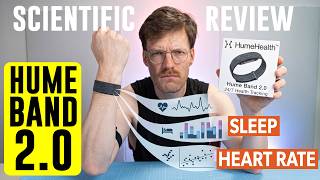

I Tested the Hume Band 2.0 So You Don't Have To
45sThe opening hook challenges a heavily marketed product, promising a scientific takedown that sparks curiosity.
▶ Play Clip"The title's warning is fully justified by the data, but the 'scientific' claim is slightly overstated given the limited sample size."
This video is a scientific initial review of the HUME Band 2.0, a fitness tracker. The reviewer, a post-doctoral scientist, tests the device's heart rate and sleep tracking accuracy against reference devices (ECG and EEG) and compares it to competitors. The verdict is highly negative, citing poor data accuracy, a limited app, and a high price.
The reviewer was asked to review the HUME Band 2.0, a competitor to Fitbit and Whoop. He notes the original was promoted by fake stock model scientists and lacked good data.
Build quality is better than the original, but the app feels like an initial release, not a mature product. The reviewer believes the company invests more in advertising than in app development.
A major limitation is the difficulty in accessing raw data. The app's 'metabolic momentum' overview is confusing, and the 'Human Body Pod' measures body fat, but accuracy is unverified.
Blood pressure readings are always around 120/70, which the reviewer finds suspiciously narrow. The focus of the review is on heart rate and sleep stage tracking.
The app is limited: only beta activity tracking for running, walking, and weightlifting. No heart rate patterns are shown, and there's no Strava integration. It does connect to Apple Health.
Compared to a Polar H10 ECG chest strap, the HUME Band 2.0 shows a correlation of 0.92, but with very few data points. It often detects a heart rate that is too low.
The HUME Band exports very little data to Apple Health (one value every 1-3 minutes), compared to the detailed data from the Polar H10. This limits analysis.
The reviewer states the $100 Fitbit Air is more accurate, has a better app, and provides full data access, making it a much better deal than the HUME Band 2.0.
The reviewer's GDPR request for data from the original HUME Band was ignored by the company, which is a violation of European regulations.
Sleep stage patterns are repetitive and unrealistic, with deep sleep occurring at the end of the night. Compared to an EEG reference, agreement is very low: 35% for deep sleep, 59% for light sleep, and 40% for REM sleep.
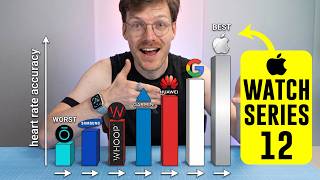
In the reviewer's testing, the HUME Band 2.0 ranks as one of the worst devices for sleep stage tracking, alongside the HUME Band 1.0, and below competitors like Whoop, Apple Watch, and Oura Ring.
At over €200, the HUME Band 2.0 is not competitive. The reviewer cannot recommend it, suggesting cheaper alternatives like the Amazfit Helios and Fitbit Air perform better.
The HUME Band 2.0 is a poorly performing fitness tracker with inaccurate heart rate and sleep tracking, a limited app, and a high price. The reviewer strongly advises against purchasing it, recommending better and cheaper alternatives.
What reference device was used for heart rate testing?
Polar H10 ECG chest strap
03:47
What was the correlation between the HUME Band 2.0 and the Polar H10?
0.92
04:15
What was the agreement for deep sleep detection?
35%
09:51
What was the agreement for REM sleep detection?
40%
10:04
What was the agreement for light sleep detection?
59%
10:04
What is the price of the HUME Band 2.0?
Over €200
14:41
What GDPR request did the reviewer make?
A request for all personal data, which was ignored.
07:35
What is the main limitation of the HUME Band 2.0's data export?
It exports very little data to Apple Health, only one value every 1-3 minutes.
04:00
Heart Rate Correlation
Provides a quantitative measure of heart rate tracking accuracy, showing a moderate correlation but with sparse data.
03:47Sleep Stage Agreement
Reveals very low agreement with EEG reference for deep sleep, indicating poor sleep tracking performance.
09:51Device Ranking
Places the HUME Band 2.0 among the worst devices tested, providing a clear comparative benchmark.
12:18Value Proposition
Highlights that cheaper alternatives offer better performance, making the HUME Band 2.0 a poor value.
14:41[00:03] you have been asking me to review the competitor of the Fitbit Air, the Whoop Strap, and the Amazfit Helios Strap. So, today I'll give you my first testing of this device and we will see if the second version of this device is at
[00:16] least a little bit better than the original, which seemed to be promoted by fake stock model scientists, and basically not include a lot of good data initial review, but I think it's already
[00:30] very telling what we get out of this. Now, first of all, what is my impression of the build quality of this device? Well, it's definitely better than the old one. It feels a lot more solid, looks a lot better as well. But, it's
[00:43] still very clear that Human is investing a lot of money on advertising this product, and I think they could actually spend some more money on building their app and building their whole infrastructure, because it feels very
[00:55] much like an initial release and not like a mature app yet. Let me actually loading, my name is Rob and I'm a post-doctoral scientist specializing in biological data analysis, and that will be the main part of this video, the data
[01:10] and data quality, at least as an initial test and as far as I could access it, because that's a major limitation of this device. It's super hard to get to the raw data and do anything with it. But, getting back to the app, here we
[01:23] have the app itself. I've been using it for about 5 days now or so, and there's this metabolic momentum overview in your home app, metabolic capacity, recovery. For me, this is not what should be front and center. This is
[01:37] just somewhat confusing, not that clear. You need to go to the band part to get a the Human Body Pod, I think they call it, where it actually measures your fat percentage and things like that. Again, I cannot say how accurate that part is.
[01:52] traditional overview of my metrics. So, my Human Band is connected. The battery life also seems at least better than the older one. Um you have my steps, your sleep, your blood pressure, which always seems to be around 120 to 70. This is
[02:09] basically always it seems to be in a very narrow range, which I don't think is super likely, but again, there's no official test that I did for this yet. What I focused more on was the heart rate testing and also the sleep stage
[02:23] initial review, uh but I can already tell you, even though it is potentially a bit better, it's still a pretty bad device, in my opinion, or at least a bad deal compared to the competition, and you're much
[02:37] better off getting some of these devices. Now, that will include some of show you some of the things that have bothered me about the app. So, here you have an overview of all your metrics. I don't have the premium subscription, so
[02:50] an activity, there's only a beta activity setting right here. So, you can start an activity. It's only there for running, walking, and weightlifting, and the other ones aren't there yet. And once you finish them, they end up right
[03:04] here in your overview. Let me actually see. So, it's right here. I had to log my cycles, and indoor cycles is runs as well, because I cannot log anything else at the moment. But then if you go to that data, there's basically no
[03:18] information on your heart rate patterns. It's just basically the very basic data, and here it even couldn't connect to my device for some reason. There's no heart rate at all, 0 BPM here. Here we do have an average heart rate of 134, which
[03:33] could be true. I'm not exactly sure. And there's also no way yet to connect this to Strava or anything else. So, I think this is a super limited app at the moment that can do very little. It does connect to Apple Health, and that's how
[03:47] I got to this data right here. So, So we're comparing the heart rate as measured by the reference device, which is the Polar H10 ECG chest strap, to that of the U Band 2.0. However, the data that actually syncs to Apple Health
[04:00] is super limited, so it's only a value every minute at maximum, usually every 3 minutes or so. So this is for a bunch of different exercises, all data combined, and that is when we get to a correlation
[04:15] of 0.92 with very few data points. So these were all the data points I could extract, and there are many points also below the blue line, indicating that very often it detected a too low heart rate. And this
[04:29] is also across all different kinds of activities, which should actually result in usually some of the best correlations because you have both very low heart rates right here, which is usually during weightlifting, and also high
[04:41] heart rates right here, which are during the extreme parts of running and indoor cycling, for instance. And even then, the correlation is honestly not that good, and quite often there's a too low heart rate, as we just saw. And now I
[04:54] can actually show you how little data that it actually exports to Apple Health in this case. So we have the Polar H10 reference device here in blue-green, and the U Band 2.0 in red. And as you can see, the Polar H10 has very detailed
[05:09] data, and you can see all my intervals during indoor cycling in this case. And the red lines are basically connecting these few measurements that the U Band 2.0 made. Now luckily, the measurements that were made were usually
[05:23] quite correct for indoor cycling. Now indoor cycling is one of the easiest exercises for a device to track, so I would hope it would be relatively However, the app itself and the data you
[05:36] get access to is just super limited. Now here we have a second spinning session. seemed like. And there's also some moments where it detected a too low heart rate. Also right here, it's not exactly correct. This is just a world of
[05:50] difference compared to the, for instance, $100 Fitbit Air, which is super accurate, has a great app, or pretty good app, but great compared to the You Band app. And also, just connects to everything, gives you access
[06:04] to all of your data. It's just much more complete, much more developed, and there's a much more reliable team behind it. Again, my You Band right here was shipped directly from China. So, you might encounter extra import fees as
[06:17] well. I think, especially in Europe, after the 1st of July, you pay €3 extra one of those days, you pay a bit of money extra per item that is shipped to Europe, and you might actually have to pay import tax as well. Because this
[06:32] device is officially €230 or so. I bought it with my own money, so there's no influence from You here. about it. And they actually offered me money, of course, to be a sponsor, and
[06:44] quite lucrative affiliate links. But I didn't want to do that. Here we actually have a weightlifting session I did with the You Band. And also, here you can see it really wasn't able to detect the peaks in my heart rate,
[06:56] or it wasn't exporting the data on the moments I was having those peaks in my heart rate. No idea what's going on here. This just doesn't look that great, honestly. Now, there were even a few more data points for cycling and some
[07:09] other exercises. However, my scripts, or my code, actually expects a lot of data, and if there's extremely little data, it will not make the plots, for instance, like this, when there's only like three dots by the You Band. So, that's why
[07:23] these were the only plots that were created by my code. Overall, I'm not happy with these results. I just think it's not reliable when they don't give you access to your own data. I was actually in contact with You. I tried to
[07:35] get a GDPR request out, but in the end, they just stopped responding to me. So, I didn't get data from them. That was actually for the original UUM 1.0 that I asked for that service months ago and they just didn't do it in the end. And
[07:47] according to GDPR regulation, which is European regulation, they should have sent me all my data if I asked for it. So, that's the heart rate tracking performance. Now, another thing as we just saw that the UUM band measured is
[08:00] your sleep. So, let's actually take a look. One thing you will notice when looking at their sleep stage patterns right here is that they are super repetitive. So, if you zoom in a little bit, you can see sort of the expected
[08:12] then you have some deep sleep, REM sleep, light sleep, deep sleep, REM sleep. However, normally near the end of the night, you don't have a lot of deep sleep anymore and they still have more even than at the beginning of the night.
[08:26] And also at the end of the night, you should have more REM sleep, but the REM according to the UUM band. This already looked weird. Whereas for the heart rate tracking, we used an ECG as a reference,
[08:39] so a device that measures the electrical activity of the heart. For sleep stage tracking, I use an EEG as a reference, so that measures brain electrical activity. Now, this is sort of a silver standard, not a gold
[08:51] standard, but good enough to give us a first impression of the performance of asterisk to this testing because I only have two nights of data where both the reference and the UUM band provided data. As you saw right here, I have
[09:06] four nights of sleep right here and five days of blood pressure data in this case. But for the four nights of sleep, I only fully functional and I checked the data and it was all reliable. So, let's take
[09:19] a look at those results. And those results are right here with on top the sleep stages according to the reference device and on the left the sleep stages as recorded by the UUM band 2.0. And if these two would perfectly agree, all
[09:34] values on the diagonal right here should be 100% and this is not close to 100%. Regular viewers will know it will likely not be 100% or even close to that. Usually the best devices are around 80 to maybe 85% for these sleep stages.
[09:51] However, this is very far away from that. So for deep sleep agreement we see that. So for deep sleep agreement we see 35% agreement which is super low. Light sleep agreement at least isn't the worst at about 59%
[10:04] and REM sleep agreement is 40% so also not very good. About the same amount was of what was predicted as being REM sleep by the EEG device. So this just doesn't look very reliable. I actually want to show you how that
[10:18] compares to other devices and show you an example night. ask for your support because I have to buy this device myself for instance because I don't do paid reviews from any manufacturers. The most I will do is
[10:31] affiliate links. That is actually how I want to ask for your support. If you buy general Amazon affiliate link, it you make a purchase with that link it supports the channel. So if you make it
[10:44] your default way of going to Amazon, that's just the most direct way of also have specific affiliate links for devices like the Oura Ring or the Whoop Strap or on Amazon the Amazfit Helios strap. If you buy any of these with my
[10:59] best discount possible if there is a discount except for the Oura Ring and same time and I also have channel memberships. And don't forget to like and subscribe. But let's take a look at some example night to see what this
[11:12] actually looked like. So on top we have the night as tracked by the EEG device and on the bottom the night as tracked by the U Man 2.0 with on the left the sleep stages and along the horizontal axis the clock time for both.
[11:26] So first I'll mark deep sleep as marked by the EEG device in blue purple and this of matched here in the beginning, but then near the end of the night, I apparently still had some deep sleep,
[11:39] but this was a little bit detected by the You band, but it detected a bunch of extra deep sleep as well that wasn't really there. Then if you look at REM sleep, we clearly see my sleep cycles right here.
[11:51] And these basically were not detected by the You band or at least not fully. You could say that there's a little bit of REM sleep here, so it did detect my sleep cycles sort of because it also missed this final part right here. But
[12:05] you could say, "Okay, a new sleep cycle started." But if you look at the actual percentage REM sleep that is detected correctly, it's quite low compared to some of the other devices out there. And as regular viewers know, we can make
[12:18] that comparison more directly by taking the average sensitivity over those three sleep stages along the horizontal axis right here. And the worst out of those sleep stages along the vertical axis. That means that the further to the top
[12:31] right the device is, the better is its agreement with the reference device. And those best devices do include some band-based devices. Like for instance, your biceps. Also, the Whoop strap seems to be doing
[12:46] reasonably well. And those are both amongst the top five devices out there or top five brands in terms of sleep stage tracking at least on my body. Those are Google and Fitbit also with the Pixel Watch 4.
[12:59] Then we had the Whoop strap, we have the Apple Watch, then of course the Oura Ring, and then finally the Eight Sleep Pod, my favorite sleep improvement device. I always mention this, this is a super expensive device that's more meant
[13:13] as sleep improvement because it can cool down each side of the bed independently. at least on me, but that's not what you there's cheaper options for sleep stage tracking. Eight Sleep Pod in my opinion
[13:26] is mostly there to cool down your body or warm it up in winter if you want to individually. If you want to check it out, I do have an affiliate link and a review which I'll post up here and down here. But, if
[13:38] we don't focus on these best devices, but instead check where the U Band 2.0 ended up, it ended up all the way down here as one of the worst devices out there together with the U Band 1.0. Basically, similar performance for both,
[13:54] which makes sense as probably the same algorithm is still in both devices. It's followed by the old Huawei algorithm, the Coros Pace 4, and then we have sort of the mid-tier devices right here, which includes the older Amazfit
[14:09] algorithm, the older Garmin algorithm, Polar devices, and then we have the second-tier devices right here, which could, if my review of the new Garmin Forerunner 70, actually also include Garmin. There's Amazfit
[14:25] and Galaxy watches. So, that's sort of the order of devices with the U Band in my testing on my Embodii being the absolute worst performer, which is why I honestly cannot recommend this device. At over 200 euros or 200
[14:41] dollars, this is just not competitive with the competition. You can get both an Amazfit Helios strap and a Fitbit Air for less money, and both of these will individually perform better. So, the combination of both, which I don't see a
[14:55] reason why you would get both, but if you want both, will be cheaper than getting the U Band, and you will get better performance from both these devices. At this point, based on this initial test, I cannot in good
[15:08] conscience recommend the U Band 2.0 to anyone really. If you already have the U Body pod, maybe, but I think the app's kind of meh
[15:20] at best, and you can get better apps for all those other devices, and then maybe get another skill or connect the output from the Body Pod to Apple or Google Health, and just use that to port it to whatever app you do like to use, whether
[15:34] it's Google Health or I don't know if Amazfit can take in that data, but I honestly just see no reason to get this device. It really appears to be a relatively cheap device that is overpriced for what you get out of the
[15:47] device. The app experience isn't very great, and they're just paying influencers a lot of money to promote it. That's my impression, my opinion. I would not get this device at this point, and I don't see that improving unless
[16:01] the app changes drastically. And especially that this device is shipped from China, you don't know what other taxes or anything will be added to it. the old one, where it was basically a copy of a cheap Chinese device. I wonder
[16:15] if they really developed this themselves. They have removed their fake to be a little bit more honest, which is why I wanted to give them a second chance. But I really don't like how much they're trying to pay influencers give
[16:27] positive reviews of this device. I just don't think that should happen. But that's my opinion. Have you ordered the Yum Band 2.0, and do you like it? that's why you wanted one of their devices. I also stuck to the free
[16:41] version of their app cuz I just didn't want to pay for anything more. And with afraid that I'd forget to cancel it and give them even more of my money. you like the device, maybe you get benefit out of it. But my first
[16:55] competitive compared to what else is out there. Now, if you do end up getting instead maybe a Fitbit Air on Amazon, an Amazfit Bip S strap, a Whoop strap, my favorite sleep improvement device, the Eight Sleep Pod, or anything else on
[17:10] Amazon for that matter, even something as small as toilet paper or coffee and get yourself the best discount possible, use one of my affiliate links Now, given that you watch this video on the You Man 2.0, you might also like my
[17:25] initial review of the You Man 1.0 or this video on the Eight Sleep Pod. this video on the Eight Sleep Pod. >> [music]
⚡ Saved you 0h 17m reading this? Transcribe any YouTube video for free — no signup needed.