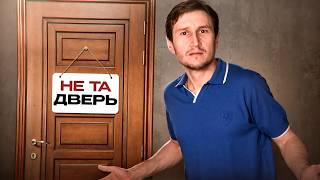

Why indicators create an illusion of control
54sReveals a common cognitive bias that makes traders believe they understand the market more than they do.
▶ Play Clip"Title is honest and the advice is relevant, though the sales pitch for his school dilutes the message."
In this video, Artem Zvezn, a trader with 18 years of experience, shares the common trading mistakes he made, including relying on indicators, following broker analytics, and using trading signals. He emphasizes the importance of having a written trading system and combining trading with investing and business.
Using indicators gives a false sense of understanding and control over the market. They require experience and never work 100% of the time. Moving averages fail in sideways markets, while oscillators fail in trends.
Indicators with complex formulas like Ichimoku Cloud and Alligator worked worse than simple indicators because they caused confusion and were harder to interpret.
Almost all broker advice resulted in losses, including the final tip to go public on the St. Petersburg Stock Exchange. This loss was substantial, and the speaker attributes it to the cognitive distortion that the broker knows better.
Analytics is not guaranteed to work; it is a probability that may or may not come true. You need your own experience to judge whether an analyst truly understands the issue or is just fantasizing.
Signals are based on manipulation, guilt, and gaslighting. High-quality signals don't generate high returns, so beginners always end up with scammers who take their money.
Without a written trading system, losing money is guaranteed. If it's not written down, it doesn't exist, and you trade blindly.
Break your trading into specific setups and track performance. After 100-200 trades, remove losing setups and adjust position sizes based on results.
For setups that perform well, increase trading volume; for mediocre or losing setups, reduce volume or eliminate them entirely.
Many traders earn money by chance without understanding how, then lose everything later. Don't follow them; rely on your own statistics and evidence.
The speaker's main mistake was focusing only on trading. The ideal approach is to combine trading, investing, and running a business to diversify income.
The key takeaway is to avoid common pitfalls like indicators, external analytics, and signals, and instead build and maintain your own written trading system. Also, don't rely solely on trading; combine it with investing and business for a balanced approach.
What psychological trap makes indicators feel reliable?
The illusion of control.
00:58
In which market condition do moving averages work best?
In a trend.
02:08
What was the final piece of advice from the broker that caused losses?
To go public on the St. Petersburg Stock Exchange.
03:30
Why are trading signals fraudulent according to the speaker?
They are based on manipulation, guilt, and gaslighting; profitable signals don't exist.
06:13
What is the minimum number of trades needed to evaluate a trading setup?
100-200 trades.
10:14
What happens to a trading system that isn't written down?
It doesn't exist, and you are trading blindly.
08:37
What is the speaker's main mistake in his career?
Focusing only on trading instead of combining it with investing and business.
15:39
What approach does the speaker recommend for sustainable income?
Combine trading, investing, and a business simultaneously.
16:33
Broker analytics are unreliable
Shows that even professional advice can lead to major losses, highlighting the need for personal responsibility.
03:03Signals are a scam
Explains why trading signals are fraudulent and how manipulators exploit beginners' trust.
07:46Written trading system is a must
Stresses that a non-written system doesn't exist, a fundamental principle for disciplined trading.
08:11Adapt your system based on data
Provides a concrete technique for improving profitability using statistical analysis of trades.
10:14Don't limit yourself to trading
Emphasizes diversification across trading, investing, and business as a key lesson for sustainable wealth.
15:39[00:02] wrong door in trading? My experience shows that it is possible, and I have encountered this many times . And in this video, I will tell you about the doors in trading that I, unfortunately, opened during my 18 years of practice. My name is Zvezn Artem
[00:17] Anatolyevich. I have been trading in the market since 2008. A qualified investor certified by the Central Bank of Russia and director of the state-licensed online school on investments and finance, Finzvezda . Here is my
[00:29] yield chart. Let's go. The brightest door I've ever connected to the indicators. She stood out
[00:43] whom we will of course talk about, who is the one who is standing out with such a door, is the one who is scamming everyone into stops. And now all of you are looking for this market maker, but you still can’t find him and you used indicators, because it was such a universal money button.
[00:58] When we put an indicator on a chart, we analyze this very indicator and make a decision. All of this is based on cognitive distortion. It's called the illusion of control. When you just look at a chart, you don’t understand it
[01:10] because you don’t have the experience and knowledge. But when you set the indicator, it is simpler and easier to understand, as it seems to us all . Although in reality it is completely different. It seems like an illusion of control appears, and it seems to you that you
[01:22] are beginning to control the situation, that you are beginning to understand the market and understand what is happening in it. Because whoever wrote the indicator, well, he clearly didn’t write it for no reason, he clearly knows something secret there. Just like
[01:36] you now have the illusion of a market maker who, well, certainly leads the price somewhere. He knows where he's leading. It's the same thing . In fact, all indicators work, but they all, without exception, require knowledge, they require experience, they
[01:52] are doing, because they do not work 100% of the time. I won't even mention the fact that all indicators work in different periods. These periods need to be distinguished. The moving average indicator works great in a trend, but in a sideways market it will
[02:08] lose you mercilessly. Oscillators work great in sideways movements, but they lose like crazy in trends. And separating where the trend is and where the sideways movement is, this is what traders should do, of course. And the most interesting thing is that indicators that
[02:22] had complex formulas, like the cloud and shimoku or the alligator indicator, unfortunately, worked much worse for me than simple indicators, because it was easier to get confused in them. I don’t know a single trader right now who
[02:37] would use only indicators as their basis and nothing else. Therefore, I can absolutely guarantee you that you, well, will not make money on indicators. This is simply impossible. Even if you were to go through indicators,
[02:50] throw them into a neural network, for example, and try to figure out what combinations, what parameters, and what indicators you need to select to make money, you, unfortunately, won't make money, because that's the wrong door. Indicators can
[03:03] only serve as assistants. The second door is, of course , analytics, which is provided either by brokers or by some more or less smart people, as it seems to me. Yes. Well, here are just the facts, I’ll just tell you the facts. Almost
[03:17] all of my broker's advice led me to losses, even after I gained experience. The final advice was to go public on the St. Petersburg Stock Exchange. And in the end we lost money on this . Moreover, they lost not 10,000 or
[03:30] 20,000. and not a million, and not even two. This is the advice the broker gave me. Again , the cognitive distortion that someone knows better than me is at work. And, accordingly, this uncle will help me now . It won't help, actually. I'm not
[03:44] saying that analytics doesn't work at all. The analytics you get work, but you need to understand it. That is, you need to understand where, conventionally speaking, some analyst understands the issue, where he does not understand the
[03:58] issue, where he is simply fantasizing, and understand what to read where. Well, in particular, take my example, yes, I am very reluctant to analyze, for example, gold. Why? Because many geopolitical factors influence
[04:12] gold itself. And when they, well, tearfully ask me to tell them something about gold, I tell them, but I always make a bunch of reservations there, saying that, guys, this is just not accurate. But I am very good at analyzing the same
[04:24] crypto, but even there there are one or two, so to speak, analytics that I do and which do not work or work, but not as I would like. And this is absolutely normal. That is, there is analytics, and this analytics is
[04:39] simply a probability that may or may not come true. And for this reason, you definitely need your own experience to understand who is telling you what and how true it is. Are they [ __ ] in your head right now, are they trying to
[04:55] rip you off with some honeypods, or is the analyst, a real analyst, understanding the issue and simply sharing their opinion, well, including the opinions of their colleagues. The most interesting thing is that good analytics, as a rule, is
[05:08] not needed by anyone. I have a group called "Babki no problem". You can scan this QR code and get acquainted with this group. And here we are doing high-quality analytics. That is, we have a professional with all the necessary
[05:21] credentials, licenses, and so on, who studies issuers in real time, 24 hours a day, all day long. This is his job. Study issuers, look at the reporting and immerse yourself in this very reporting. We
[05:34] pay him a lot of money for this. And as you can see, this group is not particularly interesting to people. Why? Because there is no bunch of X's, because a true story is told, because there is no money button. This group is more likely to be of interest to
[05:47] professionals. But there aren't that many professionals, because, unfortunately, they do n't get it. So analytics works, but you need to understand whether you're dealing with real analytics or just plain crap, and that requires experience. So analytics
[05:59] is not that door. With analytics, I think it’s clear. And here is another wrong door - these are, of course, signals. How much money was lost on signals. And it always seemed to me, well, this whole system, it, well, it kind of works. I'll say it in my own
[06:13] words, I'll say it with obscenities: "Get the kids away from the screen and so on." This is a scam, basically. All signals are based on the fact that you are being screwed. That is, this is an absolutely fraudulent topic. High-quality signals are of no
[06:26] interest to anyone because they do not generate such high returns. And you, as a beginner, will 100% find some scammer who will now tell you something, and you will lose money. This is absolutely 100%. So,
[06:38] why am I telling you this? The fact is that all these scammers are excellent manipulators. They always make you feel guilty. They always gaslight. Whenever you lose money and turn to them, you say:
[06:51] “Well, you, so to speak, gave a trading signal, and so you lost me money.” They will find a lot of ways to make you feel guilty that you are somehow different . But in the end it turned out that I first found one, so to
[07:04] speak, signalman, then another. There are even entire services that provide these signals. And absolutely every time I lost money, because I was always imbued with these marketing stories that you will come now,
[07:19] say, invest 100 dollars, and earn 10 million dollars. And in the end , of course, I found something that suited these illusions. And these, as a rule, were scammers. These were, as a rule, complete scammers who
[07:32] deceived you, who showed high returns, which are possible only with enormous risks, which you begin to understand only after five years of experience. Therefore, all these signals are an
[07:46] absolute misconception, a deception. This is 100% the wrong door. Let's now talk about that door. But there must be a system. I talk about this all the time . None of you have this system . I am more than sure. Look at
[07:59] me, you specifically don’t have a trading system. Uncle Vasya has it, but you do n’t. What a bastard. There must be a trading system because without a trading system, losing money is guaranteed. That is, you will lose
[08:11] will lose it. It is not necessary to write a trading system there on 20 A4 sheets. That is, we have an online school. You can scan this QR code and explore this online school. Our students sometimes write trading system
[08:25] correct, but it is not necessary to do it this way. But you must have an and it must be written down. If you have n't written it down, it doesn't exist. This means
[08:37] you are trading absolutely blindly and you will lose money. When you lose, no one can even tell. And if this was still in the props, you will be kicked out with rags and blocked by IP. Therefore, it is better not to do this. So,
[08:50] you have at least some kind of trading system, and you will understand why you made money or why you lost. It is . You'll have to write it yourself. No matter what trading methods
[09:06] you use, they are all publicly available, but each trading method publicly available, but each trading method needs to be adapted to market changes. I'll tell you how to do it. I talk about this in almost every
[09:18] telling this to, because no one does this. So, you have, so to speak, your trade. Let's depict it as follows . This is how big-big your trade is. Of course, you don’t trade just one
[09:31] trading situation or one trading pattern there. Of course not. You have , let's say, about dozens of them there. And now you have a certain table. Here you trade, for example. I'm just taking it conditionally now. Maybe you won’t even
[09:43] else. For example, you trade a candle like this. you are trading short. The next situation is exactly the same formation, for example, at the level. And you trade, for example, in LON, right? Here you are, for example, trading a moving average, trading,
[09:58] for example, a rebound from this moving average. That is, you write down different situations, how you will use this, trying, relatively speaking, to be will specifically do after a certain number of iterations. That
[10:14] is, you made, for example, 100 or 200 transactions. You will already have an understanding of what specifically in your trading, what specifically in your market does not work. For example, you will understand that this formation was the worst of all. For example, out of ten
[10:27] transactions, nine were unprofitable. Well, what's the point, what's the point of maintaining this trading system? You remove it and add some new one. Here, for example, you had, well, somewhere in the middle, that is, 10 trading situations,
[10:41] five ended in plus, five ended in minus. Yeah. You recorded this and simply the next time you enter a trade in this trading situation, you will enter, for example, not at $10, but at $5, that is, you will reduce the trading volume. But
[10:54] this trading system, for example, turned out to be the best. Well, naturally, you will increase your trading volume here. That is, we work with our trade in isolation and with each block. This way,
[11:08] we can, within a certain period of time, select the most effective working methods specifically for our market, our temperament, our trading style, and our capital our trading style, and our capital
[11:21] as fast as we would like, but unfortunately, this is the only way to make money. Let's continue now. I'll tell you a little about my colleagues, but for now, a little advertisement. Please do not skip the commercials. This is very important
[11:33] for your development and for the development of our channel. You probably expected that I would now advertise someone, some application, a bank, an exchange, and so on. We don't do that kind of thing. We do n't even have advertising slots on our channel. This is due
[11:46] to the fact that we earn most of our money from investments and trading. This is a very difficult time for the country, and now you can clearly see what is happening. The population's income is falling, but at the same time my students and I maintain a
[11:59] high standard of living. This is not because we lead an idle life or steal somewhere. This is because we are involved in investments and trading and know how to make money in financial markets. For 11 years, our
[12:13] Finzvezda school has been teaching beginning traders and investors the intricacies of trading and investing. Please scan this QR code. It will take you to a page dedicated to active trading. With this training, you will
[12:26] create your own trading system, understand the market and, most importantly, start making an indecent amount of money in this market . Everything is completely legal. We work in the white light. You will trade on legal platforms with full knowledge and
[12:41] understanding of what exactly needs to be done. You'll receive a well-thought-out step-by-step program with simple, accessible explanations of what exactly to do, what to look for, and, as I like to say, where to click to
[12:54] like to say, where to click to make money. Well, just think about it, our school has been in existence for 12 years, well, practically 12 years, that is, 11 years, to be more precise, full years. I live in Russia, I'm not hiding, like all the info-cygans and
[13:07] scammers in Dubai. I live in Russia, I'm not hiding from the law, and I haven't declared bankruptcy. What is this? As a lack of recognition of the quality and effectiveness of what we do. Otherwise, if we were engaged in deception, we would have been
[13:22] imprisoned long ago. Scan QR codes and get the best training program. Thank you for best training program. Thank you for watching the commercial and not skipping it. You're probably going to say to me now: "Who are you anyway to give me
[13:35] advice here, or anything like that?" Ah, guys, I can tell you with absolute certainty that the majority of your future colleagues are idiots who earned their money by chance. This works as follows: A person, without
[13:49] understanding or knowing anything, buys some financial instrument, and he is lucky, , that is, either up or down. So he earns a lot of money without even understanding how he earned it, and begins to imagine himself as a great trader. It
[14:03] literally lasts there for a couple of months or a couple of years, he loses everything and leaves the a couple of years, he loses everything and leaves the market. I've seen a huge number of such shots . That is, I have been conducting my own and blogging activities
[14:15] since 2013. How much does this come to? It turns out that I have been blogging for 11 or 12 years time I see that, so to speak, someone is rolling a barrel at me, pouring [ __ ] on me. Six months pass, a year, and he is
[14:30] gone. The question is, why doesn't it happen? Because he loses money and leaves. You know, like in that parable, I’m sitting by the river and watching my enemies float past me. So don't listen to anyone. If you think that I'm
[14:44] pouring something on you now and you can and know better, for God's sake, but remember that distortion, so that this isn't an error, so to speak, in your perception, that you really have figured it out, that there are numbers, evidence, that there is,
[14:59] so to speak, a long period of time that will indicate that you have really figured it out for example, I have statistics, I have a transaction log, I have profitability not for one year or even two. And not even
[15:12] for five. I can show it to anyone, so to speak, and prove it. If you also have statistics, if you have, so to speak, journals, don’t listen to me, do it the way you do. The main thing is that it brings you money, because most of your
[15:25] colleagues, unfortunately, are idiots. And the last piece of advice I would like to give you is that trading is not enough. My main mistake, which I unfortunately cannot fully accept, was to
[15:39] fully accept, was to only engage in trading. I myself come from, well, not a family. Plus, unfortunately, my mother suffered from narcissistic [ __ ] up. And for this reason, the distribution of finances was, to
[15:54] put it mildly, rather strange in our family. And when, say, a mother dilutes milk with water to save money, and at the same time spends money on some construction project, it’s simply ridiculous. That
[16:07] is, I still, I’m a grown man now, I can’t understand why my parents do this, but nevertheless. So, back then, it seemed to me that I would earn a huge amount of money in trading, that is, I would become
[16:20] ultra-rich there, so to speak, I would get up to speed, say, by the end, and then I would reduce the risks, I would engage in investments there, and so on. It doesn't works, but only under ideal
[16:33] conditions. It didn't really work for me. The most ideal thing is to do both trading and investing, and run some kind of business at the same time. Look at me, what I'm doing now. I am running a business now. I have an
[16:46] online school here. I advertised myself here. Here I tell you how handsome I am and so on. At the same time, I have investment accounts that bring me a constant, albeit modest, but nonetheless income. There are
[16:58] trading deals that I make from time to time and earn opinion, this is the most adequate approach when we use everything together. We don't
[17:10] focus on just one activity; we work, trade, and invest. And I would like to say that it is very difficult, but it is not that difficult, that is, it can be handled,
[17:23] because you don’t need, so to speak, to go to some new shift. started, there were push-button phones. It 's why we were all focused on some kind of day trading there. Nowadays you all
[17:37] have smartphones. That is, it can be done in literally two or three clicks. Each of us has short breaks throughout the day, 15 or 20 minutes every couple of hours. Who does what , who goes there, smokes, so to
[17:51] speak, who watches YouTube, and our students simply open graphs and little time. And they did the main analysis there, so to speak, in the evening or at the end of the week. And so, in the process, they watch and, as I like to say, press
[18:07] do it this way? To be honest , I sincerely don't understand. I hope this video was helpful to you. Scan the QR code, please go ahead and buy our courses, they are really cool. Happy earning.
⚡ Saved you 0h 18m reading this? Transcribe any YouTube video for free — no signup needed.