
My ES Entry Strategy: Wait for the Value Gap
43sTraders love seeing a clear entry strategy with specific price levels and targets, and the suspense of waiting for the close builds engagement.
▶ Play Clip"Title is vague and the content is a brief trade recap, not a detailed explanation of 'what happens'."
The video is a trading tutorial where the presenter demonstrates a short trade on the E-mini S&P 500 (ES) futures, focusing on entry signals, trade management, and exit strategies. The presenter explains how they wait for a value gap to be filled and a close below a certain level before entering, and how they use the Nasdaq (NQ) as a signal to exit their position.
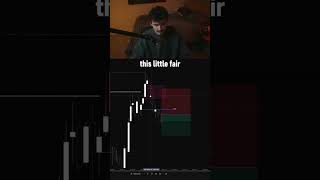
The presenter looks for a change in the start to get ran through to the downside. They wait for a value gap to be filled and a close below it before taking an entry.
After the close below the value gap, the presenter waits for the next candle to fill around that area. The stop loss is placed above the fair value gap.
The first price target is the low of the day, and the external price target is the recent low. The presenter scales out at the first target and manages the rest.
The presenter uses NQ as a signal to exit. If NQ looks like a good long (e.g., a break to the upside), they take off the last 10% of their ES position.
The exit was great because if they had held, the rest of the position would have been stopped out at break even.
The video emphasizes the importance of patience in waiting for specific price action signals and using correlated instruments like NQ to manage trades effectively.
What is the entry signal for the ES trade?
A change in the start to get ran through to the downside, with a value gap filled and a close below it.
00:02
Where is the stop loss placed?
Above the fair value gap.
00:14
What are the price targets?
First target is low of day, external target is recent low.
00:29
How does the presenter decide to exit the last 10% of the position?
If NQ looks like a good long with a break to the upside.
00:44
Patience for Entry
Emphasizes waiting for a specific price action setup rather than forcing a trade.
00:02Using NQ as Exit Signal
Shows a practical method of using a correlated instrument to manage risk.
00:44Exit Timing
Demonstrates that a timely exit can protect profits and avoid a stop-out.
00:56[00:02] am I looking for to now take an entry on ES? I'm looking for a change in the start to get ran through to the downside. For value gap gets ran and this is where I take my entry. So we start to close below it. I'm still
[00:14] waiting. Once we finally close below it here, I wait for this next candle that getting filled around here. And then my stop loss is above this little fair pretty quickly. So my first price target is low of day and then my external price
[00:29] target is all the way back down to this recent low. ES goes pretty quick. I here. I scale more right here and then I end up taking off my last position right this is all about trade management, right? A sign for me to take off my
[00:44] position is if NQ is looking like a good long, right, which NQ was looking like a lows for valley gap here gets ran through and we have this one minute break towards the upside. So as soon as that happens on NQ, I take off the last
[00:56] 10% of my position on ES and I just call it a day there. And it this actually a great exit cuz if I held it, the rest of my position would have been stopped of my position would have been stopped at break
⚡ Saved you 0h 01m reading this? Transcribe any YouTube video for free — no signup needed.