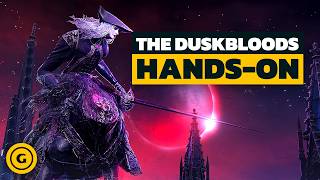

Miyazaki Redefines The Duskbloods: Not PvPvE?
50sMiyazaki himself challenges the game's genre label, sparking curiosity and debate among fans.
▶ Play Clip"The title accurately reflects the preview's content, delivering a detailed and enthusiastic look at the game, though it's a bit hyperbolic."
This video is a detailed preview of FromSoftware's upcoming Nintendo Switch exclusive, The Duskbloods, based on nearly 8 hours of hands-on time with the network test. The preview breaks down the game's hybrid PvPvE mechanics, the unique sigil system, and the diverse cast of Bloodsworn characters, offering a comprehensive look at how the game blends familiar Souls-like combat with new multiplayer dynamics.
Game director Hidetaka Miyazaki discusses the game's PvPvE label, suggesting it may be limiting. The game is a Nintendo Switch exclusive, announced last year, and has been shrouded in mystery.
Players drop onto a map with free-form objectives that reward virtue points. Each match has four phases, and players with the least virtue are eliminated until only three remain, who then fight in an arena for 'first blood'.
Killing other players doesn't typically yield virtue, but temporary alliances can be formed. These alliances prevent accidental attacks and end if both players reach the final phase.
Virtue can be earned by killing enemies, collecting items, hunting bosses, or finding purple flame tombs. Boss fights are cooperative, with all players notified and able to warp in, but PvP is disabled within boss arenas.
At the end of phases two and three, ritual sites appear. Players compete for control of pillars, which nets virtue, but killing other players also yields points. This creates a strategic choice between PvE and PvP.
Matches last roughly 30 minutes, requiring quick judgments on how to spend limited time. The author found that killing basic enemies in phase one, tougher enemies in phase two, and then focusing on PvP near ritual sites was effective.
The final phase always culminates in a PvP match between the three remaining survivors. The hub area, House of Night, allows players to test Bloodsworn and explore lore, but many areas are locked in the network test.
Combat plays like Elden Ring or Dark Souls but feels like a 3D Super Smash Bros. due to high jumps, short and long-range attacks, and the ability to knock players out of the arena.
Each Bloodsworn has two unique skills tied to a cooldown meter. Examples include Zork's 'human rocket' and mortar-like missiles, Albert's blood projectiles, and Trangon's invisibility and giant snake summon.
Sigils alter a Bloodsworn's backstory and give them a specific quest during a match, such as marking another player as a sworn enemy or proposing to a lost love. This injects unexpected drama and role-playing into matches.
The game features a Gothic aesthetic but pulls from different eras and timelines, with characters like Zork looking like a steampunk diving suit. Maps are diverse, each set at the 'dusk of humanity' with a sense of ruin.
The map, Lowen Row City, is highly vertical, with a foggy swamp at the bottom and ornate Gothic architecture above. The Bloodsworn are more agile than Elden Ring's Nightfarers, designed around this mobility.
Miyazaki explains that his inspirations constantly evolve into new ideas, making his work original even when referencing familiar tropes. This approach is evident in the game's unique take on vampires and Gothic settings.
The author admits the game isn't what they initially wanted but appreciates its originality. They highlight the game's many tutorials and mechanics, which can be overwhelming but rewarding once mastered.
The author reflects on their ideal From Software game, combining elements from Bloodborne, Sekiro, Elden Ring, and Dark Souls, but realizes that Frankenstein-ing them together would lose what made each special. The Duskbloods, with its willingness to take risks, is what they truly want.
The Duskbloods is a bold, experimental departure for From Software, blending PvE and PvP in a way that feels fresh and unpredictable. While it may not be the traditional single-player experience some fans hoped for, its unique mechanics, diverse characters, and atmospheric world make it a compelling and exciting prospect.
What is the core objective in The Duskbloods?
Players drop onto a map and complete free-form objectives to earn virtue points, with the goal of being one of the three players to reach the final phase.
00:52
How many phases are in a match?
Four phases.
01:05
What happens to players with the least virtue?
They are eliminated until only three remain.
01:05
How can players earn virtue?
By killing enemies, collecting items, hunting bosses, or finding purple flame tombs.
02:00
What is the role of ritual sites?
They appear at the end of phases two and three, and players compete for control of pillars to earn virtue, but killing other players also yields virtue.
03:10
What is the duration of a match?
Roughly 30 minutes.
03:49
What are sigils?
Sigils alter a Bloodsworn's backstory and give them a specific quest during a match, such as marking another player as a sworn enemy or proposing to a lost love.
07:21
What is the unique ability of Zork?
He has a skill called 'human rocket' that lets him fly across the map and crash into enemies.
06:15
What is the theme of each map?
Each map takes place at the 'dusk of humanity' as worlds are falling apart, with a shared sense of ruin.
11:08
What is the name of the map available in the network test?
Lowen Row City.
11:36
Core Match Structure
Explains the fundamental gameplay loop of earning virtue and the elimination process.
00:52PvP Encouragement
Shows how the game balances PvE and PvP, with ritual sites providing a direct incentive for player combat.
03:10Sigils and Role-Playing
Introduces a unique mechanic that adds narrative and role-playing elements to matches.
07:21Miyazaki's Inspiration Process
Provides insight into the creative philosophy behind the game's originality.
12:54The Perfect From Software Game
Reflects on the game's unique identity and why it's exciting despite not being what fans might expect.
15:07[00:02] That word kept coming up when I sat down with legendary game director Hiataka Miyazaki to discuss From Software's next game, The Dusk Bloods. Announced last year, the Nintendo Switch exclusive has been shrouded in mystery. The prevailing
[00:16] label that's been thrown around since its reveal is PvPVE, a term Miyazaki Nintendo. However, after spending nearly 8 hours with the network test in From Software's Tokyo office, calling the Dusk Bloods a
[00:31] Tokyo office, calling the Dusk Bloods a PvPVE game feels limiting. Even Miyazaki told me maybe that wasn't the best way to refer to the Dusk Bloods. So, what to refer to the Dusk Bloods. So, what exactly is the Dusk Bloods then?
[00:52] board games. Eight Bloodsworn. The playercontrolled characters drop onto a map and are tasked with a series of free form objectives that are rewarded with virtue points. Each match is split into four phases. And as it progresses,
[01:05] players with the least amount of virtue are cold until only three remain. The final three are transported to an arena to duke it out for first blood,
[01:17] the mysterious substance that the Bloodsworn are vying for. objectives, you may run into other players. However, intentionally killing
[01:31] another player doesn't typically yield any virtue. There are exceptions to this, but focusing solely on PvP might get you cold early on. Instead, you could form a temporary alliance with another player. This gives the friendly
[01:46] player an outer glow and prevents you from accidentally targeting or attacking them while fighting enemies. That partnership ends if you and your new friend make it to the final phase. So, how do you earn virtue? In any given
[02:00] match, there are a handful of goals that players can chase. Probably the most straightforward of these is to just kill standard enemies, which awards virtue to the players with the highest enemy kill count. Another
[02:14] awards the players who've scooped up the most amount of items. There are more direct ways to earn virtue, too. Players can hunt down bosses marked on the map or seek out purple flame tombs that reward an increasing amount of virtue
[02:28] for each one found. These objectives are less competitive by design. If you initiate a boss fight, every player in the match is notified, and they are given the option to warp directly to you and join the fight. Within these boss
[02:41] arenas, players cannot lock on or attack each other, keeping the focus solely on the boss. If you manage to defeat the boss, the virtue is split among the victors, and those who warped there will return to their last location. These
[02:55] avenues exist, so players aren't boxed into PvP in order to survive the colon. From Software wants to strike a balance between PvE and PvP mechanics in order to give players options. That said, there are instances where engaging with
[03:10] and killing other players is not only encouraged, but can shake up the leaderboard. At the end of phase two and phase three, ritual sites appear on the map. Glowing pillars randomly appear within the specified area, and players
[03:23] compete for control. Claiming and holding onto one of these pillars nets you virtue points, but so does dispatching other players. In one game, I shot up the leaderboard and cinched my spot in the final phase because I
[03:35] abandoned these pillars altogether and killed as many players as I could. Of these bouts and focus on other objectives, but you might find yourself way behind the competition if you did.
[03:49] roughly 30 minutes. So, this time management aspect injects a lot of strategy into the dusk bloods. In any given round, you have multiple ways to acrue virtue, but you need to make quick judgments on how to best spend your
[04:03] limited amount of time. After a few matches, I found that killing basic enemies during the first phase was the best use of my time. I'd level up my character, and if I was particularly aggressive, I could claim the award for
[04:16] killing most enemies early on. In phase two, I would take down tougher enemies and bosses until a few moments before the ritual sites appeared. After that, I took down as many blood sworn as I could. In another round, I spent phase
[04:29] two and three looking for the purple flame tombs and barely made it into the flame tombs and barely made it into the final phase. has come. For as many options as there are to make it into that final phase, it
[04:44] always comes down to a clash with other players. be variations on this final phase when the Dusk Blood launches. But for the
[04:57] network test, it all culminates in a nail-biting PvP match between the three nail-biting PvP match between the three remaining survivors.
[05:09] House of Night, a hub area where you can test out different Bloodsworn, presumably chat with characters, and look over tutorials and lore tidbits. This is where a majority of the Dusk Blood story unfolds, but entire wings of
[05:22] the house are locked off in the network test, so it's hard to say exactly what test, so it's hard to say exactly what you'll be doing in here.
[05:35] matches that we played, and every time I made it into the final phase, I could feel my heart pounding outside of my chest. Fundamentally, the Dusk Bloods plays a lot like Elder Ring or Dark Souls, but these are tense duels that
[05:48] almost feel like a three-dimensional Super Smash Bros. The Blood Sworn can jump incredibly high. Each are armed with short and long ranged attacks, and winning comes down to exploiting attack recovery animations. You can even win by
[06:02] knocking players out of the arena. Zor, a bloodstororn fitted with a bulbous suit of armor, has a skill called human rocket that lets him fly across the map and crash into enemies. I witnessed one player get knocked off the arena because
[06:15] he wasn't keeping an eye on Zork. Alongside their bespoke weapons, each Bloodsworn has two unique skills tied to a cooldown meter. One is available at the beginning and the other is unlocked after hitting a certain level within the
[06:28] match. Zork's basic skill is human rocket. And his advanced skill lets him fire mortarlike missiles. Albert, the slender silver-haired fox in the trailer, packs a sword and a machine gun, while his basic skill lets him
[06:41] launch blood projectiles, similar to the reduvia dagger in Elden Ring. Meanwhile, Trangon has shocks that can be used as melee weapons or thrown at enemies. Her basic ability lets her turn invisible, and her advanced skill summons a giant
[06:55] white snake. There are six playable characters in the network test and each fits into a different play style we've come to expect from Dark Souls and Elden Ring. Albert and Trang Lon align closer with dexterity builds while Zork and his
[07:09] massive articulating sword is a strength character through and through. customized, but these options aren't available in the network test. The only
[07:21] customization option we could enable were sigils. This is one of the Dusk Blood's most fascinating ideas. Upon choosing a Bloods Sworn, you can equip them with a sigil that alters their backstory and tasks them with a specific
[07:35] backstory and tasks them with a specific quest during a match. passive sigils based on your sigil and unknowingly play a role in your quest. For example, one sigil marks another player as your sworn enemy, and hunting
[07:51] them down will earn you extra virtue. Another one tasks you with tracking down an old friend and forming an alliance with them. One particularly interesting sigil has you find your lost love who also happens to be another player and
[08:04] propose to them. It's not the first time a From Software game has touched on the theme of betroal, but it's never been done quite like this. This is where the Dusk Bloods drama starts to take shape. Inspired by tabletop RPGs, these sigils
[08:18] incentivize players to play out specific roles in the middle of a match. In one game, I was marked as someone's sworn enemy. As the match went on, I noticed that one blood sworn wouldn't stop following me. Every time I'd stop to
[08:31] clear out enemies or pick up an item, he'd try to get in a few swings. Considering that PvP is deemphasized for most of the match, I couldn't understand why he was so tenacious. It turns out I was marked as his sworn enemy, and I had
[08:45] to adapt. Eventually, he did kill me, but thankfully there's no penalty from death aside from wasted time. Quote, "We wanted to develop a system that creates unexpected drama and excitement alongside role playing." Miyazaki tells
[08:59] me, "While I wasn't able to complete all the sigil quests, the inclusion of these player specific objectives certainly shakes up matches. One sigil had me play as an inquisitor hunting down heretics. By using a specific emote, a temporary
[09:13] trail would materialize that led me to the blood sworn branded as such. It completely shifted my priorities for the rest of the match. According to Miyazaki, the sigils available in the network test are relatively simple, but
[09:26] they will get more complex. Either way, I suspect these sigils are tied to the Dusk Blood story and its progression. Two aspects that largely remain a Two aspects that largely remain a mystery right now.
[09:43] is about, its tantalizing art direction has me excited to learn more. The Gothic aesthetic will certainly drum up comparisons to Bloodborne, but the Dusk Bloods has its own distinct vision that pulls from different eras and timelines.
[09:57] This is best represented in its cast of Bloodsworn. Each character comes from a they all fit nicely into that overarching Gothic style. Perhaps the biggest outlier is Zork. His bulky suit of armor looks more like a diving suit
[10:13] than the plated carouses we've come to expect from Dark Souls, and his helmet features an extendable beak to help him drink blood, almost like a mosquito. Fascinated by his design, I grilled Miyazaki on how this oddball came to be.
[10:27] Quote, "The original design prompt for Zork was a blood sworn risen from the sea, though he looks quite different now. I love Ultram Man and Ultra 7, specifically featuring monsters rising from the ocean depth. Miyazaki says, "As
[10:40] Zor started to take shape, the diving suit evolved into an industrial era steampunk inspired unit. Despite the wide range of styles and influences, the Dusk Bloods world feels cohesive. These characters are pulled from different
[10:53] eras, but they all come from the same universe that Miyazaki conjured up. However, Miyazaki welcomes a tinge of chaos. The maps are just as diverse as the cast of characters. As Miyazaki cryptically put it, each map takes place
[11:08] at the dusk of humanity as these various worlds are falling apart. The theme that each map shares is that sense of ruin, a theme that From Software is no stranger to. But because there is no fixed era, the team is able to explore a wide array
[11:22] of regions, each with their own style and architecture. The only map available in the technical tests is Lowen Row City, which mostly adheres to the wellestablished vampire mythos. Gothic castles for boating clock towers and
[11:36] castles for boating clock towers and grimy sewers. reason for this. Quote, "We went with Lowen Row City for the network test because it's very symbolic and matches the aesthetic of vampires, but it's just
[11:51] one era and aesthetic. Some of the maps that will be available in the final game are from completely different eras with completely different overall architectural styles. So there's quite a bit of variety to show multiple
[12:03] different eras of humanity's dusk. Lowenro City might feel like an obvious location for a vampire game, but it still has that from software flare. The bosses that roam the world feel plucked out of Miyazaki's worst nightmares, and
[12:15] the labyrinthian streets give way to some incredible views and a blood red moon. What's really surprising about Lowen Row City though is its verticality. The Bloodsorn are far more agile than the Nightfares in Elden Ring
[12:28] designed around their heightened mobility. At the lowest point, there's a foggy swamp. It's not poisonous, luckily, home to these inky jellyfish creatures. And as you ascend, you start to see more of the ornate Gothic
[12:42] architecture that looms over the surrounding areas. It's not quite as big as Night Rain's Limved, but there's a lot to explore. Part of the reason the Dusk Bloods and other From Software games managed to sidestep a lot of
[12:54] obvious tropes is how Miyazaki uses his inspirations. Quote, "From a personal standpoint, whenever I see something very interesting that I'd like to reference, it never really stops at that point. There's always things I look at
[13:07] and think, wouldn't it be cool if it was like this?" It changes shape in my mind into a constant flow of new ideas coming together and coming apart. even without intentionally trying to make it original. It just becomes original
[13:20] because of all the other things I want to do with that idea. Vampires and Gothic castles are well trodden ground at this point. But it takes just a few see all the different directions Miyazaki and the team have taken this
[13:33] Miyazaki and the team have taken this familiar concept. From Software game I wanted. Coming off of Elden Ring Night Reign, I hope the
[13:47] team would return to its singleplayer roots, but it's hard not to admire what From Software is doing. Taken as a whole, I've never played anything quite like The Dusk Bloods. It borrows ideas from PvPVE games and previous From
[14:01] Software titles, but it's impossible to pin down. It's not built on any pre-existing franchise. There's a lot going on in any given match, and there appear to be more tutorials in the Dusk Bloods than any From Software RPG before
[14:15] it. That not so gentle learning curve might throw some folks off. The abundance of tutorials certainly threw me off, but once I settled into a rhythm and started piecing together its many mechanics, it became harder and harder
[14:27] to put down. The randomized variables within the map ensured that I couldn't rely on one specific strategy. The differences between Bloodsworn forced me to consider how certain matchups could play out, and the final showdown had my
[14:40] heart racing every single time. This is all steeped in a moody art direction that seemingly breaks common vampire tropes at every turn. With more maps, more blood sworn, and more lore to pour over, I could see myself spending dozens
[14:54] of hours exploring this world. After my preview wrapped, I found myself thinking about the perfect From Software game. I dreamed up a game that would have Bloodborne's gothic aesthetic, Seiro's white knuckled boss fights, Elden Ring's
[15:07] expansive gameplay options, and Dark Souls layered world design. A multiplayer component like the Dust Bloods never even crossed my mind. But imaginary game, the more I realized that I don't actually want that. Distilling
[15:22] all those experiences down to one specific thing in order to Frankenstein them together shaves off so much of what made those experiences special. Perhaps the Dusk Bloods isn't the From Software game I was hoping for when I first sat
[15:35] down with it, but that's what makes it so exciting. Despite Miyazaki and the team's extraordinary pedigree, they never seemed satisfied or interested in resting on their laurels. I didn't think I'd like Elden Ring Night Reign or Seiro
[15:48] either, but I ate my words on both accounts and sunk 200 hours into each. The Dusk Bloods represents From Software's pension to upend expectations and chart new territory. Regardless of the risks, it always seems willing to
[16:02] push its design and in turn its players in new directions. After all, that willingness to take risks is how Demon Souls reinvented the action RPG genre. I don't anticipate the dusk bloods doing the same for PvPVE games, but I think
[16:17] that desire to chase new ideas and experiment with off-the-wall mechanics is what I truly want out of a From Software game.



⚡ Saved you 0h 16m reading this? Transcribe any YouTube video for free — no signup needed.