
AI Summary
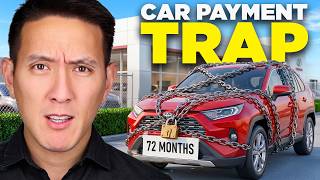
This video compares leasing versus buying a car from a financial perspective, explaining how residual value affects lease payments and why buying is generally the better long-term financial decision.
Chapters
Leasing a car costs about $375 a month, while financing a purchase over 36 months is roughly double that, making leasing appear cheaper on the surface.
The dealer estimates the car's residual value at lease end. For a $30,000 car with an $18,000 residual, you finance the $12,000 difference over 36 months.
When financing to buy, you pay the entire amount, resulting in higher payments, but you own the car at the end of the term.
Leasing can make sense if you prefer a new car every few years, but it leads to a cycle of continuous payments without ownership.
Buying a car and keeping it long-term is almost always the better financial move, even if it's harder on your budget upfront.
While leasing offers lower monthly payments, buying and keeping a car long-term is financially superior for building wealth.
Study Flashcards (4)
What is residual value in a car lease?
easy
Click to reveal answer
What is residual value in a car lease?
The dealer's estimate of the car's worth at the end of the lease.
00:14
If a car costs $30,000 and has a residual value of $18,000, how much do you finance over the lease?
easy
Click to reveal answer
If a car costs $30,000 and has a residual value of $18,000, how much do you finance over the lease?
$12,000
00:27
Why are lease payments lower than financing payments?
medium
Click to reveal answer
Why are lease payments lower than financing payments?
Because you only finance the difference between the car's current value and its residual value, not the full purchase price.
00:27
What is the main financial advantage of buying a car and keeping it long-term?
medium
Click to reveal answer
What is the main financial advantage of buying a car and keeping it long-term?
You build equity and avoid continuous lease payments, making it better for wealth building.
00:53
💡 Key Takeaways
Residual value concept
Explains the key mechanism behind lease pricing, which is often misunderstood.
00:14Buying is better for wealth
Provides a clear, actionable financial principle for car ownership.
00:53Full Transcript
[00:01] about $375 a month, but if you buy this Honda Civic, your payment over 36 months is roughly double that. Leasing a car on the surface is much cheaper than buying a car, but in actuality, it's one of the most expensive ways to own a car. When
[00:14] difference in value of what it's worth today compared to what it's going to be That's called residual value, and it's a price that the dealer estimates your car will be worth at the end of your lease. If the car is worth $30,000 today and
[00:27] the residual value is 18,000, that means when you lease, you are financing that $12,000 difference spread out over 36 months. When you finance the car to buy entire amount, and that's why the payment is higher, but then you get to
[00:40] keep the car when it's done. Leasing can make sense if you want a new car every if you're trying to build wealth, you're just going to lease a car, you're going another car, and this cycle continues. Buying the car and keeping it long-term
[00:53] is almost always the better financial move, even if it is tougher on your budget up front. Which one are you doing? Let me know in the comments.