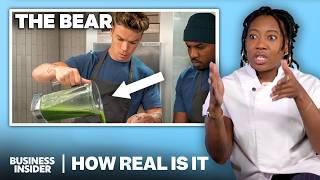

Michelin Chef Reacts to Movie Desserts
45sThe chef's credentials and immediate reactions to iconic movie desserts create instant intrigue and authority.
▶ Play Clip"Delivers exactly what the title promises: a Michelin chef's expert ratings on dessert scenes, with minimal fluff."
Michelin-starred pastry chef Kamari Mick reviews dessert scenes from 19 movies and TV shows, rating them for realism and technique. She provides expert insights into pastry-making, from proper dough handling to the accuracy of plating and flavor combinations.
Kamari Mick, a Michelin-rated pastry chef, introduces herself and the video's premise: judging dessert scenes in TV and movies for realism.
She notes that the characters have been up since 4 a.m. baking, which is realistic for a bakery shift. She comments on the physical strength required, referencing the character's arms and the heavy bags of flour.
She explains the challenges of wood-fired ovens, including maintaining temperature and achieving smoky flavor. She rates the pie scene a 9 for its accuracy.
She criticizes the unrealistic practice of leaving icing in buckets for weeks and the unsanitary habit of leaving spatulas in the icing. She emphasizes that donuts should be yeasted, not cake-based.
She acknowledges the realism of the yelling in kitchens, but notes that times have changed. She rates the scene an 8, but mentions it's why she stopped watching the show.
She finds it unrealistic that only two people work in a huge pastry department. She also points out that the dough is being overworked, which would ruin it.
She explains the process of pre-shaping, bench resting, and final shaping. She comments on plating techniques, noting that some chefs are overly particular about direction, but she prefers efficiency.
She explains that the character is likely working for free as a stage, which is common but exploitative. She rates the scene 8.5.
She finds it unrealistic that recipes are handwritten on note cards; in restaurants, they are typed with clear instructions to avoid human error.
She explains the technique of blanching vegetables to maintain color and defines a gelée as a thin gelatin layer, not a full dessert component.
She criticizes the combination of pineapple, shiso, marzipan, chocolate, and chocolate sauce, saying the flavors don't work together. She rates the dish a 2.
She demonstrates the proper quenelle technique, noting that students should practice with margarine or whipped cream, not ice cream, to avoid waste. She rates the scene a 7.
She appreciates the creativity but finds the dish unrealistic, especially the lack of bread to accompany the mousse. She rates it a 6.3.
She notes the marmalade is too loose and the scoop is not clean. She suggests adding texture and criticizes the caviar as overrated. She rates it a 6.3.
She criticizes the character for patting the dough like 'patty cake', which would deflate it. She also notes that having 12 people to prep is unrealistic; she managed with only two cooks.
She explains that reducing plum wine takes hours and requires attention, not constant standing. She also notes that slicing plums is a quick job.
She questions the use of veal fat in a gelée, as it wouldn't set like sugar syrup. She rates the scene a 5.1.
She explains the proper method: undercooking the cake or using a frozen ganache center. She criticizes the scene's inaccuracy.
She finds it unrealistic to yell at a food critic, as that would be bad for business. She rates the scene a 7.
She appreciates the simplicity of a caramel and lime dessert, but notes that crushing caramel in a towel is inefficient. She rates it a 9 for the home version.
She agrees with Robert De Niro that all muffins should have equal blueberries. She explains the proper method: layering batter and blueberries. She rates the chef's approach a 2, but De Niro's a 10.
She discusses the trend of chefs being put on a pedestal and the discourse around it. She rates the scene a 10 for accuracy in mocking fine dining.
She explains what a broken emulsion is and notes that it's sometimes intentional, as in West African cuisine. She rates the scene a 10.
She finds it unrealistic to make a single cupcake with fondant flowers, as it's time-consuming and overly sweet. She rates it a 4.
She notes that chefs can often identify ingredients by taste, but a good chef would know if a cookie is homemade or manufactured. She rates it a 5.
She criticizes the combination of trifle and shepherd's pie, calling it a 'half and half' that doesn't work. She rates it a 3.7.
She explains that laminating requires butter and dough layers, and adding flour between folds prevents sticking. She rates the scene a 9 for accuracy, except for the shape.
She shares a funny story about juicing oranges and notes that Paddington's method is unrealistic. She rates it a 6.
She explains that beignets are traditionally yeasted and square, and mentions Chef Leah Chase as the inspiration for Princess Tiana. She rates it a 7.
She praises the accuracy of the tempering process in 'Chocolat', noting the importance of crystallization. She rates it a 9.
She explains the technique of crimping the crust and notes that coconut custard is a common family dessert. She rates it a 10.
She praises the accuracy of the peach cobbler scene, noting the batter, peaches, and butter layers. She rates it a 10.
She criticizes processed foods for ruining palates, noting that produce abroad is smaller but more flavorful. She rates the Wonka scene a 4.
She mentions 'The 100-Foot Journey' and 'The Grand Budapest Hotel' as favorites, and shares her career journey from Easy Bake Oven to Michelin-starred restaurants.
Kamari Mick provides an expert and entertaining critique of dessert scenes, balancing technical accuracy with humor. She emphasizes the importance of proper technique and flavor pairing, while also acknowledging the creative liberties taken in film.
What is the proper technique for making a quenelle?
Use a spoon, hold it correctly, and practice with margarine or whipped cream, not ice cream, to avoid waste.
10:05
What is a gelée?
A thin layer of gelatin-set liquid, used as a glaze or topping, not a full dessert.
08:07
What is the proper method for making a molten chocolate lava cake?
Undercook the cake or use a frozen ganache center; the outside cooks fully while the inside stays molten.
16:53
What is a broken emulsion?
When oil and water separate instead of being microscopically blended, often seen in vinaigrettes.
22:09
Why should you not use ice cream for quenelle practice?
It melts and creates unnecessary waste; use margarine or whipped cream instead.
10:33
What is the traditional shape of a beignet?
Square and thick, topped with powdered sugar.
33:25
What is the purpose of tempering chocolate?
To allow sugars to crystallize properly, giving the chocolate a crisp snap and good mouthfeel.
35:18
What is the difference between cake donuts and yeasted donuts?
Yeasted donuts are preferred; cake donuts are not as good.
03:16
What is the proper way to ensure equal blueberries in muffins?
Layer batter and blueberries in each liner, adding more batter and blueberries on top.
20:16
What is the role of a stage in a restaurant?
An unpaid internship where the person gains experience and the restaurant gets free labor.
06:11
Quenelle Technique
Provides a clear, practical tip for practicing quenelles without wasting product.
10:05Molten Cake Method
Explains the proper restaurant method for making molten chocolate cake, debunking common myths.
16:53Broken Emulsion Explained
Clarifies a common culinary term and notes that broken sauces can be intentional in some cuisines.
22:09Chocolate Tempering Importance
Highlights the skill and importance of tempering chocolate, especially without modern technology.
35:18Processed Foods Critique
Offers a chef's perspective on how processed foods affect flavor and palate.
37:42[00:06] when we want to feel fancy, we do a canele. I would never let a student practice with ice cream. Hi, my name is Kamari Mick and I am a Michelin rated pastry chef. Over the last decade or so, I have been honing my skills in fine
[00:22] dining restaurants as a executive pastry chef. Today, we will be looking at dessert scenes in TV and movies and judging how real they are.
[00:38] Did you sleep well? Gorgeous. You hear her say, "Oh, look who's finally up." Because they have been up for since like 4:00 a.m. baking. Um just the two of them. You see how much like they've gotten done. Like they're actually
[00:52] gotten done. Like they're actually towards the end of their shift. tricks. We little flips and little tricks. You see those arms that he had?
[01:04] Yeah, look at those arms. Look at that chest. Bro, he hitting the gym. He's very strong because he he's lifting up 50-lb flowers of bag. Like we're 50-lb flowers of bag. Like we're two trays by a bread. Listen.
[01:17] >> We we got we got some sleeper builds, okay? Like we're strong. You have to have body. You know, some people got a little sleeper build. He's drawn perfectly. But it's such a big job to build a fire.
[01:36] times. They're tricky. You know, you have to kind of like build the fire, maintain the fire, and then use the oven. And a lot of times, wood fire ovens never actually cool down. So, just maintaining the the temp is you need
[01:51] that know-how. When you cook with a wood fire oven, you obviously get that smokiness. You get that nice dark rustic color. So to flavor-wise you can wood-fired. Is the pie Is it ready? It seems
[02:06] Is the pie Is it ready? It seems fine. But it looks absolutely delightful. It did look a little dark on the edges, but c'est la vie. Um maybe that's exactly how she wanted it a little bit more bien
[02:19] cuit. That's fine. I would rate it a nine. I would rate it a nine. Like it it's pretty spot on. I love I'm going to go home and watch this.
[02:38] they're not going to roll through all of that icing one day, right? So that icing sitting in buckets for weeks. I understand it's like sugar and like maybe shortening and butter, so it's not like real, but that is that is gross.
[02:50] And also like why are your spatulas just sitting in there? I I don't even know. I'm I'm just at a loss for words for this.
[03:02] when you go to make something especially like a donut, they're donuts. to look. I did it. I figured out what I was doing wrong. You know, I was trying been yeast all along. This is totally real.
[03:16] Ish. For soft cake donuts aren't that great. Feel free to at me. Um so you should always be making a yeasted donut though. And the fact that he didn't know the difference between that, I just I never loved his portrayal as a pastry
[03:30] chef for real for real. Um he made us seem like we're out of touch. Why are you WITH ME? WHY ARE YOU WITH ME, HUH? GET THE BACK TO WORK. OH MY GOD. OKAY. I understand Carmy's frustration
[03:44] because the rest of the kitchen's in the that obviously. I've been yelled at like that. I've been like berated in front of people. There's definitely a a change in the times now, like you don't yell at
[04:00] episode, um, and the reason why I stopped watching the show. Uh, no offense. I would say like an eight. I'm Luca. Pastry. Start 5:00 a.m. Your section's at the end of the bench. They're the
[04:13] only two there, which is like a little mind-boggling because even if they're only in the pastry department, that's a huge pastry department for only two people. I've never had that much space, ever.
[04:25] 200 and 25 g, chef? Correct. Look at the amount of dough that they have to cut. They should be working faster. You got to move cuz honestly, that's not the only dough that they're probably making. They have other
[04:37] stuff to do, and that's a lot of flour. Like, I don't know what type of dough it is, but it definitely looks like they're touching it too much, and that will deflate the dough, and it'll just ruin it. So, you see how like wrinkly that
[04:50] that means it's going to affect the final loaf itself. Uh, London. You're from Chicago? He is putting folds into it, so it looks like it's doing like a pre-shape. They will pre-shape,
[05:03] bench rest, and then you're going to do your final shape. So, that's 6:00, that's always facing the guest.
[05:15] 12, 6. So, you always plate 6:00, you always plate as you would as the guest always plate as you would as the guest gets. makes sticking it in there, you know? He's a good teacher. He has a lot of
[05:30] patience for seeing them plate up like this, which honestly looks like a liver pâté with like caviar or something. And then the sliced hazelnuts, tweezing
[05:42] little finite details like that, super fine dining, Michelin-rated, if you will, and just like tucking it into the side. Yeah, some chefs get super anal about the directions of things and because like that they have a vision and
[05:57] that's what the vision is. For me, I've let go of a lot of that because it doesn't affect anything and now you're just slowing down the plating. Make it just slowing down the plating. Make it pretty, but don't make it so particular.
[06:11] Just be confident about it. Don't second-guess yourself. This is probably just a stage in which he is working for free and you know, it's beneficial for him because he gets experience and gets to see all of these,
[06:26] for the restaurant because they get free labor, unfortunately. I would give it like a eight, again, a nine, an eight, an 8.5.
[06:39] right? Yes, chef. he goes to look up how to make it, which I've done that before. I've told a chef,
[06:51] yes, and I was just like, um, let me just go check my reservoir of notes. So, cuz you want to impress your chef, of course.
[07:03] Recipe. Thank you, chef. But then he slides him note cards, right? That is weird, in my opinion, because in a restaurant you're not going to have handwritten recipes. They're
[07:18] going to be typed up with clear instructions, so there's no room for interpretation. We, as humans, human error is very common. You have clear instruction, clear recipes for every item in the house.
[07:41] anything that is vibrant and green and you want to cook so eat that you do it with string beans, you could do it with basil broccoli. You blanch it in hot basil broccoli. You blanch it in hot salty water and then you shock it in ice
[07:53] water and that just helps keep the vibrancy of the color. Any two ladles of that into that and just bloom the gelatin. Shiso.
[08:07] Shiso gelee. A gelee is normally a thin veil of gelatin a jello set or a gelatin set liquid. So it could be like the pineapple juice that he was saying or like, you know, the shiso, but normally it's a nice thin layer and that
[08:21] can act as a glaze or a topping, but not like a full that's not the full dessert.
[08:38] >> Did you guys see the way it was wobbling? That was like the 1950s jello craze, you know, they would put jello in Yeah, that was that and then like the little sh-
[08:51] >> of chocolate sauce. First off, the flavors don't really make sense. We have pineapple jello. We have a shiso jello, which shiso, for those who don't know taste, is like a cousin of the mint. So marzipan, shiso,
[09:06] chocolate, pineapple. I mean, they yes, you yes. >> [laughter] >> Plus chocolate sauce. None of these flavors are really working together for me.
[09:24] minty snack as well. Minty Snickers. Snickers bars? There was not enough chocolate to get that connection. Um I disagree with everything that they did in this. There's also no texture for
[09:37] the plate, like like you have a sauce and then you have a jello that's and then you have a jello that's spongy or mushy. And then like that thin crisp on top, like that just doesn't that's not wet in my whistle.
[09:50] At all. I would rate this like a two. Because of, you know, the plating, the Because of, you know, the plating, the jello, the inaccuracy of the recipes, I jello, the inaccuracy of the recipes, I think this is more like a two.
[10:05] Away. Back. Typically for pastry, when we want to feel fancy, we do a quenelle. And it's
[10:19] one-handed and there's multiple ways you can do it. What's really, really hard is like one just getting the motion. It takes time, it takes practice. I would never let a student practice with ice cream. You let them practice with
[10:33] margarine or whipped cream, but not ice cream because that's your product. The with the ice cream, um it's going to melt and then it's you just have unnecessary waste. There's great color on that. Um
[10:48] going to be. I'm not too hot, too cold. water. You can use warm water. I like to use like more like tepid room temp. He did this to warm the spoon to release it
[11:03] from the side. Um if you're good, you don't have to do that. Warm again Try again. No, again, chef. The way he's holding the spoon right there, he's like kind of like pinching at it. So, I always hold
[11:17] like this and then you're going to go. And then like that. I rate this one around a seven. It is pretty accurate. >> about cannolis and and more specifically, um
[11:30] mousse. Parmesan [snorts] in a shell. Dipped in pistachio. see it in the kitchen. I like to actually encourage it in the kitchen because one, I have, you know, a a ton of knowledge, obviously, and I want to
[11:43] pass that on to my sous chefs and my cooks, and I want them to exercise the creative side of it. It builds great morale, and that is a great way to morale, and that is a great way to connect with your your younger cooks and
[11:57] help them start to think about how to build flavor profiles together and how to build a cohesive plate. This is a special savory dish. >> Wait 1 second. This one is Shell looks gorgeous. This
[12:14] it's nice and crispy. Looks like they use very use very beautiful Bronte pistachios. Uh like gorgeous Sicilian pistachios. Okay, there's the good feedback. The
[12:27] there's the good feedback. The mortadella filling, pistachio, yum. Parmesan, okay. Trout row? I mean, that's not even like the good stuff, either. And then whatever what the black stuff is underneath, and then to finish
[12:40] it off, you pour olive oil on the plate. Uh that's unrealistic. No. It's like a little bit big for such a savory bite without bread. Like something to spread it on. I only say that because
[12:55] essentially cream, I would imagine. And then like eat it and you get the crisp, you get the cream. That's fun and all for desserts, but have you ever eaten
[13:07] like a ton of like chicken liver mousse or something? It without any substance. It tastes good, but it you're not going to feel good afterwards. Um I don't like I'm not liking it.
[13:21] That's nice, chef. Copenhagen Sunday. The marmalade [screaming] looks a little loose. The scoop is not clean. So, like, you know, they're shooting to be a fine dining restaurant. So, if you're going to do a sphere,
[13:35] know, like, it's not going to be rough. It's not going to have this like little lip on the end. Um you want to clean that up a little bit. The color looks good. And then, the caviar doesn't excite me. Caviar doesn't excite
[13:48] me anymore. I think it's a little bit overrated, but c'est la vie. It's not my dessert menu. I think it could use a little bit of texture. If it's a sundae, I want some crunch. I want some cake. Put a little olive oil and Maldon salt
[14:00] >> [snorts] >> Sydney's donut parentheses after corn Yo, homie and his donuts. yeasted donuts and the cake donuts? There's technically another donut, too,
[14:15] that you can have, which is more zeppole style or sonhos, which is like the Portuguese ones, where it's more like a patachou. And that's what that one looks like. It looks like it's a patachou style of a donut, rather. Which is cute.
[14:30] It's cute. They're a little bit more like um custardy in the center. I would like um custardy in the center. I would rate this scene about a 6.3. And the star, like, some of this stuff needs to be like tightened up a little bit.
[14:46] Oh. What is he doing? I'm sorry to stop so early, but he's literally just patting the dough. He's literally just like the dough. He's literally just like patty cake, patty cake, baker's bat.
[14:58] >> Like, literally. I'm sorry. Continue. 12 people to prep that? No, that should know how I'm multitasking this show. I swear. The more chefs in the pot, the
[15:12] something up. At Masque Restaurant, I only had two cooks, one production cook and one plating. it. That's it. There's uh plum wine, and you cook it until it becomes a syrup. You know, it takes hours. Two
[15:26] shifts, two different people just watching them. To reduce plum wine, pot and then you keep an eye on it. You're not just going to stand there all day and watch it. Your chef would yell at you. And then, yeah, you're going to
[15:40] mandolin and slice the plums, compress them. That is like a 10-minute job. I've had cooks do that right before service. And then, I don't I don't know. This plate doesn't look that cute. They could did a little bit better. At this place,
[15:56] the chef wanted the gelee to be like the consistency of Haribo gummy bears, which talking to gelee. I wouldn't call it a gelee. I would just call it like a candy at that point. Like, you literally want the texture of a of a gummy bear.
[16:10] every minute of like a year trying to figure it out. So, how did he do it? What? Veal fat. And gelee's when it's cold. I I just don't see veal fat setting the same way as cooking a sugar syrup.
[16:27] You're going to cook the the candy or the sugar syrup to a certain in your flavorant and then you're going to add in gelatin. And then, that is going to give it its chewy texture and that's how I would make a gummy bear.
[16:40] They're talking about doing something else and then incorporating veal fat. If you guys had the recipe, I would look at it and I I I could tell you more, but I I don't think that this is accurate. I'm going to rate it like a 5.1. Chocolate
[16:53] chocolate cake. That's not what makes the center molten. You take a frozen THE ramekin so that as the outside cooks fully, THE INSIDE BECOMES MOLTEN. WELL, there's actually multiple ways to make a molten chocolate lava cake. You can put
[17:08] puck of ganache in the center. That's kind of like the cheating way. But, the kind of like the cheating way. But, the old school way was that it is undercooked. It is undercooked. You actually make more like a ganache base,
[17:23] put your yolks into it, beat egg whites, fold in into it, and then bake it at a time. So, it creates a crust on the outside, and then the the center stays molten. That is how you make it in a proper restaurant setting. It's
[17:39] molten, see? It's molten, you It's cool. Yelling at a critic. I've never had to do that. >> [laughter] they're a food critic, you know? Come with me when I go and try this $100
[17:56] meal. Like shut up. And what we start to see now in a lot of photography, to not destroy the dining know, sometimes it's just like just come and eat. Just eat. Just eat food and get
[18:11] and eat. Just eat. Just eat food and get out. favorite. Cleaned it, tossed it in like some lime zest. If you're highlighting
[18:26] something that's properly in season, like I wouldn't serve this, but like of eat. I think it's a little weird that he like made the caramel, crushed it in a towel. I mean, yes, it works, but why not just
[18:40] put it in a Robo Coupe? A kitchen towel, like all the sugar is going to get like stuck in the crevices of the linen. And then, you know, you might have like a little bit of cross-contamination between like serving. But, this is a
[18:52] between like serving. But, this is a very simple, light, summery dessert that very simple, light, summery dessert that I would enjoy with a glass of wine. We do stupid like that all the time. Yeah, I've done that before where at
[19:08] home, when I'm cooking for myself, nobody's around, I do like stupid chef things like that, and then I just like hit it at the end. For the restaurant scene, I would give it like a seven, but for this, I would give it like a nine.
[19:22] nine. There was not one single thing I will not catch. didn't know he was that tall when he was younger. Look at yours. Look at that. Look at Look at this. This is nothing.
[19:35] Absolutely. If I saw if we both ordered blueberry muffins and he had 10 times more blueberries, I'm complaining. I'm sending that muffin back. I need a new Every blueberry muffin should look alike. I shouldn't order a blueberry
[19:47] Can you imagine getting a chocolate chip cookie and you have one chocolate chip in it? I would be vexed. I would be so upset. I want you to put an equal amount Do you know how long that's going to take? I don't care how long it takes.
[20:02] Put an equal amount in each muffin. I agree with Robert De Niro. Him and his foreign ass. Like he is right. And the chef is wrong. It's not going to take blueberries and specifically so
[20:16] blueberry, chocolate chip, cherry muffins, like you're going to do it the same way when you're doing like mix-ins. So, you have a plain base, nothing mixed into it. You have all your liners, you're going to scoop
[20:30] your batter, you add your bloobs, you scoop more batter, you add more bloobs. to sink in a little bit and they're going to the batter's going to bake above. And so, that means you have an equal amount of bloobs and you're going
[20:43] to have a beautiful muffin. Boom. Everybody has the same fancy, a little a little crumble, a little streusel on top. That chef is little streusel on top. That chef is wrong.
[20:58] I wish I could get up and get closer. They're all the same batch and they all don't look alike. You see the mixer? They have two 60-quart mixers. This is a gorgeous kitchen. They They could do it. They could make it happen. It should be
[21:12] maybe a 2-hour project. Cuz once you know your measurements, it's an assembly line. And if you're working as such, then you're going to work faster. From the chef's point of view, a two. From Robert De Niro's point of view, 10. But
[21:26] you, my dear guests, are not the common man. And so tonight, >> [music] >> No, this is such a funny movie. No bread. I I tried to do it after. I was like, "Guys, I could I could stop
[21:42] >> [laughter] >> I think this is something that we see in fine dining all the time where it's like, "Oh, the chef was this. The chef was wants to do this." There's There's this whole discourse that we as an
[21:55] industry and as a society have put chefs on a pedestal too high and like treat ridiculous. You're trying to say something without saying anything. This something without saying anything. This emulsion does look slightly split.
[22:09] You really shouldn't see that in a restaurant of this quality. There it is. Well, there it is. A broken emulsion is like take a vinaigrette. Oil and water never want to mix. So, when you see oil droplets on top of water, that's them
[22:22] droplets on top of water, that's them not mixing. When you um blend it together and emulsify it, you are microscopically blending the oil and the water together in which creates a more viscous liquid and it is now like shiny
[22:38] and it's homogeneous. If the ratios are off or if you didn't blend it well enough or whatever it sits and it separates, that is a broken emulsion. And then sometimes what we are starting to see now in a
[22:52] trend that I love is broken sauces on purpose because sometimes it's that's the way it's meant to be eaten. You see it a lot in like West African cuisine where there's like a lot of red palm oil on top and that's that's on purpose and
[23:06] it's beautiful in itself and then it's really fun to look at. He's trying to entire meal is going to be. You won't know until the end. You like this. Mhm. basically insulting you. Mhm. No, no, no. You don't get I weave
[23:20] in stories for myself and like little Easter eggs, but does it ever get there's an interest, but not necessarily all the time. Um I mean look, the food's conceptual stuff, but could we please get a little bread you know and some
[23:34] gluten-free for my friend as well? No. I hate diners like that. You eat what I >> [laughter] >> When you're paying for experiences like could be we will treat you like a king and we'll get you whatever you want.
[23:47] Like EMP like they say like if you don't like something we'll we'll make you you want. And then there's other places that are like you eat what I give you and honestly, if you're in for the storytelling like homeboy Tyler is, you
[24:01] like will go along for the ride and go along for the journey because at that point and at that level the chef is the artist and they're painting you a landscape and you know, tell trying to tell a story, which is fine. But I also
[24:14] don't want to leave and go have to eat a hot dog. All right? Like there are times to tell a story and then there's times to like let's also eat. Like there there needs to be a finite balance between it. 10 out of 10
[24:27] accuracy for how ridiculous fine dining can be and like making fun of it in a can be and like making fun of it in a punchy way.
[24:41] make a singular cupcake, you have way too much time on your hands. Recipe-wise, I don't think it's possible. You need like an eighth of an possible. You need like an eighth of an egg.
[25:02] paste, fondant, it's a lot of confectioner's sugar. It's very, very, very sweet. Um and then when it dries, you can manipulate it into petals. And
[25:14] then what she did there was like take probably vodka because it's clear and dries and it's edible. And then mixed it with some water coloring so she can with some water coloring so she can paint it on. And then she like piped the
[25:27] grass with probably a buttercream and then stuck in the petals. Honestly, that is a sugar bomb. Like it's so sweet. Anytime I see fondant on a a cake, I
[25:39] peel it off. It It's just like a Band-Aid of sugar. Like you don't you don't want to eat it. I've never made something so detailed for myself to just like eat. No chef is going to do that. Like we stand over trash cans and eat.
[25:55] Like we stand over trash cans and eat. Like we're freaking raccoons, okay? even eating it. I've worked with gum paste and fondant
[26:10] in in college. I think this is also a trend that has gone out of season. Or like even molding we switched to like molding chocolate rather than gum paste and fondant. But there's still some really, really talented people who do
[26:24] the fondant if you want fondant and gum paste flowers. I rate this a four just for the sole fact you're not making a single cupcake. I I made a batch and I froze it and this is the only one left. Wait, I think I can figure out the
[26:37] recipe from this cookie. From taste? Yes, a lot of people can do that. Chefs try to recreate it. It's definitely a skill that you can build up over time. Uh maybe these will taste like your grandmother's. This has a little bit of
[26:53] orange peel, but no nutmeg. Also, who's putting nutmeg in a chocolate chip chocolate chip cookie? Just let a chocolate chip cookie be. Is this the chocolate chip cookie be. Is this the recipe?
[27:07] Honestly, a good chef should have been able to tell that it's not a able to tell that it's not a true homemade recipe, you know, like there is some manufacturing behind it. I would give this a five. What is it? It's
[27:21] a trifle. It's got all of these layers. It's more ladyfingers than beef sauteed and then I just put some whipped cream on top. The English don't know how to cook. English trifle, yes. Multiple layers,
[27:34] necessarily need to be ladyfinger. It could be like a cake. It's layers, and then um topped with whatever you want. The fact that she put meat in it
[27:46] I listen, I've done savory stuff in desserts, but nothing like this. The pages are stuck together. She made half an English trifle and half a shepherd's pie. No, no, I have common sense. I'm sure
[28:01] it's happened where I'm like actually making something and you're like, this feels wrong, and then I just go back to the drawing board real quick. the drawing board real quick. >> [laughter]
[28:18] [gasps] >> Tell her the truth. And then also just standing by letting her ruin it, like y'all not really friends. I like it. >> [laughter] >> Custard good. Jam good. Meat good.
[28:32] When I'm looking to pair flavors together, you kind of think in the mind of like what grows together goes together. If they're in the same season, they grow together. When you think about all citrus kind of works together, and
[28:45] that's all winter. 3.7. I would rate this a 3.7.
[29:02] Laminating is having the butter and your dough and creating those fine layers within it, so you have those flaky crust. You need the dough to stick to one another. So, the fact that they're putting flour in between the folds just
[29:18] makes it not want to stick to each other. Also, I didn't see them put butter. Maybe they just did it for TV magic. Everybody knows a croissant needs magic. Everybody knows a croissant needs butter.
[29:37] days, but they skipped the whole dough making part. So, you could laminate and shape and bake in one day. You could, but you're rushing the dough, but it still wouldn't have been this like 4-minute montage.
[30:02] croissants. So, just no. But, everything up to that was pretty right. Like, the measuring, the cutting. It was just as soon as I saw her like cut the no, no." The proper shape is going to be like you're going to cut it into a
[30:16] rectangle at the top, one at the top, and then like roll them together, and then you have like the scroll. Let's take time out of the factor because it is a movie. For the accuracy, I would give it a nine. It's pretty accurate.
[30:29] The only thing is the the shape of the chocolate croissant. What is this? It's a marmalade sandwich. Is the Baron yourself a fine pair of orange squeezers.
[30:42] squeezers. Orange squeezers? So, quick funny story. I worked in N Tuckey for two seasons. And there's this like big burly guy comes down and he's like
[30:56] Kamati, do you need to help? I'm like, sure, you know, can you juice these oranges? I give him like all of the oranges and he like goes around the corner to the prep table where he was and he is taking the
[31:10] oranges like this and like juicing them like this. And he's just like so strong and I am like so astonished and my chef comes at for not showing him how to juice oranges cuz I'm like, I didn't know that
[31:25] homie fought bears in Bulgaria and is now juicing oranges like this. Anyways, that's not how you juice oranges. You would get the machine, choo choo, and just, you know, go ahead and juice. Good.
[31:39] Not at all. Lovely. It's really cute that Mr. Paddington is sniffing the oranges to see which one's right. He's just being specific because this is his recipe. And you know what? I'll take it, Mr.
[31:53] Paddington. I'll take it. But for me, if we're just going to make a batch of most ripe. You just want them to be into one and you find that it's like pithy, I wouldn't use it, you know, just
[32:07] don't use those. Paddington, how did you learn to use a Paddington, how did you learn to use a knife like that? You don't want to know. ahead, go off, king. Like it's good it's good. Like chop chop chop chop. It was
[32:22] the fling that's a no-no. Don't fling your product off onto the ground. Like you can't use it anymore. Aim again.
[32:36] Bro, get a bigger pot. You don't want it to ever go to the top and overflow the cuz you have to clean up that mess afterwards. Copper is a wonderful conductor. So, it transfers heat the fastest out of like steel, stainless
[32:51] steel, whatever type of other pan there is. If you can't afford a full copper pot, they do sell copper bottoms and that just really helps like conduct the heat a little bit better. Cooking marmalade in it is a it's it's smart.
[33:05] smart. Other than the CGI bear, I would give this a six. This is cute. Or make a smaller batch. >> [laughter]
[33:25] So, beignets famous in New Orleans are a fluffy donut essentially. So, it's a fried dough. There's several ways that you can make them. You can do like we were talking about the pate a choux way or it's
[33:37] mostly common the yeasted way. They are traditionally yeasted way. They are traditionally served square and nice thick and topped with a ton of powdered sugar. Delicious. She put honey and powdered sugar, which
[33:51] is also delicious, too. It's definitely not the standard. you're going to spin something and then type do a bunch of powder.
[34:03] It's not really going to get on where you want it to get on. So, you know, I would just keep the tray still and just like hit it here, hit it here, hit it like a little >> [gasps]
[34:16] Princess Tiana was based on Chef Leah Chase? The fact of her job and everything, not the fact of her turning into a frog. Yeah, Chef Leah Chase of Dooky Chase in New Orleans. This is a beautiful story and iconic to the
[34:32] African American South culinary history. Serving her famous beignets, her her man-catching beignets. I would rate it a seven, even though I I would rate it a seven, even though I love Tiana.
[34:49] >> Old school. Very, very, very old school. Everything is super accurate. It looks like she's making her own chocolate, which I have making her own chocolate, which I have never done, but I know from watching how
[35:01] they do it in Mexico that is that is an accurate starting point. with an offset spatula. She's tempering the chocolate. In that act, she is
[35:18] allowing the sugars to crystallize and allow the chocolate to crystallize and allow the chocolate to set in a way where the snap and crack of what you know of normal chocolate to be. That initial crystallization is
[35:34] very, very important to having a proper tasting mouthfeel of a chocolate. A lot of things could go wrong with tempering, and it's it's a very tricky tricky thing to hone down on, but like to do that without the technology that we have
[35:48] today is, you know, it's super impressive, and it's skills that are unfortunately lost due to the advances of technology.
[36:01] that tempering act in order to set in that molds. And if it sets with a nice crisp and a crack, then you're going to be able to have a beautiful fish that or whatever you put your mold in like she has. I would rate it a nine. I love this
[36:15] movie. I think it's cute. We actually watched this in culinary school a few watched this in culinary school a few times because of its accuracy.
[36:29] setting it on the edge and creating a just like a cute design in which when you do put the filling in, you can have that little lip which has like more that little lip which has like more crust and keeps the um filling in. So,
[36:43] like a coconut custard which is quite delicious. Uh and very very common in my household, too. Yeah, the coconut custard is very simple. A lot of times you parbake a pie shell, but for that you actually don't
[36:57] need to because it's such a liquidy state that you you need that whole state that you you need that whole baking time.
[37:13] classic. Southern classic. You do the batter on the bottom. You do your peaches and then you do more butter on top which they did. You could also do like a crumble. This is a really well-done movie. Cooking in the kitchen
[37:26] with my family like that is exactly how I got into the industry. That little >> [laughter] >> You know, soul food, some collard greens, some candied yams, cornbread. 10. 10s across the boards. 10.
[37:42] 10. 10s across the boards. 10. Darling, 10. Benito. Process anything is is no good. I think processed foods are ruining our
[37:56] palate, especially in America. Like our fruit, our vegetables don't actually taste. Like if you go abroad, you get some really good like just basic stuff. Honestly, everything's much smaller, they're much the flavors are much more
[38:09] concentrated, that they're better. Like the food that we have here is like large and flavorless. This little piece of gum is a three-course dinner. It's tomato is a three-course dinner. It's tomato soup, roast beef and a baked potato, pie
[38:22] BLUEBERRY PIE I'VE EVER TASTED. Three-course meal candy. I mean, it would be cool in theory. I I I don't know how that is actually
[38:34] possible. Wonka was a madman. He kidnapped children and I I swear they're all candies now. They're all dead in the factory. I would rate this like a four. A 100-Foot Journey is my definitely my favorite food movie. Like
[38:50] like a little romance, a little food. You have this young Indian gentleman You have this young Indian gentleman coming to the hills of France and like learning how to cook. I love Grand Budapest. The dessert scene where he's
[39:05] that's really pretty. And then one of my one friends recreated it, too, which was like gorgeous. When I was seven, my parents got me an Easy Bake Oven and I used it until the light blew out. And
[39:18] so, from there, I went to culinary school. Then I bounced around from Nantucket and Paris, and then I came to New York. Started at DB Bistro, Daniel Boulud's Bistro. Worked at Le Bernardin and
[39:32] Thomas Keller's Tack Room. Pandemic hit, started selling donuts through my Instagram, and then it actually landed me a job at Musket Room. And then we're now opening L'Atelier de Joël Robuchon, which is going to be amazing. Thanks for
[39:46] watching. If you like this video, why not check out another one right here.



⚡ Saved you 0h 39m reading this? Transcribe any YouTube video for free — no signup needed.