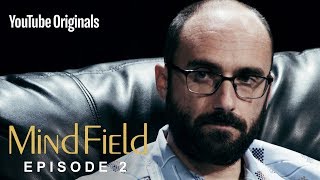

Why doing good makes you do bad
43sReveals the counterintuitive psychological phenomenon that good deeds can license bad behavior.
▶ Play Clip"The title accurately reflects the content; the video thoroughly demonstrates moral licensing through experiments."
This video explores the psychological phenomenon of moral licensing, where performing a good deed subconsciously gives individuals permission to act less morally afterward. Through two field experiments, the researchers demonstrate how people who engage in a virtuous act are less likely to help or more likely to let others take the blame for wrongdoing.
Moral licensing is the theory that when you do something good, you subconsciously feel you've earned a license to then do something bad.
Researchers set up a fake PSA shoot where participants are asked to help pick up trash, creating a good deed. Then a homeless confederate asks for money to see if those who helped are less likely to donate.
Makaylo helped pick up trash, then when asked for money by the homeless man, he claimed he only had $20 bills and did not give any, illustrating moral licensing.
Alex did not help pick up trash, but when asked for money, he gave a dollar. This shows the opposite pattern: without a prior good deed, he felt compelled to give.
Derek agreed to help but didn't actually do it, yet he still felt he had done a good deed and gave only a dollar to the homeless man, demonstrating how people can rationalize moral credit.
Diana both helped clean and gave money to the homeless man, showing that moral licensing is not universal; some people act consistently morally.
A more extreme experiment where participants are given money and asked to donate to charity, then they are placed in a scenario where a thief steals VR equipment and a child is blamed. The test is whether they will confess or let the child take the fall.
Kimberly donated $1 (thinking it was $100), then let a thief in and did not confess, letting the 12-year-old Noah take the blame. This suggests moral licensing may have influenced her.
Zeus donated $5 (thinking it was $500), but when the theft occurred, he confessed immediately, showing that even with a large donation, he did not engage in moral licensing.
Michael did not donate, but when the theft happened, he confessed and took responsibility, demonstrating that moral licensing is not deterministic.
The video concludes that people are sensitive to recent actions and that moral behavior is influenced by context. The key lesson is to be aware of how our actions affect our moral choices.
Moral licensing is a powerful subconscious force that can lead people to act less morally after doing good deeds. The experiments show that awareness of this bias can help us make more consistent ethical decisions.
What is moral licensing?
The theory that when you do something good, you subconsciously feel you've earned a license to then do something bad.
00:38
In the first experiment, what did Makaylo do after helping pick up trash?
He claimed he only had $20 bills and did not give any money to the homeless man.
05:13
What did Alex do in the first experiment?
He did not help pick up trash but gave a dollar to the homeless man.
07:11
How did Derek rationalize not helping but still feeling moral?
He agreed to help and recorded a video, so he felt he had done a good deed even though he didn't actually pick up trash.
08:36
What was the second experiment designed to test?
Whether people who donated money would let an innocent child take the blame for a theft they enabled.
13:59
How much did Kimberly donate, and what did she think it was worth?
She donated $1, but thought it was $100.
16:08
Did Kimberly confess to letting the thief in?
No, she did not confess and let Noah take the blame.
19:52
What did Zeus do after the theft?
He confessed immediately that he let the thief in.
22:33
What did Michael (the participant) do?
He did not donate but confessed to letting the thief in.
24:17
What is the number-one lesson from the experiments?
To remind ourselves how sensitive all of us are to our recent actions, and that our moral choices are influenced by context.
26:49
Definition of Moral Licensing
Core concept of the video, clearly defined.
00:38Makaylo's Moral Licensing
Clear example of moral licensing in action.
05:13Second Experiment Setup
Shows a more extreme test of moral licensing.
13:59Key Lesson
Summarizes the main takeaway about human behavior.
26:49[00:09] Moral psychology isn't always an easy thing to study. to ask people what they think is moral doesn't always reveal what they would do in real life.
[00:22] in what feels like a real scenario but researchers must always balance the benefits with the safety and well-being of the people they study.
[00:38] doesn't always make humans look good. For example, today we're going to look at moral licensing: the theory that when you do something good...
[00:52] you subconsciously feel you've earned a license to then do something bad.
[01:21] from the Department of Logic and Philosophy of Science on a way to observe moral licensing in the wild. I want to see people who have been led to believe,
[01:37] Use that feeling it's like people are keeping tabs, But none of that is happening consciously, right?
[01:54] in moral licensing is asking themselves in their head... But it is going on, and they don't experience it. I think we're going to learn a lot today.
[02:08] Let's do it. we designed is going to work.
[02:20] and, for the purposes of science, Next, we've hired some unsuspecting actors about the park.
[02:33] Once they've arrived, it will be obvious that the trash is a problem. Will they do a good deed and earn some moral credit
[02:47] And to make everything feel more real, Forget the concrete and the heat. Of outdoor space that can't be beat.
[03:02] Right outside your door. each participant will be asked to wait in a separate area There, our confederate Cameron, who appears to be homeless,
[03:16] Meanwhile, Dr. Stanford and I will be watching behind the scenes to observe how our subjects react. keep their subconscious moral scorecards balanced
[03:28] or feeling like they don't need to give money if they did?
[03:42] First up in our demo was Makaylo. as the crew of the fake PSA We normally sort of never ask this, but...
[03:58] I'm going to grab some gloves. I was wondering, All three of us can triple-team it. Yeah, this is just what we wanted to do today.
[04:12] How do you think that's currently sitting He's thinking of himself as having done a good deed Right? And so the moral credit is high.
[04:26] [man] Take it away. Relax in 16,000 square feet. -Hey, thanks so much. -Cool. No problem, man.
[04:39] so they would have plenty to give the homeless man, Then we asked them to wait in a nearby tent
[04:51] Will Makaylo's good deed be enough moral credit All right, Cameron, this is Michael. You can go ahead.
[05:13] -What's up? -Hi. Yeah, I'm just waiting for someone to help me out here. Just, I can go to the vending machine?
[05:25] Oh, I got nothing but $20 bills. -You sure? -Yeah, man. [Michael] We're going to go talk to him.
[05:43] -This is Kyle. -Nice to meet you. We really appreciate your help today. -For a dollar bill. -[Michael] Oh, for a dollar bill?
[05:56] -No. -What'd you tell him? So I'm going to debrief you on what we're doing here today.
[06:08] on what's called moral licensing. who do volunteer to help pick up the trash,
[06:20] to a homeless person who walks by. Now, you just exhibited the exact pattern In that you had already done a good deed--
[06:32] moral licensing in effect? Let's see what our other subjects do. Is there anybody that can help us clean up this?
[06:44] Okay, so this is Alex. And Alex is just messing with his stuff. But all of that is just fine.
[06:57] [Michael] So Alex didn't help pick up trash. and therefore motivate him to give money to the homeless man?
[07:11] Can you spare some money? Maybe help me out? [Cameron] That's more than cool, man. Helping to shoot a PSA, yeah.
[07:24] -Thank you. -All right, take care. I do wonder if he felt a little bit of guilt. I'm very happy about this.
[07:38] So I'm on set doing a PSA shoot. that someone had a... what could only be described
[07:50] I mean, they just threw trash literally everywhere, So I'm going to go help them pick up some of the trash. I would also like to point out, though, that he has not helped.
[08:07] And I wonder, when it comes to moral licensing, I can check the box. Not only am I good, [Michael] I love this.
[08:21] I love that he got credit for helping, is how that'll look to him, or seeing himself as kind of skated on the obligation,
[08:36] Hey, do you think you could spare some money, Here, man. Here's a dollar. All right, you're a good man. Thank you.
[08:50] because you agreed to help, and then you recorded a video but by the time all that was over, -Right. -So we were wondering,
[09:05] No. I didn't have time to. Like, ooh, I kind of like got out of helping. I would have definitely picked up trash.
[09:20] Yeah. I'm sorry, I don't have anything on me here. -Oh. -Yeah.
[09:32] good illustrations in both directions. at play in several cases. our results weren't always cut-and-dry.
[09:45] Gotcha. Yeah, yeah. Some of the participants both didn't help clean Could you maybe spare some change?
[09:57] However, they did find other ways to help hiim They have snacks, maybe. Do you want a soda or something?
[10:12] Yeah, that'd be... -I don't, sorry. But... -Okay. ...which one do you want?
[10:24] some of the cash that we know you had You know, there's just like a whole bunch of stereotypes And you don't know what you're getting into.
[10:38] who both volunteered to clean and gave money. If you wouldn't mind, that'd be really helpful. -Do you need any help? -Oh, would you mind?
[10:51] These were the only two participants -[man] Thank you so much for the help. -[Diana] Of course. -Thanks a lot. -Best of luck.
[11:05] [Michael] All right, let's go talk to her. What motivated you to give the man money? I don't know if that's the best thing.
[11:19] So two people both cleaned and donated money. or didn't clean, but gave in some form.
[11:33] Well, it was really interesting. I would like to do it with many more people. We saw the thing happen. is sort of the gap between what people did
[11:50] -Yeah. -Right? And that's something-- to be very suspicious of people's rationales But these actually fit kind of nicely.
[12:03] if they didn't do a good deed that was open to them. "Well, of course, that's what anyone would do" attitude.
[12:15] successfully created the conditions towards taking this kind of study But, of course, many people already have a philosophy
[12:30] than the impact of a good deed they do. Now, here's what I want to do next, okay? and I think one of them is that when the scenarios
[12:43] are scenarios they may have experienced before, If someone did or did not give money to a homeless person, "Well, I never do," or "I always do."
[12:58] that we haven't created a philosophy allowing someone else to take the blame Because that seems like a scenario
[13:13] where all of us would say we would never let that happen. But if we build up significant moral license in that person, that none of us would ever want to admit that we would do?
[13:28] I am down indeed. All right, let's do it. to really try and pinpoint moral licensing
[13:42] they'd likely never been in before, A test that might make people behave in a way that could surprise even themselves.
[13:59] is we're going to see if we can get people to do something we're capable of doing: for a crime they committed.
[14:14] Early on in the demonstration or experiment, To really up the value of their moral action, of the money they've made today,
[14:30] So if they donate just a dollar today, We're giving them a chance there to do something morally good like they don't have to step up
[14:45] and keep this innocent child from taking the fall They just think they're coming to test out at the YouTube Space in Los Angeles.
[14:59] a new kind of VR technology. is that everyone else is a hired actor, [laughs]
[15:11] is of the utmost concern, because the doors... you need a key card. [knock]
[15:25] the man they let in will steal some of the VR equipment. Even though the participant let the thief in, and be blamed for what the participant knows
[15:40] -And, Noah, you let him in? -Yeah. [Michael] Putting participants into difficult moral scenarios so we have a psychiatrist on call.
[15:54] Now with all the details in place, it's time to begin. [woman] All right. Head on in. Go ahead and grab a seat.
[16:08] Kimberly gave $1 of her earnings from the study, which means she thinks that she's donated $100. be sure to let someone know.
[16:23] -should be coming back in. -Okay. Gotcha.
[16:35] -[mother] Just stay there. -[Noah] Okay. Noah's mom left the room to go get a coffee. -Oh, nice. -Have you?
[16:51] I'm excited. [both chuckle] So our thief is trying to get in. [knocking persists]
[17:08] Is somebody knocking? -[man] Thank you so much. -Oh, yeah, you're welcome. -Oh, "thank you," "you're welcome." -Awesome.
[17:22] Yeah. Thank you.
[17:36] Okay, I'll have you... who wasn't supposed to be in here? Yeah, I let someone in.
[17:49] Um... Okey-dokey.
[18:06] [door closes] I don't know. We'll get to see the full escalation.
[18:33] [woman] Yeah, I was gone for maybe, like, three minutes, one of the sets is gone. ...the amount of technology.
[18:45] You just opened the door and let someone in? Mm-mm. My heart rate's going.
[18:58] I mean, I didn't know, so... [Kyle] She hasn't decided at this point
[19:10] But she's seeing how it plays out. for Kimberly to come clean, -How old are you, son? -Twelve.
[19:23] stay out of the hallway, give the officers room to come in. because just in case there's something else going on here. Is there something that you saw,
[19:38] I literally just came in, like, five minutes ago, -So... -Okay. There was like a couple guys coming in and out, so...
[19:52] -[Noah] But there were tons of guys coming in and out. -Yeah. Mom, you and the son are going to need to come with me, okay?
[20:06] [Michael] Kimberly was given many chances to tell the truth, letting poor Noah take the blame. One little thing to follow.
[20:20] Can I go? Okay, let's go, Kyle. I'm gonna debrief you on what's been happening here today.
[20:36] I'm Michael Stevens, I'm the host of a psychology program. -in Philosophy and Logic. -Yes. Of course. Yeah.
[20:51] I was, like, let me help out. for letting a person in, about the fact that he was taking
[21:05] I was literally, like, just frozen. I feel so uncomfortable right now. And I assume, like, if somebody actually took anything,
[21:19] they'd be like, hey, you're the one that let the guy in. she may have been displaying moral licensing. and that might have given her the moral credit
[21:31] she's not lying... she's utterly typical, we all do that. in a way to defend whatever behavior they engage in,
[21:45] What I love is that confabulation. [knock on door] ...and subsequently followed the order not to open the door.
[22:04] My boss told me to. Please, guys. He chose to donate $5,
[22:19] for a $500 donation. Did you...
[22:33] who didn't have one of these key cards? Yes. Sorry, I let someone in. Miss, that was me.
[22:47] I thought he worked here. just stay right here, guys. [Michael] Even though Zeus donated money,
[22:59] he confessed. We don't always like what we learn about ourselves. who donated the largest amount
[23:13] and asked to not be included in this episode. who did not donate.
[23:26] hello? Thank you, man.
[23:45] I'm amazed that no one has asked the guy for a badge. This guy just came in. Came in, picked something up, and then he walked out.
[24:00] ...did he have a badge? I let him in. I don't know what happened. his behavior in line with moral licensing.
[24:17] Will Michael stick to the truth? He let the guy in. Yeah, a guy was knocking on the door and he said,
[24:33] And then... Guy was banging on the door, said "his boss..." he takes something, and then he walks out.
[24:49] [security guard] Okay, you opened the door and let him in. Okay. -Why is this kid... -It's very hard to imagine. -[Michael] Obviously. -...a regular person to be in.
[25:04] [Kyle] Trying to figure it out. Yeah. you and your mom are going to need to come with me, because he opened the door,
[25:16] I tell you, just listen. -I promise we're right-- -Mom, come with me. Just keep your hands to yourself and do what I ask you to do.
[25:32] [Michael] We should go in. and admit that you were the one who opened the door? I felt uncomfortable that something was stolen, one.
[25:46] I mean, I needed to step up and be accountable But it was just... didn't quite know what was going on [Michael] Michael's behavior shows us
[25:59] That even when we want to do the right thing, and abandon that sense of morality if, and when, So, Kyle.
[26:15] so many people were willing to let the wrong blame game go. Viewers may well be sitting there But I think the kind of evidence we're gathering
[26:33] to get regular people to do things Another kind of lesson I think we get here is to remind ourselves how sensitive all of us are
[26:49] even if we feel in our heart of hearts That is probably the number-one lesson, who helped us illustrate that, because without the illustrations,
[27:04] Right. we'd never expect ourselves to do.
[27:17] And the choices that you make you are as a person, and more to do with how you've acted recently.
[27:29] but we are imperfect creatures. because we are also curious. And the more we learn about why and how
[27:43] the better we'll be able to tackle difficult questions in the future. thanks for watching.
⚡ Saved you 0h 28m reading this? Transcribe any YouTube video for free — no signup needed.