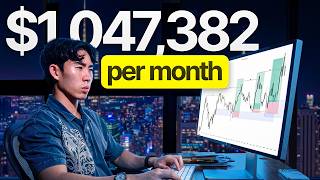

Why Most Traders Fail (It's Not Strategy)
60sControversial claim that consistency comes from habits, not strategy, challenges common beliefs and hooks traders.
▶ Play Clip"Delivers a solid routine breakdown but padded with app promotion and self-congratulation; title oversells 'millionaire' status."
This video presents the daily trading routine of a professional trader, emphasizing that consistency and profitability come from disciplined habits rather than finding perfect trades. The trader walks through his pre-market preparation, in-market execution, and post-market review, highlighting the importance of meditation, chart analysis, and journaling.
After seven years of trading and coaching, the trader realized that consistency comes from building better habits, not finding better trades. Professional traders are profitable because their behavior and daily actions differ from amateurs.
A fragmented trader is unprofitable. The trader starts his pre-market routine 30-45 minutes before the London session (around 2:00-2:15 PM Singapore time). He believes money is made in preparation and reflection, not in clicking buy/sell.
The first and most important step of the pre-market routine is a 15-minute meditation. This is non-negotiable and helps gain awareness of emotions, preventing emotional trading decisions.
The second step is reviewing the trading system (called 'edge' in the app). This includes reviewing entry criteria, charting process, and entry models to ensure charts are marked up for success.
The third step is checking the economic calendar for high-impact news. The trader avoids trading 30 minutes before and after high-impact news due to volatility and manipulation. The app can block trading during these windows.
The final pre-market step is analyzing charts: identify trend direction on higher time frame, map supply/demand zones on medium time frame, and set alerts for price to reach points of interest.
The entire trading strategy: identify trend direction on higher time frame, map point of interest on medium time frame, and look for entry models on lower time frame. Simplicity is key.
On the daily time frame, the trader identifies who controls price (buyers or sellers) by looking at market structure like lower highs and lower lows. In a downtrend, sellers are in control, so he looks for shorts at supply zones.
On the 1-hour time frame, he maps out supply and demand zones, order blocks, and flip zones (institutional zones) where smart money enters. This is the 'location' piece of the puzzle.
Trading with the trend isn't just about the higher time frame. The trader checks the internal structure on lower time frames to see what price is doing in the present moment, avoiding trades against current order flow.
Until price mitigates a supply/demand zone, the trader does nothing. Waiting is the best position; most traders get itchy and take stupid trades.
Once price reaches the point of interest, he drops to the 15-min or 5-min time frame to look for entry confirmation. He has nine entry models, including liquidity sweep plus market shift and flip zone entries.
The trader shows a live long trade on GJ (GBP/JPY). He explains the context: Bank of Japan volatility, an imbalance to fill, and a consolidation breakout. He predicts price will move to 214 level.
He closes the trade manually before the New York session, securing about 200K profit (4R). He prioritizes not giving back profits and emphasizes a minimum of 3R.
The trader argues that volatility is opportunity, not a reason to avoid trading. He references the Chinese word for crisis containing 'opportunity' and stresses learning price action and market mechanics.
The post-market routine consists of Record, Review, and Reflect. Journaling is the most important part for improvement, treating every trade as a data point.
Trades are automatically imported into the journal on the app. The trader manually fills in entry confluences, mistakes, emotions, and attaches chart screenshots.
When reviewing, the trader asks if he executed his edge, not if he made money. He distinguishes good losses (following the plan) from bad losses (deviating from the plan).
The final step is reflection, often with 15-20 minutes of meditation to reset mentally and avoid carrying emotional baggage to the next day.
Profitable trading is built on repeating the right process every day, not on one perfect trade. Consistency in routine leads to consistency in results.
The video concludes that profitable trading is not about finding perfect entries but about building a consistent routine that includes preparation, disciplined execution, and thorough review. By repeating the right process daily, traders can achieve long-term success.
Consistency from Habits
Challenges the common belief that finding better trades is the key to profitability, shifting focus to habit-building.
00:02Preparation and Reflection
Emphasizes that money is made in preparation and reflection, not in clicking buy/sell, a core principle for traders.
01:16Meditation for Awareness
Introduces meditation as a non-negotiable step to gain emotional awareness, a practical technique for discipline.
04:36Simplicity in Strategy
Condenses a complex trading approach into one sentence, highlighting the value of simplicity and clarity.
13:18Volatility as Opportunity
Reframes market volatility as an opportunity rather than a threat, a mindset shift for traders.
28:08Execute Edge, Not Profit
Shifts the review focus from profit to process execution, a key differentiator between amateurs and professionals.
33:16[00:02] trader is all about finding the perfect strategy. But after seven years of trading and coaching thousands of students, I've realized something. Consistency doesn't comes from finding better trades. It comes from building
[00:17] better habits. The reason why professional traders are wly profitable professional traders are wly profitable is because the behavior is different. They do a different set of actions every single day. So, in today's video, I'm
[00:30] going to walk you through my complete trading routine from my pre-market preparation to how I analyze the charts before the session begins, what my inmarket routine looks like, and finally, how I review and journal my
[00:44] trades after the [music] market closes. This is the exact routine that I follow every single day to stay disciplined, eliminate emotional decision making, and focus on executing my edge. Now, you don't need to copy it exactly, but I do
[01:01] hope that by seeing how I structure my day, this will give you some ideas on how to build a routine that works for you. So, with that being said, let's jump right into my pre-market routine. A fragmented trader is an unprofitable
[01:16] trader. If you don't have a proper trading system and a structured workflow every single day, you're not trading. you are simply donating your hard-earned money to the market. So right now I literally just came back from the gym,
[01:30] you know, changed and then he's wearing this like oversized comfier shirt right now. And this is where I'm about to do my pre-market routine. So London session starts at 300 p.m. Singapore time, right? So this is where around 30
[01:44] minutes to 45 minutes before 3 p.m. which is, you know, around 2:00 p.m.ish 2 to 2:15 p.m. This is where I start doing my pre-market routine. So I fundamentally believe that the money is not made in clicking the buy and sell
[01:57] button. It's made in the preparation and the reflection. It's made in what you do before you start trading. How you prepare the charts, how you analyze your charts, how you do your research, and it's also made in the reflection, which
[02:12] it's also made in the reflection, which is how you actually use the trading data to improve your trading strategy. Right? So, it's the before and the after that actually allows your trading strategy to perform at its best. The reason why I'm
[02:25] telling you guys this is because like the other day I had a coaching call and like one of my students asked me, "Yo, Brad, how is it that you are always able to capture these sniper entries? How is it always that once you get in for the
[02:39] trade, price just start going up to your TP very, very fast?" And it all comes down to my pre-market routine, right? It all comes down to the fact that I literally get in before the liquidity step into the market, before the
[02:52] institutions actually start dumping their large amount of buy or sell orders. So, I'm able to like get in before the huge move. And like I said, it really comes down to your analysis and your preparation, right? So, this is
[03:04] the secret, right? The secret is you don't trade when the market opens. You start analyzing your charts. You start doing your chart markups. you start, you know, prepping your charts up for success 30 minutes to 45 minutes before
[03:18] your trading window, right? So, for me, like I said, trading window starts at 3 know, all the liquidity going to step traders are going to be actively trading at this time. This is where before that,
[03:31] I'm already marking up my charts. I'm already doing everything I need to do to set myself up for success, right? So, with that being said, let me walk you through my pre-market routine which I'm doing on edge flow. So in edge flow
[03:43] there's this cool feature which literally enforces you right enforces literally forces you to do your pre-market routine like if you don't do your pre-market routine we will advise you not to trade right so that's how
[03:56] important it is that's why I built this entire app right so I can have my entire trading workflow in one place my pre-market routine my trading and my postmarket routine all in one entire beautiful system just like this just
[04:08] look how beautiful this be is anyways this is where you can see when you come banner right here that says ready to trade today complete your pre-market routine before execution so it serve as like a reminder and this thing pop up
[04:22] like literally 30 minutes to 45 minutes before I start trading before 3 p.m. it always pops up at the same time to remind myself in the case where I start getting complacent and I start neglecting my pre-market routine. Right?
[04:36] So yeah, this is where I would press this complete pre-market routine and single step of the pre-market routine itself. So the first step of the pre-market routine which is also in my opinion the most important step is
[04:49] meditation. This this is where I go to sanctuary and this is where I usually perform a 15minute meditation like this is a non-negotiable for me and it's not because I'm trying to be like a zen monk but it's really because I can gain
[05:03] awareness that's the key word right here awareness and that's what meditation allows you to do you know the times where you start getting emotional right getting frustrated after a losing streak or you start getting greedy after a
[05:17] winning streak and that emotion temps you into getting into a trade which you know you're not supposed to get into. In those cases, if you act according to your emotions, it's because you're unconscious. It's because you are not
[05:31] aware. Right? So, what meditation does is that it kind of allows you to become more aware, become more conscious of your emotions. So that when your emotions do arise when you trade which happens because you are literally
[05:44] risking your hard earned money on the line. What happens is that you can say hey I acknowledge there is greed. I acknowledge that is fear. I acknowledge that is doubt but I understand that I am not my my emotions. I am not my
[05:57] go. Right? You just let them go and then you go back to your trading system. You go back to your trading plan. So meditation pretty much just allows me to be much more aware, much more conscious so that I can actually be much more
[06:11] logical and rational when I am trading. So that's what meditation does for you. edge flow click 15 minutes meditation and then you can even choose your little ambient sound. I like just like to meditate in silence, but yeah,
[06:25] there's a lot of choices in here, right? You can probably hear the ambient sound using like the mic right here, right? Cool, right? Pretty cool. So, I just Just get it over and done with. Like I said, non-negotiable, right? This
[06:39] prepare your mind for success. So, the next step of my pre-market routine is to review my trading system in this feature called edge, right? Because that's really what your trading system is. It's your edge, right? It allows you to
[06:52] increase the odds of your success when you are trading. It tells you exactly when to buy, when to sell, when to exit, and it pretty much give you a set of rules that you can follow so that you can actually make sure that your charts
[07:06] are marked up for success so that you can be ready for the opportunities when they do arise in the market. So, I like to come in here, I like to just quickly review the trading system, right? Just go through the charting process, go
[07:19] the entry models, right? This is just like an example of like a trade plan that we actually offer here inside flow right you actually get like these don't have a proper trading system yourself which is really really cool
[07:33] right these are all templates and playbooks from professional traders right for my coaches at a 1% club so like they are proven to work right but here you look at what are the steps that you should be taking in order to analyze
[07:47] the charts you review your entry criteria which is quite simply put the entry confirmation and the triggers that you want to look for before you press important. You don't press the buy and sell button. In fact, you don't even go
[08:01] down to the lower time frame until this criteria actually appears in the market. And it also tells you like how you should be like managing your trade and basically these are rules. And also there's a bunch of quotes right here,
[08:16] right? Just to remind myself that hey, you don't build trust in a system with affirmations. You build it with data and yeah just other notes to remind myself. that you can actually have your trading plan right by your side when you are
[08:31] where you can come in here, you know, do your chart markups and also review the you don't have to rely on, you know, switching to another tab to look at a the charts because we all know how frustrating that is. But yeah, let's not
[08:47] the final step of the pre-market routine. Before we even go and analyze the charts, we want to make sure that we stay away from landmines. And landmines trading. I would like to go to the news feature, which is simply like a economic
[09:02] calendar in edge flow. And this is where I'm able to just review all the upcoming news for the day itself. And most importantly, what I really want to look out for is high impact news, right? All right. So, I can just press this filter
[09:16] right here and then it will just show me all the hindback news. But because today news, so it's not showing anything here. and then you filter out highback news, this is where you can see all the
[09:28] upcoming high impact news. And if you click on each individual news, it will even re show you all the data, all the information that you need to know about the news itself, right? Like what the news is about, right? and the numbers
[09:41] that you have to know and when is the next release and how frequent the news actually get released. Now the reason why I do this is because I want to make sure that I'm not trading 30 minutes before and after high impact news
[09:54] times where there's a lot of volatility in the market. There's a lot of importantly there's a lot of market manipulation, right? So there's going to be times when price will just jump up and then start coming down very very
[10:08] fast by 100 pips. Or it could be like a good news and then price still go down. go up. So it's very unpredictable. Like to me I just believe that trading the news is like gambling, right? It's more riskier than a coin flip in my opinion.
[10:23] So yeah, I just try to avoid trading within the high impact news window. And yeah, this is why I just want to come in here just see what time the high impact news are actually coming out. So I can avoid trading those times. Now the cool
[10:35] this function called block trading during the high impact news. So if you enable this news block, what edge flow does is that it physically prevent you from entering into a buy or sell position before the high impact news or
[10:51] even after the high impact news based on your setting. And you can even set like the block window itself, right? So once again, this literally prevents you, trapped in the market manipulation that
[11:04] comes with high impact news release. Now the final step of the pre-market routine is to analyze my charts, right? So this is where I'll come in here and I'll just basically look at the higher time frame trend direction. you know determine who
[11:16] is in control of price and then followed by mapping out my medium time frame point of interest my supply and demand zones so I know where to trade and then once price mitigate that point of interest this is where I jump down to
[11:28] entry models to look for my entry confirmation and if I see it during the London session or before the London session I will just execute the trade without hesitation reservation or fear so after I'm done analyzing the charts
[11:42] demand zones If price is not near that supply and demand zone or order block or flip zone whatever what I like to do is to set alert right so I'll set like an alert so that when price mitigate that zone then
[11:56] edge flow can send me a notification and then that is where I will go to edge that's my entry confirmation and entry trigger then I enter into the position itself so with that being said let's go to my office and this is where I'll
[12:11] share with you how I analyze the charts how I scan for trading opportunities during that trading window and how I decide whether it's a A+ setup or it's like a C setup which I should just avoid taking. Now that the pre-market routine
[12:24] is done, it's time to trade, right? It's time to execute. Now, the other day the student asked me, "What is my secret to profitability?" And I told him that it's this, man. It's green tea. A cup of green tea a day keeps the market
[12:39] manipulation away, right? That's what I told him. That was the secret. So yeah, and be more focused when you're analyzing the charts, get a glass of green tea. And yeah, this is where I'm over here scanning for the trading
[12:52] opportunity right now. Now, like what I said just now, during the pre-market already been done, right? So it's like the pre-market routine is the time where you do your analysis, you do your research, you do what you need to do to
[13:05] mark your charts up for success. So now all you have to do is to wait for your entry confirmation. So I believe that simplicity is the highest form of intellect. What I basically mean by that is that my trading system is very
[13:18] is that my trading system is very simple, very mechanical, very methodical what I'm going to do is that I'm just going to explain my entire trading strategy in one sentence. I identify my trend direction on the higher time
[13:31] frame. I map out my point of interest on the medium time frame and I look for my entry models on the lower time frame. Let's break that one sentence down step by step so you can know how I actually analyze the charts, how I actually think
[13:45] charts. So once again, right now we are on edge flow, the best trading super out there. Wink wink. And my higher time frame is usually the daily time frame or where I'm looking at a trend direction to see who is in control of price. Is it
[14:01] the buyers or the sellers? So in this particular instance, price is creating lower highs and lower lows. lower highs, lower lows creating break of structure to the downside just like this. This is where we know that hey guess what price
[14:13] is in a downtrend right because price is creating lower highs and lower lows which means the sellers are in control of price. So if you are a swing trader which is someone who's holding the trade for a few days or a few weeks as much as
[14:27] trend. So you should be only looking for shorts and if you're only looking for shorts you're going to be looking for short at some form of supply zone. Once you guys don't understand, go and check out my free market mechanics mentorship
[14:40] playlist where I walk you through how I trade, right? How I actually analyze the precision. Yeah, but go and check out that free playlist right after this video. But anyways, back to the video. So, that's essentially what I do on the
[14:55] higher time frame, right? is to identify the trend direction which we have established that is bearish right now and also to see who is in control of price supply or demand sellers or buyers and in this particular instance it's
[15:09] going to be the sellers that's done right so I believe that every single time frame should serve a individual purpose right so it's like every single time frame you're going to be doing a different set of actions so higher time
[15:22] frame you identify trend direction you map out your market structure you find out who is in control of price. You find out what is the objective of price. Boom. Done. Then you move on to the next time frame which is the medium time
[15:34] time frame, this is the time frame where you want to map out your supply and demand zones, your order blocks, your flip zones. These are pretty much what I call institutional zones, right? Because
[15:46] these are the zones where the smart money are actually looking to get in for So these are the zone where there's going to be a lot a lot of liquidity. So use the one hour time frame as the medium time frame and this is where I'm
[16:02] going to map out all the supply zones. So if I'm looking for shorts in this the supply zones, right? Because in the downtrend sellers are in control of price. So you want to look for shorts at supply. And then if it's a uptrend where
[16:16] buyers are in control, then you want to look for longs at demand zones, right? of these up as your supply zone. One here, another one here and then another one here. So on and so forth, right? And then these are the supply zones in which
[16:30] you can get interested to get short. Now with that being said, I will add a little nuance into this by letting you guys know that it's not just about what's going on on the higher time frame. So when we talk about how we
[16:43] should trade with the trend direction, a lot of people automatically assume that higher time frame is doing. So if the higher time frame is 4hour and it's scenario, they should just look for short. And that's a common
[16:57] misconception, right? Because depending on your trading style, you're going to this example, if you look at the lower time frame, you look at what price is doing on the internal structure, which is really just what price is doing right
[17:11] now in the present moment, you will see that price is actually bullish, right? Price is actually creating higher highs and higher lows right here. So should you be entering for a sell right now? Probably not. Because if you do so,
[17:25] you'll be trading against the internal orderflow. You'll be trading against the indana structure which means you are trading against what price is doing right now. Right? Remember early on when we talked about meditation which allows
[17:38] you to have the awareness. Right? Another thing meditation does for you is that it grounds you in the present moment which is what we try to do as traders because as traders we don't want to trade the past because the past is
[17:51] future right because the future haven't come yet. We want to stay dialed in, stay focused in the present moment and trade what price is actually doing right now. So in this example, it just doesn't make sense for me to look for a short
[18:05] right here even though the higher time frame is bearish, right? Even though you supply zones right here. So once again the more important thing is you got to once you determine your trading style you can determine the best set of time
[18:19] frames to use and then that is where you can use those set of time frames to develop a proper trade bias and then you can take the right course of action. Okay. So, in this particular example, if I'm looking for shorts, right, which
[18:31] means I'm trying to trade with the higher time frame trend direction, I'm not going to be doing anything until price mitigates any one of these supply zone, right? Whether it's this one, this one, or this one, or this one. And then
[18:43] once price mitigate my supply zone, then I will jump down to the lower time frame to look for my entry confirmation, to look for my entry triggers, to look for my confluences for me to trade the move to the downside. So until price actually
[18:56] touches the zone right here, any one of these four zones that I've marked up, I am not going to be jumping down to the lower time frame, I'm waiting. To me, I believe that waiting is the best position you can take as a trader is to
[19:10] staying on the sidelines and just doing absolutely nothing until your opportunity arises. And that's the hard part. That's the part where most people people start, you know, getting echy
[19:22] though there's no opportunities, you know, they they start like trying to play with them charts, you know, and they do stupid and as a result, they take stupid trades, they win stupid prizes. So that's how you can approach
[19:35] this. If you are looking for shorts, now if you're looking for longs, what you can do is to look for longs on demand zone, right? look to trade the continuation of this move to the upside itself since the internal structure is
[19:49] actually bullish and if that's the case you might want to look for longs at some form of demand zone right so you can see based on your trading style you will take a different set of action which will give you a different result so make
[20:04] first before you can even think about having like a proper trading routine so yeah like that's all the medium time frame does for me is for me to I just map out the point of interest so I can know exactly where to enter for the
[20:17] trade. Right? This is like the location piece of the puzzle. So until price goes into the location which is the point of interest, I'm not going to be doing anything. I'm not going to be jumping down to the lower time frame, I'm not
[20:29] getting itchy fingers and forcing trade whatsoever. And then once price finally get into my point of interest, which is i.e. my supply demand zone. This is where I'm interested to get down to the lower time frame, which could be the
[20:41] 15-minut time frame or the 5m minute time frame. And this is where I look for my entry confirmation. And you might be thinking, what does my entry confirmation look like? Well, I have a myriad of different entry models. I have
[20:55] up to around nine entry models in my arsenal, and I share all of them inside my mentorship program, 1% club. But some standard entry models you can find inside my free market mechanics mentorship series. And one that comes to
[21:09] mind is the liquidity sweep plus market shift entry model which is a certain pattern which requires you to look for a liquidity sweep first and then get a market shift and then you look for an entry from the point of interest that
[21:22] entry model that comes to mind is the flip zone entry model which requires you to actually enter a trade once there is a failed reaction in price. Right? So have in my arsenal for me to know exactly when to enter for the buy or
[21:38] sell position. But yeah, if you want to check out the video that I've done on entry models, you can do so in my free market mechanics mentorship playlist link in description. So yeah, that's my entire trading strategy at a high level.
[21:50] Obviously, we did not have the time to cover every single nuance, every single aspect of it in this video because if I do it, it's going to be like a twohour mechanics mentorship playlist is for, right? So, if you guys want to learn the
[22:03] full strategy, once again, go and check out the playlist. But with that being said, I want to show you guys a live example of me executing this trading strategy. And this is a live trade that allowed me to make a lot a lot of
[22:15] profits, right? So, editor, please cue the live trading footage right now. Boom. Chat. So, we just entered for a quick little long position on GJ, right? GJ is an interesting one, right? Because if you
[22:31] interesting one, right? Because if you look at EU and GU since London session open about like 15 minutes ago while I was at the gym, price has just been you can see EU has already made his move. Gio has already made his move as
[22:46] well. So, I'm expecting GJ to catch up, right? But the problem here is that if you look at the left hand side, Japanese yen went crazy, right? Like because of the Bank of Japan, they dropped a bomb on us. It's a very volatile period.
[23:01] There's a lot of uncertainty in the market right now, which is why price has been in this consolidation for such a long time, such a ridiculous amount of long time. And right now, I'm pretty much just expecting price to break out
[23:14] of this entire consolidation to push to the upside. Right? There's a few confluences that is pointing towards this bias itself. Right? So I didn't just enter into this trade without any preparation or research whatsoever. If
[23:28] here, we got a huge amount of imbalance. So something has to fill up this imbalance, right? So we know there's order block somewhere around here at point that led to this huge amount of selling pressure stepping into the
[23:42] market itself. This is where the Bank of Japan went crazy with Japanese yen, Japan went crazy with Japanese yen, right? causing the entire price for GJ to just drop significantly right here and then since then he has already
[23:55] recovered like halfway right but then there's this other half of imbalance which haven't been recovered yet so we're pretty much expecting that to get filled up right uh so this means that we
[24:08] just need to wait for this consolidation right here to expand right to break out for some imbalance to step into the market And when that happens, bro, trust me, price is just going to go up like crazy, right? Price is going to go up
[24:23] very, very far, very, very fast. And I'm looking to catch the start of the next move itself. And I'm anticipating that it's going to happen in the next few hours. Right? So that's my prediction. My prediction as to like where price is
[24:37] going to move towards next for GJ is is going to move towards to the 214 come out to this 214 level in the next few hours. Okay, so that's my out or not. If it plays out, I'm a freaking genius, right? Like I said, you
[24:53] got to put some respect on my name. Yo, if you actually play out, bro, we are on a massive winning streak right now, bro. I'm freaking unstoppable, man. I feel like I'm the king of the heel on the on the best trade in the whole damn world,
[25:06] which I am, right? I'm the goat after all, right? Who are you kidding? But yeah, so that's my prediction. I do think that right now we are about to break off this consolidation soon. London liquidity should be sufficient
[25:19] for price to come all the way up here. So let's see. Let's see. Oh, let the search begin. Let the search begin. Like I said, man, Let the search begin. Like I said, man, it's just a matter of time. All we got
[25:34] to do is be a little bit more patient and price will break out of this consolidation. I can just feel it in my bones, man. There we go. Price has literally just broke out of this consolidation just like I predicted it
[25:49] consolidation just like I predicted it will. Love me or hate me, but you can't deny that I'm always right. You can't deny the fact that my analysis is always on point. Go and look at the last live trading videos that I've been boasting.
[26:04] And literally like almost in every single video I predicted where price is going to go and price go right there. The accuracy is insane. The precision is insane. Tell me. Tell me. Say my name. Say my
[26:22] name, son. All right, guys. Update on the position itself. As you guys see, it's getting dark outside. The sun has set. It's getting late here. I'm about to end work and I'm not sure I want to be holding
[26:34] going to do is that I'm just going to close this trade manually right now. And at first, I wanted it to be like a 11 hour trade, right? Which is me aiming to hit the moon, right? But 4 hour, I'll take it, man. 4 hour, I'll take it, bro.
[26:47] So, yeah, just going to come in here. Got to close this position right now. We're up about like 220K, whatever. Let's get the hell out of that shades. And there we have it, ladies and gentlemen. Look at that. Good old 200k
[27:02] in the building. Literally as simple as that. Now, the reason why I decided to close the position right here is because I'm about to end the work. And I'm not going to watch price reverse against me during the New York session, right?
[27:15] during the New York session. Price can either go up very very nicely, hit the TP right here, or reverse very aggressively and just cause the entire aggressively and just cause the entire trend to shift bearish. And I'm up 200k.
[27:28] I sure as hell do not plan to give my profits back to the market because of me trying to catch this extra 6R. Right? So yeah, for me my bare minimum is 3R. If you give me three R, I'm good, right? But if I can get four R, which I did
[27:42] But if I can get four R, which I did right here, I'm Gucci, too, man. So 10R have it, cool. If I don't, cool as well. I just want to make sure I secure the bag. You know what I'm saying? I'm happy as a clown right now, bro. So there we
[27:55] have it, guys. Today we made about 209K, dude. We're up like 500K and it's the first week of May and people are out here screaming, "Oh my god, Trump. Oh my
[28:08] here screaming, "Oh my god, Trump. Oh my god, World War II, man. I can't trade the market right now. It's too volatile. It's it's too unpredictable. There's too much uncertainty out there." Buddy, if you understand market mechanics, the
[28:21] volatility is the opportunity. With every crisis comes with an opportunity. The word crisis in Chinese literally has the freaking word opportunity inside it.
[28:34] This is why you guys got to learn price action. This is why you guys got to learn market mechanics. So that you can take advantage of any and every market take advantage of any and every market condition out there. So 200k literally
[28:46] as simple as that. I love this I love this game. My life is Gucci, baby. My life is Gucci, baby. So that's pretty much my entire inmarket routine, like which is what I do when the market is actually open. As you guys can see, it's
[29:02] not as simple as just sitting there and blindly clicking buy and sell buttons. blindly clicking buy and sell buttons. No, it's more about waiting, observing, and executing when the trade setup is aligned with a trade plan. Like that is
[29:17] it. Like that's the secret right there. If you can execute with boss dip conviction on the trade setups that is higher probability, you're going to be very very rich in the long term, right? That's all trading is about. It's all
[29:31] about allocating resources. That is why you want to make sure that you are very picky with your setups and you only take trades that are worth your financial, emotional, and intellectual capital. Because when you take a trade, you're
[29:44] not just risking your hard-earned money, which is the financial capital. You're also going to be depleting your energy, which is the emotional capital. You are also going to be using up a little bit of your decision- making skills, which
[29:56] is the intellectual capital, right? So, the more trades you take, the more likely you're going to take lousy trades and the more losses you will incur, which means the harder it is for you to become profitable. So, be extremely
[30:08] picky with your setups. And most importantly, remember that the best position you can take as a trader is to wait. is to do nothing until your A+ setup appears. So with that being said, let's move on to my postmarket routine.
[30:22] This is what I do once I am done trading for the day. So once I close a trade, this is where I'll move on to my post market routine. Remember, your trading day is not over yet until you have actually journaled and reviewed your
[30:36] trade because this is in my opinion the most important part of the entire trading routine because this is where you are able to make the most amount of improvements, right? I treat every trade as like a data point. Win or loss, it is
[30:50] a data point. And to me, this is the hardest part about the entire trading most important part and it's also the most difficult part. Not because it's tedious to actually do this but rather it's because it's very boring.
[31:06] It's very unsexy. It requires a lot of willpower to sit down and like physically journal your trade after you have went through a losing streak. Even like, I don't want to look at the charts anymore, you know? But this is what
[31:21] separates professional traders from amateur traders. Professional traders do what's necessary irrespective of their emotions, right? Irrespective of the trading results. They don't care about whether they're happy or sad or whether
[31:35] they end the day positive or negative. They sit down, they do what's required, which in this case is to journal your trade. So my postmarket routine consists trade. So my postmarket routine consists of what I call the three Rs. Record,
[31:47] review, and reflect. So first of all, record your trades, which is another word for journaling your trades. On edge flow we have made this easy for you by you have taken on the platform. Right? So you can see for example this day I
[32:03] made about 264K taken about two trades and both trades has automatically be imported into the journal over here. Once again this reduces the friction right because we all know how tedious it is to open up
[32:18] like a Excel spreadsheet and then attach a chart screenshot and put all your numbers in there. No, it's automatically imported into your trading journal on edge flow. Now, actually before we even review the trade, this is where you want
[32:30] to make sure that you record every single detail about the trade. Right? So, all this data is automatically imported in here like what day you take was the lot size you use, what is your AR, but we still require you to actually
[32:45] manually fill in your entry confluences, your mistakes, your entry and exit emotion. what was the trade management method you use and you can also attach your chart screenshots in here for reference. Now once again the most
[32:58] sure that you record your entry stop-loss take profit your screenshots your reasoning behind the trade and most importantly whether you follow your reviewing my trade I'm not asking myself did I make money today I'm asking myself
[33:16] did I make money today I'm asking myself did I execute my edge. So remember, your goal as a trader is not just to make money, is not to be right all the time, but rather to execute your edge consistently, right? Is to be able to
[33:30] just follow your trading plan regardless of your trading results. So this is right here where I'll just put down what happened, what was the context of the trade, why did I enter for the trade, what were my entry confluences, and then
[33:45] what's the one thing that went well and what's the one thing that did not go so well. Once again, I view every trade as a data point to improve. So trading is all about putting in as many reps as humanly possible. If you follow your
[33:58] journal a trade, that's one rep. If you review the trade, that's another rep. If you actually use the trade to improve right? So just that alone, you have put in like five reps. Compared to the
[34:12] retail trader who only trade and forget all his systems and processes, that guy takes zero to one rep, right? So if you think about it, it's really just a about putting in as much reps as humanly
[34:26] reviewing my trade, I'm asking myself, did I follow my pre-market buyers? Did I actually executed my trade plan? Did I actually waited for my entry confluences or did I rush into the trade? Did I trade emotionally or did I actually
[34:42] trade logically? Did I manage my risk correctly? Was there anything that I could have done better? So, if the trade was a win, this is where I will actually that I can actually replicate this in the future. And then if it was a loss,
[34:57] this is where I'm asking myself, is this a good loss or a bad loss. A good loss is a loss that I incur as a result of following my trading plan, which is part can follow your trading plan, you can do everything well, but still lose because
[35:12] everything well, but still lose because that's the nature of trading or was it a bad loss? you know a loss that I incur because I deviate from my trading plan because I did not follow my trading rules because I trade emotionally rather
[35:25] than trade according to my trade plan. So I try to avoid bad losses as much as humanly possible but they do happen right because I'm still human. I'm not a emotionless robot AI who can just like switch off its emotions just like this.
[35:40] No, I still feel emotional which means I still take bad trades. I still, you know, trade with emotions sometimes as you guys can see on my second channel, Brad trades, which I recorded every single live trade on there. But yeah,
[35:53] right now my goal is to try to eliminate the bad losses as much as humanly possible. And then for the good losses, I just learn from it, right? I just review the mistake, see what I could have done better, and just develop a
[36:06] strategy or a reminder to prevent myself from committing the same mistake again two are. You record your trade, you review a trade. The last one is to reflect on your trade. Like I said, the first two are does not matter if you
[36:21] don't actually reflect. This is where you want to give yourself the time and space to actually introspect. So I personally like to do some form of meditation to kind of like just give myself that time and space, right?
[36:34] because this is where I can just switch off from the charts, just forget about what happened, whether it was a win or a loss and just restart, right? Just reset myself, you know, get back to a state of mental equilibrium so I can close the
[36:48] day for good and I can move on to the next day with a clear, refreshed and focused mind. So yeah, I will usually end it off with like a 15 minute to 20 minutes meditation just so that I don't bring all that baggage from today if it
[37:00] was a loss or bring that pride from today which if it was a win into tomorrow right so tomorrow when I do come onto the charts I'm locked in I'm calm I'm detached I'm doing what's required so that's my entire postmarket
[37:14] routine I believe that every single trading day is an opportunity to improve and if you make all of these tiny improvements every single day. Eventually, they will compound into quantum lips, right? Massive
[37:29] improvements in the trading plan, which results in massive improvements in your trading results. So, this is my complete trading routine. What I do before the trade, how I analyze the charts, how I do my execution, and how I review and
[37:44] biggest thing I want you to take away from this video is that profitable trading is not built on one trade. It is built on doing the right process every single day consistently. And the biggest
[38:00] thing I want you to take away from this video is this. Profitable trading is not built on one perfect trade. It is built on repeating the right process every
[38:12] single day. Because if your routine is inconsistent, your results will be inconsistent. So don't just focus on finding the perfect entries. Build a system that prepares you, keeps you disciplined, and
[38:26] ensure that you are learning from every single trading session. So, if you guys app that I've built, which really allows you to do your pre-market, your inmarket and your postmarket routine all in one place, you're able to execute, journal,
[38:42] review, reflect, even do your meditation on there all in one place. If you are apps, if you're sick and tired of trading with emotions, go to So, with that being said, if you guys want to learn exactly how I trade, if
[38:58] you guys want to learn my entire market mechanic strategy, feel free to check out my free mentorship right here in this playlist. Right? So, this is where I will literally walk you through how I trade over 33 days, right? So, go and
[39:10] check that out. And as always, remember, you're just one trade
⚡ Saved you 0h 39m reading this? Transcribe any YouTube video for free — no signup needed.