[00:00]
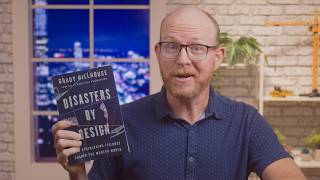
I have a new book coming out in March, Disasters By Design. It’s about famous engineering failures throughout history, how they happened, and how systems like building codes and engineering practice evolved as a result of those disasters,
[00:16]
because there have been a lot of good things come out of the moments we’re not so proud of. And I thought it was only fair to include a few of the errors I’ve made in my career as an engineer in the book. One of those stories is in the preface, and it also - I think at
[00:31]
least - makes a compelling case for the rest of the book, so I want to read part of it to you and then try to answer some of the questions I’ve been getting about the release. The first time I visited a construction site as a young engineer, I was by myself. I think my
[00:45]
boss arranged it that way on purpose. I pulled the company truck through the rutted entrance to the site and brought it to a bumpy stop, surveying the scene. The ensemble of yellow machines kicking up dust and spewing black smoke seemed to know exactly how to avoid
[01:00]
one another. The deep rumble of diesel engines and piercing backup alarms drowned out the soft public radio voices playing inside the cab. My job was simple. A new dam was being built,
[01:12]
and environmental permits required us to monitor groundwater for contamination. I needed to collect a water sample from a monitoring well for testing, a seemingly easy task for the new guy. I carefully steered the truck down a twisting path and eventually found the well,
[01:29]
a nondescript PVC pipe poking from the weeds. I stepped out wearing my new white hard hat and neon green vest, still creased from the packaging, shining like inexperience incarnate. A bailer is a simple tool. It’s just a length of pipe with a check valve at the bottom,
[01:45]
allowing water in but not out. I tied the a rope to the device and began unwinding the spool, allowing it to slowly descend the casing. It reached about halfway, and then, suddenly, it was gone. I watched in terror as the loose end of the rope whipped over and into the well,
[02:01]
and a couple of seconds later, I heard the splash. I hadn’t realized that the spool held two separate lengths of rope, one much shorter than the other. I had inadvertently chosen the wrong one.
[02:13]
Instantly, panic set in. I thought about the cost of re-drilling the well and the steep penalties of noncompliance with environmental rules. I didn’t know anyone on the site, so I began an awkward chain of introductions, looking for help. Passed from one puzzled face to another,
[02:29]
I eventually found a sympathetic colleague. We devised a makeshift rescue plan involving fishing gear purchased from a nearby store. I spent the next hour dropping various hooks and weights down the well, fishing for my lost bailer. By the time I finally pulled it up,
[02:45]
dripping triumphantly in the afternoon sun, everyone on the site had heard the tale. Naturally, I was embarrassed. But my feelings were more complicated than that. Up to that point, I’d
[02:58]
held an idealized image of engineering. I imagined a world filled with confident experts who deftly controlled complex systems, who effortlessly anticipated every detail with exacting precision.
[03:11]
The built environment appeared so intricate yet so steadfastly dependable. I had spent six years in college looking forward to the day when I would start my career and become one of those experts.
[03:24]
Fishing for my equipment that day afternoon shook some sense into me. It was a silly, inconsequential mistake, but my notions of infallible expertise had plunged into the well alongside that bailer. It was the first of many errors I would make throughout my career,
[03:39]
but it helped me see clearly what engineering truly is: a profession filled with people just like me, well-intentioned and well-trained, yet undeniably human. I kept that fishing gear on my desk for nearly a decade afterward as a reminder of my capacity
[03:55]
for blunders. And ever since, I’ve been trying to reconcile two competing ideas: we live in a remarkably safe and comfortable era, rarely needing to question the reliability of the infrastructure around us, yet this complex stability depends entirely on the
[04:12]
work of ordinary, imperfect people. That moment, and many others like it, taught me something I hadn’t learned in school. Failure isn’t just a possibility in engineering but a defining force. Every structure standing today is, in part, a response to one that didn’t.
[04:30]
There is a large group of amused construction workers and a small office of engineers who, after witnessing or hearing about my mishap with the bailer, will never use a spool of rope without first checking if it holds a continuous length. It’s a trivial example,
[04:45]
but it illustrates a deep truth: we learn from each other’s mistakes. One person’s error quietly becomes someone else’s precaution. Over time, those individual choices add up to something larger. We observe faults and misjudgments, big and small,
[05:01]
and weave them into our collective consciousness. We update codes, write new regulations, and establish procedures that help us catch errors before they escalate. And we tell the stories.
[05:13]
It goes on, but I’ll let you read the rest when you pick up your copy. I’m so excited about this book. In some ways it’s kind of the culmination of how my philosophy about engineering has evolved throughout my career both as an engineer and as someone who talks about the
[05:29]
profession online. It already has a lot of great reviews from early readers like Adam Savage, Latif Nasser of Radiolab, Fred Mills from the B1M, and more. It’s got a ton of beautiful
[05:41]
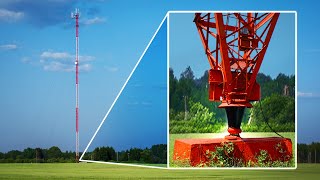
illustrations, and, actually, speaking of that, I have something special for you. Anyone in the US who pre-orders a copy, whether you already have or you do it before the release in March, can get this poster of the Arecibo Radio Telescope, which
[05:55]
famously collapsed in 2020. The investigation into what went wrong was super interesting; I have a whole chapter on it in the book. The poster is super nice, 11x17 inches, printed in uncoated cover cardstock. And they’re completely exclusive to the pre-order; we won’t make any more
[06:11]
once the book comes out. If you pre-order from any retailer in the US, you’re eligible while supplies last. Just click the link down below, enter your order number, and submit the form. Of course, the book comes out after Christmas, but (and this might be a controversial take)
[06:28]
I think a pre-ordered gift is even better than a regular gift. It splits the joy of receiving into two distinct moments, plus you get to give the gift of anticipation! you know that we will have them in the US. I’ve partnered with one of my favorite bookstores,
[06:47]
Nowhere Books in San Antonio. If you want to pre-order a signed copy, you have to get it through them. There’s a link down below to pre-order now, and of course, the poster offer applies to those as well, and it even applies to the audiobook version.
[07:00]
Yes, there is going to be an audiobook that comes out on the same day. And yes, I will be the one reading it. In fact I’m heading to the studio next week to start recording it, so say a prayer for my vocal chords. There is also a UK version of the book. I love the
[07:15]
cover for it. It shouldn’t be very different from the US version at all except for some word spellings and units. Book distribution is complicated, but my understanding is that, just about anywhere in the world, you should be able to get at least one of these editions from
[07:29]
your favorite bookseller. And if you do, I want to say thank you. And I really do mean that. You’re in this book. Your support and feedback means so much to me, and I’m so grateful to have such a
[07:41]
fantastic group of people watching these videos and making projects like this book possible.