

What's Under That Bridge?
45sThe curiosity gap and interactive guess prompt keep viewers engaged, and the visual of bridge bearings is visually appealing for short-form video.
▶ Play Clip"The title is a bit vague, but the content delivers exactly what it promises—a quick, informative look at bridge bearings."
This video explains the purpose and types of bridge bearings, which are critical components that allow bridges to move safely. It covers why bearings are necessary, the modern elastomeric pad design, and the older roller/rocker style, ending with a book promotion.
Bearings transfer loads of a bridge's superstructure to the substructure, literally bearing the bridge's weight.
Bridges move due to traffic vibrations, thermal expansion, and contraction. Without isolation, stress would build up and cause failure.
Modern bridges use elastomeric pads, often inside steel pots, to allow movement.
Older bridges used roller or rocker bearings for freedom of movement.
The creator promotes his new book with two bridge sections and a giveaway via social media posts with the hashtag #engineeringinplainsight.
What is the primary purpose of bridge bearings?
To transfer loads from the superstructure to the substructure and allow for movement.
Why can't girders sit directly on supports?
The superstructure deforms, vibrates, expands in heat, and shrinks in cold.
00:15
What type of bearings do most modern bridges use?
Elastomeric pads, often used inside steel pots.
00:28
What type of bearings were used on many older bridges?
Roller or rocker bearings.
00:44
Bearings transfer loads
Clearly defines the core function of bridge bearings in one sentence.
Bridges move
Explains why bearings are necessary—bridges are not static structures.
00:15Modern vs. older bearings
Provides a quick comparison of bearing types used across different eras.
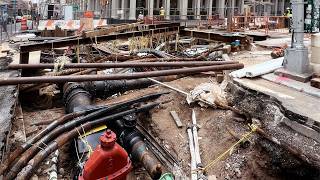
00:28[00:00] If you go peeking underneath bridges, you're likely to find a variety of interesting structural connections like this. Can you name that infrastructure? Pause the video here if you want to make a guess. Bearings transfer loads of a bridge's superstructure to the substructure.
[00:15] They literally bear the bridge's weight. Girders can't sit directly on supports below because bridges move. The superstructure deforms and vibrates with traffic loads, expands under the glaring sun, and shrinks when it cools down.
[00:28] Without isolation from the substructure, these movements would build up stress and potentially cause structural members to fail. Most modern bridges use these elastomeric pads on their own, or inside steel pots as bearings between the super and substructures. But many older bridges
[00:44] used cool looking roller or rocker bearings to provide freedom of movement for the deck and girders. I have two sections in my new book dedicated to bridges. If you'd like to win a free copy, make a social media post about infrastructure like this one, and include the hashtag engineering
[00:59] in plain sight.


⚡ Saved you 0h 01m reading this? Transcribe any YouTube video for free — no signup needed.