
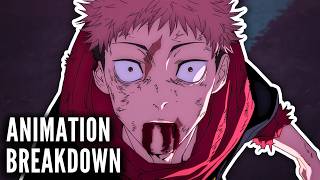
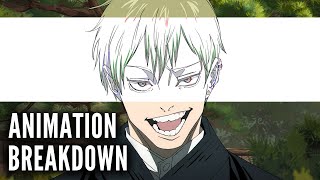
One Animator Drew an Entire JJK Episode?!
43sThe shocking fact that one person animated a full episode of a major anime like Jujutsu Kaisen is a mind-blowing revelation that will immediately grab viewers' attention and spark curiosity.
▶ Play Clip"The title promises a breakdown of the solo-animated episode, and the video delivers exactly that, though it's padded with some fluff and a lengthy subscribe plug."
This video provides an in-depth analysis of Jujutsu Kaisen Season 3 Episode 8, which was solo key animated by Kouki Fujimoto. The creator breaks down the animation techniques, the significance of solo key animation, and the episode's overall visual quality, praising Fujimoto's exceptional character acting and weighty movement.
The episode is praised as incredible, with outstanding 2D animation, direction, and storyboards, all animated by one key animator, Kouki Fujimoto.
Kouki Fujimoto solo key animated every shot in the episode, a rare and impressive feat, especially for a production like JJK.
Directed and storyboarded by Yusuke Takada, with one animation director (Yajima) for the first time since season 1, and one key animator, Koki Fujimoto.
The concept of one person animating an entire episode is mind-blowing. While in-between animators helped, the key animator defines the shot and is the creative force.
This indicates the episode was in production for a long time, with healthy conditions and a justifiable number of second key animators, rather than a lack of resources.
Fujimoto excels at animating human motion and character acting, making mundane actions feel natural and fluid, with incredible weight and realism.
The episode's focus on realistic, weighty character acting and human interactions made it the perfect fit for Fujimoto's solo key animation effort.
Fujimoto's subtle acting animation is 'perfect', with meticulous frame placements and a fantastic understanding of human movement, as seen in shots like Higuruma tapping his pen.
The episode also features more exaggerated, in-your-face acting animation, which is still realistic and natural, with noticeable bounce in the motion.
Fujimoto's natural acting extends to animals and even inanimate objects, with cats and the ground being hand-animated by the animator.
The episode utilizes a blobby, abstract style of drawings with varying degrees of form, but Fujimoto never sacrifices the movement component, creating a unique visual dichotomy.
The episode is packed with movement, from meticulously animated hand slaps to complex shots with multiple characters and perspective shifts, making it difficult to highlight every impressive scene.
Yusuke Takada stuck to Goshozono's philosophies, with long lingering shots, sporadic bursts of movement, layered compositions, and repetitive visual motifs.
The episode is one of the most polished from the season, with few visible errors thanks to Fujimoto's incredible draftsmanship and the corrections by the animation director.
The only real issue is some background work, which looks like low-res hazy photographs, a minor fault but worth mentioning.
The episode features complex shots with multiple characters, vehicles, and hand-animated backgrounds, which are time-consuming to draw but executed flawlessly.
The fight scene feels real with tremendous weight in every motion, run-up, and strike, even the more cartoonish exchanges are presented naturally.
The confrontation features some of the best drawings of the season, with impressive rotation shots, colors, and liquid effects, culminating in a complex domain scene.
The creator praises Fujimoto as a 'madman' and looks forward to the remaining episodes, expecting them to be good, especially the last one.
The episode is a masterpiece of solo key animation, showcasing Kouki Fujimoto's incredible talent for character acting and weighty movement. It's a must-watch for animation enthusiasts and a testament to the artistry behind Jujutsu Kaisen.
Who solo key animated Jujutsu Kaisen Season 3 Episode 8?
Kouki Fujimoto
00:14
What does 'solo key animation' mean?
One key animator draws all the key poses and decides how many in-betweens are needed, defining the creative force behind a shot.
02:03
Why was the episode solo key animated?
It indicates the episode was in production for a long time, with healthy conditions and a justifiable number of second key animators.
03:24
What is Kouki Fujimoto particularly good at animating?
Human motion and character acting, making mundane actions feel natural and fluid with incredible weight.
04:33
What is the 'loose drawing style' mentioned in the video?
A blobby, abstract style of drawings with varying degrees of form, where facial features are often omitted, but movement remains lifelike.
07:44
What was the only real issue with the episode?
Some background work looked like low-res hazy photographs.
10:50
What did the creator say about the fight scene?
It felt real with tremendous weight in every motion, run-up, and strike, even the cartoonish exchanges were presented naturally.
12:33
Solo Key Animation Feat
Highlights the rarity and impressiveness of one animator handling an entire episode, especially for a major production like JJK.
00:14Role of Key Animator
Clarifies the creative importance of key animators, who define shots and are the primary creative force behind animation.
02:03Fujimoto's Character Acting
Demonstrates Fujimoto's exceptional skill in making movements feel natural and weighty, a core strength of his animation.
04:33Loose Drawing Style
Explains a stylistic choice that maintains movement quality despite abstract forms, showing a deep understanding of animation principles.
07:44Polish and Draftsmanship
Emphasizes the high quality of the animation with few visible errors, attributing it to Fujimoto's incredible draftsmanship.
10:36[00:02] incredible in every sense of the word. From the overall direction and storyboards to the outstanding top-of-the-line 2D animation, it was a jaw-dropping display of artistry animated entirely by one guy, one key
[00:14] animator. That's right. As some of you may know, the newest episode of JJK was solo key animated by one Kouki Fujimoto. He animated every single shot. I'll talk especially for a production like JJK, and what it means from a
[00:29] behind-the-scenes point of view in a bit. Back to the energetic intro, the episode, like I said, was amazing. We had eye-catching framing, mind-blowing animation, phenomenal drawings, and an incredibly satisfying visual aesthetic.
[00:42] one of the best-looking episodes from this show, in my opinion. And as such, let's break down the visuals. Make sure to subscribe. That subscribe button looks the best when pressed, and it helps out a lot. Come on, it takes a
[00:55] second. Go down there and subscribe. Just do it. You can also become a member of this channel. Members get at least two exclusive videos per month, custom badges and emojis, shout-outs, and more. Just go down there and press the join
[01:07] As always, let's start with the staff list, and there's a lot worth talking directed and storyboarded by assistant director Shota Goshozono's seven-episode-long storyboarding streak,
[01:21] While Goshozono not handling the storyboards for once doesn't surprise me, if anything, him storyboarding so many episodes was the real surprise, it still feels like a momentous occasion. I know Takada stuck closely to Goshozono's
[01:34] like the show morphed into something completely different, but it's still definitely worth highlighting. Over on the animation side of things, we had one Yajima, one animation director for the first time since season 1. Well,
[01:49] technically, that Tengen Yapp episode didn't have an AD credit, but I believe their own shots, so it doesn't count. One AD for the first time since season 1, Yazi Lu, who I actually remember making his Sakuga Booru tag myself, a
[02:03] couple of assistant animation directors, and of course, one key animator, the aforementioned Koki Fujimoto. Let's start with the elephant in the room, solo key animation, a concept that always blows my mind, especially on this
[02:16] scale. The idea of one guy picking up a pen and animating an entire episode over 20 straight minutes all by himself is, quite frankly, ridiculous. Now, yes, you can be pedantic about it. Yes, Koki Fujimoto didn't animate every
[02:30] single frame himself. There were in-between animators, but look, I'm not in-betweening, but when we talk about animation, we usually say this scene was animated by Yutaka Nakamura, not this scene was animated by Yutaka Nakamura
[02:43] and in-between animators, and that's for a reason. The key animator defines a shot. He or she draws all the key poses and decides how many in-betweens are needed and where, occasionally drawing actual in-between guides. They are the
[02:56] key animators, the creative force behind a shot. Also, for what it's worth, Koki Fujimoto was credited as an in-between animator as well. animating this entire episode all by himself is, like I said, ridiculous, and
[03:10] amount of movement. Again, I have trouble wrapping my head around the concept of an animator drawing so much and so well. Insane stuff. Now, what does all of that mean, you may ask. Why was this episode animated by
[03:24] one guy? Did they run out of animators? Were they saving resources? Well, no. What it means is that this episode was in the oven for a long, long time. Think about it. One guy animating 20 minutes of content will obviously take a lot
[03:38] longer than 10 or 20 guys doing the same. That's how things work. Plus, the episode had one CAD and one AD, usually the outcome of healthy conditions and a justifiable number of second key animators. Justifiable because one guy
[03:51] of people cleaning them up is a production model that actually makes sense. It's a lot better than a bunch of guys drawing the layouts and a bunch of guys cleaning them up. Sure, some artists go even further. They animate an
[04:05] and handle the cleanup. Takayuki Yanamihai by episode 6, what is wrong with you? Are you clinically insane? But there's nothing wrong with requiring cleanup help when you've animated an entire episode. That's perfectly fine.
[04:18] Anyway, with all that being said, let's finally go through this episode. Fujimoto. I think that will help us unpack this episode better because, you know, he animated all of it. Fujimoto, as you could probably tell, is
[04:33] outstanding at animating human motion, at animating character movement. His ability to make seemingly mundane actions feel natural and fluid is so to say he's one of the best character acting animators of our generation. He's
[04:47] phenomenal. The sheer amount of weight he packs into his animation is simply otherworldly. That's the reason why his animation often gets mistaken for CGI and or rotoscopy. Also, just for the record, nothing in this episode was
[04:59] rotoscoped. Heavily referenced, yes. This episode had a separate live-action references being Fujimoto himself, but not rotoscoped. Naturally, entrusting an artist like Fujimoto with an episode centered around
[05:12] character acting, and not just acting, but the realistic, weighty kind of much on human interactions and society, it just made sense. Out of every single Jujutsu Kaisen episode, this was
[05:24] probably the best fit for a Koki Fujimoto solo key animation effort. Right from the get-go, you could feel the natural vibe of the animation. This ultra-wide angle shot of Higuruma, for example, even though he is far away from
[05:36] the camera, meaning there are lesser lines to manipulate, making it harder to visualize the movement, Fujimoto conveyed so much weight and personality all via a back profile where Higuruma takes up like 2% of the screen. You're
[05:49] watching a master at work, boys and girls. This is it. Similarly, this simple shot of Higuruma tapping his pen had perfect weight control, the way the fingers recoil under the weight, the way the palm shifts back and forth. It's
[06:02] ridiculous. I won't go over every shot in as much detail. We'd be here for point. Fujimoto's acting animation is very perfect, if that makes sense. Throughout the course of this episode,
[06:14] subtle scenes like the ones I just in-your-face acting animation, and both styles were executed perfectly. These two shots, for example, he dialed up the bounce in the motion. They were still
[06:27] realistic and natural, but the movement was more noticeable in a good way, of Just look at this shot. Look at the phenomenal volume control. Look how consistent the character drawings are. Look how alive the movement feels.
[06:39] Meticulous and methodical frame placements, coupled with a fantastic understanding of human movement, absolutely incredible. I actually have a particularly strong sense of appreciation for this shot, because it's
[06:51] a bit of a tangent, but it's my channel, off. As some of you may know, I'm and I'm animating a few shots for it myself, and one of the shots I'm currently working on is very similar to this one. Character walks and then turns
[07:04] around, so I know firsthand how difficult shots like these are. Maybe not to Fujimoto, because he is who he is, but for the rest of us mere mortals, it's insanely difficult. Moving on, I love this shot. You know
[07:16] natural-looking movement for one character? Animating natural-looking movement for seven characters. Also really like how the character models additional layer of shading and had the model be transparent beyond it. By the
[07:31] way, Fujimoto's natural acting isn't just limited to humans. Even the cats course they are. Also quick shout-out to the ground underneath the sky and the car and in this shot for being cell as in drawn by the animator, not the
[07:44] background artist. Before we move on, let's briefly address believe that's what they're called. I'm not entirely sure. Basically, it's that thing where characters have less detail
[07:56] camera. Less detail in quotes because a more appropriate definition would be less form. For this episode, Fujimoto utilized this blobby abstract style of drawings with varying degrees of form. In most cases, he would omit facial
[08:10] in some shots, he would make the entire body wobbly and stylized. Now, this does this. But the reason why I'm pointing it out is because Fujimoto never sacrificed the movement component. Even shots that look like this moved
[08:26] like this. I was particularly fond of this sequence. The character models were incredibly loose and deformed, but the movement was perfectly lifelike, creating this weird visual dichotomy that I loved. Also, this shot was
[08:38] insanely complex. So, you had multiple characters moving like their lives high angle plane and away from the means Fujimoto had to animate multiple subtle perspective shifts. I think most
[08:52] casual viewers won't think much of shots like these, but they're incredibly difficult than your standard flashy action scene. Now, look. Realistically, I can't go over every impressive scene from this
[09:05] episode. The thing simply moved too much. Is this a still of these two sitting? No, because here comes a well-animated mother and daughter. This guy slapped the glass. But of course, we can't just put hand.png on glass
[09:17] window.jpeg and call it a day. We have to meticulously animate the weight behind the hand and the fingers pressing against the glass as a result. Just draw a close-up of Fuji climbing down the stairs. What are we? A normal anime? Of
[09:29] course, we'll painstakingly animate his entire body going down each step one by one. Something that's notoriously difficult to do. You get the idea, right? This episode kept moving. The Koki Fujimoto character animation train
[09:41] was firing on all cylinders. There's only so much I can talk about. Pretty much every shot in this episode deserves its flowers, but from now on I'll focus understand. Also, let's use this opportunity to talk
[09:55] about a few non-Koki Fujimoto talking points. The direction, for example. Like I said earlier, this episode wasn't storyboarded by Shota Goshozono, but Yusuke Takada stuck to his philosophies. Long lingering shots of killer
[10:08] course, the storyboards weren't as overtly eye-catching as the previous episodes, but they more than got the job done. You had these long shots with sporadic bursts of movement to keep the viewer engaged. You had layered complex
[10:21] compositions. You had repetitive visual motifs. It was great. Besides that, episode 8 was one of, if not the most polished episode from this season. The and Lu's corrections, and despite featuring the largest amount of
[10:36] could count on one hand the number of visible junk {slash} melt thanks to Fujimoto's incredible draftsmanship. Basically, the animation end was pretty much perfect. The only real issue I had with this episode was some of the
[10:50] background work. Some of the BGs did look like low-res hazy photographs. The previous episode had a similar issue. Not a significant fault, but definitely worth mentioning. Anyway, let's get back to the breakdown.
[11:03] I loved this shot. There was so much going on. The two important characters in the distance occasionally moving and the countless mob characters, vehicles, and mob characters on vehicles moving past the screen. So many different
[11:15] things that had to be animated alongside the focus characters. Shortly afterwards, we got this really cool sequence. Obviously, the walking on top of that, the background was hand-animated. Crowds and backgrounds
[11:29] are the two most time-consuming things and can draw, and this episode featured This frame was really cool. I loved the individual blood vessels in the eyes, the well-defined shading adding form and volume to the face, and the metric ton
[11:42] of hatching. Amazing stuff. Although, the jump from the previous shot to this one was a bit abrupt and awkward. Gave it a very government-mandated manga I mean. I loved this scene. The force and
[11:55] desperation in Higuruma's body language was conveyed through natural movement instead of exaggerated motion. It was truly remarkable. This was then followed by this shot where the entire room was hand-animated. We started with a front
[12:07] side with some heavy foreshortening and then backwards turning into a low-angle background was animated accordingly. An insanely complex idea, but executed
[12:19] The next highlight was the fight scene, and it was preceded by more incredible acting. I know I said I'll skip over these scenes, but just look at this. This is character acting of the highest level. This is season finale quality.
[12:33] Absolutely mind-blowing. Anyway, back to the fight. I loved how real it felt. Every motion, every run-up, every strike, the entire thing had a tremendous amount of weight. Even the more cartoonish exchanges were
[12:45] presented naturally. It's the kind of Chainsaw Man got dragged over the coals for, and it was insane. A bunch of top-tier acting, both subdued and in your face, then brought us to the Higuruma-Yuji confrontation, and it was
[12:58] simply stellar. We started with some insanely polished drawings, some of the best of season 3, followed by this impressive rotation shot. Also loved the colors, especially in this shot. It was very over the top and in your face, but
[13:10] red was actually really well implemented. Anyway, back to the animation. We got this gorgeous three-tone liquid animation and this complex high-angle shot with top-notch shading. This was
[13:23] warping and distorting as judgment popped up and more liquid effects, really cool stuff. This shot was ridiculous. The camera tracked Yuji Itadori's legs and the entire background, the bathtub, the floor, the
[13:36] stairs, all of it was hand-animated. It was then followed by more natural acting and finally, after all of that, we got the domain scene with a complex camera zoom out and pan, liquid effects, lots of background animation, and these easy
[13:49] but beautiful impact frames. This was then followed by these intense flashing lights, which I believe were added by the compositing team. Amazing work. And that was the episode. Again, absolutely insane. Hats off to Koki
[14:03] Fujimoto. He's a madman. Based on what I've heard, the remaining few episodes should be good, especially the last one, so I'm really looking forward to them. Of course, expect more JJK videos in the future. That's about it. A special
[14:15] thanks to Noodle03, Ahmed, TheGallus90, and Sheikisan for becoming tier three and Sheikisan for becoming tier three members. And until next time.
⚡ Saved you 0h 14m reading this? Transcribe any YouTube video for free — no signup needed.