
Parasite's Invisible Jump Cut
42sReveals a subtle editing trick that most viewers miss, making them feel smart and engaged.
▶ Play Clip"The title accurately reflects the video's deep dive into the editing techniques of Parasite, though it focuses more on the collaborative nature of editing than just 'perfect editing'."
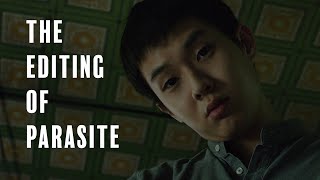
The video analyzes the editing techniques in Bong Joon-ho's film *Parasite*, focusing on how the director avoided traditional coverage shooting and instead planned edits in pre-production. It explores the collaborative nature of editing, involving script, performance, and cinematography, and argues that understanding editing improves all aspects of filmmaking.
The opening scene uses a subtle jump cut to convey Ki-woo's attraction to the stone, making the audience lose track of time.
Bong Joon-ho did not shoot coverage for most scenes; he relied on storyboards and shot lists, limiting the editor's choices to selecting the best take and timing transitions.
Montage is defined as creating meaning through the juxtaposition of two shots; it is the fundamental building block of editing.
Smooth transitions often require collaboration between performance (e.g., a glance) and the editor's timing, originating from the script.
In scenes with coverage, the editor can make creative choices like crossing the line of action to emphasize character traits.
VFX are used to composite takes, perfect timing, and even stitch together pans to create the illusion of a single take.
The screenwriter is the first editor, and understanding editing makes one a better screenwriter or cinematographer, and vice versa.
What is 'coverage' in filmmaking?
Coverage is the process of shooting a scene from multiple angles (wide, close-up, medium, over-the-shoulder) to give the editor options in post-production.
1:37
How did Bong Joon-ho's approach to shooting Parasite differ from standard coverage?
Bong Joon-ho did not shoot coverage for Parasite except where absolutely necessary; he relied on storyboards and shot lists.
2:08
How does the video define 'montage' in the context of editing?
Montage is the creation of meaning through the visual juxtaposition of two shots.
4:24
When no coverage is shot, what becomes the primary role of the editor?
The editor's job is to choose the best take and time the transitions into and out of the shot.
2:28
Why does the video claim that the screenwriter is 'the first editor'?
The screenwriter is the first editor because they plan the visual progression and transitions in the script.
9:17
How are VFX used by editors in Parasite to improve timing and performance?
VFX are used to composite two shots together to perfect timing, and even to stitch together pans from multiple takes to create the illusion of one longer take.
7:50
Give an example from Parasite where performance and editing collaborate to create a smooth transition.
The cut from the kitchen to the basement is aided by Choong-sook's glance towards the stairs; the performance and the edit work together.
5:14
What meaning is created by the editor cutting to a shot that crosses the line of action in the scene with Mr. Kim?
Crossing the line of action emphasizes that Mr. Kim is someone who will cross the line.
6:14
Subtle jump cut with the scholar's stone
Demonstrates how a barely noticeable time jump can convey a character's subjective experience and loss of time.
0:06No coverage shooting in Parasite
Reveals a key production choice that shifts the editor's role from constructing scenes to refining timing and transitions.
2:08Montage defined as juxtaposition of shots
Clarifies the fundamental building block of editing and how meaning is created through visual combination.
4:24Collaboration between performance and edit
Illustrates that smooth cuts often depend on scripted actions and actor choices, not just the editor's timing.
5:14VFX used to composite takes and perfect timing
Shows how modern tools allow editors to refine performances and pacing even in locked-down shots.
7:50[00:06] At the beginning of parasite Min shows up with the scholars stone
[00:11] Ki-woo is immediately attracted to the stone. He stares at it intently
[00:18] The next cut is a break in continuity, a jump in time
[00:22] The stone has already been lifted out of the box and ki-woo is looking in a totally different direction
[00:28] But this jump is barely noticeable
[00:30] the dialogue from this shot starts under the previous shot making the jump in time almost imperceptible
[00:39] Is this a landscape type?
[00:42] The transition from a closer shot to a wide shot also keeps us from being a jump cut but the subtle passing of
[00:48] time isn't accidental. We enter into Ki-Woo's subjective perspective in this moment
[00:53] we're experiencing his attraction to the rock and it's almost as if he and
[00:58] We the audience lose track of time and snap back to reality a moment later,
[01:04] Realising time has passed
[01:07] There are many examples of this kind of subtle and precise editing in parasite that we could examine
[01:13] But parasite provides us with a great opportunity not just to examine and break down some examples of effective editing,
[01:20] But to ask ourselves, what editing is and who really does editing in a film?
[01:26] This video is sponsored by Mubi check out their curated collection of streaming cinema and movie comm slash Thomas flight
[01:32] Most likely the majority of films and TV shows you watch are shot with a process called
[01:37] Coverage
[01:38] When shooting a scene a director and cinematographer will usually shoot the scene from a variety of angles
[01:43] They'll shoot some wide shots, close-ups, medium shots and over-the-shoulder shots
[01:48] Then it will be the job of the editor to stitch together the scene from all these takes
[01:54] The director hopefully has an idea going into the scene of how it will progress visually
[01:59] But with coverage you have an option in the Edit of changing the visual structure of the scene
[02:05] We know from interviews with Bong Joon-ho
[02:08] That he did not shoot coverage for Parasite except where it was absolutely necessary
[02:13] This means for a scene like this where the entire scene plays out from a single angle
[02:18] this was probably the only angles they shot this scene from they didn't shoot any other angles just in case they wanted to
[02:25] Change how the scene progressed in the edit
[02:28] so in this case instead of creating the visual progression of the scene
[02:33] the editors job is just to choose the best take and
[02:36] Time the transition into an out of the shot
[02:39] For Bong Joon-ho, one of the reasons he can avoid shooting coverage is that he's often
[02:45] Incorporating or planning how the film will be edited together in the script and in his storyboards
[02:52] Let's look at this scene
[02:53] as the conversation shifts to the idea of counting the parks the visual composition of the scene changes
[03:09] And we have this shot
[03:18] it's a transition from here to here and from
[03:21] Using this angle of Min to this angle of Min
[03:25] Was planned for this moment in Bong Joon-ho's storyboards
[03:28] And cinematographer Kyung-pyo Hong just shot the scene the way it was storyboarded
[03:33] And editor Jim-mo Yang just followed bong storyboards and stitched the two shots together.
[03:38] Do we attribute the effectiveness of the end result to editing, cinematography or directing?
[03:46] Ultimately, no matter which person made the creative decision or if it was made in pre-production
[03:51] Post-production or production we can attribute the effectiveness of the transition to editing
[03:57] When we use the word editing or often incorporating two things into that definition
[04:02] first we're referring to the activities of the actual editor and the creative decisions they make but we're also referring to the
[04:10] Concept of an edit in film language. This is sometimes called montage
[04:14] I'm not talking about montage sequences like the one you see later in parasite
[04:18] A montage sequence uses a faster series of shots that usually condenses time, space and information
[04:24] When I say montage here
[04:24] I'm referring specifically to the creation of meaning through the visual juxtaposition of two shots
[04:31] By itself this is just a shot of a stone and by itself this is just a shot of Ki-woo but edited together
[04:37] they create a moment where Ki-woo, looks at a stone that's montage and
[04:42] Montage is the fundamental building block used by editors to create meaning
[04:46] But montage and editing can happen long before a film is even shot
[04:52] Towards the end of parasite there is a lot of inner cutting between different locations and characters
[04:57] A lot of action is happening all at once but this is carefully managed in a way that is
[05:02] seamless
[05:03] We can attribute this seamlessness and pacing to editing but it isn't just the editor
[05:08] who's responsible for how these scenes flow together and are inter-cut
[05:13] For example
[05:14] Here, the cut from the kitchen to the basement is aided by Choong-sook's glance towards the stairs
[05:20] The performance and the edit have to work together to create that smooth transition
[05:24] it's the work of the editor to time the cut with look but for the editor to do that the look has to
[05:29] exist in the performance
[05:31] And in this case it originates in the script
[05:34] But I'm not trying to diminish the work of parasites editor Jim-mo Yang
[05:37] or give all the credit to Bong Joon-ho
[05:40] By making strong and effective creative editing decisions early on,
[05:44] director Bong is simply giving his editor more time and space to work on everything else
[05:49] Some scenes are still shot with coverage and it's up to Jim-mo Yang
[05:53] to work out the timing of the cuts in those scenes
[05:56] In this scene it appears coverage was shot
[05:59] It looks like the entire scene was probably filmed from these four angles
[06:12] Here the editor cuts to
[06:14] this shot crossing the line of action instead of cutting back to this angle
[06:19] Which stays on the line of action
[06:21] This choice emphasizes the idea that Mr. Kim is someone who will cross the line
[06:26] the material to be able to make this choice
[06:29] crossing the line and creating meaning through montage had to be provided by the cinematographer
[06:34] and it was probably planned for by Bong
[06:38] But if coverage was shot the editor still needs to decide when is the right moment in that scene to cut to that new angle
[06:52] In this scene we see the housekeeper inside over video and also on the outside in the rain
[06:58] An important decision for the scene is when to show her on the outside in the film
[07:04] We don't see her outside until right before. Mrs. Kim takes some pity on her and lets her in
[07:25] The shot mirrors some shots of the Kim's from earlier
[07:28] And so I think it makes sense to show her outside for the first time when mrs
[07:34] Kim relates to her and has sympathy on her
[07:38] But this shot could have come at the beginning of the scene or in the middle
[07:42] and it's up to the editor to make that decision
[07:45] But even with the constraints of no coverage shooting there's still a lot an editor can do
[07:50] As VFX become cheaper, better and more accessible
[07:53] they're increasingly used by editors in subtle ways to improve timing and performance
[08:00] The lock down shots in a moment like this
[08:02] It's easy to composite two shots together to perfect the timing of actions
[08:07] Here's another example
[08:08] If I wanted in the shop for the housekeeper and the dog to come in a little earlier
[08:13] That would be a very easy adjustment to make
[08:16] But it goes deeper than that. In an interview with the art of the cut Jim-mo Yang revealed that
[08:21] shot stitching is used in the film even during pans on longer, unbroken takes
[08:25] In the same way the editor of 1917 can combine multiple takes to create the illusion of one longer take
[08:32] Editors like Jim-mo Yang
[08:33] can use the same techniques to combine multiple takes to perfect timing or combine two different performances
[08:40] and if they're not spending most of their time constructing scenes from coverage
[08:43] the editor will have more time to spend perfecting every little detail
[08:48] The role of editing is massive and far-reaching in film
[08:52] but the building blocks of good editing often start with the script and cinematography
[08:57] A great editor will be able to create magic from scenes shot with coverage. Coverage itself isn't bad
[09:04] but often when a director like Bong Joon-ho is planning the cinematography, performance and editing
[09:10] and how they'll work together from the beginning of the process
[09:13] It can lead to a quality of work difficult to achieve otherwise.
[09:17] In the same way the editor of a film is often referred to as the last screenwriter
[09:22] The screenwriter is, in a sense, the first editor even if they're never communicating directly, in reality
[09:28] the editor is working in collaboration on the edit with many other members of the film crew
[09:35] understanding editing will make you a better screen writer or cinematographer
[09:39] And understanding screenwriting and cinematography will make you a better editor
[09:45] This video is sponsored by Mubi
[09:48] Parasite was a film that I think made a lot of people realize that the world of international film has a lot to offer
[09:56] if you want to have more access and find interesting indie films arthouse films or international cinema
[10:03] check out Mubi! Mubi has 30 films at a time and they add a new one every day
[10:07] It's a great place to find new stuff and you can try it for free for 30 days when you go to
[10:20] Thanks so much for watching
[10:21] If you want to see some additional commentary on parasite that just didn't fit into one of these essays
[10:26] You can watch this month's bonus video on my patreon by becoming a patron for five dollars a month at patreon.com/thomasflight
⚡ Saved you 0h 10m reading this? Transcribe any YouTube video for free — no signup needed.