
The Film School! I'm a Fag!
45sShocking, unexpected outburst with a funny 'calm down' follow-up creates a highly shareable moment.
▶ Play Clip"The title is generic and doesn't overpromise; the content matches the description of a post-mortem discussion."
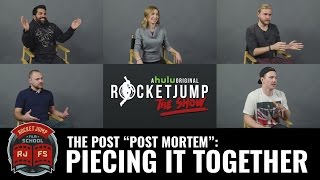
In this video, Ben Waller, creator of Rocket Jump the Show, discusses the post-production process with his editing team. They share insights on logging footage, technical challenges, and the importance of creative problem-solving, while reflecting on the intense work hours and camaraderie that defined the project.
Ben introduces the post-post-mortem, explaining that the story can change during post-production, and the editors are the gatekeepers of the final episode.
Nathan Kemp, an editor, describes the camaraderie and the tiring nature of post-production, noting that the documentary stopped filming the process once shooting ended.
The team needed a way to log and search footage efficiently, which was a key part of their workflow.
The editor wishes they had a transcriber to write everything down, allowing them to edit a script first, a common documentary technique.
Technical issues like using control T on large projects could crash them, causing half-hour load times, which they learned the hard way.
The team emphasizes making all problems creative, so they focus on storytelling rather than tech issues.
Long hours and sleep deprivation led to the team becoming 'crazier' and developing their own language, but they remained dedicated.
The editors reflect on the experience, feeling proud and exhausted, and note the lack of a clean end to the show.
Transcription saves time
Highlights a practical tip for documentary editing: transcribe footage to edit a script first.
04:42Project crash risk
Warns about a common technical pitfall in large editing projects that can cause significant delays.
05:27Creative problem solving
Emphasizes the importance of focusing on creative challenges rather than technical ones for better output.
06:10Dedication of editors
Shows the high level of commitment and passion the team had, working long hours without complaint.
07:21[00:00] My name is Ben Waller. I'm the creator and executive producer of Rocket Jump the Show, and we're going to be giving you the post-post-mortem. So after we finished filming the show, the last stop on the train was post-production and finding those stories,
[00:13] and we may have had an idea of what that story was during production, but it could become something completely different in post, and we're going to talk to the people that sort of put the final stamp on what those stories were, obviously in coordination with everyone else throughout the process,
[00:26] but they were kind of the gatekeepers of, this is the episode. So, we're going to be talking about... The film school! The film school! I'm a fag. I'm a fag.
[00:38] I'm a fag. Calm down, okay? Boom. Hi, I'm Nathan Kemp, and in post-production, I was one of the editors on the show. I don't want more clapping.
[00:51] Kept missing. Really good snap right here. I just couldn't clap. It was a group of people just working together to try to make something great. And it was a really interesting process, and it's fun.
[01:03] You get a sense of camaraderie when you're all working towards the same goal. Basically, the day we stopped shooting the shorts was the day the documentary kind of stopped shooting the process. Because post-op, there's a bunch of people sitting in their room, clicking and repeating sounds,
[01:18] and it's very tiring, not really that interesting. Okay, so how are we going to do this? How are we going to do the actual post-production aspect of it? We needed a way to be able to log footage and be able to search footage.
[01:31] So what we did actually is a system of sub-clipping in Premiere and then renaming that sub-clip with general descriptions, different types of motions, different types of keywords. I could go into the project files and search Matt Happy KitJar.
[01:46] And I have a billion clips of Matt reacting during KitJar in a happy way or maybe talking about something that made him happy. So I had to go through like every clip and label it and give a title to it and stuff like that, which was horrible and it took like months.
[02:01] Honestly, we didn't even log everything. It's impossible. I could still be here logging. It's just so much fun. It a process that takes a while and it not really the most fun but it something that really key to being able to you know really help out in terms of editing and efficiency in post At that point you know we basically assigned different editors to different projects and they would kind of be in control of that episode I kind of realized my job was going to end soon
[02:30] so I figured I had to maybe take over one episode and keep everybody away, and I did that with Dorje. Please, please, please, please, please can I work on Fan Friction?
[02:44] Not only because it's a great story, but also because people that I love and respect and admire were working on it. We started with what we call kitchen sinks, where basically there was three-hour, four-hour cuts
[02:56] that were really just the best moments that were related to episodes and characters. And then we kind of picked and chose the best storylines and then fleshed those out throughout each episode.
[03:08] Then we took that three hours and shortened it to 45 minutes. Then we took that 45 minutes and shortened it to 26. That worked really well. oh, that thing you thought was funny, yeah, it's not funny, or it's only funny to you,
[03:20] and just sort of started to iron out the moments that worked the best, the stories that seemed to be, they help each other connect the dots to create an overall story and arc. Something I feel is really important in any artistic work
[03:33] is that it makes someone feel something, and I think with this show it's no different. No one looks like they're struggling, then you're not going to have something that's compelling to watch. It's just going to feel like a video diary as opposed to a story.
[03:46] it's also important that you provide context so that you understand, you know, what's going on. And then you've got something to work with in terms of building that kind of emotional attachment with what's in front of you.
[03:58] Like, Nate, you know, he's a story guy. He likes to focus on, like, arcs and stuff like that, whereas I just find, like, Joey saying, you know, dick jokes, and Anthony saying dick jokes,
[04:13] and, yeah, just sort of compile all those together. There were so many, like, dirty, fun jokes. And that's my sense of humor. All sorts of weird laughter. Just insane laughter.
[04:26] You can't cut that, but that's the thing that I'm consistently laughing about. No, it was whatever I said. Yeah, I would just say, like, I want it this way. But again, if it doesn't work for the story. In retrospect, if I could start over, work on the card just again,
[04:42] I would have had everything logged and transcribed I think that would have been that would have been essential to save so much time Having a transcriber to write everything
[04:56] that happened, so we can almost edit a script and then edit the video, would have been really interesting too, because a lot of documentaries do things. I wish I knew as much about the story science documentary as I know now, because that was something
[05:10] I had to learn how to do. Someone like Nate had to teach me and Aaron. I don't know, it's just important to keep the moments that make the audience actually feel something. And I guess because I don't understand human emotions, like it was hard for me to understand why that was important.
[05:27] There are a lot of things like when your project is to a certain size, you can't copy and paste. You have to select a large chunk of things and altering it to somewhere else. If you try to, or you accidentally just by habit do like control T, your project may just crash and it may take a half an hour to load.
[05:45] So there are things like that where if we had known those from the get-go, they would have saved us so many countless hours, so many late nights. And yeah, that would have been great knowledge to have.
[05:58] But I think it's about just figuring out the technical side of things and going from there. when you're focusing on problem solving, you're taking time from another problem. Try and make all those problems creative.
[06:10] And then all you have to worry about is like, hey, how do I portray this character better? Or hey, what's the problem in this episode? Or how do I show this conflict more effectively? You don't want your problems to be tech related.
[06:24] That's the worst. I've definitely had crazy inmates. I think it came out the more sleepless nights and longer the hours got the crazier we got for sure.
[06:36] So for the last couple months of the show it was myself, Aaron, and Dom in a very small room and we're just like working crazy hours late into the night just trying to get the show out and that also meant that we were getting
[06:48] progressively like crazier and more sane. In the beginning they were like very normal, nice people and when outside rules would like come in like there was almost like social skills were completely gone. You know, we, at points we're just resorting
[07:01] to different types of like grunts, just rambling nonsense. By the end we had our own language and we were creeping each other out so We all got used to how crazy we were because we were sleep deprived and just in this weird zone of editing for 14 or 15 hours They stayed up late when they needed to They
[07:21] came in on weekends without even telling me sometimes. They just, they cared so much more than a lot of other places that I've worked. So that's been the best part of the whole process is the heart that goes into what we make. I hate that question. How about this
[07:37] How are you doing? How are you doing? I mean, I feel amazing about this whole experience. I feel exhausted. I feel good. I feel, like, kind of anxious. I've been sitting in a room for a long time. I need to shoot something. I don't feel like I'm done yet, even though technically I am.
[07:51] Yeah, it's weird. Ben and I were talking about how there's no, like, real, clean, official end of the show. And right now we're still kind of in the middle of that ending of the show. You know, I'll probably know how I really feel in a couple weeks,
[08:03] but right now I feel like I have to separate myself from the experience because it was such an intrinsic part of my life the last year and a half. I think Dad looked at me and was like, dude, you're really lucky. And I was like, yeah, I know.
[08:16] Like, this is incredible. I feel proud to work with the best people I've ever worked with and be able to call them my friends. It's great to see everybody now that the show is done
[08:28] and, like, without everybody's hair all over the place and staying up every single night. And I feel like I'm meeting people for the first time, you know, even though I've been here for like a year.
[08:40] At Rocket Jump, we're always about, you know, figuring out things and doing bigger and better things. And also, you know, letting people know how we're doing that and kind of trying to make education available for folks as well. And this was definitely a big learning experience for us,
[08:53] and it was a growing experience for us, like doing a network TV show. Like, it was huge. and we really want to make sure that we can help you guys. Where do I go with this?
[09:07] There's a lot of pressure because whatever the last sentence is, is the closing sentence. I would hate to mess that up. There's a plane going over.
[09:27] you
⚡ Saved you 0h 09m reading this? Transcribe any YouTube video for free — no signup needed.