

Renko & HiLo: The Ultimate Trading Couple
43sThe playful metaphor of Renko and HiLo as a couple immediately grabs attention and sets up an engaging explanation of a popular trading strategy.
▶ Play Clip"The title promises a trend-following couple, and the video delivers a clear, practical breakdown of the Renko + HiLo strategy—solid, though with some filler."
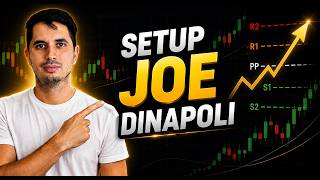
This video introduces the Renko + HiLo Activator trading setup, a popular trend-following strategy for Brazilian day traders. The presenters explain how Renko filters market noise while the HiLo Activator acts as a compass and dynamic stop-loss, and they demonstrate a complete trading routine with entry, exit, and risk management rules.
The HiLo Activator is an old indicator created by Robert Kraus as part of the Gun Swing strategy. It calculates the average of highs and lows, and when the price is above the average, the line plots below the price (uptrend); when below, the line plots above (downtrend).
Renko filters out noise and leaves only important movements, while HiLo acts as a compass and a moving stop. Together they help traders distinguish trends from sideways movement.
The setup uses a 20R Renko brick (100 points) and a HiLo Activator with a traditional period of 3. Entries are made at the start of the day when trends are strongest.
The strategy uses a 300-point stop-loss and a 900-point profit target (3:1 ratio). Traders are allowed up to two reversals after a stop-loss.
Three exit methods: fixed 900-point target, trailing stop, and scaling out (closing half at 900 points and letting the rest run with a break-even stop).
Maximum risk per trade is 0.5% to 1% of the account. Avoid adjusting stops mid-trade; hope doesn't pay the bills. A good trader is a live trader.
Common mistakes: adjusting the box size mid-operation, arguing with the system, using it on high-impact news days, and thinking it's a miraculous setup. Always test and adapt to your own style.
Who created the HiLo Activator?
The HiLo Activator was created by Robert Kraus as part of the Gun Swing strategy.
01:12
How is the HiLo Activator calculated?
It takes the average of the highs and the average of the lows.
01:26
What does a line below the price signal in the HiLo Activator?
A line below the price indicates an uptrend; a line above indicates a downtrend.
01:41
What roles do Renko and HiLo play in the setup?
Renko filters out noise and leaves only important movements, while HiLo acts as a compass and a moving stop.
02:20
What is the point value of a 20R Renko brick?
A 20R Renko brick equals 100 points.
03:07
What is the traditional period for the HiLo Activator?
The traditional period for the HiLo Activator is 3.
03:21
When is the best time to enter trades with this setup?
At the beginning of the day when the trend is strongest.
03:38
What are the recommended stop-loss and profit target in points?
300 points for the stop-loss and 900 points for the profit target (3:1 ratio).
04:37
How many reversals are allowed in this strategy?
You are entitled to two reversals (two comebacks) after a stop-loss.
04:53
What are the three exit strategies mentioned?
The three exit methods are: fixed 900-point target, trailing stop, and scaling out (closing half at 900 points and letting the rest run).
05:58
What is the recommended maximum risk per trade?
The maximum risk per trade should be 0.5% to 1% of your account.
07:45
What are the four common mistakes mentioned?
Avoid adjusting the box size mid-operation, arguing with the system, using it on high-impact news days, and thinking it's a miraculous setup.
08:24
HiLo Activator as a Trend Tracker
Provides a simple, objective way to identify trend direction and act as a dynamic stop-loss.
01:12Renko Filters Noise, HiLo Guides
Explains how combining two indicators solves the common problem of distinguishing trends from sideways movement.
02:203:1 Risk-Reward Ratio
Sets a clear, disciplined profit target and stop-loss, essential for consistent trading.
04:37Risk Management is Non-Negotiable
Emphasizes that survival in trading depends on strict risk limits, not hope.
07:45No Miraculous Setups
Warns against blindly copying strategies, highlighting the need for personal adaptation and testing.
09:21[00:02] to open your manual. I am Lis. And I am Ricardo. And today we're going to talk about the most famous couple in Brazilian day trading . It's Renco with How. Yes, and this is a couple that works well together. Renco is the kind of husband who doesn't care about the
[00:17] time, but he's rarely late because he has a wife who's always nagging him, telling him when is the best time to buy or sell. And if you've never heard of them, stick around until the end because you'll leave here with a
[00:30] complete setup to trade mini-index and mini-dollar futures and their variations as well. And if that's not enough for you to stay here, to like, to subscribe to our channel, well, I give up, I'm not part of this world.
[00:45] not part of this world. Let's go to the video. have a special video here explaining exactly how everything works with Renk.
[00:58] So, to save time, let's move on to the high-low. Okay, so let's talk about the fiscal one, the high-low activator. Well, it's not a new invention; it's an old indicator created way back by Robert Kraus as part of the
[01:12] Gun Swing strategy, and its fame is well-deserved. Marcos More, for example, calls it the best trend tracker in the world. AND . And how does it work? Yes, it's a super simple calculation. It takes the average of the
[01:26] highs and also takes the average of the lows. And generally, the pattern that's okay? Now comes the nice part. In that case, when the price is above that average, the indicator plots the line below the
[01:41] price. When the price is low, the line goes up. In other words, a line below the price indicates an upward trend. Conversely, a line above indicates a bearish signal So you can think of it as a ruler that tracks the price and
[01:55] at the same time acts as a bodyguard. Why? He tells you the way and also protects you. Because the line functions like a moving stop. As long as the price stays within that line, the trend is active. But you'll probably ask:
[02:08] "Ah, but Louis, but Ricardo, would n't a candlestick chart already work?" Well, it works n't a candlestick chart already work?" Well, it works , but that's where the renco does its magic and shines. So let's go. Pay attention to everyone's role
[02:20] The Renco filter acts as a filter; it cleans out all types of noise and leaves only the important movements. These little bricks are indispensable. JW is both the compass and the brake. It points you in the right direction and tells you how far the trend
[02:37] is being pursued. Together they solve a major problem in day trading: knowing whether it's a trend or just a zigzag, a sideways movement forming. Even better, in the Renco How system, it's more stable
[02:50] than 2 minutes at a time. This setup is widely used here in Brazil, OK? And of course, we're going to show you how it works in practice now. Beauty? Graphic on the screen, we will use the income of 20R. Why 20? Because then
[03:07] of 20R. Why 20? Because then our little brick has 100 points, OK? And also, of course, we've already added our `high`, which is just a right-click here, indicators, we just type it here, see, high, and it's right here, just insert it.
[03:21] Beauty? And this high, our high here, it has the traditional period of three, right? Then he will take the highs and lows of the last three candles. OK? Is everything alright? So how are we going to make our entrance?
[03:38] Our arrival will always be at the beginning of the day. We don't usually do this kind of Because at the beginning of the day , when the trend is strongest, it seeks some direction, usually more towards the end of the day, right? Towards the end,
[03:51] the trend loses a bit of momentum and all that, right? Most of the time, this type of setup doesn't aim to trade sideways. OK? So what do sideways. OK? So what do we do? We're
[04:05] That's what he's saying. So, for example, the day started here, you turned, right, he was in a buying position, he turned to a selling position, it's time for you to apply the sell order. It probably happened very quickly here, it wouldn't even have been possible to
[04:21] operate, but let's pretend it was possible to operate here. So, you entered the sell position here and, unfortunately, it already went up and everything, and it triggered your 300-point stop loss. So, let's go, noting a stop loss of 300 points. What is our gain?
[04:37] Our gain would be 900, because we're going to do three to one, okay? So, unfortunately, we hit our first stop here. In this case, what can we do? We're entitled to two reversals, right? The two comebacks. So,
[04:53] we took a stop loss and then immediately reversed the position. He turned his hand upwards, thinking about buying something. Same thing. Stop 300 points down, right? In this case, it 's a buy and a gain of 900. Did it work? No, it didn't work. We took another
[05:11] stop right down here, didn't we? And we took the stop. And it's the same thing, turn your hand over. So we are entitled to two turns of the hand. After that, it's over, just close the computer. That's how the strategy works. So we took
[05:26] the stop-loss order again and switched our position back to selling. And what happened now? That's when the deal really took off. Okay, let's leave it here. 300 point stop loss. It barely it here. 300 point stop loss. It barely touched here before going all the way
[05:41] down there, didn't it? Let's take a look here. It went down beautifully. So yes, we took the 600-point stop loss, but we managed to get our 900 points, at least the minimum for the trade, we got 900 points, meaning a 300-
[05:57] point profit, after deducting fees and everything else. Now we have three types of exits. I mentioned here, right, the three-for-one solution. Our second way to exit is by using a trailing stop, following the
[06:12] instructions. So yes, you can go down and follow the path, just like we said during the video, right? It automatically performs a trailing stop on its own. So you can go on,
[06:24] keep going, going, going, going. When it finally breaks down, that's when you stop. The third form is as follows, which I find to be the most interesting of all. If you enter into more than one contract, when you reach 900 points,
[06:37] you can close half of your contracts. So, if you entered with two, for example, close one and then the rest, then you just keep going and let it flow , let the wave take its course. Because if you let the wave carry you here, look
[06:51] how many points he managed to score that day. He even gave it to you, right? 1800 points. He even dropped much lower, 3,000 points. Well, I believe
[07:03] that with this pullback here you would have already closed the deal. Or if you want to place a stop loss, close the first contract at 900 points and place the other stop loss at break-even or even lower, letting the wave carry you through. You
[07:15] would receive your 3,000 points. There are several choices; it's for testing purposes. That's why our channel is educational, so we'll show you ways to operate with this type of chart, right, the mixed high/low chart.
[07:30] Now we come to the boring but essential part. Even if you pretend not to hear. This setup will work like others, but obviously you need to have risk management and a strong mindset.
[07:45] And the rule is simple. The maximum risk you can take is half to 1% per transaction of your account, okay? Of course, right? Don't keep messing with the stop button, okay? to go down like that in the middle of the operation. No, that's not management, that's hope.
[07:58] Hope doesn't pay the bills. And the truth is, a good trader is a live trader. Stop, it's part of a trader's daily routine. It's better to lose 100 points occasionally than to lose the entire account all at once. The math
[08:11] of a trader is about surviving in order to trade the next day. Yes, all of this also includes your psychological state. And it's no use knowing the whole strategy, knowing the risk management, if you don't have the psychological strength to follow it. The
[08:24] most important aspect for a trader, in my opinion, is their psychology. Now, we see that three times a day. Adjust the box mid- operation. That little button there, the size of the box, isn't a radio knob that you adjust to increase or decrease during
[08:37] operation. He chose, tested, and fixed. That's it, you've already done your test before, don't real account, okay? The second big mistake is arguing with The second big mistake is arguing with How. Your feeling isn't a setup.
[08:51] How's approach is objective and doesn't care about your feelings. And the third big mistake is using the system without fully understanding how it works. It's using the system without understanding its time limitation. He doesn't show the
[09:05] time. So on days with big news like a rollover or interest rate decision, it can careful. On days with big news, it's best to stay out of it or have some other strategy to trade in favor of that news. And the fourth mistake,
[09:21] which is my favorite, is thinking that there's some miraculous setup out there. You're going to close this video and say, "Wow, now I'm going to be a millionaire." Which essentially means you're copying any video setup without simulating and
[09:37] adapting it to your own trading style. What works for some may not work for you. This isn't beating around the bush, it's honesty. has a different psychological makeup, but since we have different actions, anxieties, and
[09:51] fears, you won't act exactly the same way as the person next to you. So you have to works for us might not work for you due to your trading style. And as always, remember, our content is
[10:06] educational content. This is definitely not investment advice. Variable income investments carry risk, and high risk at that, which is why we have so much respect for them here on our channel. Regarding risk, we talk in all our videos about your
[10:21] psychology, about risk management, and everything that encompasses trading. It's not just a matter of finding the strategy, applying it, and getting rich. Be very careful with that. getting rich. Be very careful with that. If this video helped you, please give it a
[10:33] like and comment below if you were already using Renco along with How. Also, don't forget to subscribe to our channel. Don't forget to check out this video; it will definitely help you. That's all, and until
[10:48] will definitely help you. That's all, and until the next video.



⚡ Saved you 0h 11m reading this? Transcribe any YouTube video for free — no signup needed.