Could a 1990s Radar Have Caused This Crash?
60sThis technical explanation of radar shadowing is both educational and controversial, suggesting a potential cause of the crash.
▶ Play Clip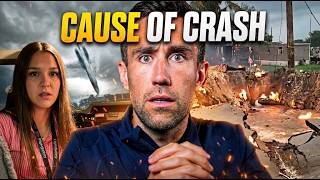
"The title promises 'shocking data' but delivers a speculative analysis with little new information, though the technical breakdown adds some value."
The video analyzes the November Florida Learjet crash that killed nine people, exploring potential causes based on technical evidence. It focuses on weather radar limitations, icing effects on the aircraft, and the sequence of decisions that may have led to the tragic outcome.
The Learjet crashed in Florida, killing nine people, likely hitting the ground at speeds over 700 mph.
The aircraft was a 22-year-old Lear 60, tail number N722BD, with the co-pilot being a 20-year-old woman who got her license at 17.
The aircraft had a Collins WXR 840 weather radar, a 1990s system prone to radar shadow, which can hide severe cells behind heavy rain.
The WXR 840 manual warns that radar energy may not penetrate a cell, and pilots should never assume the area behind heavy rain is clear.
They initially asked for direct to Freeport, but ATC advised deviation due to weather; then they tried to dodge storm cells.
Supercooled water droplets in thunderstorms can cause rapid clear ice formation, even at -47°C, leading to icing on the aircraft.
Runback water from the heated leading edge can refreeze behind the heating element, creating ice dams that act like spoilers, reducing lift.
The aircraft likely stalled and tumbled forward, leading to a nose dive, with a potential loss of tail components.
The manual recommends lowering the landing gear in overspeed to increase drag, but it's unclear if this was done.
In known icing, pilots should disable autopilot to feel control changes, but if used, it could mask icing and complicate stall recovery.
Crash Details
Confirms the Learjet crashed in Florida, killing nine people, and likely hit the ground at over 700 mph.
00:26Radar Shadow Danger
Explains the critical aviation concept of radar shadow, which can blind pilots to severe weather.
04:38Runback Water Mechanism
Details how runback water can lead to ice damming behind the leading edge, reducing lift and increasing stall risk.
13:32Autopilot in Icing
Highlights the standard procedure to disable autopilot in icing to feel control changes, which may have been overlooked.
24:35Swiss Cheese Model
Applies the 'Swiss cheese' accident model to show how multiple small failures aligned to produce a catastrophic outcome.
28:20[00:01] >> Sadly, all aboard were lost. That's certainly a factor, absolutely. looking into icing, of course. some breakup of the aircraft before impact? We're still seeking to determine
[00:14] >> Yesterday, we started our November with horrific news that a terrible Learjet plane crash had happened in Florida, killing nine people instantaneously.
[00:26] As the aircraft hit the ground, likely at speeds of over 700 mph. >> This has left us, the very next day, all wondering why. What happened? Did this
[00:44] aircraft get shot down? Didn't it have anti-icing protections to prevent from icing issues? Didn't it have weather radar? Weren't there two pilots? Why did radar? Weren't there two pilots? Why did they fly into a weather cell like this,
[00:59] a convective weather cell that was as clear as day looking in from the Monday morning quarterback point of view? What could have left them blind? Is there potentially something in the aircraft's history that could give us
[01:14] some clues? Spoiler alert, there may be. all of the answers that we can put together regarding this aircraft, including the potential that this T-tailed
[01:29] aircraft potentially lost some of its stabilizers before impact. A lot of people have been wondering, do they still make T-style aircraft, T-tails? They do. I happen to be certified to fly a T-tail style jet. It also happens to
[01:45] be one of the most popular business jets for sale today. That's it. Let's focus on what we know now, including now the identity of the co-pilot. We do not yet have the identity of the pilot available of the
[02:02] pilot flying the actual aircraft. Right now, we only have the identity of the co-pilot who was operating the air traffic control communications. This was traffic control communications. This was a 20-year-old who got her license at 17
[02:16] years old and wanted to work for the airlines. She's actually photographed here in what we believe to be the current configuration and setup of the aircraft. And this is very useful to see because we can see some of the monitors
[02:30] give us a little bit of insight into potentially the weather radar that they had on board this aircraft. Now, my heart goes out to all those affected by this is this terrible for the aviation community, the families involved. This
[02:44] is a horrible situation, and so we're going to try our best to stick to the facts. Here is an old listing of the very aircraft for sale, November 722 Bravo Delta. This is what the interior of the aircraft looked like the last
[02:59] of the aircraft looked like the last time it was for sale. We do not know if time it was for sale. We do not know if the actual accident aircraft maintained this equipment or configuration, but at least at the time of this sale, which it
[03:12] was painted for the sale in 2017, which we don't know exactly when the appears to have been sometime after 2017, this is the equipment that the aircraft had. And looking at this equipment is actually quite insightful.
[03:27] Right next to the radar altimeter, which is what you hear when you hear those cockpit voice recordings where the plane goes 50, 40, 30, that's the separate uh radar device. We're going to be looking right here for the Collins WXR 840. That
[03:43] is the weather radar that was in this aircraft, at least in 2017. Again, this is a 22-year-old plane. It's possible this could have been upgraded at uh by this could have been upgraded at uh by the time of the crash, but if it wasn't,
[03:56] let's go take a look at what the manual says for weather radar work in actual storms. So, right here you're going to find an important thing to remember find an important thing to remember about attenuation. Now, I need you to
[04:11] understand how weather radar works and the easiest way to do this is to show you this really quickly and then reading this will give us a little bit that's flying, what you're doing is you're sending radar pulses out to
[04:26] identify as much rain as you possibly can and the depth of that is going to paint your map darker. You're going to see more yellows and oranges and red
[04:38] indicating more density getting reflected back to you. The problem is with older radars, there can be something known as a radar shadow where something known as a radar shadow where when the rain is so heavy, you actually
[04:52] get obscuration of what's directly in front of you in the radar. So, it actually looks like there is no rain in front of you.
[05:04] there is no rain in front of you. This is called a radar shadow and it is actually warned in the very manual for the WXR 840 that was once installed on
[05:16] this aircraft. They warn of this very danger. And so, when people say, "Why would they go fly directly into a storm cell?" Mind you, they're very likely blind. They very likely can't see anything but clouds outside of their
[05:30] window. We obviously won't know until an NTSB report comes back and even then we But, the point is a lot of folks are wondering, "Why would they fly directly into that cell?" It is entirely possible that they could not see the cell. And
[05:44] when we look at what the actual manual says, we can start going, "Aha. This could have been a failure or at least one of the holes in the Swiss cheese could have been a failure of old equipment."
[05:57] The old Collins WXR 840 is a conventional 1990s radar that operates through manual tilt and gain. The manual right here says, "An important thing to remember about attenuation due to precipitation is that radar energy may
[06:13] not be able to penetrate a given precipitation cell with enough energy remaining to give an accurate assessment of any additional cells that may be lurking beyond." So, in other words, if you hit one cell with your radar and
[06:28] cell here." That could actually mask a bigger cell behind it. That's problem number one. Problem number two, quote, and this is directly from the "Of course, it is also possible that any given cell can be of sufficient depth or
[06:45] intensity that the radar is unable to detect its full depth. Even with our compensation functions on, the pilot is cautioned to never assume that the area
[06:57] behind heavy rainfall is clear of precipitation because the radar is showing a level zero black return or a yellow alert arc is not being yellow alert arc is not being displayed." In other words, don't trust
[07:11] the system that's being displayed to you. This is what it would look like on this WXR 840. Now, that's a relatively small screen. I want to show you what a more modern system looks like. This is the aircraft
[07:25] that I flew. This is the weather radar actually painting the weather. Now, we send out radar beams at about the speed of light. So, it happens pretty quickly, Listen in for a moment. >> 5 75-ish. There it is.
[07:42] >> That's cool. Actually picking it up on our own radar. weather data, but this is this fed weather data could be delayed. And this
[07:57] is a Garmin 3000. So, this fed weather data could be delayed. This right here is what's actually in front of us based on the radar. And so, we like to use a combination of A, what we can visually see, B, the weather that's being
[08:11] see, B, the weather that's being provided to us by data services, and C, a weather radar to make sure we can avoid those developments. And if we fast forward a little bit right here, you'll again be able to see that vertical
[08:23] development over here. And to us, that's a red flag. We're going to avoid that. The problem with this Florida situation is there really wasn't an let's avoid this capability. In fact, when they originally deviated, their first
[08:39] deviation came only after air traffic control told them, "Hey, it doesn't look too good to go that way." To me, it seemed like there was potentially, and we don't know if this was a contributing factor, some get-there-itis, some
[08:52] enthusiasm to get to Freeport as soon as possible. Listen to them request Freeport as soon as possible. Going direct to Freeport from this area would mean trying to fly over all of this weather. When potentially the correct
[09:07] did a lot of flight training over in this area, and there are plenty of opportunities to land. But let's listen in.
[09:20] >> Number 722 Bravo Delta, say direct Freeport. area of moderate to severe deviation at 11 o'clock 11 o'clock and 2 5 mi 100 mi in diameter.
[09:43] >> This breaks my heart because basically what they've decided here Oh, this it honestly it just it gives me chills because I I understand. Looking at this, you're trying to take care of your business
[09:56] Freeport. The weather is great in Freeport. You just got to get through Florida. Like, can't we just go over this? You're on a jet, come on. The answer is no. As we just learned here.
[10:09] sometimes there's the impression that we can dodge the clouds. And so, the thesis here was, "All right, if we can't go directly there, why don't we dodge the clouds down? By the time we get to FIMED, maybe what will happen is
[10:23] this storm cell will move up and to the left, which would be the northwest, uh through it over here." Which is obviously what they end up attempting to do. And that storm cell moves uh up and to the
[10:38] left. But, unfortunately, they end up hitting a leftover patch right here. Which is exactly where chaos strikes. They're picking up precipitation, which yesterday we indicated was likely to ice over the aircraft. See, a lot of people
[10:53] ask me, "Kevin, don't these aircraft have anti-icing systems?" They do. These aircrafts, including the Lear 60, which is what this was, even though it's 22 years old, the aircraft is equipped with a a FIKI
[11:06] certification, which stands for flight into known icing. And generally, when you're really up high in the sky, you generally don't have to be as concerned with a buildup of structural icing because it's just less common under
[11:20] Their temperatures, as they said on comms, were reported at -47°, which doesn't eliminate all icing hazards, but it eliminates a lot of
[11:32] going to worry about icing flying over Florida, even though you're -47° outside. Which really has little to do with being over Florida, mostly because you're too cold for there to be any liquid to actually attach to the
[11:47] almost like it bounces off. That's an oversimplification, right? There's one exception. Thunderstorms. See, thunderstorms can contain what are called supercooled water droplets. Basically, water that's
[12:02] very, very cold that gets lifted up by a thunderstorm's convective movement. So, we have movement of air up, and it actually brings you wet while it is -47° outside. So, as you go
[12:17] through this convective buildup and you now get these water droplets, these supercooled droplets, you have the potential of forming very quickly heavy clear ice on your aircraft. And this creates some substantial issues for the
[12:33] leading edge of the wing and specifically the lift that you might be able to experience. So, I have a diagram here. I'm going to pull this diagram up just to show how this might end up looking and how this
[12:46] could potentially affect your uh stall speeds because we do believe that this aircraft entered into a substantial nose dive stall. So, take a look at this. Here is a clean aircraft flying along. There's the relative wind. Okay. Now,
[13:02] let some time go by here and we're going to see some remaining airspeeds and play this. What we're going to find over time here is this yellow is an accumulation of ice that begins to enlarge and
[13:17] of ice that begins to enlarge and actually dams potentially behind where that heated leading edge is. Now, that sounds odd. Why would ice potentially accumulate behind the leading edge of the wind?
[13:32] Well, there's a special and very unfortunate reason that this could happen. So, there's something called runback water. So, here's how this could work and this we don't know that this happened. This
[13:45] will come out over time. But because the leading edge of the aircraft wing is some of the ice that ends up accumulating actually ends up melting
[13:57] and then it gets pushed back to the further portion of the wing behind where that leading edge is. Now, it refreezes back here where there are no heating elements. See, jet engines have a system known as
[14:12] bleed air and you take some essentially hot air, you bleed it off, you do performance for that, but you bleed off a little bit of the heat from the heater inside the cabin, but you also use it to heat up your heat surfaces,
[14:27] your pitot tube, which is one of your aircraft sensors, the leading edge on your T-tail over here, so you don't get that ice accumulation up here, and of well. But unfortunately, if you get
[14:41] overwhelmed with supercooled water droplets, then you could freeze, melt, and refreeze really rapidly, and in places that you don't want, because now you actually start damming ice behind where that
[14:57] heating element stops. That almost then operates like a wind break or a spoiler. That's not good, because it lowers the lift of the aircraft. Now, remember that
[15:10] lift on an aircraft in part happens because the plane gets sucked up. This is sort of a bizarre concept to think of. So, it's a little easier to see this visually. Essentially, when air flows over a
[15:25] windfoil like this, you create an area of low pressure, and you suck the plane of low pressure, and you suck the plane up. When you disrupt or contaminate the surface of that wing, you may not get that low pressure
[15:40] system, lose that lift element, and potentially stall one of the wings. Now, this stalling at a high altitude speed 35 to 35,400
[15:54] ft, given that they were in a climb to get away from some of the turbulence storm, would have unfortunately been devastating, in my opinion. This is my opinion, but I think the initial G-force
[16:07] opinion, but I think the initial G-force of going from a climb, now potentially with ice loaded on the wings, which ice on the wings potentially also raises to stall. Well, at the same time, lifting up to climb, so going into a
[16:22] climb lowers your speed, which also means you're getting closer to that stall point. Both of these things together, climbing out and accumulating ice, likely push them to the point of
[16:35] stalling, in which case the aircraft likely, as we saw on the ADSB data, tumbled forward and uh would have left uh for one heck of a ride inside of the aircraft, a feeling initially of negative Gs followed by uh very loud
[16:51] wind and and rushing, and unfortunately not being able to see outside because you are now going directly through the very thunderstorm that you've been trying to avoid. We are hoping to get a cockpit voice recorder.
[17:05] It's worth remembering that the Learjet that ended up crashing in Philadelphia in 2025 did also crash, although this crashed right after takeoff, spatial disorientation was a factor, and it also
[17:17] hit the ground somewhat like a missile, though nowhere near as vertical as this one. And we were able to recover the cockpit voice recorder and flight data recorder buried 8 ft below the surface where the
[17:31] aircraft crashed. That was the Learjet 55, the Medevac crash. Now, just for comparison, if this aircraft hit the ground between 700 to aircraft hit the ground between 700 to say 800 mph at about an 18-ton weight,
[17:45] let's take a look at what that might look like to make it more relative if it were a truck hitting a wall. So, a truck hitting a wall at this So, a truck hitting a wall at this point, at 800 mph in this case, uh would
[17:58] essentially experience the following. You won't see any damage intentional, but just focus on the actual truck here. This is what a truck accelerate it that quickly, would potentially look like.
[18:17] everything uh substantially disintegrates and scatters. Uh and this is how a uh around 600 people were displaced from their homes because of the debris field of this explosion essentially that
[18:31] ground. The aircraft did have a stick shaker but no stick pusher. However, it's also possible that the icing that the aircraft encountered would have the aircraft encountered would have overridden any form of stall warnings.
[18:45] This is really how the holes in the Swiss cheese can align. So, outside of Mar-a-Lago, which Donald Trump did leave Mar-a-Lago just about an hour before this aircraft crossed that airspace,
[18:58] that potentially the aircraft was shot down, even though there are no radio communications of any form of an explosion, simply uh radio calls about weather uh and icing and precipitation. We don't have any indications of an
[19:12] explosion. We had a lot of communication unfortunately on the way down. Uh I for them, it must have been terrifying. I can't get over it as a pilot. It gives me chills. It made it hard to sleep last night. But, we don't have reports of GPS
[19:27] anomalies. We don't really have evidence that this aircraft was shot down. We know that this system here is an Avenger air defense system. Uh this fires FIM-92 Stinger homing missiles.
[19:40] However, those homing missiles are designed to reach 5 uh km, which uh 5 km really going to be somewhere around maybe 12,500 ft.
[19:54] maybe 12,500 ft. This jet was 35,000 ft away. So, miles systems. Jammers that are also localized are designed to hit smaller drones, not jets uh or jet flight controls. Uh and this
[20:08] machine gun right here is also really designed for much nearer conflict. So, it's unlikely that a system like this would be able to take down uh a a jet. And then you also wonder, why would it do that? Uh that that seems like there
[20:23] failure here. Maybe there's some technology that's not disclosed that could have contributed here, but this seems unlikely. Uh so, while we can't likely. A bigger question that comes up from
[20:37] A bigger question that comes up from people is what happened to the tail? And did the stalling characteristics of this aircraft lead to a separation of uh the And so, there's been a lot of speculation on whether or not there was
[20:52] actually uh a vertical component still attached. Some people have tried to attached. Some people have tried to enhance the image to indicate that No, uh there were components missing. Like you could see people have manipulated
[21:05] this image to literally remove a wing from the aircraft. But the problem here is you could see very clearly on the left that the wing, even on the left, is barely visible because of how fast the aircraft is moving towards the ground.
[21:19] And the shutter speed implying that it would be very challenging to see all of National Transportation Safety Board did indicate that at least there's some evidence that some components did fall off of the aircraft or detach from the
[21:33] aircraft during the descent. So, we briefly touched on this yesterday. This is the overspeed recovery section of the Learjet 60 manual. I have the whole matters. What's interesting is they do tell you,
[21:46] "Warning, do not extend the spoil uh spoilers." Because if you are overspeeding on a Learjet and you extend the spoilers, the manual warns that you could actually pitch the nose down even
[21:59] could actually pitch the nose down even more and make the situation worse. So, don't do that. That's why it's very important that pilots are certified on the individual planes that they fly. Every aircraft is different. After going
[22:11] through thrust levels idle, autopilot disengage, identify the attitude to a level the wings, and then pull back as necessary. There's an additional component here that indicates landing gear switch down. Minor damage to the
[22:25] landing gear doors may be experienced when the gear is lowered at very high speed. Do not retract the landing gear for the remainder of the flight. Lowering the landing gear at high speed will increase drag and cause a momentary
[22:39] nose up pitch, which is easily controllable, but should be anticipated. Extending the landing gear has been flight tested at up to Mach point eight five. Analysis of flight test test data indicates this procedure is
[22:55] applicable at higher speeds. In other words, the manual itself indicated deploying the landing gear is a tool that you could use to increase drag. This is very important. When you train emergency descents as a pilot, you are
[23:11] emergency descents as a pilot, you are intentionally trying to bring a plane as depressurization, a medical emergency, whatever it is. possible, but you don't want to overstress the aircraft.
[23:25] The overspeeding on an aircraft, uh the red flag for that, is actually surprisingly close, especially at higher speeds. Here, you can see the barber poles, and they indicate that if we climb uh into this speed range here of
[23:40] around 220, we'd be overspeeding the airframe uh uh and and what it's capable of withstanding. If we substantially pieces of the aircraft could start falling off. That's what they want you
[23:54] to avoid. So, the idea is drop the landing gear. Landing gear's right here. We drop the landing gear because this is a heavy dragging device that could slow the descent of the aircraft. That's why it's generally on a
[24:07] checklist to drop the landing gear in an emergency descent or even in an overspeed condition, just to slow you down a little bit. It's not clear that Time will tell, but that'll be another thing that we're looking for. Now, what
[24:21] about that autopilot? Could that autopilot have caused problems? Yes. Unfortunately, when you enter into an icing situation, autopilot is a big no-no. In known icing, you are supposed
[24:35] to disable autopilot, so that way you can tell when your controls are getting indicating that you might be accumulating ice. Because when you're sitting at the front of a cockpit, you can't see the wings behind you. If you
[24:49] now have an autopilot set, and you stall on top of that, you could be trimmed for straight level flight, which means now the autopilot disengages, but your flight. Which now it wants to pull you up, which
[25:05] thing to do anyway. We want to pull up, right? We want to go back up." No. remember, and this is the complicated part about flying, you have to level the wings. So, if your trim condition is trying to
[25:19] lift the aircraft before you've leveled the wings, you're deepening the stall. So, now you have a pilot who is in a stall condition, banked 60°.
[25:32] flying around, people are starting to pray for Jesus, literally. You could hear that in one of the recordings. And you're fighting the trim. That is not necessarily fast. I don't know what it's like on this aircraft,
[25:46] but for us, that's me fighting, pushing this little knob on my wheel here, or I but it's slow because it's electronically controlled. And so, I'm all of my muscle that I can into this. I'm fighting a system to make sure, in
[26:02] this case, that I can actually get the nose down. And I'm trying to untrim the system at the same time as figuring out what kind of stall do I have. I've got autopilot disconnected. I've got a lot of screaming going on. I can't see
[26:15] of screaming going on. I can't see anything. Why am I banking 60°? The addition of all of these factors is really problematic. Think for a moment some of the failures that we just went through, or factors that we just went
[26:30] through. We just listed quite a few of them. The very first is that weather radar and how that weather radar could actually be failing us. So, the WXR,
[26:42] that old system, which is 1990 style technology with those shadows, into thinking they were going into clear air when we know they weren't.
[26:54] The next thing is were they using the autopilot in icing? autopilot in icing? That would have masked the very icing. why try to dodge in the first place?
[27:10] Why not land, delay, go around? don't have the fuel for that, so you have to land. Yeah, it's another stop, kills another 2 hours of your day. Just Just a landing configuration alone
[27:25] and taking off again is probably an hour. That doesn't include the taxi, the fueling, the bathroom breaks, the snacks. Landings uh can get it all done in an hour, hour 15 minutes, but usually it's a 2-hour on
[27:39] But anyway, so that's why people tend to avoid it know, we got a jet for a reason to get there fast." Yeah, well. Why was the landing gear not down?
[27:51] The landing gear potentially could have helped us. Was it used and did it break off? We don't know. Did that T-tail break off first or after the stall? And how did we recover from the stall? And what
[28:08] procedures were we trained on using on that stall recovery? And we don't think it was likely that the aircraft was shot down, but is it the aircraft was shot down, but is it possible that the very stall horn had
[28:20] possible that the very stall horn had failed due to the icing situation? And putting all of this together along with the decisions that were made here with the decisions that were made here left, in my opinion, very little room
[28:34] for potential successful outcome here. Flying into a convective storm that ice is over your aircraft is a very bad very bad situation. And hopefully the entire aviation
[28:50] community can learn the lessons of this whatever happened here and become safer for everybody. Unfortunately, at the cost of nine lives Unfortunately, at the cost of nine lives who just didn't deserve this.
The video opens with a direct statement about a tragic crash, immediately tapping into viewers' concern and curiosity about safety disasters. This emotional trigger is enhanced by the mention of nine deaths and the uncertainty about the cause.
Yesterday, [EVENT] shocked the [INDUSTRY], leaving everyone asking: what went wrong? Today, we dig into the data to uncover [INSIGHT].
AI-generated clip ideas for Shorts based on the transcript
This technical explanation of radar shadowing is both educational and controversial, suggesting a potential cause of the crash.
▶ Play ClipVisual and clear breakdown of icing effects on aircraft, relating to a real incident, is highly educational and engaging for aviation enthusiasts.
▶ Play ClipThe surprising technique of using landing gear during an emergency descent is a gripping and less-known piece of aviation knowledge.
▶ Play ClipExplores a common but dangerous pilot error, making it relatable for travelers and intriguing for aviation fans.
▶ Play ClipSnapshot 2026-11-17
Every observation TubeSum recorded, plotted as measured.
The vertical axis starts at 321K, not zero, so later observations stay readable.
Based on 7 observations · last observed Nov 17, 2026 · solid lines connect consecutive measurements (≤2 days apart); dashed lines span days TubeSum did not measure. · vertical axis focused on the observed range (starts at 321K)
Based on 7 observations · last observed Nov 17, 2026 · solid lines connect consecutive measurements (≤2 days apart); dashed lines span days TubeSum did not measure. · vertical axis from zero
Exact daily observations; gaps mean no observation was taken that day.
| Date | Views | Avg views / hour | Channel median |
|---|---|---|---|
| 2026-11-17 | 321,372 | 926.1 | 47,319 |
| 2026-11-16 | 321,351 | 947.9 | 47,319 |
| 2026-11-15 | 321,317 | 1,039.9 | 47,319 |
| 2026-11-14 | 321,271 | 1,115.5 | 47,319 |
| 2026-11-13 | 321,196 | 1,264.6 | 46,328 |
| 2026-11-12 | 321,156 | 1,343.7 | 46,328 |
| 2026-11-10 | 320,921 | 1,680.2 | — |
Audience reaction — separate from the performance metrics above.