Mayday: Learjet 60 Crash Audio Reveals Terrifying Descent
45sThe raw emergency radio calls and rapid descent make this a gripping, shareable moment that taps into aviation fear and curiosity.
▶ Play Clip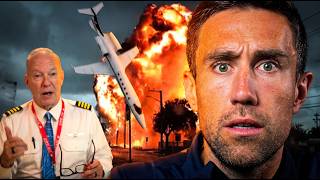
"The title promises 'new evidence' and the video does deliver on the latest findings, but it's padded with speculation and personal anecdotes, making it feel longer than necessary."
This video provides a detailed breakdown of the Learjet 60 crash that occurred eight days prior, analyzing the known facts, potential causes, and the ongoing NTSB investigation. The host, a licensed pilot, discusses the flight's circumstances, including the crew's decision to climb into a severe storm, and evaluates six possible contributing factors, from icing and autopilot issues to weather radar limitations and aeronautical decision-making.
The cockpit voice recorder has been discovered, which is expected to provide crucial information about the Learjet 60 crash.
The crash occurred eight days ago, killing nine people and injuring one on the ground. The video will break down six potential causes and assess their avoidability.
The NTSB is conducting an archaeological-style dig at the crash site, with debris scattered up to 3.9 miles away. One engine part has been recovered so far.
The NTSB has confirmed the aircraft came apart at least partially before impact. The left elevator was found in three pieces within a 1.3-mile range.
The host explains that the crew was at 35,000 feet because they were beginning their descent to land in the Bahamas, a common practice many miles out from the destination.
The crew reported moderate turbulence with altitude swings of 700 feet and light ice. The host notes that at -47°C, supercooled liquid droplets shouldn't exist, but thunderstorms can carry them to higher altitudes.
Icing can raise the stall speed, effectively bringing the aircraft closer to coffin corner even at lower altitudes. The Learjet 60's bleed air anti-ice system may have been overwhelmed by rapid ice accumulation.
Using autopilot in vertical speed mode during icing can mask the buffeting that would warn pilots of an impending stall, potentially leading to loss of control.
Weather radar can fail to detect the most severe storms because the radar signal is completely attenuated, showing a 'no signal' return that pilots might misinterpret as clear air.
The crew chose to climb to 37,000 feet, but the aircraft's manual recommends maintaining altitude or descending for turbulence penetration. Climbing can raise stall speed and worsen the situation.
ADM involves the decision to fly within 20 nautical miles of a thunderstorm, potentially influenced by 'get-there-itis' or pressure to arrive on time. The host speculates the crew believed the storm was less severe than it was.
The NTSB has ruled out a Stinger missile from Mar-a-Lago. Other theories include a component breaking off or a mechanical failure, but the host notes that aviation accidents often involve multiple factors (Swiss cheese model).
The 60° bank angle suggests a traditional aerodynamic stall. The host outlines the recovery steps (thrust idle, level wings, pull out) and notes that autopilot trim could have worsened the stall.
The pilot on the radio did a phenomenal job communicating the emergency, which is rare in such situations. This provides valuable data for the investigation.
Captain Steve's analysis of the crash video suggests the horizontal stabilizer may have been missing before impact, but the host explains that rolling shutter effects can create visual anomalies.
The captain was 55, ATP certified, and had multiple Learjet type ratings. The first officer was 20, also Learjet 60 type rated, but with a pilot-in-command limitation, meaning she could only serve as second in command.
Crash Overview
Provides the essential facts of the accident, setting the stage for the entire analysis.
01:01Coffin Corner and Icing
Explains a complex aerodynamic concept and how icing can bring an aircraft into a dangerous regime even at lower altitudes.
12:09Weather Radar Limitations
Highlights a critical safety issue where radar can mislead pilots into flying into the worst part of a storm.
22:53Aeronautical Decision-Making
Emphasizes the human factors that often contribute to accidents, beyond mechanical failures.
25:46Pilot Communication
Rare example of a pilot effectively communicating during an emergency, providing valuable data for investigators.
33:41[00:03] they discovered the cockpit voice recorder. Thank goodness this is going to have a treasure trove of information on the Learjet 60 crash. Let's catch you up with what we know as of today. >> It almost seems like a missile. It's
[00:17] >> It almost seems like a missile. It's going so fast. Mayday. Mayday. We're descending 10,000 ft per minute. November 72 Bravo Delta.
[00:31] >> Well, what happens if the storm is so bad? No signal comes back. The weather radar is like, "Huh, no signal's coming back. Must not be any rain." >> Foot service ceiling. Why? Why do you think they were at 35,000 ft? Why would
[00:47] they be so low? >> But by 1256, just 20 minutes later, 48,000 ft. >> Why did this crew lose control of this aircraft? We're going to crash into the ground. 72 Bravo Delta.
[01:01] >> It has been 8 days since the horrible Learjet 60 crash that killed nine people and injured one person on the ground. We're going to break down everything that we know, including what the potential six causes of this accident
[01:14] are, how avoidable they are, could this happen again? We're going to break everything down that we know up to this point, including reacting to Pilot comments that they've made. By the way, big shout out to pilot debrief. He got
[01:28] me into aviation. I'm also a licensed pilot and I went on to get my single pilot in command type rating for the Phenom 300E, a multi-engine jet aircraft. We have a model of it right here, which also happens to be a
[01:42] tetailed plane, just like the Larjet 60 that crashed. This accident hits terribly close to home because the people who were on board were on board with their two children, their nanny, and two friends.
[01:56] And that is the exact profile that I have flown in an aircraft just like the have flown in an aircraft just like the accident aircraft. The crater dig is uh has begun. Uh it is in progress. And what you can find in the crater dig is
[02:10] majority of the street, bringing it just down to single lane traffic. Because essentially treating this like an archaeological dig site where they've got a tractor that'll take scoops out of the crater and drop them onto tarps that
[02:28] can then piece by piece be component, extracted, analyzed, sorted, documented, and ultimately the uh NTSB will try to reconstruct on a flat plane uh this
[02:42] aircraft with as many pieces as they pen inside of a hanger somewhere at one of their investigation facilities. So far, one engine part has been recovered from the crater. Here's what we know. We know as the NTSB has told us that the jet did
[02:58] come apart at some point before the impact. whether or not this elevator or the horizontal stabilizer broke up at the beginning of the accident situation
[03:10] or towards the end as the aircraft was in an oversp speed condition. We do not yet know, but we're going to go through the six potential causes. Of course, so far the NTSB, which is early in their investigation, has only confirmed that
[03:23] the aircraft did indeed come apart at least partially before impacting the >> yesterday. The majority of the aircraft's left elevator was located in aircraft's left elevator was located in three pieces within a range about 1.3 to
[03:38] It >> is entirely possible that that is why we heard at least what sounds like potentially the male pilot in command operating the aircraft. We believe potentially praying before impact, which
[03:54] some have questioned. Is that the best use of time in a crash? Others would say at this time. >> Bravo Delta, I'm here with you. Talk to me. >> We are descending 22,000 ft and we are
[04:08] >> We are descending 22,000 ft and we are banking 60°.
[04:23] crater did fill with water because it broke a main and a water mane and there was also a substantial amount of rain in the region. So, the excavation took quite a while to get going. This aircraft is equipped with two Prattton
[04:35] Whitney 305A engines. Debris has been scattered in massive areas. I we're talking on the roofs of homes, on the roofs of buildings and businesses. uh debris and components of the aircraft have have
[04:51] components of the aircraft have have been found as far away as 3.9 miles away. That catches us up to speed with the details on the ground and the latest information that we have. Now, there's a lot of question about why did the
[05:04] lot of question about why did the aircraft def descend to flight level 350 and then why did they ultimately cut over to the Freeport shortcut? If they were cruising at 41,000, why didn't they just stay at 41,000? Well, first of all,
[05:19] we're not entirely sure that the descent would have saved them at all. The storm cell that they inadvertently entered into ended up rising to a height of 48,000 ft. This was a horrible storm cell to
[05:32] fly into. And so, a lot of people though are still asking, including Dr. Phil, who made a video on this, and said, "Why were they flying at 350?" an aircraft with a 51,000 foot service ceiling. Why? Why do you
[05:46] think they were at 35,000 ft? Why would they be so low? >> Folks, let me give you a very simple explanation. They were trying to land. I know that sounds crazy, but when you're coming in over the coast of Florida to
[06:00] come into the Bahamas, you're going to need to start descending. Now, does that justify descending through a storm? We'll talk about that later. Short answer, probably not. But it's very common many miles out to start your
[06:16] descent. In fact, typically when you're on a commercial airline, about 30 minutes before you land, you're going to hear boom. Ladies and gentlemen, we have started our descent into whatever. It's not generally a rapid process. is
[06:31] generally relatively gradual and you follow what are called arrival procedures, especially into really busy airports and they slowly step you down to different altitudes. So that way air traffic control can manage the planes
[06:46] that are coming in and you're not just dealing with people dropping into the airport from 41,000 ft whenever they want. So Dr. Phil, why were they at 35,000 ft? Because they were trying to land. It's really not that hard. Now,
[07:01] that answers that, but it doesn't answer why the aircraft went into a storm or what ended up causing this aircraft to fall out of the sky. So, we know that
[07:13] the aircraft crew ended up asking air traffic control for a better ride because they complained of moderate turbulence with altitude swings of around 700 ft. >> 732 Bravo Delta 350 moderate turbulence
[07:26] >> 732 Bravo Delta 350 moderate turbulence plus or minus. Okay, now 700 ft. 600 ft 47° C. We're managing the ice, but it is moderate turbulence for direct report.
[07:42] that, hey, we should be getting a better ride soon as you come into my zone, this particular area that that air traffic controller controls. Uh, and the rides reported to be better as you get deeper in. Basically, the crew also reported
[07:58] light ice. And this is where pilot debrief suggested, hm, that's weird. I learned the other day that you can have super cooled liquid, meaning cloud or raindroplets that are below 0° C, but still in a liquid form. But once you get
[08:15] still in a liquid form. But once you get below -40° C, that's no longer possible liquid will freeze again. >> Pilot debrief suggested, hm, that's weird. I know there could be super cooled droplets, but at -47°,
[08:30] temperature they were experiencing outside, you shouldn't have super cooled liquid droplets at this height, there shouldn't basically be any liquid at this altitude and at this temperature. So, even though there are super cooled
[08:45] liquid droplets that could cause ice, why are you guys icing up when it's -47 out there? That shouldn't be an issue. But something to add is that pilot debrief didn't mention that they were in the midst of a thunderstorm. And in
[08:59] thunderstorms, very super cooled liquid droplets can actually go up in altitude droplets can actually go up in altitude so high as the thunderstorm convection lifts these super cooled liqufied droplets up higher. And now all of a
[09:13] sudden, higher up where you typically don't have to deal with icing even though it's cooler because there's not enough liquid there. All of a sudden, you have humid air and super cooled liquid droplets and you start taking on
[09:26] >> Uh there's updrafts and downdrafts and it's it's taking drawing um fluid and um um water from the ground and bringing it up through that that updraft from the
[09:38] heat. We know that the co-pilot, the 20-year-old female who passed, texted her boyfriend just moments before the unfortunate accident, that they were taking on ice and they were in
[09:52] turbulence. This is around the same time, about 10 minutes before the accident, that they've asked for a better ride because they were experiencing swings of about 700 ft. Mind you, 700 ft is quite a bit,
[10:05] drops. I'll tell you, one time flying over LAX, I felt the aircraft drop about over LAX, I felt the aircraft drop about 600 ft in pretty gnarly turbulence. Now,
[10:17] gets hurt. Pilots are trying to somebody gets hurt, you call it severe, like you bump your head or something, which can happen. Uh moderate turbulence is often described as, hey, well, nobody got hurt. Now, others use a definition, and
[10:33] this is where there's some complexity, because there was apparently a voice recording of what sounds like both of the pilots who were flying this aircraft outside of Teterboro, arguing that they were unable to maintain their altitude
[10:46] of Teterboro. >> Number two, Bravo Delta, why are you >> We were just about to call you. We're experiencing moderate chop and unable to hold altitude to Bravo Delta. >> That's That's not moderate. Descend to
[11:00] 4,000 immediately. Traffic alert 11:00 4 miles citation or make it a golf stream >> We're descending to 4,000 to Ro. >> We got moderate chop, sir.
[11:12] not moderate. That's severe turbulence. Are you experiencing severe turbulence? including the air traffic controller, and said, "Oh, well, if you can't maintain your altitude, that's severe turbulence." Others say, "No, severe is
[11:27] there needs to be a little bit of definitional clarity on this, but the point is here we are again months later arguing, hey, we've got moderate turbulence, which is the same wording that was used outside of Teeter and 700
[11:42] ft, that's a drop. You're going to feel that turbulence in your gut, and you are like your coffee next to you is going swishing up into the air and you're swishing up into the air and you're cleaning up a spill. That sucks. So now
[11:56] that we have this set up a little bit, let's talk about the potential causes. let's talk about the potential causes. So cause number one, coffin corner and So cause number one, coffin corner and icing. So a lot of people are referring
[12:09] to coffin corner and a lot of people utilize commentary or images of coffin corner when an aircraft is at its service ceiling or about 45,000 ft. Mind service ceiling or about 45,000 ft. Mind you, this aircraft was at 35,000 ft. So,
[12:24] we were not near coffin corner, but let's understand coffin corner and how maybe even though we weren't technically close to it, we practically could have been. And that's a really important distinction. So, coffin corner, as you
[12:38] can see in these these demogra uh in these demonstrations, is basically when if you fly too fast, you oversp speed. And so you get maxed out over here, but your stall speed has risen so much that you really need to keep your speed
[12:54] you slow down, you're going to stall and lose lift. And if you go faster, you're going to oversp speed and damage the aircraft. Both very bad direction or, you know, it's a bad corner to be in.
[13:07] That's why they call it coffin corner. And so what could get you close to And so what could get you close to coffin corner without actually being at your maximum altitude? Especially since some pilots suggest that the Lear 60 is
[13:19] known for being relatively close to coffin corner at its max height. Well, 35,000 ft. Something else that could get you closer to coffin corner would be you closer to coffin corner would be icing. Unfortunately, icing on the wing
[13:31] icing. Unfortunately, icing on the wing reduces the lift that your wings have. Uh, and icing can build up in various different manners. It can build up on wings over here. It can block your pedo tube uh in the front, which then blocks
[13:44] potentially your air speed or your stall speed warning horn. All those things could be blocked because of icing, especially if that icing onset is really rapid. Unfortunately, with the style of heating that this Larjet uh 60 has, uh
[13:59] which is bleed air here and electronic heating off uh the back, this bleed air could potenti coming off the engines could potentially get overwhelmed by could potentially get overwhelmed by these super cooled liquefied droplets
[14:14] inside of a thunderstorm. And again, that sounds weird that a thunderstorm would basically be, you know, icing. It's almost like snowing or hailing, right? But again, it's because you've got that really cold high altitude
[14:26] outside air temperature combined with that humidity coming up really rapidly. that humidity coming up really rapidly. So, it's likely that this uh this bleed So, it's likely that this uh this bleed air leading edge froze and took on ice.
[14:38] The downside is the system is not designed to manage a really rapid accumulation of a lot of ice and it can actually melt the lower portion of that ice. that melted ice, now water, can roll back and then refreeze and dam up
[14:55] further back on the wing. Now you have a buildup of ice at even worse locations of your wing where you do not have any kind of anti- ice systems. You could have icing buildup over here in the back, which has happened in the past
[15:10] before. We've actually seen uh flight directives come out from the FAA, directives come out from the FAA, especially airworthiness directive 9916 03. It was in 1999 where they warned about anti-ICE wiring and potentially
[15:25] about anti-ICE wiring and potentially losing control pitch on a Learjet 60. That was warned back in 1999. So obviously the FAA will be investigating But the point is, you start taking on
[15:38] ice now, you're raising that stall speed even more. And so, even though you're technically well below your service ceiling, what you've now done is you've put the aircraft, of course, unintentionally, uh, accidentally might
[15:52] be the right word, into the situation where your air speed looks like this, and right here is your stall speed, and right here is your oversp speed condition. Uh, and let's say ordinarily you'd have all this margin to the up or
[16:07] to the downside, which could be 20 knots in either direction because you're now taking on icing. Unfortunately, what you're doing is you're literally raising that stall speed over here. And if your speed matches that stall speed,
[16:21] you're going to start having a buffeting of the aircraft. That happens right before a stall generally. And it depends on how quickly it could happen. the happen a lot faster, obviously, but
[16:34] typically right before a stall, you're going to feel this real mushiness of the control. So, I've obviously done a lot of stall training, including in jets. Uh, except we train these in real life at lower altitudes, not high altitude
[16:47] stalls. No, nobody practices stalls at high altitudes, unless you're in a simulator. I did probably 99% of my training in an actual aircraft. Uh, and you're holding this yolk back and you're waiting for it to stall and then you can
[17:02] kind of feel it. You can feel that stall come. Now, some aircraft will actually have what's called a stick pusher. It's not clear that this aircraft had a stick pusher, but a stick pusher will actually uh send an oral warning that go stall,
[17:17] stall, stall. And it'll say this six times, so three sets of two basically. And then after the third set, as you're feeling this stall coming on, this is stall, the stick pusher will actually take the yolk and just go and it will
[17:34] drive the nose of the aircraft over intentionally. >> Stall, stall, >> stall, stall, >> stall, stall. >> There it is.
[17:48] >> So if you're getting, you know, into a stall stall zone, the aircraft automation will go dunk and and knock you over to break that stall so you can get lift back uh over those wings and actually get back to flying. Now, you're
[18:04] that. Uh but it doesn't look like this aircraft actually had that. And there's something that could mask that buffeting or that shaking. What could mask it is actually the autopilot itself. And this
[18:20] something interesting. He suggests that some autopilots have a vertical speed mode that pilots can use to climb or descend at a certain rate per minute. The only problem with using that mode is that vertical speed in most cases
[18:35] >> It's possible these pilots ended up using the vertical speed uh change setting on their autopilot to climb. >> Roger Brava Delta. Now we're picking up >> Roger Brava Delta. Now we're picking up precipitation. We need to climb um 370
[18:49] stable to Bravo Delta. November 722 Bravo Delta. Roger. Climb and maintainable 370. No further right than your present. Heading for traffic. >> Climb 370 to Bravo Delta. >> Remember when these pilots in the audio
[19:02] indicated, hey, we're at 35,000. We need to climb because of the turbulence and the weather. It's possible they went to vertical speed and then they rotated vertical speed and then they rotated that knob to let's say 3 4 500 ft per
[19:15] that knob to let's say 3 4 500 ft per minute so that the aircraft on autopilot now climbs and lifts that nose up. The problem is you should not use autopilot during icing because the way the autopilot computer works is it might
[19:31] actually make all that buffeting that you would feel manually flying the plane feel smoothed out. And so you might not actually feel all of that input because
[19:43] the computer is flying the aircraft and making little micro adjustments to hide the fact that you're coming up on stall speed. So, if you're combining potentially a failed stall warning system because of the rapid icing with
[19:56] the use of autopilot with a climb, people say, including Bronco, and I I respect his channel as well, and he says you climb to sublime. In other words, you climb to sublime. In other words, escaping ice, yes, you could climb. Now,
[20:13] in training, when we took on ice on like a Cirrus aircraft, which was back when I was in prop training, we would generally see ice. And we're like, dude, this aircraft's uh anti- ice system, which was a feaky system. It sort of bleeds
[20:28] this little gel. This is getting clogged up. This isn't working. Let's land. up. This isn't working. Let's land. Okay. Obviously going down seems like a good idea so you can land and stay out of the weather, stay out of the icing.
[20:43] That's one option. Some people say no, go higher. That's an option, too. Now, the crew requested to climb to 370 in an effort to get out of the icing conditions, which is a common tactic. Climb to sublime or sublimate the ice to
[20:59] get above the weather. >> That's an option, too. But going higher is generally not the recommendation for turbulence penetration and this aircraft's manual. So let's
[21:14] take a look at this aircraft's manual. Looking right at the manual, you could Looking right at the manual, you could see it recommends either maintaining altitude and just dealing with the turbulence, picking an air speed and
[21:27] can, but letting the altitude fluctuations occur or descending. Now, if your altitude is fluctuating 700 ft because you're going through moderate to severe turbulence, what do you do? Well, something that you could do is you could
[21:43] ask air traffic control for a block altitude. Remember they were cleared down to 35,000 ft to get towards their basically descent pattern or you know basically descent pattern or you know their descent profile. So why not
[21:58] their descent profile. So why not descend or ask air traffic control, hey descend or ask air traffic control, hey can we have a block of 5,000 ft? We're getting whipped around here or even 2,000 ft plus or minus or give us a
[22:11] block 33 to flight level 350 which is 35,000 ft. That could have been an option. But at this moment we know that the pilots chose to climb probably
[22:23] because they thought the storm was right under them which in fairness some part or component of the storm was under them. But what they didn't know is that by climbing they were raising their stall speed and potentially flying into
[22:37] a worse portion of the storm. And that brings up the weather radar. See, channel before. I hope you're a subscriber here. But one thing that you end up finding with weather radar is the weather radar manuals themselves will
[22:53] actually have a warning that you should not use or rely on a weather radar not use or rely on a weather radar inside of a very severe storm because the weather radar that's supposed to warn you of bad weather could actually
[23:10] by itself mask the bad weather. That's because if the rain is so bad, the reflective radar signature of uh the rain or how bad the
[23:23] storm is might end up getting blocked. So, in other words, if it's bad, your radar says, "Uh-oh, it's yellow or orange or red ahead. Don't go there." Okay, let's steer for the black on the radar. Okay. Well, what happens if the
[23:39] storm is so bad? No signal comes back. The weather radar is like, "Huh, no signal's coming back. Must not be any rain." Which is literally the opposite because the signal is getting so degraded by such a bad storm that what
[23:54] you think is actually a hole of bad weather, which would be a good place to go, a hole of bad weather, you fly through clear air, is actually the worst through clear air, is actually the worst part of the storm. That is a really big
[24:06] possible failure. So, let's organize this for a moment. So, number one, we got the ice problem and the increasing stall speed. Number two is that autopilot potential issue. Number three is the weather radar, which was a 1990s
[24:23] WXR 840 radar, a Collins radar. At least that's how the aircraft was sold back in 2017. And it's unclear if that weather was upgraded through a voluntary recall or otherwise uh that radar. But if it
[24:37] wasn't upgraded, that's the potential problem that we have with the weather radar. Now, remember, there are three forms of The absolute best form of weather information is what is right in front of
[24:50] you. The next best form of weather information is your radar because it is literally what you are painting on a map in front of you. And the third best form in front of you. And the third best form of data is the next radar data. The
[25:03] problem is that can operate with a multi-minute delay. And when every minute a storm is going from 22,000 ft to 30,000 ft to 40,000 ft to 48,000 ft tall based on radar reconstructions, then which are from weather companies,
[25:19] then which are from weather companies, not the NTSB, then you don't really have the luxury of toying around with minutes. Then the next issue that we've talked about already is this. Why climb instead
[25:32] of descend? And again, we know what the turbulent air penetration rule is about how it's not advisable to climb. But were they climbing because of turbulence? That's what they said on radio or were they climbing because of
[25:46] icing? We don't know. What is cause number five? Cause number five, which a lot of people say is honestly cause number one, is what's called ADM, aeronautical decisionmaking. Unfortunately, a lot of people on social
[26:00] media have turned this into, oh, why did they take a 5minute detour to Freeport? Because they wanted to save 5 minutes. They could have just gone to the south They could have just gone to the south and avoided that spotty dark cell. Well,
[26:14] we don't know, but my speculation is they weren't trying to save 5 minutes. If they knew they could go right and save five minutes and avoid the cell confident they would have instantaneously made that decision. That
[26:27] is a very cheap insurance policy. The bigger issue isn't that it was a 5-minute decision. The best decision would have probably been to land on the west coast of Florida, where there was no weather at the time, and just wait
[26:41] out the storm as it passed over to the northwest. Unfortunately, that's going to add a couple hours. So, who knows if they had dinner reservations or what's known as get theiritis could happen where potentially you have
[26:54] passengers who were going to the Bahamas for Adam Robinson's birthday saying, "Hey, we got appointments. We got to get there. We've got a big dinner celebration. We're meeting people at a certain time. We're late. We're in a
[27:08] rush." The pilots for whatever reason feel pressure either because of their own situation which could be illness, sleep deprivation or their empathy late on their own time. All these things could go into what's known as get
[27:22] theiritis. This is why back in training we always used to have this acronym uh and I'll pull it up on screen. I'm safe. And it was really a way of trying to And it was really a way of trying to declare like hey am I being pressured by
[27:35] external forces? Am I on any kind of medications or alcohol or things that shouldn't be affecting me but might be affecting me? So all these are sort of little acronyms that or or things that we say that go
[27:50] into ADM. ADM is basically why did you choose to go within 20 nautical miles of a thunderstorm? We know the accepted procedure is to never get within 20 miles of a storm. My expectation is they believe that they would be under the
[28:06] end up coming out is that this is my speculation that all the bad weather has passed that they'll be able to fly over some of the remaining clouds and that's it. I don't think their weather radar showed that horrible development that
[28:22] ultimately led to their demise. Now next, so that's ADM. That's number five. What else could have happened? Well, there are a lot of other theories and I'm putting these all lumped together because I think these are all a lot less
[28:37] likely, but they have their possibilities. One that the NTSB has already ruled out is that a Stinger missile from Mara Lago shot them down. No, Stinger missiles don't go that far. It's No. Yes, it's a
[28:52] to Mara Lago and that Donald Trump just left Mara Lago an hour before this accident. Yes, it's a coincidence, but no. The ATSB has also agreed. No. The next thing uh is this potential that a component just broke off. Maybe maybe
[29:08] the elevator got iced over, the cables froze up, and as they just yanked on it froze up, and as they just yanked on it to climb, it broke off. It could have been a maintenance issue. Uh it could have been uh a failed component. We've
[29:21] seen this before in aviation where some stupid single little bracket screws the entire flight over and the whole thing crashes and burns. It's terrible. It's crashes and burns. It's terrible. It's really, really horrible. But aviation,
[29:36] even though historically it's extremely safe, it is very unforgiving. And sometimes all it takes is one thing going wrong. Of course, often it is not just one thing going on. And that's why I put it into potential cause number six
[29:51] that there was some kind of mechanical failure. Mostly because usually what happens in aviation is that something occurs that we call the Swiss cheese model where you have multiple slices of Swiss cheese and every time you have
[30:05] Swiss cheese in your aviation, that's your aeronautical decision-m, your understanding of the flight manual, your experience on the aircraft, whatever. experience on the aircraft, whatever. Anytime you go in with bad baggage or
[30:17] practices, you're putting up a slice of cheese. And the more of those you align, the more you increase the odds that all those holes in the Swiss cheese are going to align. And then you will have made a
[30:31] decision that's contributed to a potential accident. And luck is the only accident. This is why constantly training and studying accidents is so useful. so that hopefully the thousands of other pilots that are flying look and
[30:45] of other pilots that are flying look and say, "Wow, yeah. Okay, I'm going to study stalls. I'm going to read my flight manual. I'm going to avoid company is going to upgrade the weather radar." Whatever. Every accident like
[31:00] this can end up contributing to thousands of lives being lost. Now, been some form of spatial disorientation. Generally, any of the simulations that you see on social media about this aircraft, they don't show any
[31:17] weather, which is crazy because as soon as they started losing altitude, they would have been in the storm, in the thick of it. They would have seen nothing outside of their cockpit window. So, the only thing they would have done
[31:31] is been heads down looking at the flight controls and the instruments in front of them. and they would have been locked in on those flight controls trying to understand, oh my gosh, what's happening? Is the tail stalling? In
[31:43] other words, did we lose lift at the tail? Which generally leads to a rapid decline at the front of the nose of the aircraft? Did a component break off? Why aircraft? Did a component break off? Why are we banking 60°? 60° banks aligned
[31:57] with a typical or traditional aerodynamic stall where one of the main wings lost lift, not the tail. So, the 60° bank leads me to believe this was just a regular aerodynamic stall that caused this upset. Why did we or why
[32:12] were we not able to fix the upset? Step one in a regular aerodynamic stall, one in a regular aerodynamic stall, thrust idle. Step two, level the thrust idle. Step two, level the aircraft. Roll to wings level. Step
[32:27] aircraft. Roll to wings level. Step three, once you've got speed, pull out three, once you've got speed, pull out of the stall. if you pull back or if the autopilot is still set to a vertical speed indicator that we want to climb or
[32:41] for whatever reason the autopilot was trimmed to such a setting that is at the moment they lost their lift and they fell into a stall. The autopilot through vertical speed or trim was trying to lift this aircraft up or the autopilot
[32:54] was disengaged and the trim was still out of whack. then the aircraft may have tried to lift its nose automatically because of those trims um automatically which would have just deepened and worsened the stall. All of those things
[33:12] we're going to put together. There's a lot to put together here but it's devastating. So when we put this information together with some of the other information we know that ultimately something absolutely horrible
[33:25] went wrong here. something led to an upset in this aircraft's flight, whether it was turbulence, a stall, icing, whatever. Then we need to know what happened. How did these two pilots respond? One pilot, the pilot we hear on
[33:41] the radio, was clearly finger down on that pushto talk button, communicating 60° bank whatever the issues were that she was seeing, calling out, doing actually a phenomenal job communicating what has happened here. Usually, you
[33:56] hear nothing. Usually, it's just awkwardly silent, which is really sad. Out of the hundreds of mishaps that I've covered, including dozens of pilots that have lost control of the aircraft or their aircraft has perhaps broken apart
[34:10] in flight, not a single one of those pilots made radio calls while they were falling out of the sky, describing their rate of descent, their altitude, or their bank angle the way that she did. >> Now, Captain Steve talks about, "Hey,
[34:23] was that elevator there when it hit the ground?" The NTSB says, "No." Captain Steve starts talking a little bit about how shutter speeds potentially could make it look like that aircraft doesn't have a wing or it doesn't have a wing as
[34:37] he says here. Let me show you the very next frame by the way so you could something known as a rolling shutter which I'll talk about in a moment. But here's Captain Steve and his analysis of the Onewing Cam. It's a lower quality
[34:51] camera and uh and so as you look at it, the airplane looks kind of elongated and you can see just a faint shadow of the right wing. You can't hardly see any of attached. We know that. We've been told that. But at the top of that vertical
[35:07] stabilizer right up here, there doesn't appear to be anything. And then if you just go one frame further. So if this was shot at 30 frames per second, uh then this would have been30th of a second further. We could literally
[35:22] see the second wing appear. But what you never see appear is that horizontal stabilizer. So, the rolling shutter that Steve starts explaining is really this Steve starts explaining is really this camera explanation that a a shutter
[35:38] speed isn't going to be able to capture in high definition really fastm moving really really high shutter speed. A typical 30 frames per second camera is going to shoot at a shutter speed of about twice that. So, about 60. But if
[35:53] you really want a high-speed camera, you should probably be five to 10 times that shutter speed. So somewhere in the range of 300 to 600, especially since a lot of modern cameras use something called a rolling shutter, which is where you're
[36:10] not actually even taking a complete picture every 30th frame per second. you're actually just taking a portion of the photo and then it sort of roll refreshes which is also weird and can lead to these anomalies in imagery.
[36:28] But this really puts together a lot of information here. Why were they at this level? What could have happened with icing? How did icing contribute? How did autopilot contribute? How potentially did the recovery procedure for
[36:41] turbulence lead to a stall? Why did we climb? All these things contribute. Why climb? All these things contribute. Why did we go close to this in the first place? Obviously, all questions we want answers to. What happened with the
[36:55] answers to. What happened with the weather radar? Was it an old model? We're trying to put together all of the information that we have right now at this moment, but obviously there's a whole lot more to get. So, these are
[37:09] some of the ideas. There are also talk there's also talk obviously about that about that. There's talk potentially that the pedo tubes were blocked and we because the tubes were blocked. The pedo tube measures your air speed. If it was
[37:24] even know that they were actually slowing down. We don't know. We don't have all of these answers yet. And we look forward to getting all these answers. We do know that the same jet had that Teeter Bro ATC audio.
[37:48] 55 years old of Gilbertsville, Pennsylvania, was an ATP certified pilot, 2021 certification. He was a certified flight instructor as of April 2025. He has multiple Learjet type ratings, so he should know this aircraft
[38:02] inside and out. The first officer was 20 from Boca Raton, Natalia. Uh she was from Boca Raton, Natalia. Uh she was also Leerjet 60 type rated with a pilot that mean? A pilot in command limitation means you are only allowed to be a
[38:18] second in command. Now in this case the first officer did have a second in first officer did have a second in command limitation. That is okay. That command limitation. That is okay. That has no bearing on her ability to be a
[38:31] first officer. And if she was operating the weather radar, I wholeheartedly believe it is much more likely she was misled by what she saw in front of her on that weather radar rather than what was actually going on
[38:46] outside. And so unfortunately all nine individuals passed away. Jeffrey Natalia Adam Robinson 45 of Austin Helen Sharp 40 years old his wife Emma Robinson four
[38:58] Charles Robinson two years old Anna Marie Ramirez Satina 24 years old the Marie Ramirez Satina 24 years old the children's nanny Rachel Reed and Rowan Fairtos 38 years old
[39:12] this is horrible and hopefully this is just my best hope is that we can learn as much as possible from what comes next on the preliminary ary report expected in about a month, plus the probable cause.
The video opens with the discovery of the cockpit voice recorder, immediately creating intrigue about what information it might reveal. This hook leverages the audience's desire for new information and the inherent drama of an aviation accident.
New evidence has emerged in [EVENT] — here's what it reveals about [MYSTERY] and what it means for [AUDIENCE].
AI-generated clip ideas for Shorts based on the transcript
The raw emergency radio calls and rapid descent make this a gripping, shareable moment that taps into aviation fear and curiosity.
▶ Play ClipThe emotional weight of a pilot praying during an emergency sparks debate and deep engagement on social media.
▶ Play ClipThe mystery behind the pilots' decision to enter a severe storm and the scientific explanation of supercooled droplets is highly educational and shareable.
▶ Play ClipThe concept of 'coffin corner' and its real-world application to this crash is a concise, viral-ready aviation lesson.
▶ Play ClipExplaining how weather radar can fail in severe storms challenges common assumptions and offers a compelling 'what went wrong' narrative.
▶ Play ClipSnapshot 2026-11-18
Every observation TubeSum recorded, plotted as measured.
Based on 8 observations · last observed Nov 18, 2026 · solid lines connect consecutive measurements (≤2 days apart); dashed lines span days TubeSum did not measure. · vertical axis from zero
Exact daily observations; gaps mean no observation was taken that day.
| Date | Views | Avg views / hour | Channel median |
|---|---|---|---|
| 2026-11-18 | 306,094 | 1,538.2 | 47,319 |
| 2026-11-17 | 305,692 | 1,767.0 | 47,319 |
| 2026-11-16 | 305,482 | 1,862.7 | 47,319 |
| 2026-11-15 | 304,710 | 2,257.1 | 47,319 |
| 2026-11-14 | 304,422 | 2,955.6 | 47,319 |
| 2026-11-13 | 302,223 | 3,825.6 | 46,328 |
| 2026-11-12 | 293,564 | 5,436.4 | 46,328 |
| 2026-11-10 | 109,281 | 18,213.5 | — |
Audience reaction — separate from the performance metrics above.