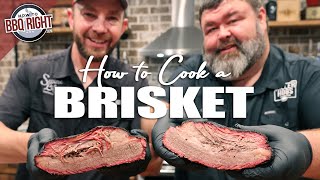

How to Pick the Perfect Brisket
47sTeaches viewers how to avoid a dry brisket by selecting the right cut at the store.
▶ Play Clip"The title promises 'secret tips & tricks,' and the video delivers exactly that—practical, detailed advice on trimming, fire management, and cooking techniques."
This video is a comprehensive guide to smoking a brisket at home, covering everything from selecting the meat to slicing and serving. Two experienced pitmasters share their techniques for trimming, seasoning, fire management, and the importance of patience throughout the cook. The focus is on achieving a tender, flavorful brisket with a perfect bark, suitable for any type of smoker.
Look for a tight cryovac package with no leaks, uniform thickness across the flat, and a pliable feel. Avoid thin, tapering flats that will dry out.
Trim fat cap to 1/4 inch, remove hard/slimy fat, and round off all sharp edges for better airflow (aerodynamics). Use a thin, flexible fillet knife.
Use a base of savory beef rub, then a barbecue rub for color/sweetness, and finish with coarse black pepper for texture. Avoid over-seasoning.
Maintain 275°F, adding a split of hardwood (like hickory) every hour. Build a clean coal bed before adding splits. Spritz with water or Worcestershire to prevent bark from drying.
Wrap in butcher paper when bark is set and internal temp reaches 165-170°F. Butcher paper preserves bark better than foil. Continue cooking to 202-205°F, probing for tenderness.
Rest brisket for at least 1 hour (ideally 2-3) in a dry cooler or wrapped in a towel. This allows juices to redistribute and ensures tenderness.
Separate point from flat, slice against the grain. The best slice includes both lean and fatty meat. A properly cooked brisket will bend and fold without breaking.
What are the key indicators of a good brisket when purchasing?
Look for a tight cryovac package with no leaks, uniform thickness across the flat, and a pliable feel.
01:52
How should you trim a brisket for optimal cooking?
Trim the fat cap to about a quarter-inch, remove any hard or slimy fat, and round off all sharp edges for better airflow.
02:38
Why is it important to round off the edges of a brisket during trimming?
Aerodynamics—smooth, rounded edges allow heat and smoke to flow evenly, preventing hot spots and uneven cooking.
02:43
What three-layer seasoning approach is recommended for a Texas-style brisket?
A base layer of Prime Beef rub, then a barbecue rub for color and sweetness, and finally coarse black pepper for texture.
04:37
How do you decide whether to cook brisket fat-side up or down?
Fat-side up if heat comes from above (offset smoker); meat-side up if heat comes from below (pellet grill).
05:43
What is the recommended cooking temperature and fuel management for a stick burner?
Maintain a steady temperature of 275°F, adding a split of hardwood (like hickory) about every hour.
07:03
Why should you spritz a brisket during cooking, and what should you avoid in the spritz?
To keep the bark from drying out, especially on the flat and edges, and to add flavor without burning sugar.
07:49
When and why should you wrap a brisket in butcher paper?
Wrap in butcher paper when the bark is set and internal temp reaches 165-170°F, to preserve bark while allowing some moisture to escape.
14:12
What is 'the stall' in brisket cooking, and why is it important?
The stall is when the internal temperature plateaus as fat renders and moisture evaporates; it's a critical phase for collagen breakdown.
17:57
How do you know when a brisket is done, beyond just reaching a target internal temperature?
Probe for tenderness—the meat should feel like soft butter with slight resistance. Also, watch for the rate of temperature increase to slow down.
20:37
Why is resting a brisket important, and what is the recommended resting method?
Rest the brisket for at least one hour, ideally two to three, in a dry cooler or wrapped in a towel to allow juices to redistribute.
22:08
What is the proper way to slice a brisket for serving?
Separate the point from the flat, then slice each against the grain. The best slice includes both lean and fatty meat.
22:30
Aerodynamic Trimming
Explains that rounding edges isn't just cosmetic—it improves airflow and prevents hot spots, a key insight for even cooking.
02:43Fat Orientation Depends on Heat Source
Clarifies the common debate of fat-up vs. fat-down by linking it to the direction of heat flow in different smokers.
05:43Wrap When Bark is Set, Not Just at a Temperature
Emphasizes visual cues over strict temperature, advising to overshoot bark color slightly since it softens in the wrap.
14:12The Stall is a Critical Phase
Highlights that the stall is where collagen breaks down, and rushing it leads to tough brisket—patience is essential.
17:57Probe Tenderness Over Temperature
Stresses that internal temp is a guide, not a guarantee; the real test is how the meat feels when probed.
20:37[00:00] so you want to cook a brisket well
[00:01] that's what we're going to do today
[00:02] brisket it can be one of the most
[00:05] difficult things you've ever cooked it
[00:06] can also be one of the most rewarding
[00:08] things you've ever cooked brisket Done
[00:09] Right is absolutely delicious today
[00:12] we're going to show you how we Source
[00:14] the brisket kind of pit we're cooking
[00:15] the brisket on give me some tips and
[00:17] techniques on how we cook a good eating
[00:19] brisket at home and you know it's going
[00:20] to be good it's going to have to be good
[00:22] let's get to cooking y'all so we're
[00:23] cooking this brisket that we're doing
[00:24] today on one of our stick burner pits
[00:26] I've got my Outlaw fired up back there
[00:28] smelling good in The Smokehouse it
[00:30] doesn't matter if you don't have a stick
[00:31] burner we're going to be going over to
[00:33] Basics today and they're going to apply
[00:34] to any pit so you can take that and
[00:36] apply it to your grill at home first
[00:38] thing to me when we're talking cooking
[00:39] brisket is it's going to take time you
[00:41] brisket's not something you can hurry up
[00:43] no we got an early start this morning
[00:45] real early because somebody had to drive
[00:47] a couple hours to get here no I set my
[00:49] alarm clock you know before the sun came
[00:51] up got up I got me a good bed of Royal
[00:53] Oak briquettes going couple tumbleweeds
[00:55] underneath the fire and I just left the
[00:57] pit open I'm talking about open the cook
[00:59] chamber doors open up the exhaust 100
[01:01] and leave the Firebox door open I want
[01:04] to get a good coal bed established I'm
[01:05] gonna let that smoke get out of there
[01:06] let it start drawing through the pit and
[01:08] then I'll go ahead and shut the doors
[01:10] once my bed's established and let the
[01:12] heat from the coals those BTUs heat that
[01:15] pit up you know 15 20 minutes you got a
[01:17] good coal bed going this time start
[01:19] adding those splits usually that's when
[01:20] I start checking my dial back a little I
[01:22] mean I want it to slowly creep up to 275
[01:24] I'm not trying to give it all the heat
[01:26] it's got a little bonfire in it you
[01:27] could use just about any kind of
[01:29] charcoal you want any kind of wood we
[01:31] like burning hickory wood that's what we
[01:33] burn in our stick burners because it's
[01:34] in our area we've noticed this a ton but
[01:36] the Hickory and the hardwoods keep your
[01:38] coal beds so much healthier you know you
[01:40] maintain that cold bed when you start
[01:41] running fruit Woods you know you lose
[01:43] that so you have to have that hardwood
[01:45] throughout the cook process to maintain
[01:46] that cold bed or you'll be fighting
[01:50] whenever I'm picking up a brisket first
[01:52] I want to look at the cry vac make sure
[01:53] it hadn't been compromised to make sure
[01:55] there's no leaks in it it's nice and you
[01:57] know got tight if the brisket's loose in
[01:59] it that's okay if it's flexible that's
[02:01] better you want the packaging tight that
[02:03] means it's got a little age on it but
[02:04] what I'm looking for is when I grab the
[02:06] brisket is a uniform thickness across
[02:08] the flat I don't want it to tell out two
[02:10] thins on the sides I don't want to you
[02:12] know have any butcher Cuts in it things
[02:13] like that often you can't tell in the
[02:15] package right you just have to go by
[02:17] feel but really if you'll just kind of
[02:19] go for something that feels like it's a
[02:21] little pliable that the package is still
[02:22] tight on it doesn't have any leaks
[02:24] oxygen hasn't gotten into it doesn't
[02:25] have any discoloration and it has a
[02:27] uniform thickness that's a good sign
[02:28] it's gonna be a good brisket it's going
[02:30] to be a little bigger on that point in
[02:31] but like you said you don't want it
[02:33] paper thin on that flat end because
[02:34] that's what's going to get dry and
[02:35] that's what's going to make you think
[02:36] you screwed up and didn't cook a good
[02:37] boost I did a home trim which is not as
[02:39] aggressive as you would going to a
[02:41] contest the way I look at it and it's
[02:43] kind of a lot along the way it's like
[02:44] Aaron Franklin teaches where it's about
[02:46] aerodynamics it's about airflow in that
[02:48] pit over the brisket I'm not trying to
[02:50] cut every single little thing off of it
[02:53] but I do want to make it smooth I want
[02:54] to kind of round it a little bit I want
[02:56] to take off any of the oxidized edges I
[02:58] want to take off any of the thick fat we
[03:00] cook this brisket fat side up because we
[03:02] want a good eating brisket today we're
[03:03] going to make a nice little crust on top
[03:05] of it but I took that fat down to about
[03:07] a quarter inch there's good fat on a
[03:09] brisket there's bad fat and you'll
[03:11] notice that good fat will be that hard
[03:12] dry fat and that's what renders and
[03:14] that's what's going to put that flavor
[03:15] in that brisket but sometimes I know
[03:17] you've probably seen on this one toward
[03:18] the flat you kind of see that slimy fat
[03:20] it's not something that's going to
[03:21] render and that's hard to cut off if you
[03:23] don't have a super sharp knife you're
[03:24] just going to push it around on that
[03:25] brisket you ain't gonna cut it off every
[03:26] time I'm trimming briskets I always go
[03:28] for my little six inch semi-curved
[03:31] fillet knife the blades real thin on it
[03:33] it's flexible but you can get the thing
[03:34] razor sharp and it's easy to get an edge
[03:36] back on and I do trim both sides like I
[03:38] flip the meat side over I'm going to
[03:40] take out a little bit of that decal fat
[03:41] the whole thing is we want this brisket
[03:43] to lay flat on the cooking grate on the
[03:45] grill and so that's where that
[03:46] aerodynamic looks in you got to think
[03:48] we've got airflow coming from the
[03:50] Firebox through the fire chamber then
[03:52] out the exhaust well we want that air to
[03:54] not be restricted when it hits that
[03:56] brisket and that's going to keep it from
[03:57] drying out from crumbling if the air can
[03:59] flow right over it's smooth and an
[04:01] aerodynamic type way it's going to be a
[04:03] better brisket but if you're cooking on
[04:05] a drum or something like that that the
[04:07] airflows mowed from the bottom up you
[04:09] still want that aerodynamic look because
[04:11] like all your Corners they need to be on
[04:13] the radius because that's what's going
[04:14] to crumble so like you were saying
[04:15] radius them off and make them smooth and
[04:17] you know the edges no Sharps no points
[04:19] you know you can do that with scissors
[04:20] you know if you don't have a good knife
[04:21] you can take scissors and walk right
[04:23] around that edge and just round off all
[04:25] the edges and you're going to still gain
[04:26] that same airflow even if it's on a
[04:28] pellet grill a drum or a stick burner
[04:32] once you got it trimmed you got to get
[04:33] something on it before we put it on the
[04:35] pit now for a good eating brisket I'm
[04:37] along those Texas flavors with a little
[04:39] bit of barbecue rub to it I used a base
[04:42] layer of your Prime Beef rub because I
[04:44] can't blame you there I mean I want the
[04:46] Savory I want that little pop of heat I
[04:48] want that Umami flavor and it just goes
[04:49] with beef I mean it just really does I
[04:51] love the I love the primes oh it doesn't
[04:53] cover anything up that's right it melts
[04:55] in you really don't even know what's
[04:56] there but you're like wow that's pretty
[04:57] good flavor you know it's almost like a
[04:58] dry brine coat a little bit and I didn't
[05:00] go super heavy with it on brisket but
[05:01] brisket can take the seasoning next I
[05:03] went with some barbecue rub I wanted
[05:05] that you know traditional kind of a
[05:06] barbecue look to it that's where you get
[05:08] a lot of that color from you get some of
[05:09] the spice and some of the sweetness from
[05:11] the sugars in it to get it to caramelize
[05:13] some you could use whatever rub you want
[05:15] on a brisket really and then to finish
[05:16] it off just a little texture with some
[05:18] TX that's that coarse saw coarse black
[05:21] pepper if you don't have that season you
[05:23] could use anything you want that has a
[05:24] coarseness to it I've used Montreal
[05:26] steak seasoning before I've just bought
[05:28] cracked black pepper and like kosher's
[05:30] flaky salt but to me that gives you that
[05:32] authentic kind of when you think about
[05:34] brisket look to the bark and to the
[05:37] outside you're going to get it from
[05:38] those seasonings this is a what I call a
[05:40] top flow offset stick burner so your
[05:42] heat's going to be mainly above that
[05:43] brisket I'm gonna put the fatty Point
[05:45] toward the fire basically your fat is
[05:47] sacrificial you have to render it but
[05:49] also that Fat's gonna help protect all
[05:51] the meat that you're trying to you know
[05:52] you're going to eat are you a fat up or
[05:54] fat down guy or does it depend on the
[05:56] grill it depends on the grill in my
[05:58] opinion but also depends on the cook you
[06:00] know what are you going for Do you want
[06:01] to build a good hard bark on that meat
[06:04] or do you want to kind of start
[06:05] rendering that fat and because I know
[06:06] our Heat's kind of more Above This
[06:08] brisket we're going to put it fat up
[06:09] this time if you're cooking on a pellet
[06:11] grill the Heat's coming from the bottom
[06:12] cook it meat side up you know it's
[06:14] completely up to you I don't think one's
[06:16] better than the other but I think one
[06:18] could make your cook easier for your
[06:20] pizza it depends on your airflow and it
[06:22] depends on where you're trying to
[06:23] protect that brisket I think that's what
[06:25] I've always said when people ask me and
[06:27] when you trim that fat down to a quarter
[06:28] inch you have a better chance of
[06:30] rendering that fat and getting it to
[06:33] flavor like what I've noticed on a stick
[06:34] burner pit especially when you've got
[06:36] your heat running 275 to 300 that fat
[06:38] can almost crisp up a little bit during
[06:40] that cook and that's a beautiful thing
[06:42] when you get that crunchy fat right on
[06:44] top of it I mean you'll see at the end
[06:46] that I hope we get some of that today
[06:47] yeah I can't wait that's what I love to
[06:49] eat so mark That's that first split that
[06:51] I put in there this morning it's burned
[06:53] probably for about 45 almost an hour and
[06:55] see there's your coals right there this
[06:57] Hickory is already starting to make the
[06:58] cold bed you still have some briquettes
[07:00] down there but we're building a cold bed
[07:01] as we speak so that is perfect so Mark
[07:03] right now we're at the easy part of a
[07:06] brisket cook it's just maintaining fire
[07:08] that's it well I say it's easy this is
[07:10] when everybody wants to go look at it
[07:11] and poke at it I said you just gotta let
[07:13] it go you just gotta be patient how
[07:15] often should you be opening the cook
[07:16] chamber to see what's going on in the
[07:18] cook chamber if it's the first time
[07:20] you've ever cooked one or on a new pit
[07:22] look at it in the first 30 or 45 minutes
[07:24] that'll tell you you know if your fire
[07:26] is running like it should or if the
[07:27] Pit's running like it should but once
[07:28] you know your pit don't worry about it
[07:30] you know
[07:31] goal is to hold this brisket at 275 for
[07:36] most of the entire cooker at least until
[07:38] we get it wrapped but right now it's
[07:40] about maintaining temperature not having
[07:42] those drastic up and downs we want a
[07:44] good even heat across it what about
[07:46] spritzing or mopping or adding moisture
[07:49] to the brisket as it Cooks so we're
[07:51] going to Spritz today I think that's a
[07:52] good way to really pinpoint on like
[07:54] areas that's going to Drought you know
[07:56] the top of that the very top of that
[07:57] brisket is in the hottest amount of heat
[07:59] in the most airflow it's going to start
[08:00] wanting to dry out that Bark's going to
[08:02] set a little quicker so we're gonna have
[08:03] to pay attention same thing on your flat
[08:05] all the edges your flat is going to want
[08:07] to dry out and get a little crusty and
[08:09] we'll Spritz and we may even Shield that
[08:11] with a little aluminum foil later on so
[08:12] what about running a water pan in there
[08:15] I know some people like in a stick
[08:16] burner pit they'll add a little moisture
[08:18] to the Cook chamber just to kind of
[08:22] mellow that hot air out a little bit you
[08:25] know you get a little bit of that
[08:25] evaporative cooling off that water pan
[08:27] it mixes and puts a little bit of
[08:28] moisture in that pit have you ever ran
[08:31] that when you're cooking briskets or
[08:32] even in common right so I mean I've run
[08:33] it in comps before if we're not cooking
[08:36] many proteins in the pit like this past
[08:37] weekend we were just cooking eight slabs
[08:39] of ribs in a pit I ran a water pan
[08:41] because it wasn't enough protein in
[08:43] there to produce that humid cooking
[08:45] environment now a lot of this I'm gonna
[08:47] go back to location we're in Mississippi
[08:48] it's humid you know we got a ton of
[08:50] motion there right now so a water pan
[08:52] isn't as critical but it is going to do
[08:54] two things it's going to help you
[08:55] maintain a lower temp you know if your
[08:56] fire is wanting to get away or you know
[08:58] you're running a little bit hot that
[08:59] water pan is going to cool that cook
[09:01] chamber down plus it's going to add a
[09:03] little bit of steam a little bit
[09:04] moisture to the Cook chamber it's not a
[09:06] make or break like I say we're not
[09:07] running one today but I know what this
[09:09] bit's gonna do and I know what this
[09:10] brisket's going to do and I know we can
[09:11] Spritz and we can produce the same
[09:13] product as if we were running a water
[09:14] pan it's just an option it's an option
[09:16] if you're cooking you know if you have a
[09:18] smaller pit and you're cooking one or
[09:20] two briskets and that brisk you know
[09:22] taking up most of that cook chamber I
[09:24] wouldn't run a water pan because you're
[09:25] never going to get that Mark to set
[09:26] you've got to have a little bit of dry
[09:28] heat but you still want just a smidge of
[09:30] humidity in that cook chamber making
[09:32] that going cooking last weekend Mark you
[09:34] get that first place brisket up through
[09:35] the mountains doesn't it we did I'm
[09:37] pretty proud of my briskets that's
[09:38] something that I think that's my
[09:39] favorite protein to cook because it's
[09:41] something that's a lot it's a lot to
[09:43] learn and you know there's so many
[09:44] different ways to do it and there's so
[09:46] many different ways to get to that
[09:48] perfect brisket you know we can cook the
[09:50] same brisket side by side
[09:51] and I cook a little bit hotter and you
[09:54] cook a little bit lower and we'll finish
[09:55] at different temps you might take it to
[09:57] 202. I'll take it to 210 but we have the
[09:59] same texture what's that difference the
[10:01] biggest difference is that you think in
[10:03] cooking a comp brisket versus cooking a
[10:06] brisket like we are today where we know
[10:07] we're going to eat it and we just want
[10:09] to cook a good home brisket so a comp
[10:11] brisket is very very rich and it's one
[10:14] of them deals you know that judge is
[10:16] only taking one bite two bites you know
[10:18] if you do your job they're going to go
[10:19] back for that second bite but brisket
[10:20] like we're cooking today you can sit
[10:22] down and enjoy you know you can it's
[10:23] still going to be rich because it's
[10:25] brisket it's got a lot of fat in it but
[10:27] you can sit down and enjoy it a Cod
[10:29] brisket you eat more than one slice of
[10:31] it you're you're done you know you're
[10:33] going to be miserable because we put so
[10:34] much into it we're injecting you know
[10:36] we're seasoning this brisket 12 hours in
[10:38] advance because I want it to basically
[10:40] marinate in the rub and then we're
[10:42] turning around we're coming back with
[10:43] glazes you know we're coming back with
[10:44] as you use and we're trying to pack as
[10:46] much flavor in that brisket as we can in
[10:48] one little bite I usually don't eject
[10:50] why do you not inject something at home
[10:52] or what's the takeaway I mean that's
[10:54] that's up to you now if I'm cooking a
[10:55] leaner brisket you know if I if I buy a
[10:57] brisket and I can get home and I start
[10:59] trimming and I realize man this
[11:00] brisket's lean I might mix up a little
[11:02] beef broth or just a little something
[11:04] but when you're cooking a protein you're
[11:07] trying to cook the moisture out that's
[11:09] what gets it tender that's the cooking
[11:10] process you're cooking water out so
[11:12] adding a bunch of injections to a
[11:14] brisket at home is all it's really going
[11:16] to do it's going to slow you down the
[11:17] more injection you put in it the longer
[11:19] it's going to take that brisket to cook
[11:20] because you're having to cook that back
[11:22] out I think people don't think about
[11:23] that like when you do inject something
[11:25] you add that moisture like you're
[11:26] talking about it increases cook time
[11:28] every single time I mean if you just say
[11:31] you have a 10 pound brisket and you put
[11:33] one cup of beef broth you're putting an
[11:35] hour to two hours on that brisket so do
[11:37] you think you're better off just dry
[11:39] seasoning and
[11:40] maybe letting it sit and dry brine a
[11:42] little bit hoping some of those flavors
[11:44] get down in the meat because you're not
[11:45] gonna unless you've got a really long
[11:47] time and I've done it before
[11:48] uncomfortable season inject our brisket
[11:50] overnight and let them sit in the cooler
[11:52] until we cook them the next morning just
[11:54] because we want that time we want the
[11:56] flavor to get all the way through the
[11:57] meat we're really changing it but at
[11:59] home my thinking is I want beef so I'm
[12:02] not trying to cover anything up of that
[12:04] beef taste I'm not trying to add
[12:06] anything down in the meat I'm going to
[12:07] get the Smoke Gets a flavor I'm gonna
[12:10] get my seasonings as a flavor I'm not
[12:12] going to glaze it I just want that Texas
[12:14] style brisket flavor that I know I love
[12:16] what's your thoughts on Tyler before we
[12:18] roll into that you know I think it just
[12:20] got to be a fad I don't think you're
[12:22] gaining anything by putting Tallow all
[12:25] over that brisket when you wrap it what
[12:27] I've noticed it's done to me is give it
[12:30] a greasy feel and I do not want greasy
[12:32] and I think that's easily mistaken as a
[12:35] moist brisket yeah it's because that's
[12:36] greasy because the Tyler's on the
[12:38] outside yeah it looks good when you cut
[12:39] it that Tyler runs down that slice but
[12:41] it does not change the inner muscular
[12:44] moisture or the inner muscular fat you
[12:45] you've got what you've got it's whatever
[12:47] the cow is yeah you're cooking that out
[12:49] of it that's the gold cut that out of it
[12:50] not to have it all on the outside of it
[12:52] either I do like some tallowing stuff it
[12:54] is great render down that's a that's a
[12:56] rich good flavor but I don't think you
[12:58] gain I don't think you've gained that
[12:59] much became a fast it just looks like a
[13:01] big you take it out of the butcher paper
[13:02] and it's grease everywhere oh this is a
[13:04] juicy yeah so you think it had nothing
[13:06] to it that's all brisket shows yeah
[13:08] that's all shown
[13:12] so Mark we're two hours into our cook
[13:14] you brought up the idea let's just you
[13:16] know normally I'd just grab some water
[13:17] or whatever but you wanted to add some
[13:19] Worcestershire to it that's one of the
[13:21] big selling points when you see your
[13:22] brisket you like that dark looking bark
[13:23] and I think it's going to add a little
[13:24] color and who don't like Worcestershire
[13:26] that's got to be a good flavor on it you
[13:27] know I've never done it but it's got to
[13:29] be good the point there is you could use
[13:31] pretty much anything you want to baste I
[13:33] want to stay away from sweet stuff yeah
[13:35] like you don't want to add a lot of
[13:36] sugar because the sugar can burn you
[13:38] know you could mix up like a vinaigrette
[13:40] like a mop but what I consider a
[13:42] barbecue mop you could use straight
[13:43] water I've used pickle juice there's all
[13:46] kinds of things that you could Spritz
[13:47] with a little bit
[13:51] we're holding our temp steady at 275 and
[13:54] then we're going to cook it this way
[13:56] until it gets to 165 170 internal we're
[13:59] looking you know five six hours maybe
[14:02] we're not really worried about the time
[14:04] it's color knowing how this Bark's
[14:06] developing on the brisket and trying to
[14:08] keep the moisture from drying out the
[14:10] edges that's the big part to take away
[14:12] and the 165 170 is a good rule of thumb
[14:15] but you know pits are different you you
[14:18] may have the bark you want it may be
[14:20] good just like you want it at 140. you
[14:23] know wrap it then you know wrap it to
[14:24] your bark until you get the color you
[14:26] want we're wanting to get a good Mark
[14:28] people jumped a gun and wrapped because
[14:30] they got the color they want but you're
[14:32] going to lose some of that in the wrap
[14:33] even wrapping in butcher paper that
[14:35] Bark's going to soften up and you're
[14:36] going to lose a little bit of it so it
[14:38] doesn't hurt to overshoot that color
[14:39] just a little bit and then once you wrap
[14:41] it it'll bring it on back to exactly how
[14:43] you want it so today I think we are
[14:44] going to wrap when we get our color
[14:45] right with butcher paper I mean I like
[14:48] using butcher paper for brisket it's
[14:50] that Texas style of me it preserves that
[14:54] bark that you work hard to create on the
[14:56] outside of it doesn't allow the brisket
[14:58] to steam as much inside the wrap like
[15:01] when you wrap it up in foil foil works
[15:03] great it I mean you know it's going to
[15:05] hold Everything In It's going to make a
[15:07] juicy brisket you're going to have a ton
[15:09] of aju cook out that you can use later
[15:11] and we do it in comps all the time but
[15:14] at home I like the fact that the paper
[15:16] is permeable a little bit it's going to
[15:19] soak up some of the juice it's going to
[15:21] allow some of that smoke still to get in
[15:23] through it it's not completely sealed
[15:25] off like full would be and I think you
[15:27] just get like a better looking Texas
[15:29] traditional kind of bark right with the
[15:31] butcher paper so Mark we're about three
[15:33] hours in now we've just been maintaining
[15:35] that fire at 275 adding to split about
[15:37] every hour we spritzed it a couple times
[15:39] we did notice that we had that moisture
[15:41] accumulating on top of it and this is
[15:43] what tipping a brisket is is what we
[15:45] call it as that moisture pulls up on top
[15:47] of your flat you don't want to just have
[15:50] a bunch of it sitting there because it's
[15:52] going to make the appearance look off
[15:53] it's going to keep the bar and
[15:55] everything from penetrating by having
[15:56] that much liquid on it so you got to tip
[15:58] your brisket you just want to get that
[16:00] moisture off like he was saying touch
[16:01] the rub up if you need to actually
[16:03] looking at this brisket and kind of how
[16:04] it's cooking we base rotate that brisket
[16:06] spin it and put that flat toward the
[16:08] Firebox home because what's happened is
[16:10] our point and everything swole up so
[16:12] tall it's almost shielding that flat too
[16:14] much now so we're going to adjust during
[16:15] our cook we're going to turn the brisket
[16:17] we're going to build that bark on that
[16:18] flat a little better and I would say
[16:20] probably about another three hours we'll
[16:22] start looking at rapid but we want to
[16:23] build a good bar
[16:26] so we're running two sheets so you do
[16:29] want at least about half the 3 8 amount
[16:31] of that sheets overlapping so when you
[16:33] wrap it up it doesn't want to separate
[16:34] yeah that's what Malcolm's concerned
[16:36] with yep so you can tell we got barked
[16:38] up we got most of that juice right there
[16:39] still wanting to leak out some fat but
[16:41] that's fine because that right there is
[16:42] a seam where you're pointing flat sets
[16:44] so that's what it is we're rendering all
[16:46] that fat and it's running down the
[16:47] brisket we're just going to moisten the
[16:48] paper up just a little bit and I'm gonna
[16:50] hit the top too just a little bit real
[16:52] lightly I like to push the brisket down
[16:54] enough to where you have enough right
[16:55] here to tuck in so that way you roll it
[16:57] up underneath it just like that and then
[16:58] pull it back to you and spray in that
[17:00] paper makes it a little bit more pliable
[17:03] pull it back to you
[17:04] wrap it tight so we're Back Lean side up
[17:07] fat side back up this is how
[17:09] you keep up with that internal
[17:11] temperature normally I like to go just
[17:12] somewhere about mid flat which this area
[17:15] up here is the flattening tail we kind
[17:16] of got the hunt where the point is I'm
[17:17] just going to come in from the side try
[17:20] to keep it about right make sure you get
[17:21] good Mass I'm betting it's around 170
[17:24] degrees what do you think Mark it will
[17:26] be 170 175 maybe 172. on the money y'all
[17:30] and we didn't probe that we didn't probe
[17:31] nothing that's just how I know from
[17:33] looking at it what it's going to be
[17:34] we're putting it right back on the pit
[17:36] fat side or Point side towards the fire
[17:38] and all we gotta do is close it up and
[17:40] let it roll we're going to take this
[17:41] brisket probably about 202 at least
[17:43] that's what I want but we're going to
[17:45] kind of watch it as those degrees start
[17:47] ticking off when they start slowing down
[17:48] that's when the brisket's done if it
[17:50] Rockets up to 202 we might let it go and
[17:53] see that it's turning that's the
[17:54] important part
[17:55] [Music]
[17:57] the dreaded Stone what is the stall the
[18:00] stall was when you're really rendering
[18:02] fat this is the key point of the cook in
[18:04] my opinion to where you're cooking
[18:05] moisture out it's starting to get tender
[18:07] but the stall is when everything starts
[18:09] breaking down but we're right at 170 we
[18:12] were at the cooking process slowed down
[18:13] and we actually went back you said when
[18:15] we wrapped it you know you're going to
[18:16] fall back a few degrees and we dropped
[18:18] to like 164. but we're hour and a half
[18:21] in the wrap and it's already back above
[18:22] 170 we're probably about 175 now I've
[18:24] had to guess you said something earlier
[18:26] about this is when everybody starts
[18:28] getting nervous yeah because they got
[18:30] guests coming over in two hours they're
[18:32] wanting to serve this brisket but you
[18:33] can't give yourself a time like that on
[18:36] brisket there's got to be plenty of time
[18:38] worked in for the cook for the rest and
[18:40] then to serve it so brisket cooking it's
[18:42] a little you know it's a labor of love
[18:44] well I think a lot of times like you say
[18:46] they get impatient right now they get
[18:48] close and they're like oh that's good
[18:49] enough and guess what you're going to
[18:50] have leather yeah that's right you have
[18:52] to get it to break down I think you got
[18:54] to break it down all the way which means
[18:55] render the fat get the temp up get where
[18:57] it's tender and then you got to stop it
[18:59] and let it cool off on its own that's
[19:01] that rest period whether it's in a dry
[19:03] cooler whether it's sitting on the
[19:05] counter whether it's wrapped up in a bed
[19:07] sheet in a camera whatever you want to
[19:08] do to it you got to allow some of that
[19:10] rest for it to be the perfect brisket we
[19:13] kind of talked on different cook temps
[19:14] you know we're cooking 275 to 300. but
[19:18] you also got to think the longer that
[19:20] that brisket is in the stall the more
[19:22] tender it's going to be at a lower temp
[19:24] so if you're at a little bit lower temp
[19:25] in your pit it's in that stall a lot
[19:28] longer so it might be tender at 200 but
[19:30] if you're cooking a little bit hotter
[19:32] and it goes through that stall a lot
[19:33] quicker it ain't gonna get tender 205
[19:35] 207 you know so this is something to
[19:37] take account of is you know what's your
[19:39] pit temp have you been flaring up has it
[19:41] been getting away from you you know
[19:42] running hot or through the stall you're
[19:43] not going to be in that stall as long so
[19:44] you probably need to push that brisket a
[19:46] little bit further yeah and I mean our
[19:47] time frame is about an hour per pound at
[19:50] 275. but if you're cooking overnight
[19:52] like 225 doing overnight pellet briskets
[19:55] or something like that man you're way
[19:56] longer than that right this one those
[19:58] take me almost 20 hours to cook I mean
[19:59] the big thing to me is when you're
[20:01] trying to figure out how much time you
[20:03] need to cook one of these whole briskets
[20:05] give yourself way more than you need
[20:07] right because that brisket can hold it
[20:10] has holding power I mean we've we've
[20:12] said it earlier that you can put it in a
[20:14] dry cooler and it can stay in there for
[20:16] up to eight hours and we put probes in
[20:18] them and watch them and still stay above
[20:20] 140 internal right just hanging out and
[20:23] it makes a better product when you do
[20:25] that actually I mean I think it's best a
[20:27] lot of times if I knew I was gonna have
[20:28] a five o'clock dinner I might cook that
[20:29] brisket almost 24 hours ahead of time
[20:31] and I'm holding it the last six hours
[20:37] just like that you get that 202
[20:40] so the magical happens I'm using the
[20:43] probe that we stuck in and I'm just
[20:44] using it to move around and see what it
[20:46] feels like
[20:47] and it does still have a little bit of
[20:49] resistance in that Flat Point feels good
[20:51] we're gonna let it go to probably 205
[20:53] before we pull it up go just a few more
[20:55] degrees just to render a little bit more
[20:56] fat but it's
[20:58] it's dang close no two briskets are
[21:00] going to cook a lot right we know it
[21:02] should be done somewhere around there
[21:04] but that doesn't necessarily mean it's
[21:06] The Telltale sign it's done what are you
[21:08] looking for when you're feeling on it
[21:09] with the probe everybody says like room
[21:11] temperature butter room temperature
[21:12] butter is not up to my opinion not a
[21:14] good example but probably like not quite
[21:18] room temperature butter it's just soft a
[21:19] little you want a little bit of
[21:21] resistance because you got to think it's
[21:22] going to carry over in the rest and
[21:24] you're going to go a little bit further
[21:25] so that's when watching that dial really
[21:27] becomes critical to me I mentioned it
[21:29] earlier like we watch when it gets 202
[21:31] we want to see how long see that rate of
[21:34] time it takes to kick it to 203 and we
[21:36] start seeing that Gap grow it's not
[21:39] going as fast that means it's done about
[21:41] as far as it's going to go and so that's
[21:43] kind of your indicator so you're hitting
[21:45] the second stall is what I would call it
[21:46] this kind of is it's like a final start
[21:48] right like right now we've already hit
[21:50] the 204. it's doing this at about 10
[21:52] minute rate once we get to 205 we're
[21:55] kind of watching it now if it takes us
[21:56] 15-20 minutes to get 205 that's what
[21:59] we're going to call this brisket that's
[22:01] what it's going to come off so Mark
[22:02] we're sitting at 205 we hit that Mark I
[22:05] think that's as far as we want this
[22:06] brisket to go to today all we're doing
[22:08] is sending it right down one of these
[22:10] large aluminum steam pans and we're just
[22:12] going to let it hang out you can leave
[22:13] your probe in it and watch it while it's
[22:15] sitting here but we're just going to set
[22:16] it right here on the counter and give it
[22:18] about an hour that's about all I can
[22:20] stand today perfect world you probably
[22:22] let that brisket rest two three hours
[22:24] something like that but today since
[22:26] we're just cooking one to eat anyway I'm
[22:28] ready to get into it I'm ready to try so
[22:30] first you're just going to cut it like
[22:31] separate the Flat Point kind of right
[22:33] down for us well that's exactly what I'm
[22:35] doing I'm gonna cut it right down the
[22:36] middle and separate it we'll have slices
[22:38] on the flat this way and then we'll turn
[22:39] it and slice the point that way just so
[22:41] we get that across the grain off this to
[22:43] me that's the best slice because you get
[22:44] a little bit of lean and a little bit of
[22:46] coffee that's my favorite area I'm a I'm
[22:49] a half and half guy but you do have
[22:51] options so if you wanted to you could
[22:52] take your knife and you can see right
[22:54] here where the point and flats separate
[22:56] and you can separate that completely out
[22:57] do burn ends do whatever you want to
[22:59] with it that's your your choice yeah
[23:00] yeah but for today's today we're eating
[23:03] a breakfast slicing and eating so we're
[23:05] just going to go right in here so can I
[23:06] have my favorite half and then you get
[23:08] the front half let's open it up and show
[23:09] folks what it looks like look how juicy
[23:11] that is we got that smoke ring going
[23:13] it's beautiful perfectly rendered kind
[23:16] of smoke ring it hickory wood on that
[23:18] Outlaw pit let's put it on here I see my
[23:21] face I see once you get down to the end
[23:23] of this flat the edges are going to want
[23:25] to crumble but that's not a big deal
[23:26] honestly that's real burned in so if you
[23:28] wanted to make old school legit burn-ins
[23:30] that's where you would Cube that off
[23:31] dunk it in a little sauce make a heck of
[23:33] a bite let's cut some of that fatties
[23:35] this is the good piece the eating end is
[23:37] like I like to call it this is where I
[23:39] want to be that folks is what you want a
[23:41] brisket to do and it'll fold over its
[23:43] own weight like that you can make them
[23:45] ends clap that's a Clapper all day long
[23:49] but that's what you want and watch this
[23:50] it's still look at all the juice in it
[23:52] we got that edge of fat and it comes
[23:54] right apart that is tender brisket you
[23:56] want just a touch of tug and then let it
[23:58] go
[24:00] and I broke my rules started with the
[24:02] flat
[24:03] but it's pretty solid more cheers on
[24:06] that brother that's good that is how you
[24:10] cook fine brisket I'll see you leave a
[24:12] little bit of that fat so that just adds
[24:14] to it
[24:15] oh my God the fat and the flat is where
[24:17] it's at it's got richness but it's not
[24:19] so rich it's gonna make you feel
[24:20] miserable it's just a good eating
[24:22] brisket it's been a while since I cooked
[24:24] a brisket like this
[24:26] and I don't know if I'm just hungry
[24:28] or what that's might be fine
[24:30] all right so Mark you got you one let me
[24:32] go up in here in this end and get me one
[24:34] I ain't picking up fat at y'all no I'm
[24:36] going to that's a good bite
[24:40] well
[24:42] oh God that's so good that's so good I
[24:45] don't know why you would ever go to
[24:46] restaurants like give me some lean
[24:47] because that right there is so good that
[24:49] crunchy bark on top left that quarter
[24:51] inch Fat trim that's easy
[24:54] brisket Basics mark and it I mean it
[24:56] just takes time patience and letting it
[24:59] rest a little bit
[25:01] I couldn't imagine how good this one
[25:03] will be if you let it rest eight hours
[25:05] oh man God it'd be so good y'all brisket
[25:07] is a long process but if you take your
[25:10] time you follow some good techniques
[25:11] promise you yours will turn out this
[25:13] good mark thank you for coming to The
[25:15] Smokehouse hanging out talking brisket
[25:17] with me today anytime this was fantastic
[25:19] my friend we got to do it again
[25:21] appreciate y'all watching the videos If
[25:23] y'all like what we're doing subscribe to
[25:25] the channel y'all know y'all can find us
[25:27] on all the social platforms Michelle and
[25:29] I'll sit down next week talk about this
[25:30] brisket recipe on our weekly podcast
[25:32] yeah I'll give that a listen Mark we
[25:34] move let you slip in there I'll be there
[25:36] we'll see y'all next time
⚡ Saved you 0h 25m reading this? Transcribe any YouTube video for free — no signup needed.