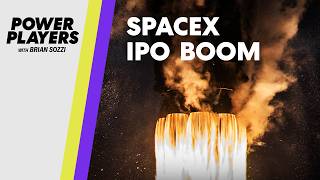

AI Market Has Been Given a Pass—But For How Long?
57sA top exec warns the AI rally is built on borrowed time while a calm VIX hides real risk—perfect for market-watcher doomscroll.
▶ Play Clip"Title accurately captures the SpaceX IPO and $150 oil call, but the conversation is a broad market chat with limited depth on either headline topic."
In this interview, Robinhood CIO Stephanie Guild and Chief Brokerage Officer Steven Quirk discuss record-high markets, the upcoming SpaceX, Anthropic, and OpenAI IPOs, and the growing importance of retail investors. They share their outlook on AI-driven growth, market volatility, a potential oil surge to $150, and the impact of the new Federal Reserve chair.
Markets are trading near record highs, with SpaceX, Anthropic, and OpenAI IPOs on the horizon. This is a significant moment not just for institutions but also for retail investors who may get allocations in these game-changing companies.
Robinhood CIO Stephanie Guild says the fundamental AI story of margin expansion and productivity gains is true, but she expects periods of consolidation because the physical world—building data centers, commodities, and funding—cannot move as fast as the agentic/AI world.
Steven Quirk notes that even during sell-offs, the VIX has shown no panic. He describes this persistent calmness as sometimes troubling because it may signal complacency.
Guild is worried about the supply of new shares. Hyperscalers are borrowing heavily, and Google has said it wants to issue shares. The market is trained on buybacks, not issuance, so this could create consolidation moments.
Quirk emphasizes that the whole industry is heavily motivated to make large IPOs like SpaceX succeed because many other companies are looking to raise capital. A failure would jeopardize those plans.
Quirk's base market-structure concern is repeating the messy Facebook IPO. He also worries about Robinhood's 27 million customers being deterred from participating in future IPOs if the SpaceX IPO goes badly.
Since Robinhood launched IPO Access in 2021, it has done over 50 IPOs. Retail investors are no longer seen as needed for allocations; they are passionate believers in the products, not flippers, and their equity, options, and crypto trading share has grown dramatically.
Guild predicts more volatility because of more types of investors, higher interest rates, and faster access to information. AI compounds the speed at which stories reach prices, as seen after Broadcom's earnings.
Guild says investors should consider rotating from Mag 7 index heavyweights into new IPOs like SpaceX because index investing is based on the past decade, not on where cash, capex, and growth are heading.
Guild says oil hitting $150–160 is a rational possibility. Global reserves have been drawn down, and rebuilding them could drive prices higher. Oil experts have been warning about this since February.
Josh notes that the market is assuming Kevin Warsh will behave like the old Fed chair, but his actions are unknown. Guild and Quirk add that he doesn't act alone and rate policy remains uncertain.
Robinhood
service
Stephanie Guild
person
Steven Quirk
person
Yahoo Finance
service
SpaceX
service
Anthropic
service
OpenAI
service
service
Broadcom
service
X (Twitter)
service
Robinhood IPO Access
tool
Robinhood Investor Index
service
Elon Musk
person
Vladimir Tenev
person
Kevin Warsh
person
Arthur Burns
person
Paul Volcker
person
Which three potential IPOs are mentioned in the interview?
SpaceX, Anthropic, and OpenAI
00:01
Why does Stephanie Guild expect periods of consolidation in AI?
Because the physical world—building data centers and commodities—cannot move as fast as the agentic AI world.
01:49
What does Steven Quirk find troubling about the VIX during sell-offs?
There has been no panic; the VIX has been calm, which is sometimes troubling.
03:57
How many IPOs has Robinhood done through IPO Access since 2021?
Over 50 IPOs.
13:53
What is Steven Quirk's base concern about the SpaceX IPO?
Repeating the messy Facebook IPO and deterring Robinhood's 27 million customers from participating in future IPOs.
08:42
Why does Stephanie Guild think index investing is backward-looking?
Because it is based on what happened over the last decade rather than where cash, capex, and growth are going.
18:23
What is Stephanie Guild's predicted 'summer surprise'?
Oil could reach $150–160 because global reserves have been drawn down and will need rebuilding.
21:11
Which historical Fed chair did Stephanie cite regarding supply-side oil shocks?
Arthur Burns in the 1970s, who did nothing because he argued the Fed couldn't control supply-side inflation.
24:50
What change does Quirk highlight in retail participation since Robinhood launched IPO Access?
Issuers and underwriters now see retail as important because retail investors are passionate believers, not flippers, and their trading share has grown.
14:08
What are the headwinds Guild mentions despite her positive AI view?
Higher interest rates, Middle East conflict, and high oil prices that could go higher.
01:24
AI's physical bottleneck
Explains why AI growth won't be linear—physical infrastructure can't match the speed of digital innovation.
01:11Calm VIX as a warning sign
Contrarian market observation that low fear during sell-offs can signal complacency and risk.
03:57Retail investors are believers, not flippers
Challenges the stereotype that retail investors are short-term traders, showing they are passionate long-term holders.
14:08Oil at $150 is plausible
High-impact prediction driven by depleted global reserves and likely inventory rebuilding.
21:11The new Fed chair is underappreciated
Markets assume continuity from Kevin Warsh, but his actions remain unknown and could surprise.
23:44[00:01] conversation with the team at Robinhood on all things markets. Look, bottom line is that this is an important time for markets. They're trading near record highs. We've got a SpaceX IPO, a potential Anthropic
[00:17] got a SpaceX IPO, a potential Anthropic IPO, a potential OpenAI IPO. And this is a big moment not for just institutional investors, but also you all, retail investors out there that are going to get allocations to some of the most
[00:30] game-changing companies in the entire world. I asked the Robinhood team all world. I asked the Robinhood team all about it. Guild, Robinhood CIO, and Steven Quirk, the Robinhood chief brokerage officer.
[00:46] Look, I I'm not writing writing anything down on here. I've talked to you both in the past. I would just love your thoughts right you all the time and I haven't talked to Steven in a while. I'm starting with
[00:59] you, Stephanie, like take us inside your head at this very important moment for >> Um you know, it's been like for the last few weeks I've been looking at the market and and just particular names and thinking like is there a point at which
[01:11] this just gets overheated and you know, this might be Monday morning this might be Monday morning quarterbacking now. But it I don't think the market in terms of like yes, we have some
[01:24] risks, interest rates are higher. We still have an a conflict happening in the Middle East. Oil prices are still high and I actually think we'll go higher. [snorts] So you do have headwinds, but I I still
[01:36] So you do have headwinds, but I I still think the fundamental story of AI and the margin expansion that we can eventually get from it, the productivity gains that we can get from it are true. But I think we're going to end up having
[01:49] these periods where of consolidation because AI fundamentally is an intersection between how fast can the physical world move relative to the agentic world? And the physical market and and commodities
[02:05] building things, building data centers, like that that doesn't happen overnight market and so and funding, lots of funding.
[02:18] going to have periods of consolidation before you can continue to to ramp from here. >> What what viewers don't see right now is So I see all I see both of you in my box. And I'm wondering off the jump, I
[02:33] mean Stephanie amazing comments as always. I love the market take. How have us three like co-authored some like market commentary on the markets? Like I'm just watching us three. It's like it just seems like so overdue
[02:45] paper or AI agent to paper. We can take that offline. But see if your thoughts >> Yeah, I think Steph summed it up pretty well. I think that that liquidity is a really important point. And you know, CEO, we have very large IPOs that are
[03:01] um, you know, that are looking to come out in the very near future. And I think there's a lot of liquidity that's going to be needed to support those. And to Steph's point, like there we've we've we've given a pass the market, when I
[03:15] say we, the market has given a pass to all the players here in the AI space, both the infrastructure and the direct AI space saying, "Hey, we want to see productivity." cuz it's going to take
[03:29] But eventually, you know, this is going to the rubber's going to have to meet the road. And I think, you know, customers and people, market participants are going to they're going to get to a point where they're going to
[03:42] anymore." And so it's not a surprise to me that we have had a pullback. Question is, you know, how much of a pullback will it be? you know, if I if we look at things historically to have this pullback. The
[03:57] things that have been interesting to me is like if I just look at the VIX level, there's been no panic even when we've had these sell-offs. It's been had these sell-offs. It's been it's been pretty calm and and that to me
[04:12] is sometimes troubling. >> Steve, where are you, man? That I I best backdrop of anybody that I talk to. You're like, "Where are you?" You're like, "I got a neon sign. I got stuff." >> Yeah, I think that is that is all that's
[04:25] >> You you got to come and visit us sometime. We have an office of about 120 Loop. >> Yeah, no, that is a hat tip to you. bit. >> Um
[04:38] I mentioned at the top with these, you know, these IPOs. Um how do you think the market is going to handle, Stephanie, this this of really hyped companies coming to market from a stock issuance
[04:52] >> I mean, it always depends on the company, right? And and what their story is and how fully valued they is they are. Um but the I am worried about the supply. Like I I think you're you you've seen it in the
[05:05] been and it's been working where the hyperscalers are borrowing and they're borrowing not just in the US, but they're borrowing abroad as well to kind of spread across what they need in terms of funding and I think what worried me
[05:19] coming cuz these are companies that are actually making real revenue and time will tell where their valuation should sit. Um but the the space that in
[05:32] indices might have to make and then also the fact that, you know, Google wants to and said they want to issue. Like those are the things that actually worry me a little more because the market hasn't been trained on that.
[05:46] market has been trained on the hyperscalers buying back shares, not issuing shares. Um and so that's the the piece that I think actually can create these consolidation moments more
[06:01] so than necessarily the IPO market. Although of course, you know, you you have some kind of natural buying when they when they end up in in an index that people invest in. >> And Steve, of course, this comes at a
[06:14] we're seeing a big in in what the hyperscalers are doing. You know, Stephanie mentioned it there, too. They're investing aggressively to build of dollars. That is a change compared to let's say
[06:26] even 2 3 4 5 years ago. These were asset-light companies, strong earnings, companies are their business models are changing, Steve, and they're still changing, Steve, and they're still trading at growth-oriented
[06:39] multiples. Like is that a is that a setup for more gains for these >> Again. >> sound like it's more gains. I mean, you wouldn't think so. But again, we keep talking about the past
[06:53] that they're getting on these capital expenditures. But I want I want to hit on a point that Stephanie brought up cuz I think it's a This whole ecosystem
[07:05] is heavily incentivized to make sure that these, especially these large IPOs, go out successfully, you know, smoothly. Because there's a lot Well, first of all, after the first one, there's two other large ones coming right after. But
[07:20] then there's also all a lot of other people that are looking to raise people that are looking to raise capital. And if if this isn't done in an effective and smooth manner, it's going to jeopardize that. It'll jeopardize
[07:32] other things. So I think we as an industry are heavily incented to make sure that these uh these are successful. successful. You know, the amount of
[07:47] liquidity that's necessary to support these and everything else that's that's um that's happening from capital standpoint, um it's it's these are these are scenarios we haven't seen before. Like it it we've never seen IPOs this
[08:02] size, we've never seen a series of them coming this quickly, and then firms like Google and others that are looking to raise at the same period of time. on the positive side, it seems like to
[08:16] this to this point, the demand has indicated that there is no shortage of here. But I guess at some point we're going to find out. >> Steve, what what's your base concern
[08:29] just from a market structure perspective, let's say with the SpaceX IPO? >> Uh well, I always have the big I'm I'm too old, so I always have concerns that we repeat what we did in
[08:42] called Facebook. >> [laughter] then the stock >> That was very that was very that was very messy. Um and I don't you know, I yeah, I I'm
[08:55] I'm hopeful that that's not going to be repeated and I don't I don't anticipate it would. Uh my concern is always I always start my concerns with our 27 million customers. Uh my concern is that they you know, that this isn't a bad
[09:09] going to deter them from wanting to participate in other IPOs. Um so that again, I as I said earlier, I think we're all incentivized to make sure that this is a this goes off smoothly. >> You know, I didn't mention at the top uh
[09:24] of course a big moment for the employees Anthropic, theoretically if they do come public, employees, their investors, those early supporters, but it is very much a big moment for the retail
[09:38] investor all across the world. >> Yeah, I mean, if you especially if you look at like our our customer base um and the the Robinhood Investor Index, the largest position in the index for some time has been Tesla. And I and it's
[09:53] they produce, right? It's also because of the belief in Elon and what he has in his future. And SpaceX is, I'd say, just as a part of that. Like I I've never,
[10:05] you know, what other IPO have I don't know if I've ever seen where so much of the retail customer base has ripped the S1 apart and and talked about it on X like, "We're going to Mars. We're, you know,
[10:19] this these are the metrics that he has." And so I I do believe it's just as much part of the overall belief that our customer base has in in Elon and and what he does um as as everything. >> You know what's interesting, Stephy,
[10:33] it's not that it's not like the company's getting a pass, but they're start SpaceX is losing gobs of money. OpenAI, uh I imagine is still losing money. Same deal with Anthropic. Why isn't it a big
[10:46] are losing money? It wasn't too long ago, a couple years ago, we were really companies, tech companies for losing gobs of money and their valuations were penalized. It doesn't seem to be the case anymore or at least right now.
[11:00] >> I mean, I think the the market can think ahead to the future and when they could investing in a private company, you're that's what you're doing. You're saying, "Okay, you'll be profitable by X year assuming Y growth rates." And if it's
[11:16] believable, then you know, they then the it it's believe it's believed, right? And they get the valuation that they do. And the company itself does make money. I mean, I think the acquisition of X brings down their overall revenue, but
[11:30] brings down their overall revenue, but the core business um was more profitable that is what is getting the pass. But we'll see, right? Like over time, I the market always ends up where it should be.
[11:46] But I think, you know, the belief sometimes carries an advance of that. >> Steve, as a seasoned veteran such as yourself, when that SpaceX prospectus dropped and in the days since, how do you tear that apart to assess and
[11:59] >> Well, I think Steph brought it up. That thing's been scrutinized more than anything. I mean, by by many market participants. So, all you have to do is is is listen and watch and hear everything
[12:13] that's there. But I think what the the point that Steph brought up, especially participation, and she mentioned it as vision. It's a story. It's a story. And there is a history, you know, with Elon,
[12:26] you know, with stories and his success in some aspects of that. And I think people are just believers. Um, you know, I always said this. It's it's very funny, um, when you look at really engaged retail
[12:40] market participants, they they have a level of optimism that I think is above and beyond a lot of people. Um, and so they're looking for a positive story um, and something that they believe in
[12:54] and they want to participate in. They feel like they're participating in by really powerful. It's what makes these capital markets so interesting. >> Steve, of course, SpaceX really, um,
[13:07] part of this and that's of course keeping with I think the DNA of Elon social media following, you name it. Does that fundamentally change how IPOs come to market? I mean, I can't tell you how many executives I talk of public
[13:22] years. They could care less about the retail investor. You know, I'm just do. I firmly disagree with that, but this is I think bringing a new dynamic companies, they need to start paying more attention to the retail investor
[13:37] and start giving a damn about them. >> Well, I think it's changed it's actually changed since we started our IPO product IPO access in 21. We've done over 50 IPOs and we used to scratch and claw to get a few
[13:53] new allocation because of to your point customer or sorry these issuers and and and underwriters just didn't think that retail participation was necessary. I think we've come a long way. This is this is the a really a a big
[14:08] acceleration of it, but we've come a long way with these companies because a all, all they have to do is look at the percentage of equity trading of option trading of crypto trading of
[14:21] fixed income trading that is being done by pure retail. It's gone up pretty dramatically and continues to grow. Second thing I would say is these people the company. They're not flipping these stocks. They're not looking for quick
[14:36] gains. They are true passionate believers of the products, services and company. So I I think that the realization has hit many of these companies that are now looking to go public that
[14:52] the way to really endear yourself to these to the to the market is by being having good participation by retail. And again, Vlad's been making this point. One of the reasons why
[15:08] AI the whole AI ecosystem is because they haven't participated in it. All they've heard is it's going to take my job and I'm not making any money on it. So why would I be excited about that? Whereas,
[15:24] if you give me an opportunity to participate and have more of an agency in the whole ecosystem, I'm going to view it far more favorably, >> Yeah, when I talked to Vlad, I've I applaud him every single time. Um what
[15:38] >> Yes. the earnings call. We're starting to see some other companies get on board with earnings calls have to change. You can't just hop on to these earnings calls and
[15:51] take no uh retail investor questions. It's just absurd. Um but Stephy, that just mentioned here, too. The retail investor has changed. And retail investors involved with the SpaceX uh eventually with Anthropic and
[16:07] volatility because you're going to see retail investors trading in and out based on what they hear on X. I mean, do you agree with that assessment? >> I think well, actually fundamentally, I don't I think we'll have more volatility
[16:20] for a multitude of reasons. One is that we do have more types of investors across the ecosystem of investment opportunities. Um you know, not just in stocks, but in other areas, too. I think it's also because we have a higher
[16:34] interest rate environment. Um I think you have access to information and research faster than you ever could have for everybody. Like, I think that's what AI, you know, the internet did it starting in the 2000s early 2000s. AI is
[16:48] doing it even more, compounding that now. Um and I think that means people get the story quickly and absorb it into the price quickly. And then, once you reach a point, maybe like you did last week with Broadcom's earnings, where
[17:02] expectation, you know, they met kind of heightened expectations and then the stock fell. So, I actually think like there's a more volatility because of that, not necessarily because of who's
[17:15] participating. But, what Steve's point, like the participation and to your point actually too, that is long overdue. Like labor share of income, you just go back. Like labor share of income has been not
[17:27] enough since the early 2000s. And this is the way for labor to participate in their productivity. So they they should definitely be paying attention, CEOs. >> Steph, what I'm most interested in
[17:41] in this um this view, you know, we SpaceX comes to market, for example. What does that And now investors are lured into a SpaceX and this latest Elon story and everything they may achieve over the
[17:53] next 5, 10, 15 years. What does it mean for the interest own FANG stocks, the interest own the Mag 7? Are those stocks used as a source of funds to buy into a SpaceX and then eventually an OpenAI and an Anthropic?
[18:08] >> My personal take is that they should be. Um know, they're they're large, but they're not necessarily where the future is. I think that's why um index investing itself is a little bit backward-looking
[18:23] uh because it, you know, it's it's kind of again, based on what happened over the last decade rather than where the cash is going and where the cap ex is going and where the the growth is. Um and so I I do think that that should to
[18:37] me would be a natural place to make room because SpaceX is going to it is going to be a very big um in in the indices as well. Uh rather than taking from some of the places that maybe are smaller in a market cap perspective, but are um
[18:51] seeing, you know, really part of the future of our country. spending all this time on on uh AI. And if I'm the CEO of a healthcare can't tell you how many people tell me, "Oh, healthcare is a great opportunity."
[19:06] And is it? And I'm suddenly supposed to be attracted to company, 3, 4%? Who cares? Uh when I have company launching rockets out in all things models. Like if you are not if you are not in the AI game, like what
[19:20] what the hell happens to your stock? >> Well, I think everybody's in the AI A healthcare stock they are going to use AI to help productivity and to help uh development of cures and they're already doing it.
[19:35] So, I think everybody is participating it. It's just in in what magnitude. How much is it impacting your individual stock? But I think it's it's probably more interesting to be looking at different
[19:48] sector sectors or individual names and saying, "Man, if they could really crack the code um using some of these new technologies, what could it do for their stock?" So, in my mind it creates some really cool and interesting
[20:03] >> Steve, out of all the things that we can lose sleep over, do you lose sleep over the fact that there's so there's such a high concentration the S&P 500 of essentially seven companies? >> Um I don't think it's healthy.
[20:18] I don't think it's um you know, I I the there's been so much written about it. Um I just don't know that it's it's kind of the antithesis of what you're supposed to be getting. Like we we preach diversification. We preach
[20:31] these these broad-based ETFs and indices so that you have this diversification. And I I you know, I I'm glad there's a lot written about it so people realize diversification that they think they have. And if they really want it, they
[20:47] have. And if they really want it, they probably have to explore alternatives. with you both here, I mean time flies when you're having fun. this one. Uh Steph, I'll start with you. Giving Steve I guess more time to think
[20:59] about how he's going to come at this. Uh my question to you is, if there's going to be a summer surprise in the markets, where's it come from and why? >> I Yeah, my answer to this is not um it's probably not a surprise. I think the
[21:11] thing that I I struggle with is that like it seems to be hiding in plain it's a rational thing that oil could get to a rational thing that oil could get to 150, 160. Like I know, you know, there's
[21:25] East, but the fact that we haven't seen that is because we have been going into our reserves across the the world. Um and I think now you if you end up up coming to a period where there's really isn't enough reserves to go
[21:41] around and you know, there'll be a rebuilding and probably a a way where countries start trying to build up their reserves over time to protect themselves from some of the risks that they had to endure during this time period. And so I
[21:56] I actually think it's like if you talk to any of the oil guys, they're they've been shouting from the rooftops since Feb you know, in February to be listening, >> No, no one cares.
[22:08] But they should care. >> It's a lonely place to be, but I I've it. So you know, we have an allocation to energy in our portfolios as a hedge anyway, because AI uses energy, too. So you know, but I I'm just I'm I'm kind of
[22:23] like why doesn't anyone care about this? So I wouldn't be surprised if it some >> All right. She's got dibs on the oil surprise. What say you? >> No, no, no, but I just like she mentioned it, but I think it I I would
[22:36] not underestimate. Listen, you all every one of these countries, every one of these uh every everybody just went where where inventories were put in jeopardy. The first thing they're going
[22:48] to do is build those inventories. So this isn't like when that happens and it when you do get that if you do get that price appreciation, it's not going to make sure that these inventories are are able to support
[23:03] them in times of turmoil. And so I I think that's another element that's is just rates. Rates are telling you what what this market is thinking. And at some point here. And so I think, you know, there's been a
[23:19] talk about what we're going to do. Are we going to cut now? We're not going to cut. We're going to raise. Are we going to raise? We're not going to raise. I you know, in a forward manner what what's
[23:31] in a forward manner what what's happening and you know, those two can't be disconnect They can be connected for periods of time, but as I think you said uh things always rationalize out in the market. You know, it might take a little
[23:44] longer than you think, but it gets to the point where it should be. >> Well, Steve, that that was actually my summer surprise. It is the new Federal of people I you hear people actually writing stories about Kevin Warsh and
[23:58] what he has done in the past stuff that Like we have a new Fed chair and the market is assuming that it's he's just going to be like the old Fed chair and Steve. But like I I think market's forgetting we have a new Fed chair.
[24:11] >> We have no clue. >> his We know his history. We know, you know, why he was put in place and what the anticipation is, but um until we see
[24:23] some action. And look, he doesn't act alone. So, you know, there's a lot of other people there that are going to be um expressing opinions and they already >> And Stephanie, if if if oil hits 150, 160, I am I am super curious on how a
[24:38] Fed chair Kevin Warsh respond to that, if at all. Could be just a comment. Could be action. We we we have no idea. >> Uh no. I mean, the last time we had like a, you know, a huge uh lack of supply
[24:50] and and higher oil prices was, you know, if you think back into the '70s and the the time I think it was uh President Burns he didn't or Fed chair Burns I should say he didn't do anything he actually
[25:05] that this was something that the Fed couldn't control which is kind of true like the Fed is better at controlling demand side inflation not supply side demand side inflation not supply side inflation inflation so it it could he
[25:18] could be the same because you know they're they definitely don't want to to but >> they might have to but Volcker did a lot
[25:30] >> yep >> we're going to leave it there guys I lot of time for Yahoo Finance feels like my IQ just went up 10 points listening to you both on all things stocks so I do appreciate it and if I don't talk to you
[25:43] go let's go SpaceX >> Knicks too yes yes all right thank you Steve it's tough I appreciate it >> all right that's it for the latest episode of power players
⚡ Saved you 0h 26m reading this? Transcribe any YouTube video for free — no signup needed.