
The Shocking Truth About the ISS Replacement
47sHigh-stakes geopolitical tension and the surprising role of SpaceX create immediate intrigue.
▶ Play Clip"Delivers a detailed breakdown of Haven 2 and Starship's role, though the title slightly oversells the 'destroyed' angle."
The video discusses the future of space stations after the ISS retirement, focusing on Vast Space's Haven 2 station and its critical dependence on SpaceX's Starship for launching its largest modules. It highlights the geopolitical stakes, the technical challenges, and the potential roles of Starship and Dragon in the coming decade.
Only Starship can lift Haven 2's massive modules into orbit; no other rocket can do it. Starship X is even considered to replace Dragon as crew transport.
If ISS retires in 2030 without a replacement, China's Tiangong becomes the only permanent human outpost, a blow to American credibility.
Founded in 2021, Vast Space is outpacing competitors like Axiom and Blue Origin. Haven 2 is likely the first new station, with first module launch targeted for 2028.
First four modules (16m long, ~29 tons) launch on Falcon Heavy, one every 6 months starting 2028. Larger core module requires Starship.
NASA astronaut Andrew Fustl confirmed the core module (8m diameter) can only launch on Starship. This is key to the entire story.
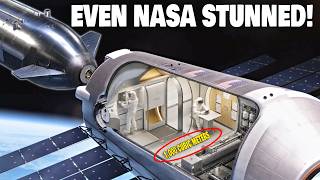
Haven Core, launching on Starship in 2030, is the backbone. Without it, Haven 2 is limited; with it, it expands to a cross shape and by 2032 becomes a 9-module station with >1,000 m³ pressurized volume, larger than ISS.
Falcon Heavy's fairing maxes at 5.2m diameter; Starship's payload bay is 9m wide, 18m tall. Only Starship can accommodate an 8m module.
Starship currently uses a PEZ dispenser for Starlink satellites, unsuitable for large modules. Vast needs a wide-open cargo bay like the space shuttle.
The shuttle's cargo bay (4.6m wide, 18.3m long) was used to assemble ISS over 37 missions. Starship needs a similar open bay mechanism.
Starship V3 is 124.4m tall, can deliver over 100 tons to LEO, but needs the right delivery mechanism for Haven Core.
Elon Musk confirmed Starship V4 will have 42 engines, fly in 2027, stand 142m tall, and target 10,000 tons of thrust. Payload to LEO expected to reach 200 tons.
Haven Core targets 2030 launch; Starship V4 targets 2027. If V4 develops on schedule with a cargo variant, timing fits almost exactly.
Starship HLS has a docking port and could theoretically dock with Haven 2, carrying 100 tons and dozens of people, but challenges exist.
Momentum: Starship's dry mass is hundreds of tons, requiring reinforced docking structure. Plume impingement could damage Haven 2's exterior. Docking standard mismatch (NDS vs. Dragon-compatible).
Starship re-entry with crew requires safety certification that Dragon earned over many missions. Starship is still in test flight phase, not 2030.
Starship as heavy lift workhorse for modules; Dragon as crew taxi. This is the most logical split based on capabilities.
Powerful machines find new uses: Saturn V became Skylab's core, shuttle became ISS assembly tool. Starship is following that path.
Vast's long-term goal is a 100m rotating station with artificial gravity, launching entirely on Starship. This is a strategic alliance, not just a launch contract.
The future of Haven 2 hinges on Starship's success, both for launching its core module and potentially for crew transport. The most realistic near-term scenario is a division of labor: Starship for heavy lift, Dragon for crew, with a strategic alliance that could reshape human spaceflight.
What is the only rocket capable of launching Haven 2's core module?
SpaceX's Starship
02:12
What is the diameter of Haven 2's core module?
8 meters
02:27
What is the maximum fairing diameter of Falcon Heavy?
5.2 meters
02:56
What is the payload capacity of Starship V3 to LEO?
Over 100 tons
05:21
What is the expected payload capacity of Starship V4 to LEO?
200 tons
06:17
What is the primary payload system of Starship currently?
PEZ dispenser for Starlink satellites
03:53
What is the target launch year for Haven Core?
2030
02:27
What is the target launch year for Starship V4?
2027
05:48
What is the main challenge for Starship docking with Haven 2?
Momentum due to its massive dry mass, plume impingement, and docking standard mismatch
08:24
What is Vast's long-term goal for a space station?
A 100-meter rotating space station with artificial gravity
11:38
Geopolitical stakes
Highlights the non-scientific, geopolitical importance of maintaining a continuous human presence in orbit.
00:47Core module only on Starship
A single sentence from an astronaut clarifies the entire dependency of Haven 2 on Starship.
02:12Starship V4 announcement
Musk's brief mention of V4 specs sends the aerospace community into speculation, showing the impact of such announcements.
05:36Docking challenges
Explains the physical and engineering hurdles of docking a massive vehicle like Starship to a station.
08:24Historical precedent
Draws parallels to Saturn V and shuttle, showing how powerful rockets find unexpected uses.
10:55[00:03] next? The answer depends almost entirely on SpaceX. They are the single most critical factor determining whether a bold new space station Haven 2 will actually replace the iconic ISS. And the reason is stark. Only Starship, their
[00:18] colossal launch vehicle, is physically capable of lifting Haven 2's massive modules into orbit. No other rocket on Earth can do it. Starship X is even being considered to replace Dragon as the primary crew transport vehicle for
[00:31] the station itself. So, how did it all come to this? Let's find out. If ISS retires on schedule in 2030 and there's no replacement station ready to take over, China's Tangong becomes the only permanent human outpost in orbit. Just
[00:47] let that sink in. This isn't a science problem anymore. This is geopolitics. A gap in human presence on orbit, even just a few months, is a blow to American credibility that no defense budget can fix. Fortunately, there's a contender
[01:01] emerging, and nobody saw this one coming. Vast Space with their station, Haven 2. This company was founded in 2021, not even 5 years old. And yet
[01:13] they've managed to embarrass every big name in the industry. Axiom, Starlab, Blue Origins, Orbital Reef, with a pace that frankly doesn't make sense for a company that young. Haven 2 is at this point almost certainly the station that
[01:27] goes up first. Vast is already targeting the first module launch in 2028, pending their CLLD contract win this year. But here's the thing, Haven 2 isn't going up all at once. Just like ISS, this is a multi-chapter story, and each chapter
[01:42] needs a different rocket. The first four modules, each 16 meters long, roughly 29 tons, will ride up on Falcon Heavy about one module every 6 months, starting in 2028. For that size and weight, Falcon Heavy can handle it, no problem. But the
[01:58] bigger modules, the more critical ones, Falcon Heavy doesn't stand a chance. That's where Starship enters the picture. And this isn't speculation. Andrew Fustl, NASA astronaut and Vast's own advisory astronaut said it plainly.
[02:12] The core module can only launch on Starship. That's a structure with an 8 m diameter. That one sentence is the key to this entire story. The next phase of Haven 2 centers on launching a larger core module 8 m in diameter aboard
[02:27] Starship in 2030. This piece called Haven Core is the backbone of the entire structure. Without it, Haven 2 is just a line of modules strung end to end, functional but limited. With it, the station expands into a cross shape,
[02:42] accommodating four additional modules, and by 2032 becomes a 9 module station with a pressurized volume exceeding 1,000 m, larger than the entire ISS. So,
[02:56] why can no other rocket replace Starship for this job? The answer is one number, 8 m. Falcon Heavy's fairing maxes out at around 5.2 m in diameter. Already the largest in commercial launch today. Starship's payload bay is 9 m wide, 18 m
[03:12] tall, the largest of any launch vehicle flying or in development. Nothing else can swallow a 8 m module in one piece. If Starship fails, if the program slips badly, Haven Core has no way to orbit. And without Haven Core, Haven 2 stays a
[03:27] stripped down transitional outpost. never the permanent American infrastructure it's meant to be. That's why Starship isn't just Vast's preferred option. It's the condition for this project's survival. And I really
[03:39] appreciate you sticking with us this far. If you're enjoying the video, mean a lot. It helps more than you'd think. But here's where things get complicated. Because Starship, in its current flying configuration, wasn't
[03:53] actually designed to launch a massive station module the traditional way. Right now, Starship's primary payload system is what the space community calls the PEZ dispenser. A sliding door mechanism at the nose cone that ejects
[04:06] Starlink V3 satellites one by one through a narrow slot pushed out by a mechanical rail. Brilliant for dozens of small satellites. But for a station module weighing nearly 30 tons with a 8 m diameter, you can't dispense something
[04:21] like that through a narrow slot at the nose of a rocket. What VAS needs isn't Starship acting like a candy machine. They need Starship to swing open a full cargo bay the way spacecraft did in those iconic photos from the 80s and
[04:34] '90s. Exactly how the space shuttle once handled ISS modules. Worth mentioning the shuttle here because that's the historical blueprint. Over 30 years and 135 flights, 37 missions went directly toward assembling ISS, hauling modules,
[04:50] trusses, solar panels into orbit. The shuttle's cargo bay was 4.6 m wide, 18.3 shuttle's cargo bay was 4.6 m wide, 18.3 m long, capable of lifting 27.5 tons to Elio. It would carry a module up. The Canid arm robotic arm would pull it out,
[05:06] dock it to the station, and astronauts would go outside to finish the job. That's how ISS was pieced together over more than a decade. Starship V3, the version currently being prepared, stands 124.4 4 m tall and can deliver over 100
[05:21] tons to low Earth orbit. A massive leap. But for Haven Core, raw lift capacity isn't enough. The delivery mechanism matters just as much. Starship needs a wideopen cargo bay configuration, not a PEZ dispenser. And that brings us to a
[05:36] name Elon Musk dropped briefly on X, briefly enough to send the aerospace internet into weeks of speculation. Starship V4. In a post from August 2025,
[05:48] Musk confirmed, "Starship V4 will have 42 engines, adding three more Raptors to a significantly longer ship. It will fly in 2027. This version stands 142 m tall,
[06:01] a 47tory building standing upright with 42 Raptor engines across the full system. The target, 10,000 tons of thrust at liftoff. Nearly three times Saturn FE, the equivalent of over 130 Boeing 747s taking off simultaneously.
[06:17] And more importantly, in block 4 configuration, payload to LEO is expected to reach 200 tons, double V3. That's not just a number for Starlink or moon missions anymore. That's enough to
[06:30] into orbit in a way no vehicle in history has ever been able to do. Now, fair warning, V4 is still a target, not a frozen hardware design. Musk says a lot of things on X schedules slip, but
[06:43] the direction is clear, and the timeline lines up almost suspiciously well with Haven 2's schedule. Haven Core is targeting a 2030 launch. Starship V4 is targeting 2027. If V4 develops on schedule and SpaceX
[06:59] rolls out a cargo variant with a full open bay mechanism, like the space shuttle, but orders of magnitude more powerful, then with a few years of testing and certification on top, the timing fits almost exactly what Vast is
[07:12] waiting for. This isn't a coincidence. This is engineering logic. And when all these pieces start clicking into place, a bigger question surfaces. If Starship can put Haven Core into orbit, can it also bring people up to dock with Haven
[07:25] 2? In theory, yes. And there's actually a crude Starship variant already designed for exactly this kind of mission, just not for Haven 2, for the moon. Starship HLS, the human landing system, has a docking port built into
[07:40] the top of the nose cone, developed from the same proven system used on Dragon 2. SpaceX and NASA have already run over 200 simulated docking scenarios with full-scale hardware at Johnson Space Center. Now, if a crude Starship with a
[07:56] living cabin, life support, and that nose cone docking port could pull up and dock with Haven 2, the potential is almost hard to wrap your head around. A single Starship launch could carry 100 tons of cargo and dozens of people at
[08:10] once. Dragon carries four crew and about 200 kar of cargo. That's not just a bigger number. That's a completely different category. But this is the part where engineers stop and start slowly shaking their heads. The challenge isn't
[08:24] approach speed. Starship can creep up to a station incredibly slowly, even slower than Dragon if you control it right. The real problem is momentum. Even after burning through most of its propellant, Starship's dry mass is still hundreds of
[08:37] tons. And when two objects make contact, the force on that docking interface depends not just on speed. It depends on mass. Haven 2's docking structure designed to receive Dragon Signis and similarly sized vehicles would need to
[08:52] be reinforced at an entirely different level to survive contact with something as massive as Starship without just buckling. Then there's plume impingement. The thrusters Starship fires to adjust its attitude during
[09:05] approach. Blast out powerful jets that could damage Haven 2's delicate exterior. solar panels, external sensors, all of it. Dragon's plume is small, well characterized, accounted for. Starship's plume is a completely
[09:19] different animal, and nobody's fully modeled what that does to a nearby structure in orbit. And then there's the docking standard problem. Starship HLS uses the NDS, the NASA docking system built for Orion and Aremis moon
[09:33] missions. But for Haven 2 to actually receive Starship, it would need a compatible port. And right now, Haven 2's design is oriented around Dragon and smaller commercial vehicles. Not an impossible redesign, but a full
[09:47] redesign, reertification, and retest process that costs an enormous amount of time and money. And after all of that, after Starship docks with Haven 2 completes its mission and the crew is ready to go home, it still has to come
[10:01] back. Re-entry at thousands of degrees, heat shield tiles on the belly, a vertical landing for reuse. Doing all of that with a crew aboard requires a level of safety certification that Dragon earned over dozens of missions across
[10:15] many years. Starship is still in the test flight phase. Not impossible, but test flight phase. Not impossible, but not 2030. So, Starship docking with a space station, realistic or not, let me know in the comments. So, what's the
[10:29] most realistic picture for the next decade? Probably a clean division of roles. Starship as the heavy lift workhorse, delivering massive modules, enormous cargo halls, the structures that define what Haven 2 actually
[10:42] becomes. And Dragon is the crew taxi, reliably bringing astronauts up on a regular schedule. That's not a compromise. That's the most logical split based on what each vehicle actually does best. But here's the thing
[10:55] that makes this whole picture worth watching in the years ahead. Aerospace history has proven this over and over again. When you have a machine powerful enough and flexible enough, people will find ways to use it that nobody
[11:08] originally imagined. Saturn 5 was designed to go to the moon, but its final version became the structural core of Skyab. The space shuttle was a transport vehicle and ended up being the assembly tool for ISS across two full
[11:22] decades. Starship is following that exact same path. Haven 2 will launch on both Falcon Heavy and Starship, a dual launch ecosystem that perfectly captures Vast's strategy. Use Falcon Heavy to survive. Use Starship to grow. And
[11:38] SpaceX's Starship now covers nearly every major piece of Vast's long-term road map. That's not accidental. Since 2023, Vast has stated its goal of building a 100 meter rotating space station with artificial gravity. and the
[11:53] entire thing launches on Starship. This relationship isn't just a launch contract. This is a strategic alliance and it might be the most consequential and it might be the most consequential partnership in the future of human space
⚡ Saved you 0h 12m reading this? Transcribe any YouTube video for free — no signup needed.