
SpaceX Sets Launch Date for Starship Flight 13!
60sAnnouncing a concrete launch date for the most anticipated rocket test creates immediate urgency and excitement.
▶ Play Clip"Delivers on the core promise of explaining the flip fix, but padded with hype and subscription prompts."
SpaceX is preparing for Starship Flight 13, targeting a launch as early as July 16th. The flight aims to address the booster flip issue from Flight 12 by implementing hardware and software changes to the Super Heavy Booster V3 and Ship 40. Key objectives include a successful booster splashdown, an in-space Raptor relight, and the deployment of Starlink V3 satellites.
SpaceX confirmed Starship Flight 13 will launch as early as Thursday, July 16th, with a 90-minute window opening at 5:45 p.m. Central Time. The date is tentative and could slip by a day or two.
After Booster 20's static fire, a problem was discovered with one of the actuators controlling the chopsticks. The team replaced the actuator within hours, with work expected to be completed by July 13th, followed by additional chopstick tests.
SpaceX stated that the Super Heavy on Flight 13 has hardware modifications to improve re-light reliability and updated abort logic to better reflect the multi-engine flight environment.
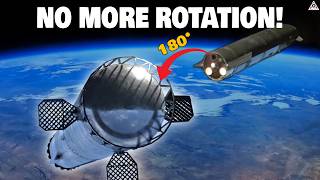
The booster flip on Flight 12 was caused by slight differences in the startup timing of the six ship engines during hot staging, causing the thrust vector to shift and the booster to rotate in the wrong direction.
SpaceX redesigned the ship's engine startup sequence to be more tolerant of timing variability, deliberately using a selected group of engines to initiate the flip in the correct direction, turning asymmetric thrust into a controlled force.
Ship 39 lost a vacuum Raptor about 40 seconds after separation on Flight 12. SpaceX addressed the interconnected causes, and Ship 40's static fire was designed to stress the propulsion system beyond that failure point.
If all six engines stay healthy during ascent, Ship 40 will attempt to relight a single Raptor while coasting in space, a critical test for future missions requiring engine restarts.
Ship 40 will deploy 20 Starlink V3 satellites, six of which have cameras to inspect the heat shield from space. The heat shield also includes new tiles and load-sensing tiles, and the vehicle will experience higher dynamic pressure than previous flights.
Flight 13 is a pivotal test for Starship, aiming to prove that the booster flip issue is fixed and that Starship can perform critical in-space operations. Success would mark a significant step toward full reusability and operational capability.
What was the root cause of Booster 19's flip during Flight 12?
Slight differences in the startup timing of the six ship engines during hot staging caused the thrust vector to shift, rotating the booster in the wrong direction.
04:43
What is the purpose of the redesigned engine startup sequence on Ship 40?
To be more tolerant of timing variability and to deliberately use a selected group of engines to initiate the flip in the correct direction, turning asymmetric thrust into a controlled force.
06:05
What is the launch window for Starship Flight 13?
As early as Thursday, July 16th, with a 90-minute window opening at 5:45 p.m. Central Time.
01:09
What happened to Ship 39 about 40 seconds after stage separation on Flight 12?
It lost one of its three vacuum-optimized Raptors.
08:27
What is one of the most mission-critical objectives of Flight 13?
To relight a single Raptor while coasting through space, testing in-space ignition capability.
09:49
How many Starlink V3 satellites will Ship 40 deploy, and what special feature do six of them have?
20 satellites; six have cameras pointed at Starship to inspect the heat shield from space.
10:17
What was the issue with the chopsticks before Flight 13?
A problem was discovered with one of the actuators controlling the chopsticks, which was replaced within hours.
01:49
Booster Flip Root Cause
Explains the precise engineering reason behind the dramatic 90° flip, clarifying a complex failure mode.
04:43Turning Error into Control
Describes a clever design philosophy: instead of eliminating asymmetric thrust, SpaceX uses it deliberately to control the flip.
06:05In-Space Relight Criticality
Highlights why engine relight in space is essential for future missions, framing it as a make-or-break capability.
09:49Heat Shield Inspection from Space
Introduces an innovative approach to pre-reentry health checks using satellite cameras, potentially improving safety.
10:17[00:01] currently hotter than a French summer. Obviously, it's not because of the weather, but due to the heat of what SpaceX is up to. SpaceX has just confirmed that Starship flight 13 will launch this week. Absolutely epic. This
[00:14] serve as a turning point for future flights because SpaceX and Elon Musk overcome the chain of issues from the previous flight. Most notably, upgrading
[00:26] the entire hardware structure of their Super Heavy Booster V3. So, what exactly has SpaceX changed? And will these new solutions actually work? Let's find out. Is anyone here a SpaceX fan, a Starship fan, or simply obsessed with rockets? If
[00:42] you are, drop a number one in the comments because this next piece of news might keep you awake tonight. SpaceX has officially announced a real target date for Starship flight 13, the 13th flight of the largest rocket ever built. Every
[00:56] time this monster launches, millions of people tune in to watch, including you and me. As SpaceX puts it, Starship's 13th flight test is preparing to launch as early as Thursday, July 16th. The 90-minute launch window will open at
[01:09] 90-minute launch window will open at 5:45 p.m. Central Time. So, if you're preparing some food and drinks for a little Texas picnic while you watch this monster roar to life and climb into the sky. It could be an unforgettable
[01:23] experience, perhaps the closest thing our generation has to watching a Saturn our generation has to watching a Saturn V to send Apollo toward the moon. But, hold on. July 16th is only a net date. The launch could still slip by another
[01:35] day or two, and don't be too disappointed if that happens because SpaceX has a perfectly good reason to remain cautious. After Booster 20 completed its static fire, SpaceX began preparing to lower it from Pad 2 and
[01:49] return it to the Mega Bay 1. That was when the team discovered a problem with one of the enormous actuators controlling the chopsticks. With flight 13 rapidly approaching, the team moved immediately. They disconnected the
[02:01] entire actuator, lowered it from the tower, and replaced it with another unit within hours. The work is expected to be completed by July 13th, after which SpaceX will almost certainly conduct additional chopstick tests. If those
[02:16] tests reveal another issue, a short delay would hardly be surprising. I'll post any new updates in the comments below this video. So, make sure you subscribe to the channel and check back before launch. Now, we come to the most
[02:28] important part of this episode. What will SpaceX do to prevent booster 20 from repeating the failures that ruined booster 19's return? On the official flight 13 mission page, SpaceX briefly explained what happened and what will
[02:42] change. The company wrote, "The super heavy on this upcoming flight has hardware modifications to improve re-light reliability, along with updates conditions seen in the multi-engine
[02:55] flight environment." Put simply, booster 20 has received hardware changes to make engine re-lights more reliable, and the abort logic has been updated to better reflect what a large cluster of engines actually experiences in flight. But
[03:09] SpaceX did not explain exactly what changed. So, how could a tiny difference in engine startup timing send a massive booster flipping 90° in the wrong direction? To answer that, we need to go back to the hot staging sequence of
[03:22] flight 12. As booster 19 and ship 39 prepared to separate, super heavy didn't shut everything down and wait. Most of the booster's engines cut off, while several center raptors kept producing thrust. And at the same time, all six
[03:36] engines on ship 39 began starting, while the two stages were still connected. hot stage structure at the top of the booster, allowing Starship to maintain nearly continuous thrust during separation. Better performance, but also
[03:52] a much more delicate piece of choreography. Here's the problem. When a Raptor receives an ignition command, it must open valves, feed propellant, ignite two preburners, spin up its turbo pumps, and build pressure in the
[04:05] combustion chamber. Six engines cannot reach full thrust at the exact same instant. There will always be tiny differences. If an engine on one side builds thrust slightly earlier than the opposite one, the combined thrust vector
[04:17] briefly shifts away from the vehicle's center line. Think of four people pushing a heavy cabinet. If they all push together, it goes straight, but if the person on the left pushes first, the cabinet starts rotating. And by the time
[04:30] everyone else joins in, that rotation has already begun. Now, imagine scaling that cabinet up into a massive steel booster, still heavy with propellant, traveling at supersonic speed. According to SpaceX, slight differences in the
[04:43] ship engine's startup timing caused Booster 19 to flip in the wrong plane. Not an extra quarter turn, but rotating in the wrong direction entirely. And once a vehicle weighing hundreds of tons gains angular momentum that way, you
[04:57] can't erase it instantly. At that altitude, the atmosphere is still too thin for the grid fins to help much. Correcting the attitude falls almost entirely on the gimballing Raptors in the center cluster. So, Booster 19
[05:09] entered the boost back phase with a much harder job than planned. Not just reversing horizontal velocity toward the landing zone, but also fighting an unwanted rotation from hot staging. And immediately after, five engines failed
[05:22] to relight, cutting the boost back burn short. SpaceX hasn't confirmed the flip directly caused those five engine failures. They may have been separate issues, but a booster rotating outside its expected profile would absolutely
[05:35] create a harder environment for relight, propellant sloshing more violently, pressure at the turbo pump inlets fluctuating, engines restarting under conditions nothing like a static fire on the ground. That may explain why SpaceX
[05:49] had to change both hardware and control logic, not just swap out five engines. So, what's the fix? SpaceX confirmed the ship's engine startup sequence has been redesigned to be more tolerant of timing variability and to help the booster flip
[06:05] in the correct direction. The company hasn't revealed which engines fire first or the exact timing gaps, but the principle seems clear. Instead of hoping all six engines build thrust at almost the same instant, the new sequence
[06:18] deliberately uses a selected group of engines to initiate the flip in the right direction. Analysis of Ship 40's testing suggests SpaceX may start two Raptor vacuum engines on the side aligned with the intended flip, plus one
[06:32] gimballing sea level Raptor, then bring in the remaining three once separation motion is established. If that's right, SpaceX isn't trying to eliminate asymmetric thrust. They're turning it from an unpredictable error into a
[06:45] controlled force. The sea level Raptor steers the thrust vector. The two vacuum Raptors create rotation in the desired direction. And if one engine starts a little slow, the software still has room to compensate through gimbal movement or
[06:59] by adjusting when the next group ignites. That's what robust to timing variability actually means. Not every engine behaving identically to the millisecond, but a sequence that still delivers the right result even when
[07:12] small differences appear. But this has never been proven in flight. Ship 40's static fire was done with the vehicle bolted to a test stand, no booster underneath, no two vehicles pulling apart from each other, no exhaust
[07:26] blasting into a hot stage dome while traveling at supersonic speed. Flight 13 is the first time the new sequence faces all of those conditions simultaneously. If it works, Booster 20 should rotate in the correct plane, stabilize faster, and
[07:41] begin its boost back burn under far better conditions. But, if the flip goes wrong again, if abnormal motion causes propellant slosh or unstable turbo pump conditions, SpaceX could once again see multiple Raptors abort nearly
[07:56] simultaneously. At that point, Booster 20 loses more than a soft splashdown. SpaceX might need another offshore landing demonstration before attempting a booster catch, delaying the road to full Starship V3 reusability. What do
[08:11] you think? Will B20 execute a clean flip and complete its splashdown? Comment Go SpaceX below if you believe they can pull it off. But, Booster 20 is only half of the story because SpaceX has also made some serious changes to
[08:27] Ship 40 and for good reason. Cast your mind back to Flight 12. About 40 seconds after stage separation, Ship 39 lost one of its three vacuum optimized Raptors.
[08:39] Now, the good news, Starship didn't spiral out of control. The remaining five engines stepped up and compensated, allowing the vehicle to reach its planned suborbital trajectory. That was actually a remarkable demonstration of
[08:52] engine out capability, something earlier Starship flights had badly failed at. But, here's the thing, losing an engine that early is not something SpaceX can just shrug off. It ate into the ship's performance margin and forced the team
[09:05] to scrap the planned Raptor relight in space, which happened to be one of the most critical tests on the agenda. So, for Flight 13, SpaceX says it has addressed the interconnected causes behind that failure. That phrasing is
[09:19] telling. It doesn't point to one bad part. It suggests a chain reaction involving the engine, propellant system, sensors, and control logic all playing into each other. SpaceX hasn't revealed the exact root cause publicly, but Ship
[09:34] 40's recent 60-second six engine static fire was clearly designed to stress the entire propulsion system well past the point where ship 39 broke down. Encouraging, but flight is always the real proof. If all six engines stay
[09:49] healthy during ascent this time, ship 40 will attempt to relight a single Raptor while coasting through space. And this isn't just a check box on a test list. It's one of the most mission critical objectives of flight 13. Future
[10:02] Starships need to restart engines to adjust orbit, rendezvous with propellant tankers, travel to the moon, and perform controlled deorbit burns. Without reliable in-space ignition, Starship is just a very expensive glider. On top of
[10:17] that, ship 40 will deploy 20 fully functional Starlink V3 satellites for the first time. Extending solar arrays, communicating with ground stations in South Africa, and linking into the broader Starlink network through
[10:30] high-capacity laser connections. But six of those satellites have a very different job. They're carrying cameras pointed directly back at Starship, scanning the heat shield from space. Several tiles have been painted white to
[10:44] simulate missing sections, giving the cameras high-contrast targets to lock onto. SpaceX wants to know if an external inspection system could one day tell ground crews whether a returning Starship is actually safe to land. Think
[10:59] of it as building the bones of a future pre-reentry health check. The heat shield itself is also a test bed this flight. Ship 40 is carrying tiles mounted on the metallic side of its aft flaps, new attachment mechanisms around
[11:12] the aft skirt, and load sensing tiles that will measure structural stress during ascent. SpaceX is also deliberately pushing the vehicle into higher dynamic pressure than any previous flight.
[11:25] data that could unlock greater payload performance down the road. If everything comes together, Ship 40 will then execute a controlled reentry, descend through the atmosphere, flip for
[11:38] landing, and splash down in the Indian Ocean. So, while Booster 20 needs to prove SpaceX fixed the opening act, Ship 40 has to prove something even bigger, that Starship has finally outgrown its experimental reputation and is ready to
[11:53] experimental reputation and is ready to start acting like a real spacecraft. So, are you ready to witness this incredible launch? Because, honestly, I'm about to lose my mind with excitement. If you enjoyed this video, don't forget to like
[12:06] if you've made it all the way to the end, seriously, thank you so much. Go ahead and hit subscribe so you never miss the latest updates on the upcoming miss the latest updates on the upcoming Flight 13.



⚡ Saved you 0h 12m reading this? Transcribe any YouTube video for free — no signup needed.