
AI Summary
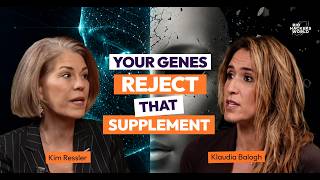
In this interview at Biohackers World, Kim Wrestler, founder of Snip Neutrogenomics, discusses the importance of personalized nutrition based on genetic testing. She explains that generic health advice and supplements often fail because they don't account for individual genetic variations, and emphasizes starting with foundational changes like removing one inflammatory food at a time.
Chapters
Kim explains that 'random dart throwing'—following what works for others—fails because each person's genetic blueprint is unique. What works for one person may not work for another, and this is why many people get frustrated with diets and protocols.
Genetic testing reveals individual strengths and weaknesses, including mutations that impact adult-onset diseases. Understanding these variations helps determine which nutrients are needed for optimization.
Kim uses the analogy of putting diesel fuel in a Ferrari to explain why taking folic acid when you have MTHFR variations is harmful. Your body can't convert it, which 'mucks up the engine.'
The key insight is that 'we aren't what we eat; we are what we absorb and utilize.' This highlights the importance of bioavailability and genetic compatibility in nutrient absorption.
The body constantly communicates through subtle symptoms. Kim shares her personal story of 11 years of feeling unwell despite normal blood work, which led her to genetic-level solutions.
For those without access to testing, Kim recommends keeping a journal and starting with one simple change: removing either gluten, sugar, or dairy for a week to see how you feel. This is a manageable first step toward better health.
Kim emphasizes that taking supplements, even personalized ones, doesn't allow you to eat whatever you want. A healthy diet is still essential.
The video advocates for a personalized, genetics-based approach to nutrition and supplementation, starting with simple, sustainable changes. The core message is that understanding your unique genetic blueprint is the foundation for effective health optimization.
Mentioned in this Video
Tutorial Checklist
Study Flashcards (5)
What is the main reason generic health advice often fails?
easy
Click to reveal answer
What is the main reason generic health advice often fails?
Because each person's genetic blueprint is unique, so what works for one may not work for another.
01:19
What does the 'Ferrari analogy' illustrate?
medium
Click to reveal answer
What does the 'Ferrari analogy' illustrate?
Taking folic acid when you have MTHFR variations is like putting diesel fuel in a Ferrari—your body can't convert it, causing harm.
03:11
What is the key phrase about nutrition and absorption?
easy
Click to reveal answer
What is the key phrase about nutrition and absorption?
We aren't what we eat; we are what we absorb and utilize.
03:53
What is the first step recommended for someone without access to genetic testing?
medium
Click to reveal answer
What is the first step recommended for someone without access to genetic testing?
Keep a journal and remove one of gluten, sugar, or dairy for a week to see how you feel.
10:08
What is the limitation of taking supplements even if they are personalized?
medium
Click to reveal answer
What is the limitation of taking supplements even if they are personalized?
You can't out-supplement a bad diet; a healthy diet is still essential.
12:13
💡 Key Takeaways
We Are What We Absorb
This reframes the common saying 'you are what you eat' and emphasizes the importance of bioavailability and genetic compatibility.
03:53The Body's Signals
Highlights that symptoms are the body's way of communicating, and that normal blood work doesn't always tell the full story.
05:16Small Steps Yield Habits
Provides a practical, non-overwhelming starting point for health improvement, which is more sustainable than drastic changes.
10:08Full Transcript
[00:02] don't get sick overnight. We don't heal overnight. But when you can go to that cellular level, the body has the propensity then to do everything better. If you're struggling with your health
[00:15] and you are still eating gluten, sugar, or dairy, start with one thing. Just or dairy, start with one thing. Just remove one and see how you
[00:32] >> Hey everybody, my name is Claudia Balog and I'm here at Biohackers World in Los Angeles. Today we have a room full of curious, advanced, beginner, intermediate biohackers and extremely interesting vendors. And next to me is
[00:48] Kim Wrestler. She's the founder of Snip Neutrogenomics. We're going to dive into some of the most foundational things as a biohacker you want to do in order to have a solid ground to build your health up on. Now, Kim, I want to start with a
[01:05] are confused when they start optimizing their health. They get on a diet, they get on a protocol that I don't know, they heard on a podcast and it's not working or it's working until it isn't working. What is the situation there?
[01:19] Oh, this is such a great place to start, Claudia. Um, and if you're listening, the random dart throwing, what works for one doesn't work for another. I have to
[01:31] tell you, you, if you're listening to this, you're special. And you and I, or you and me, and if you're a male, we're 99% alike. That 1% that makes us different is truly what tells us how we're going to age. It it tells us about
[01:46] the nutrients we need to optimize ourselves. It's all in our genetic. It's in our own biology. It's in our own genetic blueprint. So, when you're listening to trends and the videos of this influencer did this or whatever,
[01:59] why it might not work for you is is it might not be right for your body. And I want to double down on the importance of a genetic test because we know that our epigenetics and our lifestyle greatly influences our health outcomes. But that
[02:15] And I think that's why often people like, "Oh, I'm just gonna do the latest thing, take the supplements that are supposed to work." But if you don't know nutrients, then you don't have the full picture at all. That is so correct. That
[02:30] is so correct. I mean, we truly what we need to start with is understanding where those strengths and weaknesses are and knowing what we can do to optimize where we've we've got those mutations or variations in in genetics. They are
[02:45] they're highly I mean there are things that literally impact adult onset disease. And I want to do a go a little bit scientific, not too much, but I'm bit scientific, not too much, but I'm just curious in a very basic level. How
[02:57] are those genes influencing how we are processing those nutrients? What are they're making? >> So, MTHFR, so many people talk about the MTHFR um folic acid and and you know, living here in the United States or we
[03:11] live in California and they just passed a law that folic acid has to be in every bought tortilla. Now, so let's pretend you have a Ferrari. Yeah. And it needs premium unlimited gasoline and it's a million-dollar car or
[03:25] whatever it cost you. Would you put diesel fuel into it? >> Probably not. It'll ruin the engine. So, that is truly what we that's just an analogy of what we're doing when when you have markers. You can't just go
[03:38] after the MTHFR. So, I mean, I want to clear that, but you're putting folic acid where your body can't convert it. And it ultimately mucks up the engine, >> Our genetics tell us what version of that we can take, utilize, absorb. We
[03:53] aren't what we eat. We are what we absorb and utilize in our bodies. >> Yes. I love that cuz a lot of times people stop at we are what we eat. And that's not again the full story. The absorption is what makes it
[04:07] >> part of your body. >> So now come up a little bit to the surface level. How does somebody notice in their, let's say, cognition when what Like, oh, this is supposed to give me energy, yet I feel zero energy from this
[04:22] better. And I Well, I mean, that's a people are throwing darts. In other words, listening listening to what this person did or this one. I am a full believer that we all should be we are in
[04:35] something custom made for you or do you want to buy it off the shelf? We should understanding the what and why behind us. Supplementation needs to be made
[04:47] simpler. You don't need more supplements. Okay? And that's that. >> if anything, you need less. But from that, we could see with with an individual per se that the one I'm thinking of um as she gets on her
[05:01] customized, she says, "I'm struggling. I'm struggling with it." And if she was underlying condition or issue. We look at all these detox pathways and I said how she discovered she had mold toxicity.
[05:16] That's I want people to have the opportunity that are truly trying waking up one day not feeling well. That's not aging. We don't get sick overnight. We don't heal overnight. But when you can go to that cellular level and get those
[05:30] go to that cellular level and get those cells functioning at at or that DNA at max capacity is what I'd like to say. The body has the propensity then to do everything better. Energy, sleep, digestion, etc. And I love that you
[05:46] >> No, it doesn't happen. >> Our body's constantly talking to us. It's throwing us signs and subtle symptoms that for the most part we somebody and maybe we can touch into your story a little bit about how can
[06:03] you do you have a gut feeling ever that something isn't working or do you have to have to look at the data in order to fully understand but is there well I think I think this is where the problem is in truly in medicine and you'll start
[06:15] to hear me talk about this more um for me 11 years my blood work looked great I didn't feel well they would send me back out the door I'd feel crushed got this
[06:27] great you know, face on of, you know, but inside I was dying. Extreme fatigue, terrible sleep, terrible digestion. Year by year, the symptoms just kept they just kept compiling. It's like, oh, the woe is me. I mean, I didn't want to be
[06:41] that person to, you know, to chronically be complaining. And when I addressed my be complaining. And when I addressed my at the genetic level, it for me it was at first I thought this has to be a placebo effect. hasn't been in my I mean
[06:55] I'm remember I'm not a doctor. I'm not a scientist. I am a per I'm a mom or just like anybody else out there. I fell in love with the idea that we could customize and have something customized just to us based on our own genetics.
[07:11] How novel is that? Why aren't the masses doing it? Right? I just want people to have that that hope of that opportunity if we start with you and we optimize you at that foundational level and then if anybody biohackers got
[07:25] to understand that it's all about that end of one it all starts with you it goes with you it ends with you everything that you got to do has to do with what works for you and not what >> right I that is such a good point too
[07:38] because there are so many amazing modalities that you can layer over I test and we could try and we could do all of the in my opinion you should start with your own your own genetics. How are you going to biohack yourself
[07:52] unless you know where is it that you need the biggest support? It's just like they were to step into a cold punch it'll put it'll make them have a >> So that's where understanding yourself and your body gives you it I
[08:10] then now that we've have gone to the point where okay, it makes sense. I'll I'm sure it's different for everybody, but what can we expect once we start to personally do these very scientifically driven nutrients and take those and they
[08:28] >> What can you expect? >> Yeah. What can you expect down the road? >> It just depends. I mean, everybody again, what where are you struggling? I mean, it'll be the person that is going, I can't get my LDL cholesterol down. and
[08:40] we'll see before and afters. Where's your problem? Is it energy? Is it sleep? Is it digestion? Is it um you're struggling with some weight? Is it um your homoyine levels are high? Is your C reactive protein? Are you carrying more
[08:53] inflammation? Um you know, we take and we look at all of these together to simplify this process for an individual. We've seen very very different results. all of these different biomarkers and
[09:08] data points you can track over time to show to to understand if the changes are are moving the needle the right direction because that's what I think consistently changes behavior and validates the people's and the
[09:24] sort of choices that okay what I'm doing is working and but is there any time where you have to change the formula for an individual or Is it always the same >> I'm very curious. >> Okay. Well, we were talking about where
[09:40] they weren't listening to my symptoms, but they were looking at my blood work. together. You really have to track your symptoms. What if somebody doesn't have symptoms. What if somebody doesn't have access to testing? What are some of the
[09:54] starting points they can start paying attention to to start to understand how different foods and nutrients impact their body? Keep a journal. Keep a journal. And I think I think the things that I would if we're going to start
[10:08] with small steps and because I'm all about small steps yield habits, right? That's that's longevity. So keep a journal. And I think if you're struggling with your health and you are still eating gluten, sugar, or dairy,
[10:22] and this isn't don't do it all at once. I mean, everybody goes, "Oh, I'm going off in a day or two because they're so restrictive. Start with one thing. Just remove one. If if you are dealing with a lot of inflammation, choose one of those
[10:38] three things, dairy, sugar, or gluten, >> and remove it for a week and see how you feel. That's the simple simple thing. And just do one. There are so many gluten-free options now. Um there's becoming so many amazing sugar-free
[10:52] options now, like great protein bars made with um or organic dates. I mean, and they're tasty. So that would be if you don't have access to testing and you are dealing with brain fog, sluggishness,
[11:07] uh digestion issues, etc. Start with one of those three things because we see we can see in um your genetics too. If you have the propensity to be lactose intolerant or or gluten intolerant, I mean it's going to it's going to cause
[11:19] you more problems. So it's very very cool point to really start with something easy. start with something easy and simple that you could stick with. I remember when we first were like, we're going to go gluten-free. Um,
[11:32] going to do that?" And so many people say, "How how am I going to do that?" say, "How how am I going to do that?" There are so many options that you can do. And in lie of pasta, we just supple we substitute, you know, an organic
[11:46] we substitute, you know, an organic rice. I mean, because I'm a I'm a carb girl. I need my carbs. I don't feel well without my carbs. I'm sorry. I know the feeling. Yes. And I'm going to eat them still. You know, and I I'm a big
[12:00] believer in moderation, but if you know that you're dealing with that inflammation, that brain fog, that try one little one little thing, one little edit, something you can stick with. >> Mhm. And one thing before I do have one
[12:13] >> Because often times people think, "Oh, I'm going to start taking the me. I can still eat however I want." That's not true. Right. So, and you can you can't still outsupplement even if it's to your genetics a diet. That is
[12:29] true. I mean, I think the beauty behind what we do is simplicity and it's easy. what we do is simplicity and it's easy. When you start with small steps and you implement one little thing at a time, that's where we get the big overall like
[12:44] that longevity. It's it's not just the bio hack. Well, definitely changes how supplementation. And it's I love how you're building something from the you're building something from the ground up for the body to be supported
[12:57] and have the solid foundation. The body is meant your body, even if you're listening and you are sick, your body was designed to heal. You just need the raw proper micronutrients to be able to do so. And it's not restrictive. It's
[13:13] do so. And it's not restrictive. It's very simple. And it's not making people feel like they are constantly stepping around rules and messing up if they're not taking their supplements that they have been recommended by somebody who
[13:27] >> yeah, >> thank you so much Claudia. Thank you.