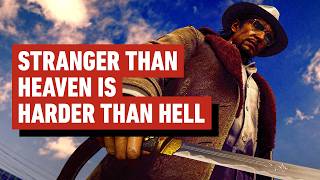

Why Stranger Than Heaven's Combat Kicked My Ass
48sPersonal shock and challenge from a veteran player creates relatability and curiosity.
▶ Play Clip"Title accurately reflects the preview's core takeaway: combat is harder than hell, and the author ultimately approves."
A veteran Yakuza/Like a Dragon fan and IGN writer shares hands-on impressions of the upcoming prequel *Stranger Than Heaven*. The new combat system, which uses shoulder buttons to control each fist independently, is initially punishing but ultimately feels like a refreshing, grounded evolution for the series.
The writer has been a fan since the original PS2 Yakuza, visited Sega HQ in 2005, and has reviewed many series entries.
The new brawling system in *Stranger Than Heaven* completely kicked the author's ass at first, feeling harder than hell.
The author clarifies they aren't suggesting scrapping the turn-based RPG system; they're talking about the beat-'em-up system used in spin-offs.
The new system uses shoulder buttons to puppeteer left and right fists of protagonist Makoto Daito, requiring smooth alternation and parrying.
The combat feels like the most grounded street fighting RGG Studio has designed, reminiscent of 007 First Light's melee but with more direct control.
Soft lock-on occasionally slips, and charged attacks with heavy weapons feel too sluggish.
Despite issues, the author is optimistic that the combat shakeup signals broader innovations in mission design, world interactivity, and exploration.
The author finds the inclusion of a digital Tupac baffling and off-putting, but it won't deter them from playing.
What is the new combat system in Stranger Than Heaven based on?
Using the controller's four shoulder buttons to puppeteer the left and right fists of the protagonist.
2:33
What issue did the author note with the soft lock-on?
It would occasionally slip, sending Makoto swinging in the wrong direction and leaving him vulnerable.
4:11
What game's melee system did the author compare Stranger Than Heaven's combat to?
007 First Light.
3:24
What is the time span of Stranger Than Heaven's story?
1915 to 1965.
5:33
What controversial digital character inclusion does the author mention?
Tupac Shakur.
6:19
Combat Kicked My Ass
Sets the tone for the preview's main theme: the new system is genuinely challenging.
0:44Kick in the Pants
The author argues the series needed this overhaul after years of familiar brawling.
2:09Most Grounded Street Fighting
Highlights the design philosophy shift toward realism and direct control.
3:14Lock-On Issues
Acknowledges current technical flaws that may be fixed before release.
4:04Tupac in Stranger Than Heaven
Raises ethical questions about digital resurrection in modern media.
6:19[00:04] I've been a fan of the Yakuza or like a
[00:06] dragon series since the very beginning.
[00:08] As a magazine writer, I was lucky enough
[00:10] to visit Sega's headquarters in Tokyo
[00:12] during the development of the original
[00:14] PlayStation 2 title way back in 2005.
[00:17] And in my years at IGN, I've reviewed a
[00:19] number of the remakes, sequels, and
[00:20] spin-offs of RGG Studios longunning
[00:23] crime series. At this point, I've
[00:25] invested hundreds of hours into beating
[00:27] the absolute snot out of Japanese
[00:29] mobsters, either via the button mashing
[00:31] combo based style of the original
[00:33] adventures or the turn-based RPG form
[00:35] that's become core to the most recent
[00:37] mainline entries. Thus, I feel pretty
[00:39] well equipped to handle anything that
[00:40] RGG Studio can throw my way at this
[00:43] point, which is why I was so shocked
[00:44] that the new combat system in upcoming
[00:46] series prequel Stranger Than Heaven so
[00:48] completely kicked my ass.
[00:53] At a recent Billy Billy game first look
[00:55] event in Shanghai, I got some brief
[00:57] hands-on time with a brawling based demo
[00:59] for Stranger Than Heaven. My first
[01:01] attempts at its allnew street fighting
[01:03] style felt harder than hell. But after
[01:05] slowly getting to grips with it over the
[01:07] course of my 30-inute demo, I began to
[01:09] feel confident that this is exactly the
[01:10] sort of substantial shift that the Like
[01:12] a Dragon fighting formula has needed for
[01:14] quite a while now.
[01:22] To be clear, I'm not suggesting that RGG
[01:24] Studio needs to scrap the turn-based
[01:26] combat system that it introduced in
[01:27] Yakaza: Like a Dragon and later evolved
[01:29] in Like a Dragon Infinite Wealth. The
[01:32] novelty of that JRPG style system is yet
[01:34] to wear off for me, largely because it
[01:37] allows for so many hilarious special
[01:38] moves and a more strategic team-based
[01:40] dynamic in each scrap. I'm talking about
[01:42] the more traditional beat him up system
[01:44] that has effectively been offloaded onto
[01:46] the series spin-offs in recent years.
[01:48] RGG Studio may have introduced a
[01:50] briefcase load of James Bond gadgets in
[01:52] like a Dragon Giden or cutlesses and
[01:55] flint locks in Pirate Yakuza, but the
[01:57] actual fighting mechanics of those combo
[01:59] based systems has remained unaltered for
[02:01] the most part. Even though I still enjoy
[02:03] them, I can't pretend that they don't
[02:04] feel a bit too familiar at this point.
[02:09] Stranger Than Heaven's heavily
[02:11] overhauled scrapping then feels like the
[02:12] kick in the pants followed by a violent
[02:14] uppercut to the jaw that like a dragon's
[02:16] aging fisticuffs has been crying out
[02:18] for. Forget about chugging in-game
[02:20] energy drinks to pump up your heat gauge
[02:22] and then button mashing hordes of street
[02:24] thugs into oblivion like in previous
[02:26] Kazamakiruddled adventures because
[02:28] stranger than heavens gangs are liable
[02:30] to quickly kick you to the curb if you
[02:31] don't have your wits about you. The new
[02:33] setup that uses the controller's four
[02:35] shoulder buttons to effectively
[02:36] puppeteer the left and right fists of
[02:38] protagonist Makoto Daito sure takes some
[02:41] getting used to. Both in terms of
[02:43] smoothly alternating his punches and
[02:44] also anticipating the direction of
[02:46] incoming attacks and parrying them
[02:47] effectively. But after finally falling
[02:49] into a rhythm with it after my first few
[02:51] failed attempts, it felt incredibly
[02:53] satisfying to pull off.
[02:58] I felt I had to lock in for absolutely
[02:59] every exchange in every combat
[03:01] encounter, which meant that my eventual
[03:03] victories felt far more earned than the
[03:04] lazy bicycle swinging beatdowns of
[03:06] previous Yakuza and Like a Dragon
[03:08] installments.
[03:14] Though its learning curve is initially
[03:16] steep, it ultimately feels like the most
[03:17] grounded form of street fighting that
[03:19] RGG Studio has ever designed. In fact,
[03:22] its more rough and tumble realism
[03:24] reminded me of the melee system in 007
[03:26] First Light. Only it felt like I had far
[03:28] more direct control over the moves I was
[03:30] pulling off thanks to the dedicated
[03:31] right and left attack setup. For
[03:33] example, as I wielded a large crowbar in
[03:35] my right hand while tackling a gang of
[03:37] six or so asalants, one of the goons
[03:39] grabbed hold of the end of my weapon and
[03:40] attempted to wrench it out of my grasp.
[03:42] To my surprise, while I was locked in a
[03:44] temporary tugof-war, I still had full
[03:46] control of Makoto's left hand, which
[03:48] allowed me to throw a few jabs at a
[03:50] second attacker attempting to blindside
[03:52] me. I then grabbed him by the scruff of
[03:54] the neck and knocked his skull into the
[03:55] first thug, taking them both out and
[03:57] allowing me to resume my crowbar based
[03:59] bullying.
[04:04] >> Having said that, Stranger Than Heaven's
[04:06] combat is not without its issues, at
[04:08] least in its current state. I found that
[04:11] the soft lock on that aligns Makoto with
[04:13] each opponent would occasionally slip,
[04:15] sending me swinging wildly in the wrong
[04:17] direction and leaving me vulnerable to
[04:18] attacks from the rear.
[04:22] >> Also, while I enjoyed the generally
[04:23] weighty feel to each and every blow I
[04:25] landed, some of the charged up attacks
[04:27] with heavier weapons seemed a touch too
[04:29] sluggish for my tastes.
[04:33] Of course, with Stranger Than Heaven not
[04:34] due for release until early next year,
[04:36] there's still time for RGG Studio to
[04:38] tighten things up. Still, my overall
[04:40] impression of Stranger Than Heaven's
[04:42] more challenging brawling system is a
[04:44] positive one, and its dramatic shakeup
[04:46] leaves me feeling optimistic that combat
[04:48] won't be the only area of the adventure
[04:50] where the developers are taking a big
[04:51] swing. I'm hopeful that this will
[04:54] present the perfect opportunity for RGG
[04:56] Studio to hit the reset buttons on all
[04:58] aspects of it longestablished like a
[05:00] dragon template, from mission design to
[05:02] the interactive nature of its world and
[05:04] the methods we use to explore it. For
[05:06] example, the audio recording feature
[05:08] that allows Makoto to record sound
[05:10] samples from the world around him and
[05:11] then convert them into musical
[05:13] compositions certainly sounds cool on
[05:15] paper and already seems like it could be
[05:17] far more involved than the simple
[05:18] rhythm-based buttontapping of the
[05:20] karaoke miniame that's been recycled in
[05:22] every Yakuza and Like a Dragon release
[05:24] since Yakuza 3.
[05:29] I also wonder what other new diversions
[05:31] there could be, especially given that
[05:33] the story's 1915 to 1965 setting
[05:36] presumably prohibits the use of the
[05:38] usual modern side activities like Club
[05:40] Seagas and Master System cartridges
[05:42] found in other Like a Dragon stories. We
[05:45] already know that there'll be arm
[05:46] wrestling mini games, but could there be
[05:47] old school pachinko parlor as well? And
[05:50] given that the events of Stranger Than
[05:51] Heaven span the course of five decades,
[05:54] will those side activities evolve with
[05:56] each leap forward in time? Not to
[05:58] mention the change in each of the five
[05:59] city settings. You'd think that by the
[06:01] time the story arrives in 1965
[06:03] Shinjjuku, we should be able to try out
[06:06] virtual versions of the
[06:07] electromechanical amusements that Sega
[06:09] famously pioneered during that decade.
[06:11] I'm desperately keen to learn more
[06:13] because so far I've been pretty excited
[06:15] by everything that RGG Studio has
[06:17] revealed. Well, I mean, except for the
[06:19] Tupac thing, of course. Why on earth is
[06:22] Tupac in Stranger Than than Heaven?
[06:24] Well, much like the gang of burly thugs
[06:26] I encountered in my hands on, it beats
[06:28] the hell out of me.
[06:32] >> Sure, it makes sense that Snoop Dogg is
[06:33] in the game because Snoop Dogg is in
[06:35] basically everything at this point from
[06:37] televised singing contests to carrying
[06:39] the torch at the last Olympic Games.
[06:41] Surprise, mother. You watching my brand
[06:44] new show? Surprise, mother. was Snoop
[06:46] Dogg and mother, you've been surprised.
[06:49] But having the late great Tupac
[06:50] resurrected in a 2027 video game for no
[06:53] clear reason just feels a bit off to me.
[06:56] Then again, I'm generally opposed to
[06:58] digital zombies in any modern media, no
[07:00] matter who signs off on it. I can't
[07:02] watch the CGIed Peter Cushing reprise
[07:04] his role as Moff Tarkin in Star Wars
[07:06] Rogue One without sensing a great
[07:08] disturbance in the Force, for example.
[07:11] >> You have made time an ally of the
[07:13] Rebellion.
[07:15] However, that doesn't prevent me from
[07:16] re-watching Rogue One from time to time,
[07:18] and nor will the somewhat baffling
[07:20] inclusion of Tupac deter me from lunging
[07:22] fists first into Stranger Than Heaven
[07:24] when it arrives in January 2027. Despite
[07:27] the fact its story takes place in the
[07:29] same fictional Japan as the Like a
[07:30] Dragon Saga, Stranger Than Heaven feels
[07:32] as though it's determined to establish
[07:34] its own identity. At least if its fresh
[07:36] feeling and fiercely challenging
[07:38] fighting system is any indication.
[07:40] Here's hoping that in all facets,
[07:42] Stranger Than Heaven finds the team at
[07:44] RGG Studio performing stronger than
[07:46] ever.
[07:57] >> For more IGN looks at upcoming games,
[07:59] check out our previews of Tomb Raider:
[08:00] Legacy of Atlantis and Alien Isolation
[08:03] 2. And for everything else, stick with
[08:05] IGN.
[08:08] Hey.
⚡ Saved you 0h 08m reading this? Transcribe any YouTube video for free — no signup needed.