![Take Entries with 75% More Probability [It Works] thumbnail](https://img.youtube.com/vi/ikGN9quvYk8/mqdefault.jpg)

Block Breakout Concept Explained
46sReveals a specific entry confirmation method that traders claim can increase probability by 75%.
▶ Play Clip"Delivers on the concept of increasing probability with block orders, but padded with giveaway promos and recap; title oversells a bit."
The presenter reviews four trade entries from the week, explaining the 'block breakout' pattern that increased entry probability by 75%. He breaks down each entry, emphasizing the importance of using smaller timeframes to confirm block orders and structural breaks. The session includes a giveaway announcement and encouragement to join the Telegram group for real-time trade insights.
The stream starts with a welcome and a giveaway announcement: two winners get 30-45 minute one-on-one sessions. Participants must screenshot the stream and tag the presenter on Instagram.
Four entries were taken on Tuesday through Friday, with Monday being the only day without a trade. The overall bias was bearish due to a sell distribution on May 13th.
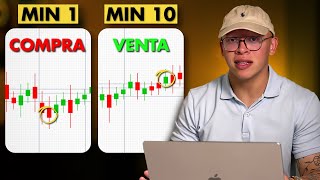
A key concept is the 'block breakout'—the last opposing candle before a strong move. In a smaller timeframe, look for a new block order created after a breakout, which increases probability.
A 40-pip distribution was taken using a 15-minute block breakout and 4-hour inefficiency. No partial close was done, but the trade was profitable.
Used a 'killer block' concept: accumulation, manipulation to an existing block order, then distribution. The entry was fast and achieved 1:2.3 risk-reward.
A block breakout in 1-hour and 15-minute timeframes confirmed the entry. Fibonacci discount tool showed price beyond 50%, and a 5-minute block order provided extra confirmation.
Simple entry using a trendline divergence and a block order created before the New York session. Risk-reward was approximately 1:2.8.
After a block breakout on a larger timeframe, a new block order (classic or in-break) often appears on a smaller timeframe. Combining concepts gives 75% higher probability, but it's not a guaranteed signal.
By combining the block breakout pattern with smaller timeframe confirmations, traders can increase their entry probability significantly. The presenter emphasizes that this method is not a 'click and go' but a systematic approach to filter entries.
What is a 'block breakout' in trading?
The last opposing candle before a strong move. When price breaks through it, it often leads to a directional move.
05:43
What two outcomes typically occur after a block breakout on a larger timeframe?
Creation of a new block order on a smaller timeframe, or a new block order in breakout that implies a structural break.
06:57
What is a 'killer block'?
A block order with a higher degree of packaging than a classic model, often appearing after accumulation and manipulation.
10:13
Why does the presenter recommend using smaller timeframes for entry confirmation?
After a block breakout on a larger timeframe, smaller timeframes (like 5-minute) provide a new block order or structural break for a precise entry.
16:10
What percentage of probability does the title claim the method increases?
75% higher probability.
27:20
Block Breakout Defined
Core concept of the video; foundation for all entries discussed.
05:43Two Outcomes After Breakout
Key rule for applying the strategy: look for new block order or structural break.
06:57Killer Block Explanation
Advanced pattern that enhances entry precision.
10:13Smaller Timeframe Confirmation
Emphasizes the importance of extra confirmation to skip bad entries.
16:1075% Probability Claim
Direct tie to video title; clarifies it's a probability increase, not guarantee.
27:20[00:25] Hello, hello, hello to everyone, my dear friends! Welcome, ladies, gentlemen, boys, and girls, to this new, short live stream. It's our first time live streaming on YouTube, so
[00:39] welcome! I'm giving you a warm welcome. I hope you feel comfortable, welcome. I hope you feel comfortable, and there are brand new seats we just bought for you so you can feel one hundred percent.
[00:52] can feel one hundred percent. So today, the goal of this short stream is to explain which entries we took this week through an activity we were doing
[01:05] In that activity, we were sending the address of the entries we were taking this week. So, as we were doing, we would send what we were expecting before we started distributing,
[01:18] what we were expecting after we took the entry, and then we were sending a little break-up of each of the entries. But since this week four entries, and all four were
[01:31] perfect, you can see it in the Telegram where we sent step-by-step instructions for each of the things we were going to do with the entries, and thousands of people were able to take this opportunity to explain these entries and give you
[01:44] explain these entries and give you some guidelines on how I'm confirming my entries to give you a little more confidence when making them. Now that we've reached that point, and with the chart in front of
[01:58] us, let's analyze the entire week together. Since this isn't our first time streaming on YouTube, I can't guarantee that this broadcast guarantee that this broadcast
[02:25] will be saved. I can't guarantee it because I don't know if the streaming software we're using allows that option. I've made several mistakes using streaming software; it happened on Facebook where we lost several recordings. But I imagine this one will be available. Besides wanting to take advantage of this first time streaming on YouTube, since there are only a few of us, I wanted to create a small team. Wayne wanted to
[02:39] do a short recording and a 30-45 minute session where the winners—I'd choose at least two— could have that session and answer them immediately. So, all you need to do to
[02:53] participate is take a picture of this class. Tag me in a story, that's all. If you tag me, it appears on my Instagram, and that way you can choose the people who participated. So, you just need to take a small photo like
[03:08] this and tag me, and we can start. I won't talk much longer, and we'll go straight to today's lesson. Here we are, looking at the timeline of a project, and we're going to analyze each of
[03:20] the entries from Friday, Thursday, Wednesday, and Tuesday. Monday was the only day where there wasn't an operation as such, but then Tuesday, Wednesday, Thursday, and Friday we had successful entries. So, I'm going to explain them to you, but I
[03:34] invite everyone, after I explain, to go to Telegram and see the time we sent it, see the photos we sent, see moment before it happened. Because remember, right now it looks simple
[03:47] because it's all over. Someone who isn't in Elche, the 'great', might say that explain an entry, but when you go to Telegram, and if you spend the whole week with us, you could see These were entries taken live.
[04:01] survey, I saw that over 1,000 people said they didn't understand the directions we sent. So, I'll also give you a little trick so you can understand them, because we'll be sending these insights for at least two or three more weeks.
[04:15] latest YouTube videos. So, throughout the week, we had a slight bearish selling direction, and the main reason was this: on May 13th, after
[04:31] triggering this euro from the blog here, after accumulating at that point, we can indicate manipulation in the timeframe. It's small, but something we never observed after all that accumulation, that this block order was activated,
[04:43] was distribution below a significant log. So, that's why all these days we've been focusing on the selling side. It's one of the reasons. If you look at the Telegram, each day we had a justification for
[04:58] we marked the inefficiency in the four-hour timeframe, which was here—I don't know if you remember—this was on Friday. We we saw this sales distribution on Friday. When we go to a
[05:13] smaller timeframe, let's look at June 17th. And I need you to pay attention, look closely because this is important. The first confirmation, or the first thing we can take away to get direction in this, was the
[05:27] one-hour timeframe. Something simple, but in addition to direction, this time we're going to Notice what I have marked here, which is one of the main factors from one of the last videos. What I have here would be this block
[05:43] breakout, the last opposing candle before the strong move. The strong move, in this case, takes place on the same side, ends up distributing on the opposite side, That would be the concept of the block breakout. It's in one of the last
[05:57] videos when we get to the New York session. We're going to mark this after eight o'clock. You noticed that I was sending all the directions used the gold of the block breakout on the opposite side, validating it. And this is where it all started. This is where all the shaking began.
[06:13] opposite side, validating it. And this is where it all started. This is where all the shaking began. at the point where we were waiting. Then we're going to look for or start with an interesting confirmation method.
[06:30] would be that you can start applying it after you see the use of a breaking block wall. It would basically be to go to a smaller timeframe to look for a new creation of a new block order.
[06:43] But if that new creation of a new block order creates, instead of a classic example, a breaking block wall, it's much better. I repeat again so I don't get lost, very gently, with much affection and much love. Remember that
[06:57] creation of the new breaking block order by Elsa. That use of the breaking block order often ends in two conclusions: the creation of a new block order, which in this case was a new block order
[07:10] in a smaller timeframe, in this case, five minutes; or the creation of a would be the two scenarios. Possibly a better way for you to approximate this concept is to use it in 15 minutes and 5, I repeat, in
[07:26] smaller timeframe, preferably the first of the block. The breakout is at 15 and the second at 5 in a shorter timeframe. I would use a classic example or a new block-in-break order. That would be, we could
[07:40] call it, the convenient blog where I would create a new blog within another, which would give rise to a new direction. This day I had mentioned to you in the telegram, and there I sent the entry when I had it open, which was one of the few days where, for
[07:55] many months, I hadn't taken 40 pips. You know that I am, or generally, I trade in the shorter term. So, the fact that I was able to adopt this distribution, in addition to Friday being a very busy day for me, was the
[08:08] day I went to Puerto Rico. So, in the middle of the trip and the planning, I was able to had this small 40- pip distribution. This day, in this case, I didn't have a
[08:20] partial close as such. After we were in this part, after having overcome this low, the correct thing, and what I always recommend, would be a partial close. But keep observing each of the entries because at the end I'm going to
[08:33] ask you for your conclusion. Observe how this day, June 17th, after using... This new block order, in this 15-minute break block order, we had that direction accompanied by the four-hour inefficiency with
[08:46] the one-hour blog order and with the daily batch. So let's look at Thursday's entry, which was interesting, and this day my patience was tested, or not so much as such because it's a very similar scenario. So let's use
[09:02] this tool to our advantage, the replay tool, and observe when we go to a slightly larger timeframe. We observe that in the four- hour timeframe there isn't as much information as there was
[09:16] yesterday. What we can see is that I filled this gap on June 15th, and in a smaller timeframe like one hour, I use this block order. But when we get to this day, observe mainly that it's the same
[09:29] daily timeframe at the beginning: use of blog humor, certain distribution, but that distribution had n't yet concluded below a logo, and that was my basic concept to understand that I might have
[09:44] I use a blog order distribution, but the distribution hadn't reached the logo; it had come very close. So after going to a same point, remember when I showed you
[09:58] this, if it reaches the red square, I would be observing your reaction to take an entry point. What you did was, it reached the red square, but why was the red square marked?
[10:13] This is where the concept of a killer block comes in. Basically, in the red square, we can find a blog that has a certain degree of packaging superior to a classic model inside.
[10:28] of balance, reaching that little red square, if we go to a slightly smaller time frame, this is what was produced. Observe it produced. Observe it
[10:42] 7:29, approximately 45 minutes. We had this accumulation scenario in the time frame of one minute, leaving all these equal, which could also have been used as a sensei, well-seen once on a
[10:56] larger scale, but in this case, I didn't use it. But after this level of accumulation, we see this manipulation directly towards the red square, and we observe that this manipulation towards the red square creates
[11:09] a new block order within another blog order. In this case, we would use 5 blog order. In this case, we would use 5 minutes, 5 minutes, if it could be 5 15. In both, you can see the killer block and the one-minute timeframe. So,
[11:22] one-minute timeframe. So, observe how we small accumulation, manipulation, and distribution towards an already established block order, creating a new one. How nice that sounded! That accumulation,
[11:36] manipulation, distribution, accumulation, manipulation towards an already established block order, and creating a new one. I know many of you know what this strategy would be called in this case,
[11:53] we use that strategy, which you already know, it would be L2. Since it's outside of that timeframe, it wouldn't be L2 as such. But observe: after the red box arrives,
[12:07] that distribution phase begins, and it was perfect. It was a super fast move. It wrote to me like this part. So, since I wanted it to surpass this low, it arrived exactly as I thought it would. Well, it arrived and
[12:21] formed exactly the same size as it was before, possibly with a discount, and it continues distributing. So, I'm not going to close partials yet. And this even after having had approximately 1 to 2. That day I made the
[12:36] mistake of not repairing the partials precisely in these shows. So even though I regretted it after it happened, I also said it because the break-even point was moving, it wasn't moving, it wasn't moving, it closed at the break-even point, and it wasn't moving,
[12:52] sorry, it wasn't splitting, it closed at the break-even point. And that day, even though I had this nice entry, approximately 1 to 2, it wasn't perfect, it wasn't 12.7, it was more like 2.3. Even though I had it there, I won't be 50%
[13:06] as I always do, below the two main ones, and that cost me this break- even point. But I consider it a win because even though I made a win because even though I made a mistake and didn't make a profit, I understand that I
[13:18] way when taking that entry according to my strategy. Obviously, I explain and justify the fact that according to my strategy, because I know that not everyone follows these exact same rules and many of you wouldn't
[13:34] respect the way I do it as much. So, in my understanding, this is the way I use it. I generally go for 1 to 2 or 1 to 3 trades; some go for... 1 to 10, 115, and I truly respect them, it's their style, I don't interfere with
[13:50] it, I don't give my opinion, I have no opinion, nobody asks me what I think about 110 or 115 or why I do 1 to 2, it simply works for me and I'm profitable with it, so nothing to say. At that point, we observe the entry of June 15th, and it
[14:04] was interesting because I remember as if it were 5 minutes ago that just having distributed below this, I told you, if you use the
[14:16] blog's breakout position on the opposite side, I go to sales. I think this people took advantage of this entry opportunity, but let's observe how interesting it was after it reached this other blog's breakout position, and
[14:31] last opposite candle before the strong move that takes the previous day's Hajj, passes strongly through the second rule and uses it on the opposite side, because it unlocks the breakout, super, super, super confirmed, using the
[14:44] using all these days, but in this case, it filled this gap and we took advantage of this distribution generated by This gap due to that complete action of that inba launch, completion, complete action is a word, it doesn't matter, we
[14:58] can also observe the order, block and break, the the strong move that this high takes and passes super strong through it and unlock, break in two timeframes, it's interesting when we now
[15:15] observe it in 15 minutes and see that it's around here, there where the important point arrives, I mean, look, it's much harder to make a mistake when you know how to correctly, there is no timeframe that is correct nor should we
[15:29] establish patterns that it should be 15, 30 minutes, then one hour, then four hours, we have many videos talking about the same concept but there is no talking about the same concept but there is no 100% correct timeframe, what I
[15:42] do is I use the one I understand, if one day I don't find anything in 15, 10, 5, I can use 30, it's not something I use constantly but I can use it, but if you can observe my daily page and it is
[15:56] found in four hours, one hour, 15 minutes, 5 and 1, it's like What I use most frequently, we could eliminate everything else. I would be perfectly fine, but in this case, it would be very difficult to miss entries after
[16:10] you have extra confirmations. We can aim, in this case, around 10 AM after confirming this block order in two timeframes. I wouldn't take my entry immediately at
[16:23] this point. That's the key to using smaller timeframes to get that extra confirmation. That's why the video says to increase your probability of success by 75%, because there are some days I don't enter
[16:36] simply because the smaller timeframes didn't confirm it. If we go to a smaller timeframe, in this case, 5 minutes, we can observe the same scenario. Something I might notice by using Fibonacci, our
[16:49] discount tool, is that it exceeds 50%, which categorizes us as being in a discount, and a five-minute block order arrives. Remember what I told you in the entry methodology: the first timeframe, after we reach a block order in two timeframes,
[17:02] I want to have two things: a new block order in a smaller timeframe, preferably five minutes, or a new block order in... Break a classic block border, a new block order in break. In this case,
[17:16] five-minute timeframe, but we can even confirm it a little more when we go to a smaller timeframe. And here we add a new concept that I've been testing lately and it's worked super, super,
[17:29] super well. It's a concept that Aro uses a lot after it reaches the blog order in break. Listen carefully to this part: after it reaches the block order in break, I would like two things to happen: the creation of a new
[17:41] block order in a timeframe like one or three minutes, and that block order in break implies a structural break, that is, that it makes a small change. I see there are many ways to call it, but in
[17:55] ways to call it, but in Latin American Spanish, Latin American Spanish, or Spanish from Spain, or Spanish from any country, it would be a structural break. So how can we find it? It would be after the last halo passes. This is the last
[18:09] hair low confirmed after the creation of this hi-hi. It passes strongly through it, and on the opposite side we can find the blog logo. In this case, we could take two breakout candles, and it would be perfectly valid. This would be
[18:22] the last opposing candle before the breakout. I did, or we could take this one, but I would categorize the first one as more valid because the high that the second one takes isn't as relevant. The first one, if it's a more defined high, is
[18:35] also categorized as a hair low. So, to give you a brief summary of this entry, and so that you don't get confused or scared or think that these concepts are difficult, they are literally very simple. It's a
[18:48] little more difficult to apply it live, but once you have an idea of exactly what you're waiting for, it becomes a little easier to use the block breakout order. In one hour and 15 minutes, we go to a smaller timeframe. We
[19:00] could have entered into the use of this order the classic way in concept more interesting, we apply a new rule. When we reach that 15-minute mark, we observe the creation of a new block breakout order on the
[19:14] one-minute timeframe, which implied a structural transition in that one-minute timeframe after changing the We observe the and I ended up entering from this part
[19:26] here. This risk-reward can't be that it's not exact; maybe it will enter a little lower because generally when I place it, the entries don't enter right on the point. It all depends on the broker. Then we implemented it,
[19:38] we observed this complete distribution which was around 1 to 2.8 approximately. Here it said 1 to 2.93, but it was more like 1 to 2.8, removing the charges,
[19:50] removing the decimal point, which was a little bit lower. But this entry, I literally think, was one of the simplest entries I've ever taken. And notice that we've already used the concept of a breaking block order three times in the
[20:04] week, so you can see how frequently we observe this concept. I've always told you that I'm better at range scenarios. distribution, we have this small range scenario where there aren't long
[20:19] distributions like in previous days where we observed this whole sharp drop, where we observed this whole sharp drop, for example, on June 9th, 10th, 12th, and 13th, we observed this super sharp drop. And now we're going to go directly to
[20:32] now we're going to go directly to Tuesday's entry. This was also super simple, and this was the entry I told you about. I just didn't have to go to your house and open it because we literally sent all the guidelines from the beginning, and I can
[20:44] see that there are new people in the broadcast. Remember that in how it is a giveaway! It will be two sessions of 30 to 45 minutes each so you can ask me all the questions you want. You just have to take a picture of
[20:58] the class and tag me. That's all! You can tag me, and if you like, you can also tweet about it. But that's it! You'll be participating. We'll possibly choose the winners tomorrow or the day after, and then we'll kick off that
[21:11] session! This is the Huawei video from our first live broadcast, and it's great to see that we're a little over 1000 people! How interesting! So, let's keep going. I do n't get distracted; if you let me, I'll go off on a
[21:26] tangent. That's why I have the podcast, to vent. Later, when we look at this day, which would be June 14th, marking from this point to this point, the first thing that comes to mind is the trend line. There was
[21:41] a small divergence between the that day via Telegram, but I understand that this entry was simple, and I think that was the second one that the most people were able to take advantage of. So, how would
[21:56] people were able to take advantage of. So, how would this concept work? How would the translation of this concept to the real market be? How would it accommodate a Just a little bit of real market be? How would it accommodate a Just a little bit of screen, just a second,
[22:12] of this concept work and how could we move forward in applying it in a super simple way, point by point? B would be our main discount points. We observed in one of the videos on how to use discounts at a
[22:27] professional level that after 50 percent, we understand that it is a discount point, no, it is not an expensive point. Before 50 percent, it would be an expensive point where there would be less probable entries.
[22:42] After 50 percent, it doesn't matter if it reaches 60 or 70. The main thing we can observe is the use of this blog order created before the New York session. What is that called? I know you know what that is called. After
[22:57] created before the New York session, let's go now to the interesting part of the concepts. So you remember that we observed the entry on Thursday, how we had exactly this same thing: an accumulation and a
[23:12] manipulation that went directly to that already created blog order. So there you have a nice clue. After that manipulation that went directly to that creation of several things, for example, we could observe this breakout block pattern
[23:27] last opposing candle before the strong move that takes place, I made it pass strongly through it and use it on the opposite side. This would have been the optimal part, but it turns out that when it was happening, I already saw this creation
[23:41] of this candle. So, inventing right here, configuring it, I brought it in, it distracted me a little with the puppies, and in the end, I had this candle. Then, after there was this small reaction, I understood that even though it didn't
[23:53] breakout block, if we went to another timeframe, in this case, the three-minute timeframe, the concept would have been valid. Observing this last opposing candle, we mark it completely and see that it didn't pass
[24:07] through it, so it ends up entering here. But so you don't get lost, I'll go back and give it to you again in small steps. We arrive at this five-minute block pattern. We go to a smaller timeframe. We observe the
[24:20] same concept as on Thursday, which would be the accumulation of a manipulation that goes to a block pattern already created. We observe the creation of a new block pattern. In the same concept we've been working on since the beginning of the
[24:33] broadcast, and its use on the opposite side, even though it went up a I understand that the entry was totally satisfactory and possibly the blog order used wasn't exactly the one I indicated, but maintaining all my
[24:47] criteria based on the new five-minute blog order, which would be sorry, I've used the 15-minute order, which would be this one here, and I see that it created a maintained all its criteria, everything was perfect because the candle never passed the
[25:03] last opposite candle, so that's why my stop loss was here above, and it's not 'm more likely to make a mistake, so the choice we can make in this particular case of this entry, many
[25:18] times it happens to me, I imagine it happens to you too, that when I use a one-minute timeframe I put the stop loss based on a one-minute high, that would be I use this block on breakout order, I could put it where the
[25:32] sometimes that I only Blogs in crisis are found in several timeframes simultaneously, so a little trick I use is that, despite having this slightly larger size—look, 15 pips—it's not a
[25:44] number I usually use, but I end up putting it close to it. I did that, and it helps me a lot more. So, how can we take full advantage of these concepts, and what conclusion can we draw from having
[25:58] taken these four entries? I sincerely invite you to go to the big video, check the schedule where we posted them, and see the replay tool. Try to draw your own conclusions because
[26:11] this week we'll be working on the same dynamic. So, what conclusion part because I don't have a presentation prepared; I don't have anything. It would be very interesting for you to take away the helpful information that after using
[26:26] a Word document for a blog crisis, a new "broken" order is generally created smaller timeframe, or a new "block" order in " classic" in a smaller timeframe, which would be the first one. You can replay the video if you didn't hear it. I think
[26:40] that if we're going to... Being able to stop recording, the second conclusion we observed on two of the four days we took entries is that many times in the one-minute timeframe before a good entry, we will observe that
[26:52] manipulation that will activate the block in a larger timeframe, confirmation with a new order, the classic new block order in breaking. Notice the combination where we combine the concept of order, the classic one, the
[27:06] last or the opposite before the strong move, with the new concept that we have been explaining in recent days on YouTube of the block order in breaking. Both creations, both uses, are from these two concepts, not
[27:20] 100%, to take entries as the title of the video indicates, which is not "click," go, and I really promise you with a 75 percent higher probability, and yes, notice that the word probability doesn't go away, 1. 75 percent higher
[27:35] probability increases a little more, so I repeat again, remember breaking on a slightly larger timeframe, whether it's 15 or 5, go one more Small timeframes are used to look for a new block pattern in a breakout that implies a
[27:50] in a breakout that implies a structural break or a classic block pattern. If, you find that accumulation and manipulation that leads to that block pattern on a larger timeframe, eureka! You're possibly facing a
[28:04] overcomplicate things with the larger timeframes. Obviously, we need them to determine the direction, but don't think you should spend most of your time on them. Obviously, if
[28:19] knowledge from this channel, you can already see that I generally stick to the smaller timeframes. If the larger timeframes work better for you, or if the larger timeframes work better for you, perfect, keep doing that. You don't have to change your style because of this channel. But I
[28:32] share all my experience with you. I share what works for me, and I try to be as transparent as possible. That's why we're doing this Telegram activity. I'm not doing this because in three weeks I'm going to
[28:44] sell signals, and I want you to see... No, I 'm not doing it because we're going to launch any services. No, I already informed you that we won't have any other services throughout the year. I'll simply continue to focus on my
[28:56] trading. We will continue advancing the free parts of the return and trades, which make up about 90 percent of all the content. After having completed this part, we understand and are working on Telegram because we have
[29:09] realized that we can help the community without spoon-feeding them. community without spoon-feeding them. A part of a signal is the anyone does. But when we give you the address and you can follow the
[29:24] starts working, processing the information you already have, obviously, if you have it. So that's why we will continue for several more weeks to keep sending the address so that you continue learning and so that you continue seeing exactly what
[29:38] I am seeing at the same time I trade in the New York session. Without a doubt, my dear friends, this week is going to be good. I'm not going to share the address for the week through this channel, but I'm going to send the video to the
[29:52] Telegram channel. It's below this video in the description. I'm going to send you This week is undoubtedly going to be very sure that everyone will be able to take advantage of the address you will
[30:05] see. What entry confirmations am I implementing? Not so much as can help with these entry confirmations using the strategies we already know. But rather, once we have something specific, we'll see which
[30:22] help us achieve that achieve that 75% probability mentioned in the title when accepting an entry. So, my dear friends,
[30:37] without further ado, see you at the celebration. Remember, the team, wey, I send you many greetings and thanks for taking the time. Around 1,700 users, what do you do to take the time
[30:49] to be here with us? So, without further ado, see you next time. Enjoy, rest, kisses, I love you, bye bye love you, bye bye and kisses.



⚡ Saved you 0h 31m reading this? Transcribe any YouTube video for free — no signup needed.