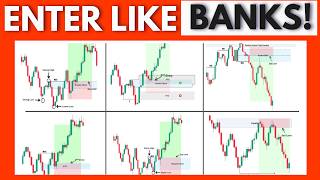

Why Timing Beats Direction in Trading
36sChallenges a common trader belief and promises a solution, creating curiosity and engagement.
▶ Play Clip"Title accurately promises entry strategies in SMC/ICT; video delivers exactly that with detailed breakdowns."
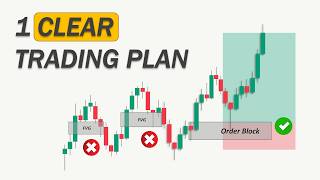
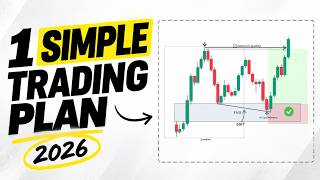
This video breaks down five powerful entry models used in Smart Money Concepts (SMC) and ICT trading. The presenter emphasizes that while direction is important, timing entries correctly is crucial for profitability. Each model is explained with specific criteria, entry rules, and risk management guidelines.
Most traders know where price is going but fail on timing. The video presents five entry models to solve this.
Used for reversals. Requires higher timeframe context (e.g., FVG, supply/demand, liquidity sweep). On lower timeframe, look for market structure shift. For bullish: swing low, expansion breaking structure, then buy limit at highest point of breaker block. Stop loss below zone.
Hybrid model for reversal or continuation. For reversal: price from HTF key area or liquidity sweep, then structure shift. Identify FVG in impulsive leg. Place limit order at highest point of FVG, stop below swing low. Prefer for continuation entries.
Similar to breaker block but uses higher low (bullish) or lower high (bearish). For bullish: swing low, swing high, higher low, then bullish displacement breaking structure. Buy limit at highest point of mitigation block.
Strong reversal model. Forms when price disrespects a regular FVG, breaking through it. The FVG flips role. For bullish: after liquidity sweep, look for violated bearish FVG that becomes IFVG. Enter immediately or via limit order at IFVG.
Hybrid model. Order blocks are footprints of institutional entries. For bearish: last up close candle before strong bearish move. Use on higher timeframes (15m+). Enter with limit order after confirmation.
Mastering entry timing is as important as direction. The five models—breaker block, FVG, mitigation block, IFVG, and order block—provide structured frameworks for high-probability entries when combined with proper higher timeframe context and confirmation.
What is the key difference between a breaker block and a mitigation block?
A breaker block requires a lower low (bullish) or higher high (bearish) before the structure shift, while a mitigation block uses a higher low (bullish) or lower high (bearish).
08:09
How does an Inversion Fair Value Gap (IFVG) form?
An IFVG forms when price completely disrespects a regular FVG, breaking through it and closing beyond it, causing the original FVG to flip its role.
09:01
What is the recommended timeframe for using order blocks?
Order blocks are best used on higher timeframes like 15-minute or above, not on very low timeframes like 5-minute or 1-minute.
12:32
What is the first layer of confirmation for a breaker block entry?
A clear market structure shift or strong change of character on the lower timeframe.
02:19
What is the purpose of a mitigation block entry model?
It is used for reversal trades, similar to breaker block but with a different structure (higher low or lower high).
07:18
Timing is Everything
Sets the core premise that direction alone is insufficient; timing entries correctly is critical for profitability.
00:02Breaker Block Entry Model
One of the presenter's favorite reversal models, emphasizing higher timeframe context.
01:25IFVG: Strong Reversal Model
Described as one of the strongest reversal entry models, often providing high-quality setups.
08:49Order Blocks as Institutional Footprints
Explains that order blocks represent areas where institutions initiate positions, making them key zones.
11:39[00:02] your analysis is right, this video will fix that because your problem isn't [music] direction, it's timing. Hey traders, welcome back to Smart Risk. In trading, direction matters,
[00:14] but timing is everything. Most traders know where price is going. They just don't know when to get in. That's why in today's video, I'm breaking down five powerful smart money and ICT entry models that I personally use to execute
[00:26] A+ trades. These are the same entry frameworks serious SMC traders rely on. stop guessing entries and start trading with more confidence. By the end of this
[00:38] video, you'll know exactly when to enter, when to stay out, and how to flow. Let's get into it.
[00:58] started. If you enter at the wrong time, even when your market direction is correct, you'll still end up with losing trades. role in building a profitable and reliable trading strategy. In fact, they
[01:13] are one of the three core elements of a complete trading framework. Identifying the optimal area of interest, confirmation, having a solid entry model. So, in this video, I'm going to break down my five personal entry
[01:25] models. The exact ones I use to execute and open positions in the market. Starting with the first one, the breaker block entry model. This is one of my favorite models, and I usually use it for reversal entries. The
[01:38] reason is simple. This pattern forms in a way that confirms price is more likely to reverse. But for this entry model to be valid, first and foremost, price must originate from a higher time frame area of interest, such as a higher time frame
[01:52] fair value gap, a supply or demand zone, or after sweeping liquidity from a major swing high or swing low. You cannot take every breaker block that appears randomly in the middle of nowhere. Context is everything.
[02:05] Now, let's see exactly how to execute an entry using this model. We zoom into a lower time frame and closely monitor for signs of reversal. clear market structure shift or a strong change of character on the lower time
[02:19] That becomes our first layer of confirmation. For a valid bullish breaker block, the price should first create a swing low, low. After that, we need to see an immediate
[02:33] expansion move to the upside that breaks structure and confirms the shift. In this case, the up close candle or series of up close candles formed between the first swing low and the swing high becomes your breaker block
[02:46] That is the area you use to plan your long entry. order at the highest point of that mitigation block and wait for the price To take profit, you can target the nearest liquidity on the current time
[03:01] frame or aim for a higher time frame key level if you're expecting a larger move. A bearish breaker block is the exact opposite. Price must first create a swing high, then a swing low, followed by a higher high. After that, we need to
[03:16] see a strong bearish displacement move that breaks structure and closes below the swing low, confirming the market structure shift. In this case, the bearish breaker block zone will be the down close candle
[03:29] or series of down close candles formed between the first swing high and the swing low. To use this entry model, you can place a limit order at the lowest point of the breaker block and wait for the price to
[03:41] Your stop loss should be placed a few pips above the zone. To take profit, you can target the nearest external liquidity on the same time frame since we expect the price to continue moving in that direction.
[03:55] Alternatively, you can aim for a higher time frame major liquidity level to achieve a better reward to risk ratio. Also, if you want to use a more refined and slightly conservative entry, you can place your order at the midpoint of the
[04:08] point of interest. This option usually gives you a better risk to reward ratio by tightening your stop loss nearly in half, while also potentially doubling half, while also potentially doubling your R to R.
[04:22] why price doesn't return to a fair value gap that forms right after a liquidity sweep or after tapping into a higher time frame area of interest. In many cases, breaker blocks are positioned slightly above or below the
[04:34] fair value gap. And because of that, price is more likely to react from the breaker block first instead of filling the gap. However, keep this in mind. If a breaker block overlaps with a fair value gap,
[04:48] that confluence significantly increases the probability of the setup. That overlap makes the breaker block zone much stronger and more reliable as Now, let's move on to our second entry model, the classic fair value gap model.
[05:04] This entry model, the most common, is a hybrid, meaning it can be used for both reversal and continuation trades. When applying it in reversal mode, let's consider a bullish scenario. First, price must come from a higher time frame
[05:18] key area or sweep a major liquidity level. Once that happens, we need to see a market structure shift on the lower time frame. That becomes our first layer of confirmation.
[05:30] After the structure shift is confirmed and we expect the price to move higher, opportunity. At this stage, we focus on identifying a the impulsive leg of the market structure shift. These zones often act
[05:45] like magnets, pulling price back in before it continues upward. We then look for a bullish fair value gap that forms within the bullish leg of the market structure shift. That's where we plan our buy entry,
[05:57] placing a limit order at the highest point of the fair value gap, with the stop loss set a few pips below the recent swing low. The same concept applies to the bearish model, just flipped in the opposite
[06:09] direction. Personally, I don't usually prefer using entry. Instead, I mostly use it as a continuation setup, adding another position once price has already moved in
[06:22] my expected direction and my first trade is running in profit. Now, let's move to the third entry model, the mitigation block entry model. if you're looking for a trusted prop firm with fast and reliable payouts,
[06:36] then you need to check out Funded Next. Funded Next is one of the pioneer prop firms that offers both futures accounts and CFDs all in one place, flexibility. They provide a wide range of challenge
[06:49] accounts starting from $5,000 all the way up to $200,000, options, meaning you can start trading without going through a challenge phase. And for the Smart Risk community, you can get an exclusive 7% discount plus a
[07:04] 120% account reward, which is only available through our link. interested in, check out the link in the description. powerful models you can use for reversal trades.
[07:18] Just like the previous models, for this entry to be valid, the price must originate from a higher time frame key area or form this pattern after sweeping a major liquidity level. Without that higher time frame context,
[07:31] the setup loses its strength. For a bullish mitigation block to form, price must first create a swing low, then a swing high, followed by a higher low. After that, we need to see a strong
[07:43] the structure and closes above the previous swing high. In this case, the bullish mitigation block will be the last up close candle or series of up close candles formed between the first swing low and
[07:56] the first swing high. To execute a long trade, you can place a limit order at the highest point of that mitigation block with the stop loss set a few pips below the nearest swing low and wait for the price to retrace and
[08:09] Note that this is different from a breaker block because with a breaker block, we look for a lower low to be formed, not a higher low. A bearish mitigation block is the exact opposite. Price needs to form a swing
[08:22] high, then a swing low followed by a lower high before a market structure shift with a bearish displacement leg that is closed below the first low. In this case, the mitigation zone will be the down close
[08:34] candle or series of down close candles formed between the first swing high and Now, let's move on to the fourth entry model, the IFVG entry. This is one of the strongest reversal entry models and often provides very
[08:49] high quality trade setups. But before we dive into the details and let's quickly recap what an inversion fair value gap is and understand how it forms.
[09:01] An IFVG forms when price completely disrespects a regular fair value gap, meaning instead of reacting to it, price breaks through it and closes beyond it. When this happens, the original fair value gap flips its role and often
[09:15] depending on the direction of the breakout. For example, if price breaks straight through a bullish fair value gap without that gap flips and becomes an inversion fair value gap.
[09:29] Instead of acting as support, it's now more likely to hold as resistance, positions. And if we play out the chart, you'll see that price retraces back into the newly generated inversion fair value gap and
[09:42] then continues lower with strong momentum. entry, price, just like the other models, must tap into or originate from
[09:54] a higher time frame area of interest or sweep a major liquidity level. Personally, I prefer using this model after price sweeps a major swing high or For example, if price sweeps a key swing low and then reclaims that range, the
[10:07] next step is to zoom into a lower time frame and look for a violated bearish fair value gap that transforms into an inversion fair value gap. confirmation. Once the IFVG forms, it is likely to
[10:22] hold as a new support zone, providing a solid area for a buy entry. And if a market structure shift occurs at the same time, that adds another strong layer of confluence, making the setup even more reliable.
[10:34] Placing an entry using this model, you have two options. The first option is to enter immediately after the inversion fair value gap forms, placing your stop loss below the most recent swing low.
[10:46] The second option is to set a buy limit order at the highest point of the newly formed IFVG and wait for the price to retrace into it and activate your For take profit, you can target the nearest buy side liquidity on the
[10:59] current time frame. Or, if you're aiming for a larger move, a key level on the higher time frame. scenario. You look for a bullish fair value gap
[11:12] that gets disrespected and violated, flipping into a bearish inversion fair Then you can either enter right after the IFVG forms or place a sell limit order at the lowest point of the IFVG and wait for the price to retrace into
[11:26] That's how you use the IFVG model for short entries. Now, let's move to the fifth and final entry model that I use, the order block entry. This entry model is a hybrid one,
[11:39] meaning it can be used for both reversal and continuation trades. It's also one of the most basic and widely used smart money concepts entry methods. Order blocks represent the footprints of smart money, areas where institutions
[11:51] initiate positions, usually at the origin of a strong move. These are decisional zones where large volumes are placed before a major expansion, which is why the price often reacts or reverses when it returns to them.
[12:05] In a bearish scenario, the bearish order block is the last up close candle or series of up close candles formed right before a strong bearish move that causes a break of structure. On the other hand,
[12:17] close candle or a series of down close candles formed just before a strong bullish move that leads to a break of structure. I personally use order blocks mainly on higher time frames, like the 15-minute
[12:32] I don't prefer using them for entries on very low time frames, such as the 5-minute or 1-minute. To place an entry using this model, just price must first tap into a key higher
[12:46] reversal. Then we zoom into a lower time frame and look for confirmation, such as a clear change of character. confirmed by breaking and closing below the most recent swing high, we identify
[13:00] the last up close candle at the origin of the bearish impulsive leg that caused the market structure shift. That becomes our lower time frame bearish order This is where we place a sell limit order and wait for the price to retrace
[13:14] The exact opposite applies to the bullish order block model. But keep in mind, lower time frame order blocks are more likely to remain unfilled, so managing expectations and risk is important.
[13:27] That's it, traders. Thanks for watching. I hope you found this video valuable. If you did, hit subscribe and turn on notifications so you never miss an Drop a comment below with your thoughts
[13:40] or topics you'd like to see next. Your support means the world to us. See you support means the world to us. See you in the next video.
⚡ Saved you 0h 13m reading this? Transcribe any YouTube video for free — no signup needed.