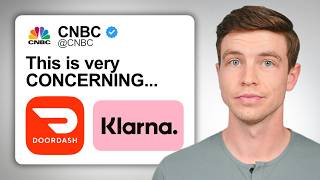

Going into debt for burritos?
30sThe absurdity of using BNPL for fast food sparks humor and shock, making it highly shareable.
▶ Play Clip"Explains the mechanics and risks of BNPL but stops short of calling it a scam — title overpromises slightly."
This video explains how Buy Now Pay Later (BNPL) services like Affirm, Klarna, and Afterpay work, their revenue model, and the hidden risks that can lead to overspending and debt. It highlights concerning trends, such as 60% of Coachella 2025 tickets being purchased via BNPL, and reveals that many borrowers are subprime, with nearly two-thirds of loans going to those with low credit scores.
Around 60% of Coachella 2025 ticket purchasers used BNPL. DoorDash partnered with Klarna for 'flexible payments,' leading to memes about going into debt for burritos.
Example: A $78 Lululemon shirt can be paid in four interest-free payments of $19.50 over six weeks, or longer plans with small fees (e.g., $2.61 fee for 3-month plan).
BNPL companies earn interest income from fees (APR up to 33.99%) and merchant fees (2-8% of purchase price). Affirm reported $2.3 billion revenue in 2024, over half from interest.
Most BNPL loans are not reported to credit bureaus, creating 'phantom debt' that masks consumers' true indebtedness. The CFPB found that 1/5 of consumers with credit records used BNPL, and 2/3 of borrowers are subprime.
1) Do you have other active BNPL loans? 2) Have you missed payments before? 3) Do you have savings (1 month in checking, 3-6 months emergency fund)? If not, BNPL may be financing a lifestyle beyond means.
Instead of BNPL, save the payment amount each period (e.g., weekly) and buy the item after six weeks. This delays gratification and reduces impulse spending.
BNPL can be useful for necessary purchases between paychecks but often encourages overspending. Alternatives like save now pay later or using a credit card responsibly (paid in full) are healthier financial habits.
What percentage of Coachella 2025 ticket purchasers used BNPL?
60%.
00:01
What is the typical APR range on BNPL longer payment plans according to the video?
19.99% to 33.99%.
02:57
How do BNPL companies make money from merchants?
They charge merchants 2-8% of the purchase price.
03:53
What does CFPB stand for?
Consumer Financial Protection Bureau.
06:09
What percentage of BNPL loans go to subprime or deep subprime borrowers?
Nearly two-thirds (approximately 66%).
06:37
List the three questions to ask before using BNPL.
1) Do you have other active BNPL loans? 2) Do you have a history of missing payments? 3) Do you have at least 1 month's expenses in checking and 3-6 months in emergency savings?
08:40
What is the alternative strategy to BNPL proposed in the video?
Save Now Pay Later: save the payment amount each period and buy the item after six weeks.
09:34
Why is investing the difference with BNPL not an effective wealth-building strategy?
Because six weeks is too short a time frame to earn significant interest.
11:57
Coachella BNPL Prevalence
Shows how mainstream BNPL has become for luxury events.
00:01BNPL Interest and Fees
Highlights that BNPL is not always interest-free; fees equate to APRs up to 33.99%.
02:30Phantom Debt
Explains the lack of transparency in BNPL lending.
05:28Save Now Pay Later
Provides a disciplined alternative to instant gratification.
09:34[00:01] later services from companies like Affirm, Clara, and Afterpay have that, we've been seeing some really concerning trends. For example, this year in 2025 for Coachella, around 60% of ticket purchasers used a buy now pay
[00:15] to actually attend that festival. And then just the other month, it was Door Dash was partnering with CLA to offer quote, "Even more convenience with flexible payments." All thanks to new buy now pay later checkout options. Now,
[00:28] and led to a bunch of memes about people going into debt for burritos. And some people were even calling an announcement like this a recession indicator because and other financing options to kind of help make ends meet when times are
[00:40] tough. However, with this rise of buy now pay later, it might not really be just to cover basic living expenses and survive. But instead, some argue that positioned to be a tool that's used to get people to intentionally spend money
[00:53] though it can feel like these payment plans are a good deal. So, in this are buy now pay later services really worth it? Or is this all somehow just a financial flexibility when in reality it's just leading to higher and higher
[01:08] first of all, how does buy now pay later even making money because it kind of sounds a little too good to be true. So, athleisure clothing and you know that Lululemon is one of the top brands for
[01:21] website and you add a shirt to your cart, but that shirt is $78, which point that might be a little bit out of your budget this month. However, you there that says, "Hey, you can either pay 78 bucks right now or you can make
[01:35] CLA." So, you click on the checkout button because that sounds pretty good since four payments of $19.50 equals $78 exactly, meaning have to pay here. Plus, when you look at the payment schedule for this purchase,
[01:49] payment today, and then another payment in two weeks, another in four weeks, and the fourth and final payment in 6 weeks. And lucky for you and many others, that paycheck schedule. So, those smaller chunks sound better for your cash flow.
[02:03] schedule with nothing due today and then only three payments of 26.87 per month over 3 months for just a small $2.61 fee. Or you could stretch that out even further into six payments of 1377 per month over 6 months for only an extra
[02:17] $4.61. Now that interest free option of four payments over 6 weeks represents structure. And then those slightly longer flex pay options are sort of like this other short-term loan with interest that's actually disguised as a small
[02:30] fee. So that's basically how buy now pay later works. But how are companies that from them? The first way obviously is going to be from interest income, which is primarily made up of those small additional fees that BNPL companies
[02:42] installment loans. And again, that's really interested as a small fee. Now, disclosures during the full checkout process and you look at those fees as an fees from the three and the six-month payment plans in our Lululemon example
[02:57] actually work out to be 19.99% as an annual rate. Clara also says that the annual rate. Clara also says that the APR can go all the way up to 33.99%. dollars of interest or fees on a payment plan doesn't sound like that much, but
[03:10] payments across millions of users, it adds up to way more revenue for these actually take a look at one of these BNPL companies, which is a firm who's can take a look at their financials to see that in the recent 2024 annual 10K
[03:25] filing, they reported total revenue of over $2.3 billion. And more than half of that came from interest income on those loans. That's over $1.2 $2 billion going to just one of these BNPL companies. And these numbers have been rising fast year
[03:38] of revenue for buy now pay later companies is called merchant fee revenue, which for a firm in 2024 was around $674 million or around 29% of its the secret way that many of these companies are actually able to make a
[03:53] payment plans. They do this by not making money from you, but instead by themselves, typically in the amount of around 2 to 8% of a customer's purchase checkout. The reason why they're able to make money this way is because they
[04:08] them, "Hey, we've got a ton of data on if you offer our payment plans on your website, then not only are you going to completes a purchase, but you're also going to get higher average order
[04:21] values. That means more revenue for the retailers because when given the choice to make a sale but pay a small fee or not make a sale at all, they're going to gladly pay that small merchant fee to a firm or to Clarna or any of those buy
[04:33] they know that psychologically people are going to be more likely to buy and spread out payments interest free. Now I'm not saying that everyone who uses irresponsible with it just like how I feel that not everyone who uses credit
[04:48] I am saying is that at scale and in general, buy now pay later might not be hack that some people are led to believe. And that is going to lead me to exactly the problem is with buy now pay later. So just like any financial
[05:03] mortgages, personal loans, car loans, and stuff like that. The problem with these things many times isn't always the financial product itself, but rather the way it's being used and who is using it. Now, over the recent years with buy now
[05:15] popularity, most of these payment plans have not actually been reporting to the have around this stuff is pretty limited. This has led to buy now pay later being called phantom debt because right now there's not any real way to
[05:28] are out there for these short-term loans. And so, even though we know that credit card debt totals around $1.2 trillion right now in the US, after you factor in this phantom debt, that means US consumers probably owe a lot more
[05:40] concerning as fears grow about a recession and because higher prices mean turning more and more towards these different financing options. Now, we are payments getting reported to the credit bureaus and that's something that's
[05:54] goes on here, which hopefully then leads to more transparency around lending with been kind of limited up to this point, we did recently see a pretty good report Protection Bureau and the results were a little bit shocking to see. So a few
[06:09] collect information from the big players in the buy now pay later space like Affirm, Afterpay, CLA, and even PayPal and more. And what they found reveals with these short-term payment options. They saw that among consumers with a
[06:23] credit record, 1/5if had used buy now pay later. And then among those BNPL borrowers, 63% had multiple simultaneous loans during the year and 33% had Now, that's not too alarming, even though it does show just how popular
[06:37] report also found was that nearly twothirds of buy now pay later loans scores that are in the subprime to deep subprime range. For some context there, the CFPB classifies anyone with a FICO credit score of 580 to 619 as subprime
[06:53] and then anyone with a score below 580 as deep subprime. And so these borrowers have things on their credit report like missed payments, high balances, many history, and other things like that. Then by cross-checking data collected
[07:05] from buy now pay later loans with other credit records, the CFPPB report also they said that BNPL borrowers were more likely to hold higher balances on other younger borrowers held more in buy now pay later debt as a percentage of their
[07:20] other interesting findings from that report, so I'll go ahead and leave a check it out for yourself. But a big thing to know about the data from this report is that it was based off data collected from 2022. And so imagine now
[07:32] what that data would look like here in 2025 as these services are obviously with the Coachella and the Door Dash stories. The fact is with the way that approving people on a purchaseby purchase basis with just a soft credit
[07:46] becomes dangerous because again you're basically kind of feeding this interest fees late fees from some providers if you start missing payments to the illusion that you're doing the smart thing by spreading out your
[08:00] payments. Again though, not everyone or every situation is going to be a victim here. And there's probably some cases where, like most things, it's fine to don't forget that the merchant fee business model here literally only
[08:13] people will spend more and will check out at higher rates with these services. incentive for retailers to continue offering these payment plans. The same is true for credit cards as well, and for that matter, even car loans and
[08:26] using debt to buy things they can't actually afford or don't really need. And so, this video here is just about raising awareness about what buy now pay considering using buy now pay later, here's three questions that you should
[08:40] worth it for you. Number one, do you have any other active BNPL loans at the moment? Because if you do, then I'd say that managing multiple payment plans is headache, and it's also not worth creating the habit of relying on these
[08:53] plans. Number two, do you have a history of missing payments on any type of if you do have previous mispayments, then the fact is that history could late fees or penalties. So, for this, you really got to just be honest with
[09:07] And then number three, do you have at least 1 month's worth of expenses saved up in your checking account and then another 3 to 6 months worth of expenses don't, then you might be using buy now pay later to basically finance your life
[09:20] better than getting into highinterest credit card debt. But again, it's really probably start prioritizing creating that margin of safety with some savings with buy now pay later. Now, if you've answered those questions and you're
[09:34] still thinking about using a buy now pay later service, I want you to at least strategy instead that I personally think is going to be a much healthier people. And that is going to be something that I call save now pay
[09:47] later. With save now pay later, the mechanics are going to work very similar week plans. However, instead of making one payment and then getting whatever item you want to buy today, and then making another payment in 2 weeks,
[09:59] another one in four weeks, and then one final one in 6 weeks with BNPL, for payment today into a savings account and then not get the item you want at this payment in two weeks, another one in four weeks, and then in 6 weeks when you
[10:13] you're able to go out and actually buy that item. This helps to fight back against a big problem that I see with buy now pay later services, which is the too many people fall victim to in today's world that's so focused on
[10:26] consumerism. So, with save now, pay later, it's really all about simply receive and enjoy the item you want to buy by just delaying that by 6 weeks. is that first of all, 6 weeks is really not that long of a time to wait for
[10:39] something. And then second of all, after 6 weeks have passed, you might not even thing anymore because now all the impulsive urges have kind of died down later on food spending for impulsive hunger is going to be a bit different
[10:53] of just ignore financing your pizza delivery through Door Dash. But even for other stuff like concerts, sports games, travel, or whatever else you want to buy with a flexible payment plan, try thinking of other cheaper alternatives
[11:05] money on instead, which is going to be my next piece of advice here. When it comes to substitutes, most people tend to forget to look at buying last year's because retailers are always constantly pushing the latest and the greatest
[11:18] the truth is that last year's products, used items, certified refurbished eBay, those are going to be where the real deals are, where you can actually price instead of just trying to manipulate and spread out that price.
[11:32] you can even use that to pay for these cheaper purchases because as long as you pay off that card on time and in full by the payment due date, you can actually avoid interest altogether while still having several weeks to pay that back
[11:45] cycle. Also, for anyone who says that it makes sense to use buy now pay later with zero interest over six weeks to make a purchase today and then kind of invest the difference to make a profit as you pay that off, just stop because
[11:57] strategy and that's not something that's going to have any sort of material effect on wealth building because 6 weeks is just too short of a time frame could earn interest in a high yield savings account or some other short-term
[12:10] and then paying off the rest of that BNPL purchase over 6 weeks. But you can also do that exact same thing with the save now pay later strategy that I just actually comes down to people wanting that instant gratification instead of
[12:24] clear, I'm not talking about the times when people use these services things they actually need to buy in between paychecks. So, it's going to be up to each person to ask the right questions and be honest with why they're
[12:37] any of the other strategies that I've talked about here in this video. There's option, including buy now pay later, credit cards, debit cards, and even weighing the pros with the cons of each option you have while not putting
[12:52] yourself at risk of overspending or even going into debt. For me personally, I good budget because I know I'm going to be able to spend the exact money that I from some of the protections and the
[13:04] which most buy now pay later services just don't have. So, if you want to learn more about how exactly I budget and use credit cards strategically in my check out either one of these videos on the screen next. But as always, thanks
[13:17] so much for watching and I'll see you in the next one.
⚡ Saved you 0h 13m reading this? Transcribe any YouTube video for free — no signup needed.