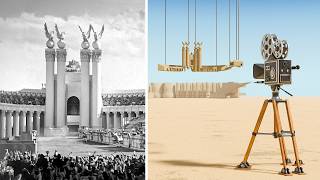

How Kubrick Faked a Floating Pen in 1968
45sReveals a simple but brilliant practical effect that surprises modern audiences who assume CGI was needed.
▶ Play Clip
[00:00] This is a scene from Stanley Kubrick's 2001: A Space Odyssey released in 1968. This was before computers
[00:29] and placed in front of the camera. The glass was attached to bearings that allowed an operator to slowly
[00:58] and even invent a green screen alternative that worked better
[01:28] and it didn't require editing. To pull this off, he'd record the first scene
[01:53] essentially remained transparent since almost no light was hitting the film. This meant that as he
[02:22] and be slowly pulled towards the camera. As he got closer, his head
[02:52] the same strip of film. By doing it this way, instead of combining
[03:22] it was all done in one take without
[03:50] The same trick was used for this scene. The massive demon mouth
[04:15] These epic chariot racing scenes required an enormous coliseum filled with crowds but the studio didn't have the budget
[04:43] that could be mechanically moved
[05:11] AI can't do everything, but if it's used right, it can be an amazing tool to
[05:36] The best part is this
[06:03] So far, all of the tricks we've looked at were about adding more things to a scene But what if you wanted to
[06:28] But it's this shot of the man
[06:55] But what about scenes that
[07:23] The camera was tilted slightly off center so that when it moved forward, the slit would travel from the middle of
[07:49] This single movement
[08:16] But perhaps the most impressive
[08:44] Actors were constantly surrounded
[09:10] it's almost impossible to avoid these problems when keying out backgrounds. But in the 1964 film Mary Poppins,
[09:37] the actors were standing
[10:05] but the sodium light was separated and directed onto a different strip of black and white film. The result was a
[10:32] and essentially allow some
[10:59] creating perfect transparency. By the 80s, this technique was largely forgotten about since it was almost impossible
⚡ Saved you 0h 11m reading this? Transcribe any YouTube video for free — no signup needed.