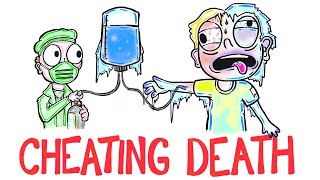

Man Frozen to Death Comes Back to Life
45sThe shocking and seemingly impossible story of a man revived after being frozen to death grabs attention instantly.
▶ Play Clip"The title promises a scientific exploration of cold, and the video delivers, though with some sponsor padding."
The video explores the science of cold exposure, from its potential health benefits to the extreme case of surviving freezing to death. It explains how the body responds to cold, the mechanisms behind hypothermia, and how modern medicine is using cold to save lives.
A man found frozen to death was successfully revived, highlighting the possibility of recovery from extreme hypothermia.
Cold therapy is claimed to improve happiness, health, and even extend life, but scientific evidence is mixed.
The host tries a cryotherapy chamber, noting a boost in feel-good hormones like endorphins and norepinephrine.
Studies on rats show cold exposure may boost immunity, but human evidence is limited and often overstated.
Cold exposure may trigger beneficial stress responses, similar to exercise, activating longevity genes.
Severe hypothermia causes cellular damage, frostbite, and organ failure at various temperature thresholds.
Multiple documented cases of people surviving hypothermic cardiac arrest, especially with rapid cooling.
Metabolism drops 5-7% per 1°C decrease, reducing oxygen needs and protecting cells.
Extracorporeal membrane oxygenation has a 50% recovery rate for hypothermia patients since 2012.
A controversial treatment pumps ice-cold saline into gunshot victims to buy time for surgery.
1.5 billion people have a genetic mutation that improves cold tolerance but reduces sprinting ability.
Short-term cold exposure can offer benefits, but extreme cold is dangerous. Science is finding ways to use cold to save lives, though many claims are exaggerated.
Surviving Freezing to Death
Challenges conventional wisdom about death and hypothermia.
Hormesis and Longevity
Explains a plausible mechanism for cold therapy benefits.
02:25Metabolism Slows with Cold
Provides a quantitative basis for cold survival.
07:06Cold Saline for Trauma
Highlights an innovative, controversial medical application.
08:11Genetic Cold Tolerance
Reveals a widespread genetic adaptation with trade-offs.
09:15[00:00] On February 21st, 2015, Justin Smith was found by his father in the snow. Blue and lifeless, he had frozen to death nearly 12 hours before. Or at least, that's what the paramedics believed,
[00:12] until one doctor was able to successfully thaw him out and oversee a full recovery. What would otherwise be considered a miracle has actually become increasingly common with modern science. But to understand how it's possible to come back after freezing to death,
[00:27] and how this is brought about an entirely new field of cutting-edge medicine, including freezing people's bodies on purpose to save them, we first have to understand what being cold says to the human body. This episode is sponsored by Columbia Sportswear,
[00:41] keeping you warm on your next cold adventure. More on them a little later in the episode. Whether you're a Wim Hof, Jack Dorsey, or a measly science YouTuber like me, there's been a lot of claims around cold therapies as potentially life-changing.
[00:53] But is there any legitimacy or scientific evidence to explain that it makes you happier, healthier, or can even change your genes to extend your life? It's not quite winter yet here in Canada, so I can't get those cool cold effects.
[01:05] I'm here at cryotherapy clinics to get in this freezing cold chamber to mimic the effects of winter. One study had 3,000 people do cold therapy and surveyed them after. 91% said they would continue to do the habit because it made them feel healthier.
[01:19] and almost all of them said they perceived that they had more energy after doing it. So maybe after doing this, I'm going to sprint on home. Whoa! Okay, so now I stretch. Oh my god. Okay, I look like a pop star.
[01:32] Ooh, the dip for perky. Mocking and ironing didn't fix the degree of Fahrenheit. This is crazy. We will do this. So one thing that has been scientifically proven about this, and I kind of am feeling it right now, is that you upregulate molecules like valendorphins, norepinephrine, serotonin,
[01:45] and that makes you feel good. And honestly, right now, I'm like, I could frickin' party! I feel like Goosebumps. And also, it's really cool because, like, your blood flows back to your skin to try and heat you up, which I love. That's part of why I love going into the lake.
[01:57] Okay, now, what about the immune system claims? One study on sick rats found that cold water exposure created stress-induced modulation of cellular immunity, as well as the release of beta-endorphins, all which could have helped these sick rats to heal.
[02:11] This has led a lot of people to claim that cold bathing or cold exposure in humans could boost your immune system, but any true association in humans is yet to be fully determined. There have also been a few studies on metabolism and immune system boosts, but the actual scientific
[02:25] mechanism for how in humans is limited. Many of the theories come from something known as hormesis, basically that, for humans in general, some amount of stress is good. Think of exercise. Doing a tolerable amount of exercise and providing the body with short physical stress is actually good And when it comes to exercise there are studies that show it actually activates so longevity genes that turn on processes which
[02:49] protect against aging. The same thing can get supplied to cold therapy in that putting your body outside of its normal comfort zone can trigger genes and hormones that can extend life. But truthfully, a lot of this evidence is still in its early stages and while it's promising, it definitely gets way blown out of
[03:04] proportioned by some self-help communities. Of course, being incessantly cold is not exactly considered good, like what happens when you freeze to death. Not only can it cause cellular damage, but if your body hits 35 degrees Celsius, just a few degrees below normal, you begin to shiver
[03:19] uncontrollably. Your blood vessels narrow, allowing the body to maintain its core temperature by reducing the flow of blood to the surface of the skin. At 32 degrees Celsius, your lips will turn blue and speech will slur. If you remain exposed to this extreme cold, you get frostbite when the
[03:35] skin and other tissues literally freeze, and ice crystals damage cell membranes, causing intracellular dehydration as water leaks from them and the ice crystals spread. Your body then tries
[03:47] to correct this surface damage by using vasodilation, allowing blood to go back to your skin to warm it up. But this is bad because it runs counter to the vasoconstriction, which keeps your body core warm, ultimately causing more damage through a vicious cycle of vasoconstriction
[04:04] and vasodilation. At 28 degrees Celsius, your breathing slows, you lose coordination, and ultimately can lose consciousness. By the time your body plunges to around 15 degrees Celsius, your heart can stop beating altogether.
[04:16] So then how can freezing to death and coming back, like in Justin Smith's case, even be possible? Before we uncover that groundbreaking science, we want to thank today's sponsor, Columbia, for keeping us warm and healthy. Columbia is the leader in warmth.
[04:28] And with their OmniHeat Infinity Gear, they use thousands of gold dots inspired by space blanket technology to reflect and retain your body heat, making it easy to be comfortable when outside exploring the cold.
[04:40] It's the most advanced thermal reflective clothing out there. The gold dot lining helps reflect your body heat back, which then heats the jacket, which heats your body, all without compromising breathability. For a little fun, we're going to try this Columbia OmniHeat technology by wearing the gear while inside the cryotherapy chamber.
[05:00] Okay, the jacket's working good, people. I'm feeling warm. Last time, it was my nipples and tits that felt the most. I don't feel that at all. My nipples and tits are warm. OmniHeat technology from Columbia is working. No, it honestly is weird how, like, normal I feel, considering what we just went through.
[05:16] I don't know what it was. That was nothing Simple as pie Is pie simple yeah oh look at that oh wow but you don feel it at all I don feel it at all I mean technology and work I know winter and cold weather
[05:28] can be daunting for some people, but it is now my favorite season because I've gone outside to cross-country ski, hike with my friends in the snow, or get a dose of feel-good hormones from a frozen lake cold plunge. And since the interior
[05:40] gold.columbia omni heat lining is featured in over 80 jackets, boots, and accessories, I can get legit head-to-toe warmth while out doing all of my favorite activities in the cold. If you don't have gear like this, you end up stuck inside in one of the most beautiful times of the year.
[05:55] Columbia will not only give you warmth, it will give you new opportunities to get outside, challenge yourself, do new things instead of staying home all cooped up when it's cold. Now, the case of Justin Smith at the beginning of this episode,
[06:07] freezing to death for 12 hours and then being brought back to life, surprisingly isn't that unique of a tale. It's actually been documented quite a few times and become more frequent in recent years. A patient with hypothermia caused by drowning with no signs of life was successfully resuscitated with a three-hour bypass surgery used to warm his body.
[06:26] An Australian toddler was once revived after half an hour in a frozen fish pond. A woman fell into an arctic stream skiing and was pulled out 80 minutes later to have her heartbeat again an hour later. In fact, between 1999 and 2013, a paper named Nobody is Dead Until Warm and Dead found nine people who survived hypothermic cardiac arrest, and there have been even more since.
[06:49] But interestingly, before 1999, no patients survived. So what exactly is going on? It turns out that if you get into a hypothermic state quickly enough and end up essentially flash frozen, you may bypass the lethal damage that the body suffers when slowly descending into hypothermia.
[07:06] You see, your metabolism slows by about 5-7% for every 1°C drop in body temperature. And when this happens at the right rate, the cells become lethargic in a way. As a result, they don't require as much oxygen.
[07:19] So even though their heart may slow and breathing stops, it's more dangerous than necessarily deadly. And while conventional wisdom shows that the brain can only survive around 4 minutes without oxygen before the cells begin to die, in Justin Smith's case, his brain was unharmed.
[07:35] After pumping his chest for hours and then slowly running warm oxygenated blood through his body, he was brought back to life. He did however lose his toes and some fingers to crossbite. Since 2012, 50% of hypothermia patients treated with this extracorporeal membrane oxygenation
[07:50] have recovered. And it turns out that these same mechanisms that allow organs in the body to seemingly withstand lethal cold can also be used to help other kinds of patients They been used for victims of gunshots heart attacks spinal injuries and premature beatings on the verge of brain damage who might otherwise be considered beyond rescue A new controversial medical treatment for
[08:11] gunshot victims involves pumping the body full of ice-cold saline at the rate of a gallon per minute so the patient's circulatory system ends up filled with icy salt water and they end up with no pulse or brain activity. But this
[08:24] This suspended cold state means chemical reactions in the body aren't happening as fast and it buys the patient time for surgeons to locate bullet holes and sew the people up.
[08:36] Then, after 60 minutes without a heartbeat or even a breath, the patient is resuscitated by a surgeon who starts pumping the body full of blood again, cold at first, then gradually warmer with the heartbeat potentially getting an electric shock to start again.
[08:50] This concept has worked on animals for years, but for obvious ethical reasons, it's been a lot harder to do this in humans. And this procedure is only for extreme situations where without this, the person will die. And even with all this intervention, it could take three to five
[09:03] days to even know if the brain has been damaged. And it'll take months of rehab, potentially years to fully recover. But it does take into account that cold can be beneficial in extreme situations.
[09:15] Now, surprisingly, there is a genetic mutation in 1.5 billion people on Earth that makes them better at handling cold temperatures. Known as a genetic polymorphism, 1.5 billion people's ACT
[09:27] and 3 genes are a bit whack, which leads to a deficiency in the protein known as alpha-actin injury. The deficiency of this protein changes the way that muscle fibers respond when submerged in
[09:39] extremely cold water. These cold-tolerant people have fast twitch skeletal muscles that act differently when exposed to the cold. Their fast twitch muscles have more slow, tight muscle activity, which makes it easier for them to maintain a core temperature when exposed to
[09:54] cold without needing to use more energy. But it does come with a drawback. These 1.5 million people will not be as good at sprinting, something that requires your back, twitch, skeletal muscle to act differently. At the end of the day, chronic exposure to cold can obviously
[10:09] be very dangerous. It's important to keep your body in homeostasis around 37 degrees Celsius, but science is finding amazing ways to capitalize on short-term exposure to the On that note, I kind of can't wait for the winter to get out and experience the cold.
[10:24] I honestly am so excited. And thanks to Columbia again for sponsoring this video and helping us be all set to handle those harsh Canadian conditions. We'll include links in the description so that you can check them out and get yourself
[10:36] ready for your next cool adventure. Thanks for watching, make sure you like it, and subscribe for more science, and we'll see you next time for another cool science video. Peace.



⚡ Saved you 0h 10m reading this? Transcribe any YouTube video for free — no signup needed.