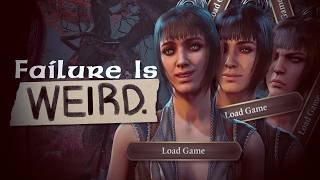

Silksong's Runbacks vs Elden Ring
57sCompares two beloved games' failure systems, tapping into ongoing fan debate.
▶ Play Clip"The title is accurate; the video thoroughly explores why failure is so hard to balance in game design, covering multiple perspectives and examples."
This video explores the complex role of failure in video game design. It argues that failure is essential for creating meaning and stakes, but balancing it to avoid frustrating players is a constant challenge. The video examines different types of failure, including runbacks and roguelite progression, and discusses how player skill and available time affect tolerance for punishment.
Failure gives games stakes and meaning, making success feel earned.
Players need the threat of failure, but if never experienced, the threat becomes meaningless.
Runbacks force players to replay sections after death, which some like for added challenge but others find frustrating.
Elden Ring places checkpoints right before bosses, allowing immediate retries.
In Silksong, runbacks feel natural due to platforming mechanics, unlike in Dark Souls.
Roguelites soften failure through metaprogression where every failure improves the character.
The Heat system in Hades lets players gradually increase difficulty, avoiding sudden brick walls.
Time limits can create tension, but players fear them due to potential wasted time.
Unsighted uses time limits that force tough choices but avoid game overs.
Players often save scum in Baldur's Gate 3 to avoid permanent consequences of choices.
Less skilled players experience more failure, creating a punishing loop, while skilled players get positive reinforcement.
The average game has become more punishing over the last 15 years, partly due to Dark Souls' influence.
Future games may shift toward roguelite structures to better balance failure and player progress.
Why is failure considered a key part of game design?
Because without the threat of failure, success can feel unearned and games can lose their meaning.
00:10
What is a 'runback' in video games?
A player must travel a long distance back to a boss after dying, requiring them to replay a section before retrying.
01:52
How does Elden Ring handle respawning after a boss death?
By providing a checkpoint right by a boss, allowing immediate retry.
02:15
What mechanic in Silksong helps players start boss fights at full strength despite runbacks?
In Hollow Knight: Silksong, the player's silk resource can be recovered without items, and Hornet leaves a cocoon that fully restores silk after death.
03:07
How do roguelites like Hades allow players to increase challenge gradually?
Players can select modifiers (Heat/Fear) that increase difficulty, customizing the challenge and avoiding a brick wall feeling.
07:57
Why do roguelites soften failure more effectively than other game types?
Because improvement is impossible to avoid through metaprogression, giving players a sense of progress even in defeat.
06:44
What happens if a player character runs low on time in the game Unsighted?
A character's time runs out and they can be sacrificed to extend the player's life.
12:18
What is 'save scumming' in Baldur's Gate 3?
They can reload saves to undo consequences of choices or unlucky dice rolls.
15:40
According to the video, what is the core reason players avoid failure in games?
They don't want to feel as if their time is being wasted; they want control and desired outcomes.
17:48
What 'unfortunate' dynamic does the video describe regarding player skill and failure?
The less skilled players experience the most failure, creating a negative feedback loop, while skilled players get positive reinforcement.
18:28
Failure gives games meaning
It establishes the core thesis of the video, explaining why failure is essential for game design.
00:10Roguelite metaprogression
Explains a practical design technique that softens failure by guaranteeing character improvement.
06:44Failure targets the less skilled
Highlights a critical and often overlooked dynamic where punishing design disproportionately affects struggling players.
18:28The razor's edge of failure
Summarizes the central challenge for developers: balancing failure to be meaningful without causing frustration.
23:25[00:00] There are many important aspects that
[00:04] but one that I find especially interesting due
[00:10] Without some sort of setback, or at the
[00:15] games run the risk of losing meaning. The best
[00:21] and so space for failure is a key
[00:25] This can take all sorts of forms, both big and
[00:32] tons of ways to incorporate it—it all comes
[00:38] What makes failure tricky is that it is a
[00:43] when I come across a new boss in a game, a part of
[00:48] attempt. Of course, if I did first try every fight
[00:52] away with is that the game was too easy for me.
[00:58] Despite our aversion to it, we need failure.
[01:05] it's what makes your inputs matter. And for
[01:09] a threat—the consequences have to be carried
[01:14] the threat will no longer feel threatening,
[01:20] On the other hand though, there is only so much
[01:25] creating this push and pull for developers where
[01:29] in a way that will feel meaningful and be
[01:33] are trying to create without driving away
[01:37] Over the past couple months, there has been
[01:41] Silksong for this reason. The game is incredibly
[01:47] will have you dying over and over again, and what
[01:52] that in most cases, instead of respawning in a
[01:57] you most likely will be sent far, far away and
[02:03] have long been a part of metroidvanias and other
[02:08] but there has been a somewhat recent push
[02:15] is with how Elden Ring does it, that being always
[02:20] allowing players to immediately retry after
[02:25] whole but instead the boss, and this format
[02:30] of some of these fights. They are balanced
[02:33] come in at full strength and therefore they
[02:38] from how difficult they are, not from
[02:42] In Silksong, bosses also seem balanced around the
[02:47] strength despite having to travel so far to get
[02:52] never that far away from being at full strength,
[02:57] can be recovered without any sort of item,
[03:01] restore their primary resource, flasks, by
[03:07] Hornet leaves a cocoon behind, and breaking it
[03:12] for the player to start every fight with a
[03:16] there is still far more friction here. Every death
[03:22] getting to keep practicing the part that caused
[03:25] section that calls for a different skillset
[03:29] Now, despite what people who hate them will
[03:33] of folks out there who do like runbacks, and
[03:39] that the challenge comes from mastering an
[03:43] segments. They like having space between
[03:47] fight with consideration instead of casually
[03:52] like finding the optimal path back and perfecting
[03:57] the temptation it creates to go somewhere else
[04:02] Sickos like this do exist. And, yes, I am
[04:08] Admittedly, while I have started to find runbacks
[04:13] I didn’t have that same feeling in Silksong,
[04:18] awkwardly weaving between enemies in Dark
[04:22] wants you to do, speeding through areas in
[04:27] bunch of moves specifically designed to help you
[04:32] of it feeling like cheesing the intended
[04:37] Now, even as someone who found value in them, it
[04:43] for tons of people, and this largely comes down
[04:48] obviously runbacks will feel different to those
[04:52] compared to those who come closer to 30 or 40.
[04:58] but also will lead to diminishing
[05:01] at the actual runback. For many, there is a
[05:06] getting back to the part they’re stuck on will
[05:10] like part of the challenge and more like
[05:14] Unsurprisingly, the more punishing failure is, the
[05:20] around Silksong often gets boiled down to it
[05:25] started to point out, it has more to do with how
[05:29] They are obviously intertwined, but it's not
[05:34] beyond anything a game has ever done before;
[05:38] a different hard part where dying on the way
[05:42] money. It is a tension that is hard to hold and
[05:47] it seems like for a good amount of people than
[05:52] Silksong can so easily beget more failure, and
[05:58] Honestly, I think part of why roguelites
[06:02] a lot of them do the opposite of this. They
[06:07] where, yes, you most likely will fail time and
[06:12] close to even looking like a successful run;
[06:16] every failure is a chance to improve your
[06:20] unlocking new moves or anything else that may give
[06:27] and the consolation is often that the playable
[06:31] with horizontal progression where its more
[06:35] having a wider pool of upgrades and
[06:39] more opportunities to craft powerful builds.
[06:44] giving players a sort of permission structure
[06:49] For instance, a pretty common phenomenon with
[06:53] will come across a boss, be underpowered in
[06:58] it until they beat it. Typically, bosses like
[07:03] meant to be barriers that push players to explore
[07:07] better equipped, you’ve heard all this before.
[07:12] which isn’t easy for a lot of players to do.
[07:17] the character's ability over the player's
[07:22] different when they do come back. If they get too
[07:27] and so beating the boss won’t feel nearly
[07:32] made. However, in a roguelite, due to the
[07:36] with a massive increase in the character’s power,
[07:41] making it unlikely that the fight will be
[07:45] it to be harder to deem what deserves more credit
[07:50] Also, more and more roguelites have started
[07:54] challenge once the player has started
[07:57] upgraded their character’s abilities. The Heat
[08:02] examples of this. Before each run, players can
[08:07] damage and health increases for enemies to more
[08:12] time limits—changes that have a significant
[08:17] challenge players opt-into, customize to their
[08:23] implement. It lets them increase the challenge
[08:27] deserves the credit while making it rare to
[08:32] All of this creates a system that offers a
[08:37] regardless of skill level, never
[08:40] exact same thing over and over again. It
[08:42] To be clear, I am not trying to say that
[08:45] better than other types—it is just that it's
[08:50] players to accept because it doesn't leave
[08:55] A person's tolerance for failure depends
[09:00] looms larger than most is how much time they
[09:05] an hour every few nights to play something,
[09:09] dying to fucking Groal again? Most players
[09:14] within any given gaming session, and even if
[09:18] that isn't necessarily going to be felt
[09:23] The right amount of failure is a hard thing
[09:27] of a game and the state of mind of the
[09:31] generally the ideal amount sort of exists on
[09:36] a boss is when you are on the brink, when
[09:41] and so, especially with games that aim to be more
[09:46] times you are willing to fail is relatively low,
[09:51] Of course, failure isn’t always tied to having
[09:57] be used to shape what happens next whether
[10:02] this type of failure may seem like it'd be
[10:05] their time wasted as it doesn't force them
[10:09] many seem averse to this approach as well.
[10:14] to gameplay. If you get thrown into a high
[10:18] permanent death of an NPC or something,
[10:22] but failing will be a hard thing to accept. Not
[10:26] experience but also there is a decent chance that
[10:31] what you were supposed to do, making it feel less
[10:35] and more like a miscommunication
[10:38] Even though plenty of people like to be
[10:42] they don't necessarily want the
[10:44] to have a lasting impact. They want to be
[10:49] and the fear of dealing with longterm
[10:54] This fear is a big part of why
[10:57] especially ones that span the entire play
[11:01] to balance titles to protect against this, a
[11:06] putting them so far behind that by the time
[11:10] A fairly common critique I received on my recent
[11:15] some games that I think would have been better
[11:19] the ways this fear can play out; what happens
[11:25] I wish I would have because I think there are
[11:29] to being forced to start the game over; and that
[11:34] video which is that no matter how interesting
[11:39] the discomfort they create will still
[11:43] For instance, instead of getting a game over,
[11:48] could simply lead to some other consequence. In
[11:53] when talking about titles that use time limits
[11:59] Every character, including your own, only has a
[12:04] life can be extended through the use of a resource
[12:08] a good reason to explore despite the time limit
[12:13] characters alive as possible. However, if the
[12:18] they are presented with the option to sacrifice
[12:23] certainly less brutal ways a game could go about
[12:28] fundamentally change character relationships or
[12:33] those who live there or anything else that brings
[12:38] effective ways of providing near unlimited time
[12:42] it. Another approach that could work with a system
[12:48] the player continue playing even after running
[12:52] they get. Depending on the complexity of the game
[12:56] but it would ensure that the player doesn't miss
[13:03] Now, the problem with these approaches is that
[13:08] drastic as sacrificing other characters, doing
[13:13] you've come to care about, while narratively
[13:18] a game over, you will pretty much have to do it or
[13:23] of game simply because you weren't quick enough.
[13:28] bad ending for your character, this also can feel
[13:32] is considered the good ending, the true ending,
[13:38] as most people are probably only gonna play a
[13:43] doesn't feel worth it for most. This increases the
[13:49] look up the most efficient path or over powered
[13:54] Honestly, this sentiment often exists even when
[13:59] seen with games that have meaningful
[14:02] most players would say that they want to
[14:06] I don’t know that that is what they actually
[14:12] that matter, I think what the majority of folks
[14:17] want it to play out. Obviously this doesn’t
[14:25] choice and living with the consequence of that
[14:30] in control. They want to know that the choice
[14:35] will get them the best ending or atleast the
[14:39] you’re only going to play a game once, you
[14:43] you gave the wrong fatherly advice or because you
[14:48] What’s weird is that I imagine the majority
[14:52] and engaging kinds of choices tend to
[14:56] be is not clear. The kind that gets the
[15:00] happen. What could go right, what could go wrong,
[15:03] whether that be based on the things
[15:06] the character they are playing as values.
[15:10] posts I’ve read, playthroughs I’ve watched,
[15:19] There is a reason why major gaming publications
[15:24] major release that includes choices surrounding
[15:29] This gets even more complicated when luck is added
[15:34] of discourse around Baldur’s Gate 3 in regards
[15:40] scumming. Whether it was to undo the consequences
[15:46] became a wildly popular way to approach the game.
[15:50] what players should do when playing a title like
[15:55] and Dragons, the ultimate example of a game where
[16:00] the mindset someone approaches a tabletop rpg
[16:05] game with. While there is a whole cottage industry
[16:10] a halfway decent group to play with, chances are
[16:15] craft an experience that feels satisfying, that
[16:21] that has payoffs for everything. But that
[16:27] They can’t be as accommodating or nuanced as a
[16:32] how you felt about how something played out
[16:37] more harsh because of that. For instance, if you
[16:42] portal at the start of the game, you just don’t
[16:47] have to be pretty unlucky to miss in this way, but
[16:52] chance that the player misreads the situation.
[16:57] it is going to try to pull them in and miss him
[17:00] would allow players to focus more on the other
[17:04] have to navigate situations later on in much
[17:08] a character as beloved as Gale, one who is vital
[17:14] will never be a part of theirs. This might work
[17:20] and games is often thrust upon us, it is near
[17:25] Obviously this is one of the more extreme
[17:30] Gate 3, but even with choices that have a
[17:34] characters or events is hard for players
[17:39] that make choices more interesting also
[17:43] avoid falling into them whether that is through
[17:48] What it always seems to come back to in one way
[17:53] if their time is being wasted. They don’t want
[17:58] get back whatever it is they hope to get out
[18:02] tons of time on things we barely even think about,
[18:07] different. It's more of an investment; it’s an
[18:11] promise of control. Of being able to progress
[18:16] a desired outcome. Failure is what makes this
[18:22] what in some cases puts it in jeopardy. It is a
[18:28] And one of the most unfortunate things about it
[18:32] the least interested in experiencing failure,
[18:38] Obviously there are many things that go into
[18:42] to be a correlation between being more skilled at
[18:48] punishment. It is the search for the sweet spot,
[18:54] but so often, especially in titles with a single
[18:59] with the consequences of failure. They aren’t
[19:06] time after dozens and dozens of hours in a game,
[19:12] ones getting through with far less friction and in
[19:18] experience or access to weapons sooner, creating
[19:23] them. Meanwhile, those a bit less skilled get
[19:27] stuck for far longer. To be clear, being less
[19:32] wanting to deal with failure at all; I'd imagine
[19:37] all the way through, but, I’d imagine many want
[19:42] punished this often and this severely pushes them
[19:47] failing the most and those failing the least, wish
[19:52] While difficulty discourse has long been at
[19:56] the past couple years it has started to feel a bit
[20:02] and it's not just that a new group of people who
[20:07] the conversation; it's that a lot of people who
[20:12] have started to sour on it. There are a lot
[20:17] the general mental exhaustion of being a human in
[20:23] a whole getting older and older thus having less
[20:27] as far as things directly related to the industry
[20:32] Dark Souls of it all. Obviously, Dark Souls
[20:37] to difficulty has been massively influential.
[20:43] being a niche studio to one of the most popular
[20:49] indie, AAA, and everything in between, have
[20:54] not even that there are too many soulslikes now,
[21:00] it's that more and more games in all types of
[21:05] leading to the average game now being more
[21:11] After an era of streamlined titles, the pendulum
[21:17] to where it was in the 80s and early 90s, but
[21:23] I don't think this is exactly a bad thing, and I
[21:28] a bit more punishing, but it feels like we're
[21:33] audience is interested in engaging with. As
[21:38] and harder ones have continuously tried to top
[21:44] failure feels heavier than it has in a long
[21:49] in life feel heavier now than they have in a
[21:53] has started to be more pushback; that general
[21:58] experience within the hobby they turn to in order
[22:04] Failure makes games better. In some ways it is
[22:10] it is no easy feat as there is no guarantee that
[22:16] be respected. And part of this is because what any
[22:22] will vary greatly depending on countless factors
[22:27] Not to mention, at the end of the day games
[22:31] more tragically, with me in mind; they
[22:37] more specifically for subsections of the nebulous
[22:42] and those subsections become more varied, more
[22:48] All of this amplifies the frustration that
[22:53] for feeling this way. I do think there is value in
[22:59] are so averse to it that we don't even allow it to
[23:05] inclination to avoid it, I think it can be hard
[23:10] of failure we will be okay dealing with. We write
[23:19] it is quite easy to get pushed too far. This is a
[23:25] to balance. They are trying to find a line that
[23:31] to hit even in games that offer players plenty
[23:36] players are instinctively trying to push against,
[23:39] way or another. I expect to see games shift
[23:44] current state of things. Truthfully, I wouldn't be
[23:49] structures more reminiscent of roguelites, and I
[23:53] tons of major studios have experimented with them.
[24:04] and I hope it is just the right amount of
[24:15] Now, one way I don't want you to be a failure is
[24:20] you've been struggling to find the perfect gift
[24:26] to make a move and this video’s sponsor, Displate,
[24:31] have a massive catalogue of high quality metallic
[24:36] out, and they are far more durable than any paper
[24:42] put the protective leaf and magnet on your wall,
[24:47] with a lot of great properties ranging from The
[24:53] work from independent artists. Regardless
[24:58] or even yourself because you deserve nice stuff
[25:04] from for fans of all sorts of things. Not to
[25:09] which could be anything from a beautiful photo
[25:15] in 10 seconds. Either or. Displate offers fast
[25:20] description you can get 33% off for 1-2 displates,
[25:27] or more. All in all, Displates look great and are
[25:33] one for those you love as well as yourself.
[25:43] For all of you still here, hello. I'd like
[25:48] possible. I've been doing this for a while now.
[25:52] this point in the video, you're responsible for
[25:58] hate…respect. I hope you have a great day and/or

⚡ Saved you 0h 26m reading this? Transcribe any YouTube video for free — no signup needed.