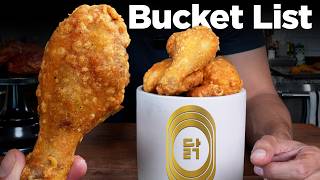

The $10M Fried Chicken Crunch
45sThe opening hook with the sound of the crunch and the massive investment immediately grabs attention and sets up a high-stakes reveal.
▶ Play Clip"The title accurately describes stealing a $10 million recipe, but the focus is more on the cooking technique than the business aspect; still delivers on the core promise."
This video analyzes the Coca-Duck restaurant's $10 million, 14-month R&D investment in their signature fried chicken, the 'Bucket List'. It details the step-by-step process, from butchery to gluten-free batter and signature sauces, explaining why it's a superior culinary experience.
The crunch heard is the result of about 14 months of research and development and $10 million of investment.
Coca-Duck in NYC is not just a place that makes good fried chicken; they built one of the favorite culinary experiences.
The bucket list is their premier menu format featuring four signature sauces, bon chon, and two courses of the greatest fried chicken ever.
This is the latest inductee to Stevie's Hall of Fame: the Coca-Duck bucket list.
Any good fried chicken must be brought first, the only way to hold up to aggressive frying.
For the brine: 2 cups water, 3 tbsp kosher salt (30-35g), 10g sugar, 1 tbsp granulated garlic, 1 tsp cayenne, 1 tsp ground ginger.
Heat only half the water to dissolve salt/sugar, then pour into cold water with ice to cool quickly before adding chicken.
Use a 4.5 lb organic pasteurized chicken; let it sit in fridge overnight to dry for cleaner cuts.
Cut along the line of fat from the flap to reveal the joint, then pop legs out of sockets.
Cut around the oyster (a plump piece near the thigh) to maintain it when removing the leg.
Remove breast before wing for stability; cut along breastbone and pull back meat.
Cut around the wing, remove wing tips and drumettes, and add carcass to stock bag.
Cut along fat lines to debone thighs, using a knife to scrape meat from bone; add bone to stock.
One whole chicken feeds about 3 people; for more, add extra legs. Brine for 12-24 hours for moisture retention even after 3 fries.
Coca-Duck's bucket list includes a sauce bar with four signature sauces.
Tomatillos, garlic, jalapeno charred in dry pan, then blended with 1/2 cup cilantro, 1/4 cup mayo, 1 tbsp lime juice, salt, optional xantham gum.
1/2 cup mayo, 1/4 cup sour cream, 1/3 cup parmigiano reggiano, black pepper, garlic powder, lemon, salt.
1/2 cup mayo, 2 tbsp spicy brown mustard, 2 tbsp honey, rice vinegar, cayenne.
1 clove grated garlic, 1/3 cup gochujang, 1/4 cup ketchup, 2 tbsp tamari, 1 tbsp rice vinegar, 1 tbsp honey, 1 tsp sesame oil; caramelize on stove.
Low-protein gluten-free flour mix: 1 cup rice flour, 1 cup potato starch, 1/2 cup corn starch. Adds less oil absorption.
Use 1/2 cup cold water, 1/2 cup vodka (evaporates faster for crispier crust). Add 2 tbsp turmeric to restore color lost due to gluten-free flour.
First fry at 275-300°F for 5-6 minutes (unbattered, just from dry dredge), then chill, then dip in wet batter and fry again at 325°F.
Slice scallions thin, dunk in ice water to curl, dress with soy, rice vinegar, honey, sesame oil, Korean chili flakes.
Replace daikon with pickled daikon/carrot from store; cucumber chunks salted with soy, honey, sesame oil.
2 cloves grated garlic, grated ginger, 3 tbsp gochujang, 3 tbsp ketchup, 3 tbsp honey, 1.5 tbsp tamari, 1 tbsp mirin, 1 tbsp vinegar.
After second fry, chicken can be held; for service, drop in 375°F oil for 1-2 minutes. Final result is dry, crispy, and non-greasy.
Chicken is tender, moist, crispy, juicy; even breasts stay moist due to brining.
The Coca-Duck bucket list is a masterclass in fried chicken, from butchery to double-frying with a gluten-free batter and four signature sauces. The video proves that meticulous brining, careful butchery, and a two-fry technique yield exceptionally moist, crispy, and non-greasy fried chicken.
How long should you brine the chicken for optimal moisture retention?
12 to 24 hours.
08:05
What is the purpose of using vodka in the wet batter?
It evaporates faster than water, making the starches crispier, faster, and holding crisp longer.
15:18
What ingredient is used to restore color in the gluten-free batter?
Turmeric.
15:31
What are the four sauces that come with the Coca-Duck bucket list?
Jun Verde, Parm Pepper, Honey Mustard, and Gochujang BBQ.
10:40
What are the components of the gluten-free dry dredge?
Rice flour, potato starch, corn starch, baking powder, garlic powder, onion powder, and salt.
13:51
What is the first fry temperature and time?
275-300°F for 5-6 minutes.
16:20
What is the second fry temperature?
325°F.
19:58
How do you portion a whole chicken to feed a fourth person?
Add extra legs (e.g., 6 more pieces) to the batch.
07:32
What is the purpose of letting the chicken sit in the fridge overnight after brining?
To dry the skin for cleaner cuts during butchery.
02:07
What are the ingredients for the Jun Verde sauce?
Tomatillos, garlic, jalapeno, cilantro, mayo, lime juice, salt, optionally xantham gum.
10:52
What is the final fry temperature for service after the second fry?
375°F for 1-2 minutes.
21:26
Why is the gluten-free batter superior?
It absorbs less oil, resulting in a less greasy, lighter fried chicken.
14:03
Scientific Brining for Moisture
Explains the chemical reason for brining 12-24 hours: salt retention allows moisture to survive multiple fries, keeping even breasts tender.
08:28Turmeric Color Trick
Using turmeric in the wet batter to compensate for lack of browning in gluten-free flour is a unique, practical solution.
15:31Double Frying Technique
First fry in dry dredge, then dip and second fry; this two-step method creates exceptional crispiness.
16:07Efficient Service Method
After double frying, chicken can be held and then flash-fried at 375°F for 1-2 minutes for service, enabling high-volume production.
21:26Oil Absorption Advantage
The gluten-free batter's lower oil absorption leads to a dry, crispy crust, demonstrating a practical advantage beyond dietary restriction.
22:49[00:00] Do you hear that crunch? That crunch is about 14 months of research and development and about 10 million dollars of investment. I know what the f**k you did to this chicken, this s**t crazy.
[00:13] Almost impossible to get into. Coca-Duck in New York City is not just a place that makes good fried chicken. They built one of my favorite culinary experiences. The bucket list is their premier menu format featuring four signature sauces, bon chon and
[00:29] two courses of the greatest fried chicken I've ever had. And the kicker, everything we're about to make, is 100% gluten-free. Today we're breaking down the proper way to butcher a whole bird, why the gluten-free batter is superior, along with all their signature but dead simple sauces and glazes.
[00:47] This is the latest inductee to Stevie's Hall of Fame. This is the Coca-Duck bucket list. Now, we need to start this a day ahead. Any good fried chicken, no matter where in the world it's from, it's got to be brought
[00:59] in first. It's the only way to hold up to the aggressive frying we're going to need to do to achieve the perfect fried chicken. To start the brine, I have a small little pot here, and I have four cups of water.
[01:11] I'm going to add two of those cups to the pot, two of that we're going to add about three tablespoons of kosher salt, roughly like 30 to 35 grams and 10 grams of sugar. Then some flavor, we're going to add some garlic, granulated garlic about tablespoon, a teaspoon
[01:28] of cayenne and a teaspoon of ground ginger. Whisk it all up, and then we're going to get that onto the stove, just until it warms up enough to dissolve the salt and the sugar. While that dissolves, we're just going to take the rest of that water and add it to a big
[01:42] bowl. The reason I split it, because we need to cool the water down before we add chicken to it, so by only heating up like half of it, we can pour it into there which will cool it down quick, then we can add a little bit of ice and get that down to temperature nice and quickly.
[01:55] Once you can see all the salt dissolved, add it to the water. A little ice in there, that's a cool down in no time. Now we're going to learn how to butcher this chicken, towel down with your biggest cutting
[02:07] board. Now here I have about a 4.5 pound chicken, organic pasteurized grate. Now let it sit in the fridge overnight to dry out, not because we need the skin to dry for
[02:19] crispiness, but it's going to allow for cleaner cuts when we butcher this. So much easier to handle when it's dry, it's not slippery, it's not leaking everywhere. Many people butcher chickens many different ways, how I like to do it, is I start with the
[02:31] legs here, right? And the legs are kind of open, you know? She's got no respect. What we want to do is lean into that, and you can see this line of fat here, that's line is telling you where you need to cut. So what I'm going to do is take that flap right there, I'm going to slice it open, and I'm
[02:46] going to just cut right along that line, and now that leg is kind of opened up and then we do the same thing over here, the pressure on the leg, and so just a nice little cut reveals it, barely even have to put any effort into it.
[03:00] Slice here, now we're going to take the legs and we're going to pop them out of their sockets. Now we can take it right here, there's a little plump piece of meat that's called the oyster.
[03:15] So we can start our knife cut and cut it around this part right here to maintain the oyster. We're just going to kind of cut underneath, cut around the oyster, it's a little nugget
[03:37] right there, and then all you got to do is just follow, and you got a thigh and a leg, and
[03:54] then the other side same thing. Now sometimes people like to go for the wing next, but I like to take the breast off because
[04:06] then the wing kind of acts as some stability, trim off the excess fat over here, and so then there's a breastbone that's running right down the middle, so I'm going to take my knife right to the side of it, and I'm going to press against the bone and pull back.
[04:25] And I can gently go in and start to just peel back the meat from the bone. Once the breastbone cut is there, then we can go ahead with our knife, cut around, and
[04:45] we've got a nice chicken breast, repeat with the other side, really quite simple, right? And so now you've got the hardest thing to remove, unless you've got it at this stage, which
[04:59] we're just going to cut around, and there you go, cut under the armpit around, now this you're saving for stock, zip lock bag ready to go, throw the carcass in there, but wait, there's
[05:14] more, the wing tips, we don't need the wing tips, so what I'm going to do is I'm going to look for them, right, and I'm going to see where they like articulate, pop it out of its socket, remove it,
[05:29] add it to the stock bag, then for the wing and the drumette, cut in, then you've got your drumette and your wing, I'm going to sever the skin and then dislocate the tip, what I find is you
[05:44] almost want to cut more into the the legs than you do want to kind of cut off the drumette bottom, so if you cut the flap like there and almost lean the wing closer to the ground, you're cutting
[05:57] closer to the wing, almost like at an angle if you could see, then we've got the leg, the thigh, and the drumstick, now again, there's this line of fat right here, that's telling you where to cut, if you want, you can kind of feel it, wiggle, and we should have a cut through with no issue,
[06:12] this is going to stay as is, then for the thigh, we're going to take the bone out, because who likes eating a bone and fried chicken, unless it's a drumstick, so again, see the fat lines on meat
[06:25] tell you where to cut, so we just take our knife and cut along that bone, open it up, and what we can do is slice along the bone, get underneath it, slide your knife under it, and then use the edge of
[06:39] your knife to almost scrape the meat back, sharp knife to just peel that skin back until you get to the end and you can kind of just peel the bone right off, now that goes into the stock back, we can cut it in half,
[06:51] you see that size, that's the perfect size and I get for me, it's a little bit bigger than the other one, so I'm going to do basically thirds, and repeat the other leg again,
[07:07] and now for the chicken breast, now you see how the chicken is almost like a triangle, kind of wider here, tapers down there, I'm going to take this, I'm going to cut it where it tapers, now that's going to be one piece of chicken, now I'm going to take the fat piece, cut it into thirds,
[07:20] now this is going your freezer, or you can go ahead and make stock with it right away, now what I
[07:32] found is that whole chicken, when it's battered and fried, will feed about three people, but say you got a fourth person, and you don't have six people, then you could just double it, you can go ahead and just get some legs, right, come out here, just put your up some more legs, and then just
[07:47] these two pieces, you've added what six more pieces of chicken, then all we're going to do, place that in our brine, it's going to be so good, you have no idea, we're just going to cover it, place that in the fridge, 12 hours is good, 24 hours is, and the reason for that is even after
[08:05] three fries, those chicken breasts are going to be tender and moist, and it's only because we allow it to kind of create time to suck in that salt and retain it, it's the moisture required to get this
[08:17] through fry, so not into the fridge, probably the hardest part, actually everything we do tomorrow is quite simple but technical, so you're going to have to pay attention, I'll see you tomorrow. I finally know where my favorite coffee comes from, and it's all thanks to this incredible box here,
[08:32] by our sponsor today, Cometyr, Dave invented a new way to make coffee, the coffee is brewed to perfection by expert coffee makers, to lock in peak flavor and freshness and is sourced by some of the best coffee
[08:44] rosters in the world, hot coffee, ice latte, espresso, all in seconds and with no machine, Cometyr ships frozen, on dry ice directly to your door in these little recyclable capsules,
[08:57] say you're a hot coffee drinker, simply pop one of the frozen pucks at about 8 ounces of hot water, before your eyes, the puck melts into a perfect cup of coffee, maybe like an ice latte, add a little milk,
[09:10] fill it with some ice, and then just pour over one of your thawed coffees and watch it transform into a latte as the coffee swirls into the milk, it's a beautiful latte, I myself am actually an ice coffee guy, for an ice coffee all you got to do is add some cold water, some ice, one of your
[09:28] thawed coffees, instantly and easily you've got coffee brewed like a barista made it in your home, I think the winzo coffee co is my favorite, and their new world mug collection is the perfect place to start to explore a world of coffee, you may have never tasted, inside this box is coffee
[09:44] from 16 different countries and roasters, each one tastes totally unique, and beyond being delicious coffee, Cometyr's TSA approved so it's perfect for travel, absolutely no microplastics involved
[09:56] and the capsules are fully recyclable, so if you want to taste all the different coffees from around the world, Cometyr is giving you 20% off, so grab your world mug experience before it's gone at Cometyr.com backslash, not another cooking show, 20, or head on down into the description to
[10:12] my link, now it's been 24 hours in the brine, just going to pull it out of the brine, we're just going to lay it out on the towel, smells amazing, this now can chill in the fridge until we're ready to dredge them, now before we get into battering the chicken, one of the more fun aspects of this meal
[10:28] is the sauce bar that the fried chicken bucket list comes with, I ran a food truck, we had a hot sauce bar, I'm a huge fan of any type of sauce bar, and fried chicken is no exception, four sauces we're
[10:40] going to quickly run through, that Coca-Dack serves, the first one's called Jun Verde, this is actually very similar to cilantro sauce, the sauce that we use to serve on the food truck, and it's of course
[10:52] my favorite of the sauces, starts with tomatillos, some garlic, and jalapeno, the thing we do is preheat a stainless steel pan on high, once it's hot, we're going to add in the tomatillos that have
[11:04] been peeled and rinsed of their little sticky film, few cloves of garlic and a jalapeno, we're going to let them toast in the pan, that's dry, just move them around, once they start charring on that first
[11:16] side, give them a flip, you know they're working when they start dancing in the pan, jiggling, once they've charred on all sides, we can start to just throw them into a blender, take a knife and just slice the flesh of the jalapeno, and especially if you want to kind of limit the heat, to that we're
[11:34] going to add half a cup of cilantro, quarter cup of mayonnaise, tablespoon of lime juice, pinch of salt, we're just going to blend until smooth, touch more mayo, it's a little loose, some green onion,
[11:49] this is a little bit of honey I think, I hit it with a pinch of xantham gum to thicken it too, that's one down, next up is the parm pepper sauce, it's going to start with half a cup of mayo,
[12:03] quarter cup sour cream, third cup parmigiano reggiano, black pepper, garlic powder, a teaspoon, cheek of a lemon, salt, stir that together,
[12:19] pepper parm sauce done, then there's their ultimate honey mustard, half a cup of mayo, I got a two tablespoons of my favorite spicy brown mustard, I think I got whole grain, but I got old style, two
[12:32] tablespoons of that, about two tablespoons of honey, a little rice vinegar, cayenne, that's three, next up the gochujang barbecue sauce, in a pan we're going to grate one clove of garlic,
[12:48] gochujang, a fermented chili paste, we're going about a third cup of that, quarter cup of ketchup, now remember I said everything's gluten free, tamari is gluten free soy sauce, about two tablespoons
[13:00] of that, tablespoon of rice vinegar, a tablespoon of honey, teaspoon of sesame oil, we're going to stir that together, add a touch of dark soy sauce, kind of darken the color a little bit, kind of
[13:13] adjust it from gochujang glaze to more of a barbecue sauce, onto the stove, then we're going to turn the heat on, bring this up to a bubble, we just kind of want to caramelize it, reduce it, allow that
[13:26] garlic to sort of cook for a minute or two, take it off, get it into a squirt bottle, and then number four, gochujang barbecue sauce, there are your sauces, every table, every bucket of chicken,
[13:38] you get these four sauces to play around with, which is a nice touch, now onto the dry dredge, the interesting thing about this recipe is the first time we fry we dredge it in low protein gluten
[13:51] free flour, potato starch, rice flour, and corn starch, now obviously a restaurant wants to serve gluten free because you could feed as many people as possible with no issues, we're going
[14:03] to go in with one cup of rice flour, but the added benefit of using these flowers is actually they absorb less oil, so what you get in the end is a product that is less kind of grease absorbed
[14:15] into it, and a lighter eating fried chicken, I had no idea this was gluten free until, I went with a friend who was gluten free and the restaurant was like yeah we got everything, you can eat whatever you want here, one cup of rice flour, one cup of potato starch,
[14:29] half a cup of corn starch, and they're all roughly measured, one problem with these flowers is because of their low protein, they have a harder time becoming golden brown, they will get crispy,
[14:41] but they won't develop a ton of color, and cook it up uses a genius trick to get that color back into the flour, but that happens in the wet batter, baking powder, we're going to go a couple tablespoons,
[14:54] garlic powder, a couple tablespoons of onion powder, a few big pinches of salt, now we want to whisk this together, now I've got like a narrow glass like this, we're going to pull out about one
[15:06] cup of the starch, add it into here, set this off to the side, a half a cup of cold water, and I'm going to add a half a cup of vodka, we've used vodka before in recipes, what it does, or any alcohol
[15:18] really does, is evaporates faster than water, because that alcohol evaporates that means the starches get crispier, faster, and hold their crisp longer, now here's the trick, we're going to add turmeric
[15:31] to the flour here, the turmeric, believe it or not, is going to give us that color back that we missed, about two tablespoons, we're going to whisk that together, then what we can do is start to slowly
[15:43] work in our liquid, and we're trying to create a loose batter,
[15:55] see how it coats a spoon, but it runs, sort of what we're looking for, I think that's ready to go, now what we're going to do, take out chicken, coat near chicken, super well coated, and now while
[16:07] I'm dredging the rest of these, I've got a pot of peanut oil, first temperature we're going for is anywhere between 275 and 300, and we're not going to dip them in the batter yet, we're going straight from
[16:20] this to the fryer, then we batter, and then we double fry, this is the technique that creates in my opinion, the best fried chicken, we've over shot the temp a little bit, so I just turn the heat off, and the chicken is still cold, so I'm pretty confident, once I add the chicken, we'll be right
[16:36] where we want to be, we're going to start with the bigger pieces first, we're going to cook these for about five to six minutes, and we're going to take our time and doom and batches, corrected back down the 280, so now I jack the heat back up, and that's called regulating the temp, after about five minutes,
[16:52] you should see the chicken starting to brown around the edges, but they will be pretty pale, pretty unappetizing, but we're prepared for that, we can take that first batch out, then we can get
[17:05] another batch in, this should go down in about three batches, once you've gone through and fried all the batches of chicken, we're going to get them onto the wire rack,
[17:18] allow them to chill on the wire rack, drain, and relax while we prep one quick thing, after stage one, they should look pale, obviously we're not done yet, this is now prepped once it's
[17:31] chilled down a bit, to be dipped in the batter, which is then going to then be dropped in the fryer, and that's when the magic starts to come alive, for now we need to make one more accoutrements, and it's something I'm almost positive you've never had, or potentially never even heard of,
[17:46] and that's a scallion salad, got a bunch of scallions here I'm going to take the tops and the bottoms off, then I'm going to segment them into thirds, then we're going to start to cut down the middle, so we get two pieces like that, and then we can line them on top of each other, and we're going to slice
[18:02] them thin, it's really a surprising thing that cuts through the richness of the fried chicken you're going to eat, got a bowl of ice, fill it up with water, and we want to add them and try and get them
[18:14] to curl up, now for the banchan, you know, that's a harder thing to make, they've got like a celery that's done something to it, and daikon which is hard to find, so what we're going to do is we're
[18:26] going to replace the cabbage with kimchi, the daikon with, I got some pickled daikon and carrot from the store, and the celery with some cucumber, what we're going to do with the cucumber, cut it in half, split it, cut it into relatively big chunks into a bowl, salt them, and we're just going to hit them
[18:43] with a little bit of soy, a little honey, a little sesame oil, stir that up, and we can let this marinate, then we can just got like, these little bowls here, we're just going to start layering some
[18:57] kimchi, a nice pile of some daikon, this, the cucumber, we're putting its own bowl, and now what we want to do, drain the water, get it on to a paper towel, you see what's happened, it's kind of gotten all
[19:12] beautiful, curly and crunchy, we're going to dress that right before service, that's our salad, now that all the chicken was out of the dredge, all I did was add the rest of the liquid I had,
[19:24] the basically the full cup, and then I started to spoon some of the extra dredge in, until I've just kind of maximized the yield, and just kind of calibrated it back to the same thickness, so now that's ready to use, got a pan on the stove to make our glaze, now the first course is the bucket of fried chicken,
[19:41] plain Korean fried chicken, the second course is your choice of soy or gochujang glaze or both, now I think we maybe have been sauceed out here, I'm going to leave the recipe for the soy glazed version in the recipe itself, so you can kind of choose which one you want, we would make it the same
[19:58] way as we're going to make the gochujang, but now we're going to get the heat back on to the oil, up to 325, and that's going to be round two of fried, now while our oil heats up, we can just build our
[20:11] gochujang glaze right in a non-stick pan, with a couple cloves of grated garlic, a little bit of grated ginger, three tablespoons of the gochujang, three tablespoons of ketchup, three tablespoons of honey,
[20:27] a tablespoon and a half of tamari, a tablespoon of mirin, and a tablespoon of vinegar, turn the heat on, start mixing it together, it should be spicy but balanced, super flavorful, right before we're ready
[20:41] to serve, we'll paint it onto the chicken, 325 is our target temp, so we're right around there, we can start to test our batter, I'm going to throw one in, what you'll notice is on this first fry,
[20:54] what I found is they almost have this reddish color from the turmeric, but if all goes right that second fry, that color goes away, now I feel better about going ahead and adding the rest,
[21:12] now it looks weird, but it resolved itself during the test, and so I've got faith, now after the second fry in the restaurant, they'd hold that chicken after it's been fried twice, and so now whenever
[21:26] somebody orders, all they do is take that chicken, drop it in the fire for like two minutes max, super duper high heat, 375, and that's how you serve great chicken to hundreds of people a night, maybe a thousand, quick, efficiently, never an issue, we've got that salad, what we're going to do,
[21:43] dress it with some soy sauce, a little rice vinegar, a little honey, a little sesame oil, Korean chili flake if you got them, you can just toss that up, our salad's ready to go,
[21:55] look, I know it's a lot of work, we've come so far, but you can't give up now, this wasn't quick and easy, this was the best, and this is what it takes, so we're approaching the target 10 of 375, gently drop some pieces into the oil,
[22:09] maintain that 375, and we're going to give it just one to two more minutes to evaporate any residual moisture that's left over in the batter with a chicken, and to give us an incredibly crispy and perfect
[22:22] end result,
[22:36] and just like I told you that red just sort of vanishes, it's weird, I know, you notice how dry it is and obviously exceptionally crispy, but the dryness I want you to pay attention to,
[22:49] it's that lack of oil absorption, there's no grease, we can take our gochujang glaze and then just paint on the chicken, if you notice the breasts right, I kept the breasts really big, the thighs,
[23:04] everything else pretty small, because the breasts can overcook really quick, I want them to be much bigger than everything else, so that they survive this cooking process, now I'm just going to start filling the sky up, there's a little piece right here, it's a little piece of the breast that fell off,
[23:19] let's see how we did, we're there, now we can arrange our banchan, our sauces, and then you have
[23:32] the kokodok bucket list at home, tender moist crispy juicy perfect,
[23:50] you can see the moisture, you can see it's tender, bite through, then you go in for a little palate cleanser, you know, some kimchi, try the honey mustard,
[24:04] and even the breasts right, cooked all the way through, still has moisture in it, glistening breast meat, hard to find in fried chicken, now I made this harder than it needs to be, whether you want one sauce or four or a banchan or four or two types of chicken, maybe three,
[24:21] or just regular chicken, recipes gonna be down in the description, that's all that I have today, I'll see you next time, until then take care of yourself, go feed yourself,
⚡ Saved you 0h 24m reading this? Transcribe any YouTube video for free — no signup needed.