
VTubers Are Oversharing Dangerously
45sHigh controversy as it calls out big VTubers, sparking debate and curiosity.
▶ Play Clip"The title promises a discussion on oversharing, which the video delivers, but it's padded with repetitive examples and lacks depth."
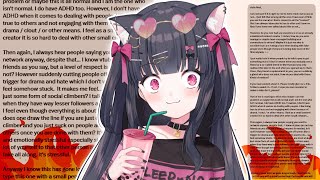
The video discusses the concept of oversharing, particularly in the context of VTubers and content creators. It distinguishes between healthy venting and harmful trauma dumping, emphasizing the importance of protecting personal safety and emotional boundaries. The speaker advises creators to avoid oversharing sensitive information and to recognize that they are not therapists for their audience.
Oversharing refers to disclosing personal information that could put your life in danger, such as trauma dumping, revealing your location, job, or relationship details. It is not about suppressing all emotions or being robotic.
Venting to a friend is normal, but trauma dumping is more serious and negatively affects others. Trauma dumping is often done to make oneself feel better by offloading unresolved emotions, which is where therapists come in.
Viewers may trauma dump on creators because they don't know the difference between normal events and trauma dumping. Creators are not therapists and should not take on the burden of their audience's mental health.
Streamers should not use their platform to manipulate viewers' emotions or offload their own emotional baggage. It's not the audience's job to heal the creator.
Oversharing happens because people are not taught proper social skills to handle emotions constructively. Sometimes it's better to keep things to yourself for safety.
The video concludes that oversharing can be dangerous and that creators and individuals should learn to manage their emotions responsibly, keeping sensitive information private to protect themselves and their audiences.
What is the main difference between venting and trauma dumping?
Venting is a normal way to share a bad day with a friend, while trauma dumping is more serious and negatively affects others, often done to offload unresolved emotions.
00:30
Why do viewers trauma dump on content creators?
Because they don't know the difference between a normal event and trauma dumping, and they need therapy.
01:10
What should creators do if someone is struggling mentally?
Recommend resources and tools, but remember it's not their job to take on the burden themselves.
01:32
What is the root cause of oversharing according to the video?
People are not taught proper social skills to handle their emotions constructively.
02:13
Oversharing Risks
Clearly defines oversharing as a safety issue, not just a social faux pas.
Venting vs. Trauma Dumping
Provides a crucial distinction that many people confuse, with practical implications.
00:30Creator Boundaries
Highlights the responsibility of creators to protect their own mental health and not act as therapists.
01:10Social Skills Gap
Identifies a systemic issue in emotional education that leads to oversharing.
02:13[00:00] Let's talk about oversharing. This is something that I see even like people from Hololive and like Ninji Sanji f*** this one up. Oversharing. There are things that don't need to be talked about and I'm not talking about like, oh don't talk about your feelings. Don't, you know, you'd
[00:17] be a robot. Never talk of an express route. I'm not talking about that. I'm talking about things that can potentially put your life in danger such as trauma dumping, disclosing where you live without actually telling people where you live.
[00:30] I'm talking about your job, talking about your relationships, things that can put your life in danger. That is the kind of oversharing you should avoid. Keep your cards close to you and learn the difference between venting to a friend and trauma dumping. Because I've like talked to some VTubers
[00:44] who straight up told me they're like, I just don't want to make friends because like if I like tell them I had a bad day, they're like, stop trauma dumping. Oh my God. Oh my God, stop trauma. Stop. I don't want to hear about the fact that like you had a bad day at work.
[00:57] Oh my God. be anime girl and jiggle your back. Like that's not trauma dumping. Trauma dumping is a lot more serious. It negatively affects other people and people trauma dump to make themselves feel better because they have these emotions
[01:10] and feelings that they don't know how to use productively and like in a more positive way. That where therapists come into play Viewers just prepare yourself and you want to become a VTuber or any content creator you will have viewers trauma dumping to you because they don know the difference between what just a normal event is and trauma dumping and they need therapy You are not a therapist
[01:32] I am not a therapist. And if someone is struggling mentally, there are resources and tools you can recommend them to, but it's not your job to take all the burden of this yourself. So make sure you
[01:46] as the streamer are not doing this to your audience. It's not your audience's job to pay your like entire emotional baggage. It's not their job to heal you and you should not be using your
[02:00] platform to essentially manipulate people's emotions in a way that damages them over time. This is stuff that not even just content creators struggle with but just people in general when you
[02:13] talk to them. This is something that happens because we're not taught proper social skills on how to handle our emotions or how to essentially be able to work through those emotions. So don't
[02:25] overshare what you don't need to. Sometimes it's better to keep things to yourself for your safety.
[02:43] you
⚡ Saved you 0h 02m reading this? Transcribe any YouTube video for free — no signup needed.

![How To Make A vTuber Avatar Icon And Model For FREE [QUICK GUIDE]](https://img.youtube.com/vi/rP_5x4WGL-o/mqdefault.jpg)