
AI Summary
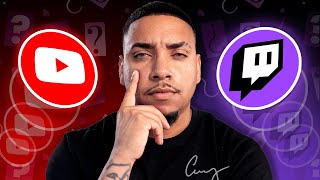
This video compares Twitch and YouTube for live streaming, focusing on growth, discoverability, and monetization. The creator breaks down the pros and cons of each platform and provides a strategic recommendation for new streamers.
Chapters
Twitch has a built-in live streaming audience, active chat, and raids, but lacks discoverability for new streamers and favors bigger channels. Starting from zero on Twitch alone is not enough; you need to bring viewers from other platforms.
YouTube offers easier discovery because live streams remain as videos, providing passive views. Shorts and long-form content drive traffic, and the algorithm gives free exposure. However, live chat is less hype, and the gaming audience is smaller.
Twitch allows faster monetization via the Affiliate Program (50 followers, 3 average viewers), plus Twitch Prime subs and bits. However, Twitch takes a 50% revenue cut, and income is not passive—you must be live to earn.
YouTube offers a 70% revenue split, multiple revenue streams (Super Chats, memberships, ads), and passive income from past streams. The downside is the higher threshold: 1,000 subscribers and 4,000 watch hours to monetize.
The recommended strategy is to multi-stream on both Twitch and YouTube using OBS, then repurpose highlights into Shorts and TikToks. This leverages Twitch for community and YouTube for discoverability and monetization.
If you prefer not to multi-stream, start with YouTube, focus on Shorts and live streaming, and add Twitch after hitting YouTube monetization for extra engagement.
The creator recommends multi-streaming to both platforms, using Shorts and TikTok for traffic, and leaning into YouTube as the main platform once monetized. This diversifies income and reduces reliance on a single platform.
For new streamers, YouTube is better for long-term growth and passive income, while Twitch offers faster monetization. The optimal strategy is to multi-stream on both platforms, using YouTube Shorts and TikTok to drive traffic, and eventually prioritize YouTube for its higher revenue split and discoverability.
Mentioned in this Video
Study Flashcards (5)
What are the requirements to join the Twitch Affiliate Program?
easy
Click to reveal answer
What are the requirements to join the Twitch Affiliate Program?
50 followers and 3 average viewers.
01:49
What is the revenue split difference between Twitch and YouTube?
easy
Click to reveal answer
What is the revenue split difference between Twitch and YouTube?
Twitch takes 50% of sub revenue, while YouTube takes only 30% (streamer gets 70%).
02:12
What are the requirements to monetize on YouTube?
medium
Click to reveal answer
What are the requirements to monetize on YouTube?
1,000 subscribers and 4,000 watch hours.
02:25
What is the main disadvantage of Twitch for new streamers?
medium
Click to reveal answer
What is the main disadvantage of Twitch for new streamers?
Lack of discoverability; you need to bring viewers from other platforms.
00:52
What is the recommended strategy for new streamers?
medium
Click to reveal answer
What is the recommended strategy for new streamers?
Multi-stream on both Twitch and YouTube using OBS, then repurpose highlights into Shorts and TikToks.
02:52
💡 Key Takeaways
YouTube's Passive View Advantage
Explains a key structural difference: live streams remain as videos, generating views even when offline.
01:08Revenue Split Disparity
Highlights a concrete financial difference (70% vs 50%) that directly impacts streamer earnings.
02:12Multi-Streaming Strategy
Offers a practical, actionable approach to leverage both platforms' strengths simultaneously.
02:39Full Transcript
[00:00] Should you stream on Twitch or YouTube? Which platform is gonna help you grow faster and make more money? And today I'm gonna break it all down, no fluff, just facts, so you can choose the best platform for you.
[00:12] Now, if you're new here, welcome to the Streamer Academy, where I teach you how to start, create, and grow your stream. So go ahead and visit the streameracademy.com for tons of free resources. Now, if you're starting from zero, one platform gives you a huge advantage over the other.
[00:25] Let's go ahead and break it down and look at the pros and cons of each, and then I'll share my recommendation. The first thing we're gonna look at is growth and discoverability. Which one helps you get found? Now when it comes to Twitch, it's harder to get discovered. But here are some of the pros for Twitch.
[00:38] One has a built in audience for live streaming. Two super active chat and community. And three, raids and host features help you connect with other streamers and communities. But here are the cons. No discoverability unless people already know you and you have to stream consistently to
[00:52] stay relevant. And then of course, Twitch favors bigger streamers, making it harder for new ones to be able to grow. So what the bottom line here start from zero on Twitch which alone is not enough You need to bring in viewers from other platforms Now when we move into YouTube and talk about discoverability it is easier to get discovered
[01:08] And here are what the pros are. Number one, live streams stay as videos, so you get views even when you're offline. You also get access to YouTube Shorts and long-form videos that drive traffic to your live stream, and the algorithm pulls content to show it to new viewers, giving you free exposure.
[01:23] But there are some cons. Live chat isn't as hype as Twitch. No raids or strong community features, at least yet. And the gaming audience is a lot smaller than Twitch. So what's the bottom line here? If you're starting from zero, YouTube is way better for long-term growth.
[01:37] But let's talk about monetization. Which platform pays you more? So Twitch allows you to get to monetization faster. And here are what some of the pros are. To get access to the affiliate program by having 50 followers, three average viewers, and you can start earning.
[01:49] You also get access to Twitch Prime subs, which is free for Amazon Prime users, but you still get paid. and you also have bits and donation, which makes it easy for you to earn money. But here are the cons. Twitch takes 50 of your sub revenue YouTube takes only 30 You don really get passive income You have to be live to make money The bottom line is Twitch is great for fast cash but it not reliable unless you stream consistently Now when it comes to YouTube
[02:12] you have higher earning potential in the long term. So here are what the pros are gonna look like. You get 70% revenue split, which is way better than Twitch's 50%. You get more revenue streams from super chats, membership, and ads, and you also get passive income
[02:25] because your past streams and videos keep making money. But here are the cons. You must hit a down subscribers and 4,000 watch hours to monetize. Super chats and memberships are less common than Twitch subs. So truly the bottom line is YouTube takes longer to monetize,
[02:39] but you'll make more money per view in the long run. So let's talk about what is going to be the best streaming strategy for you. So there's two options. Option number one, which I believe is the best for growth, is to go ahead and multi-stream. Why pick one when you can do both?
[02:52] You can use OBS to stream on Twitch and YouTube at the same time. And I have a video on my channel showing you how to do that. And I'll put it in the description below. You can build both platforms and see where your audience grows faster So here what an example with that strategy could look like You can stream on Twitch and YouTube at the same time And then after the stream turn the best moments into YouTube Shorts and TikToks So you use Twitch for community and engagement
[03:15] And then you'll use YouTube for discoverability and monetization. And again, I have a video on my channel on how I would grow a stream if I only had 10 hours a week. And again, I'll put that in the description below. Now, option two is to just go the YouTube first approach, which is best for long-term growth,
[03:29] especially if you don't want to multi-stream, start with YouTube. Focus on YouTube Shorts plus live streaming to grow faster. And then once you hit YouTube monetization, add Twitch for extra engagement. So here's my personal recommendation if I was starting in your shoes.
[03:42] I would take the multi-streaming route and stream to both Twitch and YouTube. I would then use YouTube Shorts and TikTok to bring traffic to both. And then once I got monetized on YouTube, I would lean into YouTube as my main platform and create more content.
[03:54] And the reason why is that you don't want to rely on one platform. You want to diversify, grow, and monetize so much smarter. But if you want to multi-stream to both Twitch and YouTube, go ahead and watch this video right here where I show you step-by-step how to go ahead and do it inside of OBS Studio.
[04:10] I'll see you in the next video.