
How to Spot a Counter-Trend Reversal
44sEducational and practical, revealing the exact conditions for a high-probability counter-trend entry, which is a common pain point for traders.
▶ Play Clip"Title promises entry at impulse end; video delivers a clear SMC-based strategy, though it's a brief overview rather than a deep dive."
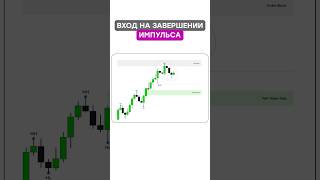
This video presents a counter-trend trading strategy based on Smart Money Concepts (SMC), focusing on identifying structural highs, institutional resistance zones, and reversal formations to enter short positions with high probability and favorable risk-reward ratios.
The strategy aims to identify the moment a new structural high forms and a reversal begins, requiring growth to reach a significant institutional resistance zone like an upper block, and a clear downward target such as an imbalance in the discount market.
Additional confirmation is needed through M3 Drives or M+ SMT reversal formations, which appear at almost every reversal, ensuring entry only after formation to avoid premature entries.
The approach provides confirmation of reversal, protection against premature entry, a high-probability universal setup for counter-trend shorts, and a high risk-reward ratio.
Two key signs: a structural collapse when a structural Higher Low is updated, and the emergence of a fresh bearish imbalance, indicating active interest in further depreciation.
The first correction is predictable and deep enough for optimal entry; a short limit order is placed at the beginning, stop-loss at the first candle of the formation, and take-profit at the first significant support zone.
The reversal occurs through a classic bearish M pattern at a structural high; the bearish imbalance signals downward order flow, and a limit order is placed at the imbalance's start, with stop-loss at the first candle.
First target is fixed on the local liquidity pool, second at the beginning of the discount zone with equal volume distribution at 50%; during a local correction, partial rebalancing occurs and the trade is filled.
After the fill, movement accelerates, goals are achieved, and the position is completely closed; this is a simple and reliable counter-trend approach applicable to any market and timeframe.
The video demonstrates a systematic counter-trend trading method using SMC concepts, emphasizing confirmation and risk management, applicable across markets and timeframes.
What are the two key signs to look for in a counter-trend short setup?
A structural collapse when a structural Higher Low is updated, and the emergence of a fresh bearish imbalance.
00:52
What confirmation is required before entering a counter-trend trade?
One of the M3 Drives or M+ SMT reversal formations.
00:26
Where is the stop-loss placed in this strategy?
At the first candle of the formation.
01:05
What are the take-profit targets in the example?
First at the local liquidity pool, second at the beginning of the discount zone with 50% volume distribution.
01:44
What is the purpose of waiting for a reversal formation?
To confirm the reversal and protect against premature entry.
00:40
Counter-trend trade concept
Defines the core strategy of identifying structural highs and institutional resistance for short entries.
00:01Confirmation requirement
Emphasizes the necessity of reversal formations to avoid premature entries, a key risk management principle.
00:26Trade execution specifics
Provides concrete placement of limit orders, stop-loss, and take-profit, making the strategy actionable.
01:05Universal applicability
States the approach works on any market and timeframe, increasing its value to traders.
01:56[00:01] counter-trend trade. Our task is to determine the moment at which a new structural high is most likely to form and a reversal to begin . To do this, it is important to determine that growth has reached a significant institutional resistance zone,
[00:14] such as an upper block. On the other hand, it is necessary to have a clear downward target towards which the price will strive. As a rule, this is an imbalance in the discount market. In such conditions, an expectation of a decline is formed, but to open a deal,
[00:26] additional confirmation is required in the form of one of the M3 Drives or M+ SMT reversal formations. They form at almost every reversal, so entering a trade occurs only after they are formed. This gives us a number of
[00:40] advantages: confirmation of a reversal, which protects against premature entry, a high-probability and universal setup for a counter-trend short position, and a high risk-reward ratio. Two key signs to
[00:52] look for are a structural collapse when a structural Higher Low is updated and the emergence of a fresh bearish imbalance. These factors indicate active interest in further depreciation of the
[01:05] asset. The first correction is usually the most predictable and deep enough for an optimal entry, so a short limit order is placed at the beginning. Stop-loss is at the first candle of the formation, and take-profit is at the first significant support zone.
[01:18] In our example, the reversal occurs through the classic bearish M pattern, structural high. The emergence of a bearish imbalance is a key sign of the emergence of a downward order flow, within which our interest in opening
[01:31] a short position arises. In such a situation, a limit order is placed at the beginning of the imbalance. Suplos for the first candle of the formation. The first tag is fixed on the local liquidity pool, the second at the beginning of the zone in the discount market with an equal peaceful
[01:44] distribution of the volume at 50%. During a local correction, a partial rebalancing of the efficiency movement occurs and our transaction is filled. After this, the movement naturally accelerates. This is a typical
[01:56] correction, and poorly informed traders no longer have time to enter at favorable prices. The goals are achieved, and at this point [music] the position is completely closed. As you can see, this is one of the simplest and most reliable
[02:08] counter-trend trading approaches that can be applied to any market and timeframe. y
⚡ Saved you 0h 02m reading this? Transcribe any YouTube video for free — no signup needed.