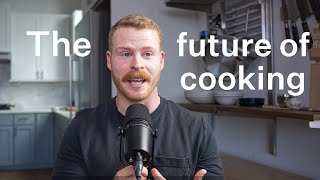

Why Cooking Is Hard (It's Not the Cooking)
60sHigh relatability as it identifies a universal pain point for home cooks, sparking curiosity and engagement.
▶ Play Clip"Title accurately reflects the video's focus on the future of home cooking and Cookwell's vision."
Ethan Chlebowski reflects on the past year and outlines the vision for Cookwell, a project aimed at solving the daily challenge of feeding yourself. He explains the problems with current cooking solutions like recipe websites, cookbooks, and video content, and introduces the planned Cookwell companion app with features like a personalized feed, smart grocery lists, and a meal calendar. He also discusses the challenges of funding and content creation, and answers Q&A questions about his video style, cooking takes, and personal journey.
Ethan introduces the video as an end-of-year reflection on his work and the future of Cookwell, a project to help home cooks feed themselves daily.
The core of Cookwell is a companion app that integrates home cooks, creators, and Cookwell to solve the problem of feeding yourself every day.
The act of cooking isn't hard; the challenges are meal planning, cooking for one, using leftovers, finding suitable recipes, and grocery shopping, all influenced by personal constraints like age, budget, and family size.
Recipe websites are free but cluttered with ads and walls of text, with no continuity between recipes, making them hard to use.
Cookbooks are beautiful but impractical for quick weeknight meals, while meal kits reduce waste but are expensive and limited in menu options.
Video content is great for inspiration but often prioritizes entertainment over utility, leading to repetitive content and forgotten frameworks.
Paid subscriptions stabilize revenue but limit reach and create pressure to constantly produce content, which Ethan dislikes.
The app will launch with four features: a personalized feed, smart grocery lists, an eating calendar, and a 'Let's Cook' button to use leftover ingredients.
Cookwell needs more content from creators and funding to build the app. Ethan considers Kickstarter or venture capital but prefers to avoid investors.
Ethan's shift to deep dives was unintentional, driven by personal curiosity and questions about food, starting with the San Marzano tomato video.
Prime rib is the worst use of a rib roast because it lacks browning; slicing into ribeyes gives better flavor and texture.
Many cooking tips, like washing rice, are overstated. Ethan aims to avoid bias and focus on observations in his deep dives.
Ethan was influenced by Good Eats, Babish, Jeff Nippard, and cookbooks like 'Salt, Fat, Acid, Heat' and 'The Food Lab'. He now focuses on first principles.
Most time is spent thinking, reading, and asking questions. Scripts are massive and visually planned. The coffee video took months of research.
His grandma inspired his love for cooking. He left a consulting job at Deloitte with 900 subscribers to pursue YouTube full-time, eventually finding success.
Ethan is excited about the future of Cookwell and hopes to build a sustainable ecosystem that supports both home cooks and creators. He encourages feedback and support through comments and potential Kickstarter.
What is the main problem Cookwell aims to solve?
It's hard to feed yourself every day.
01:22
What are the four key features of the planned Cookwell companion app?
Personalized feed, smart grocery lists, eating calendar/meal plan templates, and a 'Let's Cook' button.
11:01
Why does Ethan consider prime rib overrated?
Because it lacks browning and is mostly unseasoned medium-rare meat, requiring a sauce; slicing into ribeyes gives better flavor and texture.
28:33
What is Ethan's view on washing rice?
He thinks it's overstated and not necessary for most people, depending on how you cook it.
30:13
Which cookbooks did Ethan mention as early influences?
'On Food and Cooking', 'Salt, Fat, Acid, Heat', and 'The Food Lab'.
34:43
How did Ethan get into cooking?
His grandma inspired him with baked goods and Polish recipes, and his parents cooked homemade meals every night.
45:42
What was Ethan's job before becoming a YouTuber?
He worked as a consultant at Deloitte.
47:09
What is the biggest challenge in making deep dive videos according to Ethan?
The most time is spent thinking, reading, asking questions, and deciding what to include or strip back.
37:52
Why does Ethan prefer not to use paid content subscriptions?
He feels it loses the excitement of sharing content with a wide audience and limits reach.
08:58
What is the 'Let's Cook' button feature?
It helps users find recipes based on ingredients they already have to avoid takeout.
13:19
Core Problem: Feeding Yourself Daily
Defines the central mission of Cookwell, framing the entire video.
01:22Cooking Is Not the Hard Part
Shifts perspective from cooking difficulty to pre- and post-cooking challenges.
02:03Cookwell App as a Daily Utility
Compares the app to Spotify or Uber, emphasizing its intended daily use.
10:48Prime Rib Is Overrated
A bold, controversial take that challenges a holiday tradition.
28:33Deep Dive Production Process
Reveals the extensive research and thinking behind each video.
37:52[00:02] high level I want to do kind of an endof year reflection on where I am with maybe working on I also really want to explain the future of what we're building with cookwell I've been terrible at doing that so far and then I have pulled some
[00:15] Q&A questions from all of you uh everything's going to be time stamped down below so jump around as much as you want it's been probably almost three or so years since I've done a Q&A Style video so definitely lots to catch up up
[00:30] you're doing some cooking around the holidays um this is probably just a good one to throw on in the background treat it as maybe a podcast but anyway let's dive in and really the first topic I want to explain is what is cookwell what
[00:43] are we building what is the entire point of all of it and I've been like I said I've been bad at doing this because you may think oh is cookwell a second YouTube channel is it a website is it a newsletter is it a way to sell products
[00:55] and it's actually none of those and really we're missing this one piece that we're working on building behind the scenes and this one piece is by far the biggest thing but without it the rest of the stuff is is kind of pointless
[01:09] the YouTube I'm not going to continue newsletter and all these other things we're doing unless we can figure out this missing piece and create this ecosystem where it's a mixture of homecooks creators and cookwell all
[01:22] working in conjunction together and our goal is to solve the single problem that world every single home Coke has this problem and that problem is it's hard to
[01:34] feed yourself every day so maybe that sounded a little dramatic but really when you boil it down to these first principles that is the problem we are missing piece and kind of some of the solutions and features we're building I
[01:48] do want to explain our thought process behind this whole thing so you guys have the necessary context and can help me answer if we should continue building this and first there's kind of two questions to understand first why is it
[02:03] hard to feed yourself every day and secondly what are the problems with the current Solutions out there such as YouTube videos cookbooks recipe websites poll earlier this year and you guys listed out some of your biggest pain
[02:17] points when it comes to the cooking process and one of the biggest through and kind of mapping all of everything is that the act of cooking is not what's hard like I could give a complete beginner some ingredients in a
[02:31] recipe and they'll be able to make something decent but what holds people back from cooking more than they already do is everything that comes before and after the cooking process for example it takes a lot of time to meal plan produce
[02:45] hard to cook for one person without having to eat the same thing for four leftovers and make them into something new how do I use up expensive onetime ingredients it's hard to find recipes that fit my health and fitness goals or
[02:59] I wish I could go grocery shopping without needing to do a bunch of planning and there are two reasons that make all of this even more harder first everyone's problems are based on their unique human constraints such as your
[03:12] age your budget your time job family experience level and secondly these human constraints change throughout your life so let's take grocery shopping as an example so as a college student you may only need to shop for yourself which
[03:26] is pretty easy but you probably have a pretty limited budget to shop with a few and you have some more money to spend on ingredients in grocery shop but you're now buying more ingredients to expand the amount of recipes you make and a lot
[03:41] of your ingredients are now going to waste and maybe several years later family you're no longer just shopping for yourself but need to figure out how to grocery shop effectively for four six or eight people and all of these are
[03:55] grocery related problems but the constraints are completely different depending on where you are with your life and by using the term cookwell I don't mean to help you cook well like a chef or something that's not the point
[04:07] at all it really means to help you cook well for life and really with all the solutions we're building we're trying to figure out how do we help you cook well for what life looks like right now but also what life will look like in the
[04:20] future and this is an example of what I feel is not being served in the current landscape with cookbooks YouTube videos websites and things of that that nature cook there are many different places where you can go to get inspiration
[04:35] Source your ingredients start cooking and feed yourself but all of them tend really looking at this from a perspective of how do we help you feed yourself every day for example let's start with recipe websites recipe
[04:48] websites are generally free to access which is great however once you get there they feel basically unusable due to all of the ads there's header ads there's putter ads left margin right margin video player ads there's just so
[05:01] many of them and then there's just walls of text because what most websites are time you spend on the page so more ads can be shown to optimize the ultimately the ad Revenue you end up earning and then outside of that there is no
[05:15] continuity between recipes like some recipe websites you may like how they don't have a lot of the recipes that you want to make and then vice versa maybe some places have the recipe you want to make but you just don't like the layout
[05:30] of the problems we've already tried to solve with cookwell decom where again there's no ads on there at all we hope to keep it that way I'll explain why a little bit later but we have built in the fundamentals as well so all of the
[05:43] recipes have this very clear structure from recipe to recipe and we think it's a really great one but just one example of where kind of current recipe websites really tend to fall flat and then if we turn back the clock and look at another
[05:57] common solution are cookbooks cookbook books are beautiful they have tons of recipes and obviously have no ads because you paid for the book but it tends to not be a very useful format especially on like a quick week night or
[06:10] to plan out a couple of meals you generally don't pull out the cookbook also hard to like get your grocery list recipes it's like okay there's onion here half an onion there and you're like
[06:24] kind of flipping back and forth and then again cookbooks feel more of like a a luxury of time product where yeah if it's around the holidays or maybe on the weekend bust out the The cookbook find something that looks amazing and make it
[06:37] but if it's like a Tuesday night at 7: p.m. you're not pulling out the cookbook to make in the next 20 minutes another solution or meal kit subscriptions which genuinely do help solve the waste problem as they typically send you
[06:50] exactly what you need to make the recipes but these tend to have a very high per meal cost especially when compared to regular grocery shopping and the menus tend to be limited and you kind of become reliant on these meal kit
[07:04] subscriptions rather than empowered by them next up we have video content which is obviously my personal favorite and is probably the most popular format these days between short form and long form content it's so good at helping you find
[07:19] something is made however again video content does have its shortcomings for one a lot of content is generally created to entertain in order to get more views appease your sponsors and conform to algorithm changes and over
[07:34] time to me it feels like a lot of content just ends up becoming the same like we do not need more pizza burger and steak videos there's so many at this point another example is maybe you see a viral Tik Tok recipe and you're like oo
[07:48] then you go to the grocery store end up spending like 50 or 60 bucks a lot of thought and you have random leftover ingredients you probably should have just grabbed takeout in that case and then on the other side I have created
[08:02] and protocol videos but the problem with those is if it's a good video like if really should only make that video once and then it's kind of up to you guys to figure out examples like yes I could
[08:16] make a brazing framework video every month with just three examples but to me that's just kind of boring like I've already said what I wanted to say in that original framework video and then you're also not going to be served that
[08:28] going to just give you the same video like 3 months later there's no way to think a lot of it tends to just be forgotten over time and I will say the protocols and Frameworks are one of the pieces we are really trying to figure
[08:43] missing piece that I'm going to get to shortly but lastly I do want to talk about kind of a fifth category which I would say is a blanket group of like paid content subscriptions whether it's a newsletter maybe it's a creator making
[08:58] subscription YouTube membership something like that and really the something like that and really the downside with this model for me is that what I love about posting YouTube videos is I get to share something I'm
[09:10] passionate about and I learned and like I don't know who is end up going to watching that video when I post it out if I'm posting it in a paid Community only the paid members are going to be able to see that video which to me I
[09:22] feel like it loses some of its like excitement versus if I can put this million or two million people who have never heard of the topic of the video before maybe that inspires them in some way to cook so for me I just I I don't
[09:36] love the idea of kind of like paid content um I don't know I'm just I'm back the layers of these solutions that I've just kind of mentioned and if perspective of how do we help you feed yourself every single day all of them
[09:52] tend to have downsides and all of these downsides are kind of correlated with the problems that creators face for example it's hard to figure out how to financially how do you do it content-wise how do you do it from a
[10:06] work life balance perspective and like I was kind of mentioning your recipe websites they probably don't want to write big walls of text but they're kind of incentivized to do that based on the playground of AD revenue and and how all
[10:21] that works and then again paid content subscriptions are a way to kind of stabilize your Revenue but then it also becomes dependent on you continually putting out content like a twitch streamer for example if they have like a
[10:34] stop streaming for a month or two like all that Revenue kind of goes away and really we are trying to figure out not only how do we help solve the problem of Home cooks and how we help feed themselves every day but how can we
[10:48] themselves every day but how can we support creators as well and work in an ecosystem together and that brings me to the missing piece the missing piece we want to build is the cookwell companion app still working out the naming and
[11:01] things like that but in the beginning we want to launch with four key features yourself on a consistent basis comes down to staying inspired and having ideas on what you can make with what you already have and imagine how fun and
[11:16] exciting it would be if you could open up an app with a feed and see new recipes protocols and Frameworks that are suited to you and gets better over time additionally we want to have a steady supply of educational cont
[11:29] content from the fundamentals to keep you learning and if a recipe calls your you learning and if a recipe calls your name from this Frameworks and this is an intuitive space where you can make free form
[11:45] grocery list like you would in your notes app or choose from existing templates to help you get started and we think this is going to be better than because it will have ingredient metadata similar to what you find on our recipes
[11:58] such as flavor tags grocery categories or you can add whatever metadata you want or these could also be Frameworks and shopping lists based on Cuisine so Indian dishes we could kind of give you a starting point for what are the common
[12:12] ingredients in the pantry the fridge and things of that nature and thirdly we want to have intuitive cataloging combining and saving features so you can go back and see what you've shot for in the past and repeat these successful
[12:25] shopping trips from your archive the third piece is the eating calendar and meal plan templates again still working out naming but don't think of this as just a meal planner really think about this as a feeding calendar this calendar
[12:39] is a way for you to visualize how you're eating throughout the week whether you are cooking or you're not you can use the feed or this calendar to drag and drop certain recipes into your week write in free form notes about
[12:51] ingredients you're planning to use up or slot in events where you have meals leftover reminder you could add you're having lunch with co-workers so you don't need to cook or you can also let someone else do the thinking for you and
[13:04] slot in maybe five meals at once for example you could take five lunches from some of my videos in the past make them into one little calendar and just pop it going to eat these and make these throughout the week which then link back
[13:19] to the grocery list help you shop and then help you feed yourself throughout the entire week and then lastly we want to figure out the let's cook button so imag imagine you find yourself on like 6:30 or 8:00 p.m. or 9:00 p.m. and you
[13:33] you're like thinking about getting takeout the idea here is that we want to ingredients you may already have in the pantry in the fridge the freezer and help you along that process so you can figure out what you can make right now
[13:49] without needing to run to the store or maybe resort to takeout and hopefully that will just save you from a trip and obviously save you money over time and additionally to all of this there will be a profile where you can save recipes
[14:01] that you're doing just to make sure you're keeping track of this and really looking at this of how do we help you feed yourself every day and then how do we help you cook for what life looks like now how do we help you cook well
[14:16] for what life looks like in the future and the goal of this companion app is to make it a utility that you literally can use every single day for example when you need to listen to something what do you do you open up the Spotify app when
[14:30] you need to watch something Netflix HBO or whatever your favorite streaming service is if you need to get a ride you open up the Uber app you need to order takeout door dash for example and that is the level of thinking that I want to
[14:43] build this app to how do I help feed myself today I'm opening up the cookwell because you need to be inspired maybe your calendar maybe you need to go grocery shopping and we give you a
[14:56] Kickstart with you know an Indian Cuisine based template or maybe a template and then how do we help you track and remind you of that information over time is really how we're approaching this and I think we can
[15:11] build it but there's a few things that are kind of holding us back the first thing holding us back is a lack of content and here's where I want to explain how the paid companion app fits in with the other existing offerings we
[15:24] already have So currently cookwell kind of has three offerings we have cookwell decom which has our recipes and fundamentals we have cookwell content which includes the cookwell YouTube channel the mouthful newsletter and then
[15:36] we have individual creators content an example of that is this main channel here you know Ethan jabowski not cookwell different entities I got to try to keep this straight here now one of the big things that we want to do is yes
[15:49] build out our own cookwell content we want to build out the cookwell YouTube channel the newsletter we've got short form ideas we've got all these ideas of amazing content we can make but additionally we want to partner with
[16:01] individual creators to get their recipes to get their grocery templates to get their shopping Frameworks and it's all based off of existing content they're already making now obviously if a Creator is going to drive a sign up for
[16:15] a paid companion app we want to have a direct Revenue Split For example why do they want to be on Twitch it's because they have really good partner programs and we want to do the exact same thing with cookwell if for example you see
[16:29] the cookwell app on Ethan chabowski and you sign up with my code so code Ethan I get a direct Revenue split for that signup and then that stays with me month over month as long as the US user signs up now what's better here is instead of
[16:45] up now what's better here is instead of me having an individual like patreon or a course I made or or something of that nature that is still relying on solely me to continually churn out that new content or continually updating the paid
[16:58] community things of that nature however in this case it's cookwell responsibility to make a product that is so good that people want to sign up and that they want to stay signed up regardless of if their favorite Creator
[17:11] is continuing to put out content for example if I need to spend personally if I need to spend an extra week or two on a video I don't need to worry about oh I told the sponsor I'd have it done by you know November 23rd so I I got to just
[17:24] another week instead maybe be like you know what I have this reliable cookwell monthly income I'm just going to foro the sponsor this month around because I know that more a lot of people may sign up with the app and I I have existing
[17:38] people existing recurring Revenue that's coming in so that's like a big piece of all this we need to be able to support creators so we can help them focus on continually making great content and releasing it for all of you guys because
[17:51] like I said earlier that's one of my favorite things is I like just releasing it's going to reach maybe it only reaches you know 100,000 or 50,000 or a couple hundred thousand sometimes it reaches millions and that is like one of
[18:06] the greatest things that like content creators do is being able to make and just sharing it with the world and you never know who you're going to reach so that's kind of number one and then obviously we're going to use the revenue
[18:18] better over time we want to build out the features we already have so many other ideas of things that we can build outside of those four I kind of outlined continually make that thing better and better over over every single month then
[18:33] additionally it's not just up to creators to create the content cookwell as a kind of entity again try to separate the two don't think of just me out and get like a cookwell kitchen where we have like maybe a food
[18:47] scientist or two on staff so we can continually build out cookwell decom the recipes on there and we want to keep that completely ad free like I I want to continually update the recipes there and make it a free resource for everyone
[19:00] around the world so there's so many things that really I think we can do if we make this model correctly and I don't know we'll we'll see what happened I have never felt like that this needs to exist like I've asked myself so many
[19:14] times like do we actually need to build this like would this actually make the world a better place and I really think it would I think it would deliver so much value across everyone to home Cooks to creators to cook well and we can keep
[19:27] this thing rolling Rowling and really bring like home cooking to this place where it's it's really never been before so over the next couple months we' got to talk with creators and figure out if they want to be a part of this so if
[19:40] watching this video drop a comment down below if not I'll reach I'll reach out probably in the next next few months here um and if any people are watching let me know of creators who you might think will be a good fit for this we'll
[19:54] in the beginning and then we can build out from there but I don't know sky the limit and then the second thing holding us back now is kind of funding so up to now like we've been able to fund everything really through
[20:08] this channel the ad Revenue the sponsorship deals um but it's a really small team it's myself and there's two other full-time people like specifically on just cookwell so we're a really small team and yeah hopefully you can tell the
[20:23] team and yeah hopefully you can tell the scope of this has gotten a lot bigger than like a a small team can do like we need to hire more people to like technically from a you know engineering level be able to build this um so like
[20:38] I'm kind of at that point where like I can't like I can't hire any more people so funding is another thing we're we're trying to figure that out I think I Kickstarter so let me know down in the comments if you guys would be open to
[20:52] know helping us support this and getting it off the ground um and then if if a Kickstarter doesn't work like I'm down to see if we can go maybe like Venture
[21:04] Capital route um I'd like to avoid that if we can just because when you bring in an outside investor and maybe they have a slightly different vision and they want to get value out of the investment which like I don't know can
[21:19] just get messy and like this like this whole cookwell thing is solely for home cooks and to help support all of you guys and help you feed yourself every single Day so I'd kind of like to avoid that if we can um but I'll have some
[21:33] more information on that in 2025 probably but yeah other than that I all of this that was probably a lot of information hopefully it was fairly cohesive like you said there's so much behind the scenes work that like has
[21:46] just been going on in addition to like just this YouTube channel but I really could not be more excited about the possibilities of what we can build and to get it into all of your hands just because like you know I've heard from
[22:01] you guys the past five six seven years now and like I I feel like I hear the same problems over and over and over again about you know pain points and problems and content types and and really I feel like currently today
[22:15] there's not a solution that is really trying to approach this from like how do we help home Cooks feed themselves every single day and repeat that process every get into the Q&A um I pulled out out some questions so let me grab a drink of
[22:30] water my voice is a little parched um and I'll be right back little afternoon ice coffee little petme up let's get into these questions so yeah I just them some are quicker some are going to take a little bit longer so we'll just
[22:44] we'll just kind of hop right into them um first two are kind of related so what made you pivot from the recipe based content on the main channel to more Deep dive content and then similarly how did you come to the current video format
[22:57] where it's purely deep guys rather than you know recipe based content like a lot beginning none of this was intentional at all I basically just asked questions and was interested in making these
[23:10] videos um that that's something for me that every video on the channel you see is I am personally interested in making the video like it starts with a question I have myself and then I I genuinely do
[23:24] want to figure it out um you know a lot of other big YouTube channels like they may do a big ideation process and it's like here's like the what the title be and then you kind of make the video after the fact I'm the complete opposite
[23:38] where I the video for me and like what we're going to talk about is by far the about like the thumbnail or the title if I didn't have to worry about those like part about YouTube is like title and thumbnail stuff I genuinely love getting
[23:54] into these details and just asking myself questions about food and I think one of the first deep Dives was that Sam arzano tomato video where it's just like I asked myself you know why does everyone say that you should buy San
[24:06] Marzano tomatoes and I was kind of wondering well how different are they wondering well how different are they really you know and a lot of maybe the Articles or books that you see out there on them they never really show anybody
[24:18] testing anything they may have done testing but they never show you kind of what maybe their reactions are and it and it feels like this very like like if you just get a list of like the top canned tomatoes it feels like this very
[24:30] clear binary decision where it's like ah this is just the best however as I found out in that first video I was like well there are definitely differences in them that we learned in that video is that cans with tomato puree are definitely a
[24:44] little bit sweeter and less acidic than some of the other varieties but really the value of that video for me is not to buy the best brand of tomatoes it is to look for certain things on the can and then on the CP side as well if you
[25:00] understanding that they might be more acidic you can then make adjustments so you could add a little bit of sugar to your tomato sauce or maybe some tomato paste and things like that um and then obviously that first video did well but
[25:14] it really just started from me asking questions and then yeah like I said I think over maybe the past two years like it's kind of just cascaded down that way everything starts with me asking a question I am personally interested I
[25:27] want to find the answers to and then I need to learn all of this myself to then makes sense to all of you guys and a lot of my time is really just spent kind of thinking about reading and and looking at these kind of very fundamental
[25:43] concepts um so that's really how it happened I there again there's not a specific reason why I was like I'm not doing recipe content anymore in fact I'm why that's mainly what I'm doing on the second cookwell YouTube channel and then
[25:57] eventually if we can throw that out I do want to go back into more recipe based Dives and things of this nature because deep Dives I've kind of opened up Pandora's Box so every ingredient Deep
[26:13] dive there are a lot of fundamental things we find out and a lot of answers to those questions but at the end of the Deep dive I and this might be true for you guys too I end up having a lot more questions than answers uh
[26:28] videos work because we're really getting down to the first principles and it's down to the first principles and it's like ooh I wonder how butter would be in like the croissant like that's a whole another video so for every Deep dive
[26:42] another video so for every Deep dive I've make I have about 100 video ideas single ingredient Deep dive and for me Deep Dives like every time I walk through the grocery store I'm looking at
[26:55] example I was in the grocer store the other day I'm like ooh the peanut butter aisle you know it's just seems interesting there's aisle um caviar all of these just started with questions about ingredients
[27:09] that I've had and I I think a lot of times you know cooking is always just focused on like recipe based stuff but a lot of cooking is understanding the ingredients you're using so for me it just feels like a very useful um video
[27:22] to make because the next time I walk through the grocery store I Now understand Tomatoes I understand butter I understand how understand butter I understand how Coffee Works I understand how um what
[27:35] else have we done parmesan cheese and all these things so it really feels like this too like kind of collecting this knowledge and figuring out how to use it and compartmentalizing it it's just really fun to make it's really
[27:47] fascinating and yeah I just I I love making the recipe deep Dice and like I said I have literally unlimited video ideas I'll never run out of ideas um make cookwell work because I'd love to see more creators making more kind of
[28:03] Deep dive educational content whether it's specific ingredients or going deep down rabbit holes into recipes um just because I literally have more ideas than I'll never and I'll never be able to make all the videos that I possibly want
[28:18] to make okay next up we have what's your hottest cooking take that will get you canceled but I've got a couple of takes I want to get off my chest here I've videos about some of these but the first one that on is on the top of my mind
[28:33] right now especially with it being Christmas Time Is that a a RI roast or Christmas Time Is that a a RI roast or prime rib is just the worst possible way that you could use a rib roast um and I'll explain why that is so a rib roast
[28:49] is where ribeye staks come from right and you know they look amazing and I they're just this very visual piece with like the bone sticking out and it's like this nice sliceable thing but the problem I have with rib roast is that
[29:04] you end up with basically no Browning and mostly what you're eating is just like medium rare meat with no Browning on it like a piece of prime rib only has Browning around the outside and then you're eating mostly just like medium
[29:19] rare meat so you have to have a sauce but my thing is why would you not just get a riye like if you want to make a rib roast why would you not just you it into ribe eyes and then you get Browning around the entire thing like
[29:32] what makes steak good is the May reaction and all that Browning we get on the outside so you're literally just eating this big hunk of generally unseasoned meat as well because it takes so long for the salt to move in even if
[29:45] would take two to three days for that salt to actually work in there so that's a lot of times why you also see it served with a sauce because you are just served with a sauce because you are just eating you know medium rare meat that
[29:58] it's it's worse from a texture perspective it's worse from an aroma perspective you need to add a sauce to it so for me just RI Roos literally make cool and maybe a tradition and things like that but from a food science
[30:13] perspective I would say it's probably one of the worst ways that you could uh use that cut of meat okay second one is that washing rice just very overstated is maybe another take I'm working on is a lot of cooking advice is very
[30:29] overstated on how much it really matters and this is something that I've been thinking about a lot recently like when someone tells you a c a very specific ingredient to use or a very specific ratio of like a spice or a very and like
[30:43] some of this stuff does matter but a lot of cooking advice is generally overstated um and I let me think about some other some other examples of that so I and I've definitely done this too like I'm I am just as guilty as this as
[30:58] anyone else especially in the early days um like the orbital versus uh pole tople cut onions like does it make a difference yes does it matter so much on
[31:11] like a recipe by recipe basis not that much like it really depends on what you're making do I still cut my onions pull to pole yes the the main reason though is just because I kind of like the texture and I don't know I just like
[31:26] that video would make it seem and I think that's a bias that you really need to be careful about and recently in the Deep Dives I want to be very careful and I want to go in with basically no assumptions and I try to not give any
[31:40] bias or is it really become like just wide eyed and and making no assumptions about anything because I think that is one of the problems that I've done in the past and I think just cooking content in general um comes into is
[31:54] people are kind of driving towards like a spefic specific hypothesis and maybe fitting it to meet something rather than just giving observations which is really what I try to do now in these videos um because there are a million different
[32:08] technique changes that you can do and I think people have very very strongly held opinions about a million different cooking tips like let me know down in the comments but there are so many like very strongly held opinions that if you
[32:21] stuff by side you'd be like okay well it's not that big of a deal um so so been working on maybe I'll make a video on that one day and we'll make a big on that one day and we'll make a big long list and not mythbust but I I could
[32:35] kind of overstated cooking advice like washing your rice for most people and it really depends on how you cook it really not necessary at all I think maybe that was kind of just uh Uncle Roger just like just saying one talking point over
[32:51] and over and over again but that's an example I mean there's there's so many out there so those are kind of my takes prime rib rib roast very overrated like slice it up into ribe eyes serve it that way it's just going to be way better um
[33:04] and then a lot of cooking over advice is overstated washing rice or certain you're watching videos or or recipes in that in that type of thing all right influences on how you learn to cook the way you do such as cookbooks um food
[33:19] way you do such as cookbooks um food writers YouTube TV all that so I think I originally would watch kind of food cooking shows like kind of classic you know cable So Good Eats I loved watching Good Eats with Alton Brown and and now
[33:32] that was like kind of a little bit full circle I actually met Alton earlier this say like oh this kind of feels like an ALT Brown Show which for me I I like that because you know I grew up watching you know the good e show I also watched
[33:45] was in high school and stuff you know more of an entertainment show less so on the education side and then for YouTube wise I think babish was probably my first food cooking YouTube channel I think probably so many of you um and
[34:00] then non- food related though to YouTube was Jeff nippard so Jeff nippard has a kind of science approach for you know health and fitness and I watched a ton of his videos as well when I was coming up and I really like that idea of kind
[34:14] of approaching things from that fundamental level so yeah I mean that's another example where you can totally see by like blending the the Jeff Nipper style that I used to watch growing up into some of this um and then also I I
[34:28] think I really admire currently um like Cleo Abram and Johnny Harris in their style yeah I just I feel like they're really good at explaining topics that's better at um so that's currently what I watch as far as cookbooks and stuff I
[34:43] would say on food and cooking obviously I still reference that one a lot Salt I still reference that one a lot Salt Fat acid Heat by Sim noat the Food Lab obviously from Kenji so those were kind of some of the the early influences um
[34:56] and then recently I've kind of I don't really I don't really read or watch much cooking or food related stuff anymore because really I've been trying one of the things we've been building for on
[35:10] cook.com for example is the the flavor framework and and trying to approach it of the problems I had when we were going into deep Dives is I realized I was I was always talking about these Concepts like oh when we're talking vanilla we're
[35:24] we're not talking about taste and and things of that nature nature um so I kept running into this issue where it was hard for me to put into words what I was trying to describe from ingredient to ingredient so in the past what I was
[35:37] then trying to piece everything together and coming up with different tests but now now that we have the fundamentals I approach it from the fundamentals we're trying to build on cookwell so what are the fundamentals of flavor it is taste
[35:50] it is aroma it's texture it is the physical element it's human it is sight ingredients from that level and then additionally to that we had to figure out how do you actually how is flavor created like what like what are
[36:05] molecules and things are hitting your tongue so we're like oh we need to talk about molecules because the molecules in food dictate what type of reactions they can go through in cooking those reactions dictate how the molecules can
[36:19] change which ultimately is what turns into the taste the aroma the texture and into the taste the aroma the texture and all these various things so that really approaching things from maybe a classical like kind of philosophy or
[36:32] science-based method where it's what are the first principles of what we're talking about and then build it up from there so really building up from the ground up so I really don't read a lot of uh kind of cookbooks or like watch a
[36:45] lot of YouTube videos or other videos anymore just because I need to a to be able to understand the topics I'm talking about I really need to start at talking about I really need to start at like the Bare Bones like okay butter is
[36:58] like the Bare Bones like okay butter is 80% fat 15% water you know one 1% protein and then we got to build up from there and then that is where I may read nature so that's really changed a lot over the year I definitely consume much
[37:12] less you know kind of cooking YouTube food YouTube than than I used to um mainly just because I'm kind of needing to build and and do the research in in information myself to understand it because a lot of it is not really
[37:26] approaching it from like that groundup level and I think that actually brings me to the next question I think someone asked so Austin asked what's the most making Deep dive videos always impressed
[37:39] curious how much is kind of going on behind the scenes that that we don't behind the scenes that that we don't see yeah so by far the most time spent on deep Dives is really like thinking
[37:52] reading asking myself questions repeating that process over and over repeating that process over and over over again and then slowly building it into what are some things that we should test what should we talk about in the
[38:05] script and then that takes a lot of the time and then as I'm writing out the time and then as I'm writing out the script I am visually thinking in my a video um and as far as each video it really
[38:21] depends on the amount of time so an example of a video that took so much time to think through in research was the coffee video it took me a few months probably we had the idea a long time ago I was like oh yeah we should definitely
[38:33] do a you know video about coffee or like coffee brewing and things of that nature but then as I got into it I just there's millions of rabbit holes like I said the nature of the Deep dive videos is it starts with a very simple question and
[38:47] then each of those questions has like five more questions that could each lead to five more so one of the hard part about making the Deep Dives is like where do you explain certain areas or where do you kind of strip back so a lot
[39:01] of videos even though some of them may seem pretty complex they're generally stripped back to a level that I feel comfortable communicating and this is still a work in progress like the Deep Dives are mentally very challenging a
[39:16] bunch of research and then I'll just need to like passively sit with it like I'm not just on my computer grinding out the script like it's like okay I've done of need to passively think about it like when I'm going for a walk when I'm
[39:30] working out when I'm going to a coffee shop or whatever I just need to kind of head and then generally again then I'll come back and can read through what we've talked about what we've scripted out um or there's tests that we've done
[39:46] so in general there's kind of four stages where it's just kind of research stages where it's just kind of research asking questions ideation of the tests then from there it's like okay let's probably do some testing
[39:58] and kind of piece together what the script may look like and then that can wish I had a better answer we're getting better now now that we have kind of this clear Direction this is something I've really been working on because visually
[40:12] these videos are very hard it's not like you know I think other channels may have it's like you just kind of insert new topic and go for each Deep dive topic it depends on the concept of the the food item that
[40:28] we're talking about what matters and what doesn't so when we're talking about coffee like Aroma is very important taste is also important but then understanding all these little things of how the aroma changes is really
[40:41] important and we got to talk a lot more about you know the processing and how it's harvested and how it's roasted and there's so much that goes into that versus something that is simpler like caviar caviar is a raw material that
[40:53] comes from Sturgeon and its eggs and you don't really cook with sturgeon you kind of just scoop it out you know it's salty and Briney and that was one of the things in that video it's like all of it's kind of salty and Briney and it it
[41:07] does taste different but in no way would I I would not advise going out and buying like a two or three or $400 tin of sturgeon like for your first time just go get a cheap one and see if you like it um but but that's an example
[41:20] where it's just we're talking kind of taste and and Aroma and like I can't cook with caviar so it's just much simpler to do um so yeah they're they're always a work in progress like again I have so many
[41:32] ideas for deep deep Dives and that's why like I hope we can make more of them but a lot of my time is just spent like asking myself all these questions approaching them from a fundamental level and trying to build it back up
[41:45] thinking about tests that we can do that can explain and get to these fundamentals that we're talking about and then ultimately help explain this ingredient to all of you guys where if you using it in your cocer if you're in
[41:57] the grocery store you can understand the underlying principles of the ingredient rather than just looking for a specific brand because for me the value in those brand because for me the value in those videos is not go bu XYZ brand because
[42:10] it's the best I I think that's just pointless because surely there's more than one brand in the world that is is worth buying whether it's butter you know milk tomatoes whatever so my goal is to always break it down to its
[42:22] you that information I don't want to be like judge jury exec tioner of here is the best brand to buy go buy it and that's going to solve all your problems understand how the ingredient Works how it works in cooking and how it creates
[42:37] the flavor of the particular ingredient um so yeah I don't know if that was a good answer next Q&A I will have a better answer and I will try to come up with a more defined workflow but for example
[42:50] some of these notion docs I I'll pop up maybe the word count 95% like scripted everything just because if I'm going to talk about these thoughts I need to be
[43:02] able to write them down because I'm just going to be stumbling over my words if I'm trying to talk about the May reaction and how it's different in coffee and pyrolysis and all these other things that are going on so I need to be
[43:15] able to write it out very succinctly so these scripts are massive absolutely massive um but yeah I'll I'll get a better answer uh next time around okay next up what what's been your favorite recipe SLV video of the
[43:30] Year I'll start with favorite recipe and this is not well actually a video is coming out on the cookwell channel for beef friend dang that is the I made it probably six or seven months ago for the first time beef friend D unbelievably
[43:43] good and I would highly recommend all of you try making at home it's really easy to make you just need to find lemongrass and gongle are kind of the the hard ingredients to find but an unbelievable recipe um so it's kind of my favorite
[43:56] anything that's been done on that as far as my favorite Deep dive video of the year um the most challenging was coffee for sure uh the most surprising
[44:18] maybe I'm just not a big caviar fan but I thought it would be better and more interesting than it was and then when I tasted I was like maybe I'm just maybe I'm just not a big caviar guy um as far as the one I'm most
[44:32] satisfied with definitely kind of the past couple I feel like we've really gotten the structure down a little bit better when it becomes like me being able to script it out a little bit more cohesively and then also Spencer my
[44:47] editor and I we kind of getting in a little bit better flow with kind of how little bit more consistent from video to video because another thing that I really want to be able to convey is to give you that sense of place with flavor
[45:01] so if you realize we constantly kind of mention other other Deep dive videos in the Deep dive like I think in the butter video we mentioned the salt Deep dive video we mentioned the salt Deep dive and I want to be able to do that so I
[45:13] think the most recent one is probably the one I'm most satisfied with overall but that'll probably be that'll probably just happen for the I'll round this out with how did I get into cooking and how did I kind of
[45:27] become a food YouTuber because I think I mentioned this maybe at my 100K video years ago at this point but I haven't really talked about it for anyone that might be new here so uh how I got into cooking when I was
[45:42] younger was my grandma so she would always like do Bak Goods um like bread rolls bellish some other polish recipes and every time she came visited us or we went to visit her she would always make these and I just love the food um so
[45:57] be able to recreate this stuff when without having to wait until she came visit us around the holidays so that's really how I got into cooking um and got it you know for the first time and then
[46:11] Middle School and High School both my parents basically cooked us you know a homemade meal every single night like my parents they're they're not chefs or anything um they they just happen to like cooking and you know grew up
[46:25] cooking from cookbooks and and things of this nature um you know I have three every night so it just was a very normal thing in my family like to be cooking so naturally like we would kind of help out with
[46:38] dinner as we got older and then when I got into college it was just like well that's what I know how to do so I do all my shopping um there was probably a year or two where uh my roommates and I like I would do all the cooking for my
[46:53] roommates and they would just clean up um it's just so it's just something that always always done and then what got me into YouTube was actually because of my with an accounting degree of all things um if you believe that um and I went to
[47:09] work for deoe in Consulting and then in Consulting I was traveling every you know Monday through Friday literally just the entire time like a lot of beginning and then the the travel kind of wore on me it just like you're like I
[47:24] don't want to wake up for another you know 6:00 a.m. Monday flight and then fly back late Thursday night and repeat that process every week and because of wasn't able to cook Monday through Thursday and then like on the weekend
[47:37] I'd just be like kind of tired like I don't even feel like cooking anymore so starting the YouTube channel was kind of a creative outlet that got me back into cooking and I was like o I've I'm going to come home on Thursday night and then
[47:50] work Friday and then Saturday and Sunday like I'm going to figure out a video to make and then I ended up completely falling in love with that process um I posted like one video a year got to 900 subscribers and then decided to quit my
[48:02] job at deoe so you know most people would not advise that route um I had not made a scent off of anything I had 900 followers but for me I'm very much of like I need to know and I want a cut point where it's like I either want to
[48:16] know that I genuinely like this and and can make it work or if it doesn't you know I'll go back and get a job and that was why I decided to to leave deoe I was switching jobs or maybe I'll go back and get my MBA or or My Ms in something and
[48:32] YouTube thing what if I just spent a year or two and just see what happened so that's what I did I quit my job I so that's what I did I quit my job I moved back home um and started posting
[48:44] like two to three times a week for the next probably year and then I felt like I was get making better videos but you know didn't have anything go crazy I know didn't have anything go crazy I think so from Z 0000 to Z W from 2018 to
[48:58] 2019 this would have been 900 followers from 2019 to 2020 probably around 15,000 followers and I was making a little bit of money through ad revenue and and that thing and then covid hit and then I think June 2020 I moved out to
[49:14] California uh with one of my best friends and I was actually looking at getting potentially a part-time job because I was like I'm making like a want to dip further into my savings that had from deoe um but I was like all
[49:28] right let me just live the first month out in California and we'll see what happens and then literally I think 3 weeks after I moved out there I had several videos kind of Spike off off one of one another and literally like
[49:42] overnight it turned into Enough To You Know cover rent and basically be full-time income and then I was like oh dang like let's just keep this thing rolling so that's kind of what I did for the next couple of years um and then
[49:58] probably 16 or 17 months ago or after I moved to California um I didn't really know like what I wanted to do and I I wanted to do kind of travel content and and make
[50:11] better and deeper dive not deep dive in the sense that we're making them today but my idea was to like go spend a full year abroad and be making videos so what gave up my apartment I had no like residence in the US the plan was to do 3
[50:25] months in France and then 3 months in another probably European country 3 months 3 months um but when I got over to France I realized it was really hard to make the level of quality of video that I wanted to make while being abroad
[50:40] and I I ended up just spending a lot of time in the apartments um and was just like man I I want to make these videos but I need to figure out a better way to do it and make this sustainable because I don't want to make kind of generic
[50:53] like travel or Vlog videos like I want to get in into deeper topics and it was hard to do that while I was broad so that trip really changed a lot for me
[51:05] and and made me think about a lot more about the future of like what I want to do as as kind of like a food YouTuber if you will um and that's really like that's kind of the Nexus of what led me down this whole cookwell path and and
[51:19] trying to think about a way that I could make it in the beginning it was just sustainable for myself where I don't need to like worry about like all these brand deals and I don't need to worry about like or or make or or I don't need
[51:33] to worry about having a brand deal on every single video or I'm not so tied to like well if this video doesn't do well that's a big risk and I don't want to a genuine thing of the time because I was like man I'm spending a lot of money
[51:46] on in like France and like the apartments aren't cheap or the airbnbs and I was just like man this I don't know if this is the right path for me um so that's kind of what L me down to this you know past year or two where we've
[52:00] trying to figure out like how could we make something that like I fully believe in and I want to tell you guys about like I want to build it for you it's valuable and it can also support content that I can just continually release
[52:16] without yeah without just feeling like I need to chase like views and money and do that I just want to make videos that I find very interesting and make them hopefully interesting and educational for all of you um and that's kind of
[52:31] where I'm at like you know I don't like if cookwell works like I couldn't be more excited but if it doesn't work like I'm happy just just making videos and kind of hanging out so I either want to kind of
[52:45] take the big swing and and strike out or if we hit it out great and then we can process and help all of you homecooks in the process um but if it doesn't work you know I I think I'll be like pretty happy that I at least tried to do it and
[53:00] you know I can always like just continue making videos that I love making so I think that's a good good spot to end this video um hopefully you guys are having a had a good year uh I'm I'm really excited for 2025 and 2026 and
[53:15] Beyond um really thinking about this in in terms of decades now uh but yeah hopefully you guys have a good holiday hopefully you have a good New Year um let me know down in the comments about anything related to this video I
[53:29] it up for me in this one I will catch you all in the next one peace y'all
⚡ Saved you 0h 53m reading this? Transcribe any YouTube video for free — no signup needed.