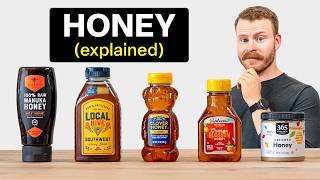

I Bought $120 Honey: Is It Worth It?
45sThe extreme price comparison ($3 vs $120) creates immediate curiosity and debate about value.
▶ Play Clip"The title promises a deep dive, and the video delivers on taste tests and science, though a sponsor segment and some tangents dilute the value."
This video explores when expensive honey is worth the cost by tasting 14 different jars, from a $3 honey bear to a $120 Manuka honey, examining how floral source, processing, and grading affect flavor and price.
The video features 14 honey jars ranging from $3 to $120, highlighting the wide price disparity, especially with Manuka honey.
The honey aisle is complicated due to different floral sources, terms like raw, unfiltered, and creamed honey, and Manuka's separate grading system.
Honey is made when bees collect nectar from flowers, which varies in sugar composition, acids, and aroma compounds, influencing final flavor and color.
According to FDA guidance, producers can name honey after a plant if it's the chief floral source, supported by evidence like pollen analysis and harvest timing.
Nectar is 70-80% water, but honey is about 20% water and 80% sugar, achieved through enzyme action and evaporation in the hive.
A sponsor break for Curology, which is a skincare service, unrelated to honey content.
Honey can be filtered, raw, unfiltered, creamed, or flavored, with different heat and straining processes affecting texture and marketing.
MGO rating measures methylglyoxal concentration, linked to antibacterial activity, with higher ratings fetching higher prices.
The host tastes each honey, ranking them from S to D tier, with local wildflower and Tupelo honeys scoring high, while cream and some Manuka honeys scored low.
Honey's flavor is explained by six properties: taste, aroma, texture, sight, physical, and human element, with sugar composition and aroma compounds playing key roles.
The host correctly identified Tupelo honey in a yogurt bowl blind test, showing that honey differences persist with other ingredients.
Four cakes (sugar, two honeys, maple syrup) showed distinct flavors, with Tupelo honey standing out, but the darker honey was less noticeable.
The conclusion: for taste, expensive honey isn't worth it for most uses; but local, less processed honeys offer unique flavors. Manuka's health claims lack evidence.
Fructose sweetness advantage
Provides measurable data on how sugar composition affects perceived sweetness.
21:55Crystallization mechanism
Explains a common honey issue with a clear scientific reason and practical solution.
25:57Manuka honey health claims lack evidence
Critical evaluation using a three-question framework for assessing health claims.
38:48Recommendation for local honey
Practical advice to explore local honeys for unique flavors without overspending.
41:37Tier list results
Shows real taste differences among honeys, with expensive ones not always ranking highest.
12:05[00:00] I just bought 14 different jars of honey, ranging from the $3 honey bear that many of us are familiar with, all the way up to this smaller 8-ounce jar of Manuka honey that, yes, this is not a typo, costs $120.
[00:14] Now, these other jars range from about $5 to $30 a piece, and what I want to figure out in this video is when is expensive honey actually worth buying? Because if you've been down the honey aisle lately, it is surprisingly complicated.
[00:29] There are a bunch of different floral sources. There are terms like raw, unfiltered, and creamed honey, whatever that means. Then there is the most expensive honey of them all, by far, Manuka honey, which has an entirely separate grading system, supposedly has some health benefits,
[00:43] but it for sure has prices that can climb well over $50, $100, or even $200 per jar. So to sort through this, we will be doing a deep dive into honey. I am going to rank every honey I bought in a tier list.
[00:56] I'll be doing two different blind taste tests, and then I'll be explaining the flavor chemistry along the way so you know exactly which ones are worth trying and which ones you should probably save your money on. And to start, I was able to visit a local hive to see how these bees actually do their work.
[01:14] Okay, so first we need to take a look at how honey is actually made. Because if you've ever seen jars labeled clover, wildflower, orange blossom, or cupola, those differences begin at the very first step when bees collect nectar from the flowers.
[01:28] And this can affect everything from the honey's sweetness and aroma to its color, texture, and even how quickly it crystallizes. So let's start with step one. As many of you know, when plants flower, they produce nectar, which is essentially a diluted
[01:45] sugar solution used to attract pollinators. And these could be butterflies, moths, or hummingbirds, but if honey is what we're after, most commercially produced honey comes from the Apis mellifera, also known as the western honeybee.
[01:58] And a worker honeybee is going to fly up to a flower and use its proboscis, which is essentially a straw-like cone, to draw up the nectar. It then stores the nectar in a specialized internal pouch commonly called its honey stomach or honey crop,
[02:11] and it allows them to bring that nectar back to the hive. Now, the interesting part is every flowering plant produces a slightly different nectar. This nectar is mostly water, but dissolved within that water are different concentrations
[02:24] and ratios of sugars, such as sucrose, glucose, and fructose, along with very small amounts of organic acids, amino acids, minerals, pigments, and aroma compounds. Now, remember these compounds for later, because we're going to talk about them in much more
[02:37] detail. But the nectar that the bees collect is a big part of what creates the color and flavor differences you're going to see, and it's also why honey bottles will frequently call out the primary floral source at the grocery store. So orange blossom honey primarily comes
[02:52] from the nectar of orange blossom flowers. Tupelo honey comes from tupelo flowers, and of course, manuka honey comes from manuka flowers. But now, the question that I had is, how can a producer make that claim that all of the honey came from one specific flower? Because here's the thing,
[03:09] a hive can contain tens of thousands of bees, and those bees, they forage several miles away. For example, some of the B-roll you're watching right now is literally just a honeybee collecting nectar from a massive basil plant that I allowed to flower in my backyard.
[03:23] There were honeybees all over this thing. And what I want to know is, if I were to track down this hive and harvest the honey, could I sell it as basil honey? Well, the answer is probably not, and this is where honey labeling can get a little messy.
[03:38] So, according to the FDA's non-binding industry guidance, a producer can name honey after a particular plant or blossom when it is the chief floral source and the producer has evidence supporting that conclusion.
[03:50] Now, in practice, this generally just means positioning the hive near a large concentrated bloom, such as an orange orchard, a tubular growing region, or an area filled with flowering manuka, and harvesting during that plant's blooming season.
[04:02] And producers can then support this claim with the location and timing of the harvest, production records, pollen analysis, sensory characteristics, and sometimes even chemical testing. Now, this is a lot of stuff for the beekeeper to control for, and it's probably going to drive up the price of the honey.
[04:17] Plus, there is no guarantee that those bees didn't fly off and visit a variety of different flowers, and this is why wildflower is probably the most common floral label you're going to see at the store. However, the problem is, since it's such a broad category,
[04:32] two honeys labeled wildflower can end up looking and tasting completely different. So I'm going to be tasting just how different some of these wildflower varieties are shortly, but after those bees come back to the hive, they still need to transform the nectar,
[04:46] which is roughly 70 to 80% water, into honey, which is roughly just 20% water and 80% sugar. And this brings us to step two, which is what actually happens inside the hive.
[04:58] Now, before we move on, thank you to Curology for sponsoring this portion of the video. And I obviously love spending a ridiculous amount of time researching food and ingredients, but skincare is one area where I don't want to have to figure it out all by myself,
[05:12] and that is why I like Curology. So, with Curology, you take a quick skin quiz, submit a few photos, and then a licensed dermatology provider uses that to prescribe a formula specifically for your skin and your goal.
[05:25] And for me, this is the HydroTret RX, which I tend to have more sensitive skin, so I like knowing this was specifically formulated for me. So at night, what I do is first use the cleanser, then I'll put on the HydroTret RX,
[05:37] and finally finish with my moisturizer and just leave that on overnight. And my goal here is just to keep my skin looking good as I get older with a simple routine. I don't want to be going down every single rabbit hole.
[05:49] Also, Curology's whole process is virtual, so there's no waiting for an in-office dermatology appointment, and everything just gets shipped directly to you. So you can head to the link below or use the QR code I'll put on screen here
[06:01] to start your own curology journey and get a special offer on your first box. But now, let's get back to the hive. When the foraging bees return to the hive,
[06:14] they regurgitate the nectar from the honey crop to a worker bee that was hanging out in the hive. And during this process, the nectar is going to mix with enzymes produced by the bees. And one of the most important here is invertase, which breaks down sucrose from the nectar into two simpler sugars that will dominate the finished honey, glucose and fructose.
[06:33] And remember these two for later, because the ratio of glucose and fructose in your finished honey, in theory, will change how it tastes. Now, there are other enzymes that also contribute to honey's chemistry.
[06:45] Glucose oxidase, for example, helps produce gluconic acid and hydrogen peroxide, which contribute to honey's acidity and antimicrobial behavior. But the largest physical change during this process is simply removing water.
[06:58] And specifically, under the International Codex standard, most honey cannot contain more than 20% moisture, while well-ripened honey is typically closer to 17% or 18%. And beekeepers can actually measure that directly with a refractometer,
[07:12] although they may also estimate the readiness based on how much of the comb the bees have cast. So during this step, you're kind of just letting the bees do their thing and transforming that nectar into the honey. Now, this particular hive is not ready to harvest today, but let me show you how this process normally works,
[07:28] because this is where humans are going to start making decisions again, and this is how we end up with so many different labels at the grocery store, and really, there are five main ones you want to look out for. So, once the honey is ready, the beekeeper removes the frames from the hive,
[07:42] and then cuts or scrapes away the thin wax caps covering the honey-filled cells. And those frames then go into a honey extractor, which is basically a large centrifuge. and as the brain spins, the honey is flung out of the comb, runs down the sides, and corrects at the bottom.
[07:57] And at this point, the beekeeper might strain and bottle the honey themselves to sell locally, or that extracted honey might be shipped in bulk to a larger packing facility. And this is where we start getting those different processing terms found at the grocery store.
[08:10] First, we have standard filtered honey. Think of your mass-market commercially produced honey bear. This honey is commonly heated so that it flows more easily through the equipment and can be filtered into a clear, smooth, consistent product.
[08:22] And depending on the process, temperatures may reach around 140 to 150 degrees Fahrenheit because a lot of larger companies are going to source honey from multiple batches, beekeepers, regions, or countries, and those batches can be blended during processing
[08:35] to create a product that looks and tastes more consistent from bottle to bottle. Now, on the other end of the spectrum, we have raw honey. And this is a little bit of an annoying term to me because there isn't a specific temperature that makes honey go from raw to not raw.
[08:51] So the USDA does describe raw honey in one of its commercial specifications as honey in the condition it exists inside the hive or as obtained through extraction, settling, or straining without adding heat. But the problem is, this specification doesn't create a universally enforced definition
[09:07] for every retail jar labeled raw. And in practice, some producers might use no heat at all, But because honey crystallizes very easily and is quite thick, others are going to gently warm their honey sometimes to 100 to 120 degrees and still market it as raw according to their own standards.
[09:25] Now, there's also another process that could affect the flavor of honey after it's harvested as well, and you will often see this listed alongside raw, and that is unfiltered honey. So, unfiltered honey doesn't mean the honey was never passed through a stream.
[09:39] Even a small beekeeper bottling a home is generally going to strain out the larger pieces of wax and other debris. So, raw and unfiltered are generally related claims, but they aren't exactly the same thing. Then, the next weird one is creamed honey, which I didn't even realize existed before making this video.
[09:56] And, despite the name, there is no dairy or cream actually in it. It's simply a honey that has been intentionally crystallized into lots of very small crystals, so it creates a smooth, thick, and spreadable texture. We'll see how it actually tastes shortly.
[10:09] And finally, there is flavored honey. And this is where another ingredient like chili peppers, maybe cinnamon, vanilla, or some type of fruit juice is added after harvesting. And personally, I didn't include any of these in the taste test. I just wanted to see what the honey alone tasted like.
[10:23] But before we start ranking them, there is one final step to understand, and that is grades and certifications. And if you are thinking about spending $30, $50, $100 plus on some Manuka honey, this is where you need to pay attention So there are a number of different grades and certifications you could see on a bottle of honey after it gets processed but there one labeling system I want
[10:43] to call out for Manuka honey, which is the MGO rating. And both of these jars are Manuka honey, but one of them costs $25, and the other costs $120, and the primary difference in price comes
[10:56] down to the difference in MGO. So, MGO measures the concentration of methylglyoxal, which is one the compounds associated with Manuka honey's antibacterial activity. And this ultimately does come from the Manuka flower.
[11:08] The nectar contains a precursor called DHA, which converts into MGO as the honey matures. And generally, the higher the MGO rating, the more expensive the honey will be. Now, there is one really important thing to note here.
[11:22] A rating that is 10 times higher isn't making a claim that the honey is going to, like, taste 10 times better. The premium is largely tied to the chemical composition and claimed health benefits when you're kind of using this as a daily supplement.
[11:35] We're going to evaluate if these Manuka honeys are actually healthy for you in any way at the end of this video, but at this point, you should understand why we can end up with so many different bottles of honey. The flowers the bees have access to, how that honey is processed, and the certifications of the grapes are all going to affect the final price you see at the store.
[11:52] But my question is, how different do these honeys really taste? And that is what we're going to find out right now. So I'm going to taste every honey I bought and place them into a tier list so I can figure out which ones I like the most.
[12:05] And we will use those honeys in our blind taste test later in this video. Now, before we start, there are a couple of rules. So first, I'm not going to be factoring in the price, but I'm going to show you the price per ounce or 28 grams of each honey so you can make your own value judgment.
[12:20] I'm just going to be judging purely based on how much I enjoy the flavor of each one. And secondly, I need to explain the tier. S tier is going to be reserved for a truly life-changing honey experience. While S tier means it's not great and I probably wouldn't even want to use it at all,
[12:35] then every other tier is somewhere in the middle. And instead of walking you through every single bottle, I'm going to highlight a few of the more interesting comparisons. And the first one was between these two honey bears. They may look almost identical, but one is a widely distributed mass-produced honey,
[12:50] while the other is a local wildflower honey that just happens to come in a familiar bear-shaped bottle. and the flavor difference was pretty noticeable. Whoa, okay, that is pretty different. Wow. Now that I've tasted these two by side, I would say a little muted in terms of kind of that top-end honey aroma.
[13:06] I mean, still okay, but for me, I definitely think this one is a little bit better, and I'm going to pop that one into the B tier. Now, the next two honeys I tasted were both raw and unfiltered blends. One came from Southwest Wildflowers, while the other was clover honey.
[13:20] There's an obvious difference of color here, but you can also see that the clover honey had already started crystallizing at the bottom. And when I tasted them, you'll see in my reaction, there was a noticeable difference here as well that placed one in C tier and one in B tier. When I had it just on my tongue, kind of made my mouth
[13:37] water a little bit more. So I'm wondering if there's like a little, some kind of acidic compounds in there. Like I really feel like my tongue is watering a lot more with this guy. This one, I'm not a big fan. I'm going to pop this one into C tier. I think this one I'm going to pop
[13:51] into B tier. The next three honeys I tasted were all from Whole Foods. I had their standard raw organic honey, a creamed honey, and then a local honey that still had the honeycomb inside. Now, the raw organic and creamed honeys were actually the first two that I placed in the D tier. They
[14:05] both had textures that I just didn't particularly enjoy. Then, as you'll see in my reactions, the flavor kind of reminded me a little bit of beeswax. It's kind of crystallized a little crusty
[14:17] in here, which is just not that enjoyable. It almost smells a little more waxy, like beeswax to me, not personally a fan. It tastes completely different.
[14:30] It's more about the form factor, less about maybe the flavor here. Feels by far the least intense of them. I don't really see the point of creamed honey. I think you'd be disappointed if that's kind of the honey
[14:42] you were getting, at least compared to some of these other options. Now, the cold honey landed in bees here. That honeycomb is pretty cool to look at, but there wasn't anything particularly surprising about the honey itself. It was just a good, solid honey. A little less intense, but still really, really good.
[14:56] And this brought me to the three wildflower honeys from different regions in Texas. And all of them are definitely good, but as you'll see from my reaction, one of them definitely stood out as my favorite.
[15:08] Difference in color right away. So we're going to start with North Texas. Interesting.
[15:20] I like this one a lot better than that one. Feels more of that well-balanced, like, amber richness, honey, a little bit on the top end of, like, those kind of floral notes. But this one, the green one, had some kind of weird,
[15:35] maybe it's some mesquite, I don't know, that popped out as kind of significantly different to me that I'm not a fan of. And then lastly, let's go to the Gulf Coast, which it has overlapping flowers listed,
[15:48] but this is the darkest of the three here. These two are much more similar to each other. Has a really nice, like, smoothness to it.
[16:00] And it feels that, like, more robust amber kind of really makes my tongue, like, come alive and kind of salivate a little bit. This one's the best. And I'm going to put this one, I think this will be the first one in A tier.
[16:12] Wasn't a big fan of this one. I'm going to pop it in C tier. and I think I'll put this one in B tier. So after those Texas honeys, the only ones I have left are now monofloral honeys, meaning each one came predominantly from a single floral syrup.
[16:25] So first, I have the orange blossom and tubal honey side by side. And I'll be honest, the orange blossom honey, although it looks incredible kind of in the bottle, I think if you blind tasted this and didn't know it was coming from an orange blossom thing, I don't think you'd have any idea, like, that the orange blossoms were in there.
[16:40] The tubal honey, however, was a completely different story. Whoa. That is good. This is really interesting. It does have that lighter kind of sweetness to it,
[16:53] but does have some more interesting aromas, kind of buttery, almost not like vanilla, but kind of those vibes, if you will. It's hard to describe. I'm going to put this in A tier with the other darker Texas one,
[17:05] and then I think I'm going to put this one next to that other wildflower local honey bear that I got, kind of in the B tier. And lastly, this brings us to our final two honeys, the Manuka. One jar cost $25, and the other an incredible $120.
[17:20] And despite the price tag, as you'll see, neither of these really blew me away. So let's start with the cheaper Manuka honey, which is still expensive. And right away, a little less viscous than the others.
[17:36] Whoa. Different. I don't think in a good way for me. This one also has those little texture like chrysalis bits. Can't say I'm a big fan of that.
[17:49] But let's move up to this one and see if there is any difference here. I think this one looks like it has a little bit of a better texture. Okay.
[18:01] Whoa. So the $120 is better than this one on just pure kind of taste and aroma perspective. It still has that slight range to it. You can kind of feel and see it in here that there are those little particles of crystallization.
[18:14] And then in terms of like the floralness of it, it feels good. It does have kind of like a buttery rock candy component to it that is quite good. Flavor-wise, though, I wouldn't say it's like that crazy.
[18:27] I would kind of pop this in probably the B tier for this under $20 bottle. And then for this other Manuka honey, yeah, it doesn't have overwhelmingly any redeeming qualities.
[18:41] I'd probably put this in C tier. So after tasting all these honeys, it clearly proved to me there can be a big variation in flavor, and I definitely preferred some of them much more than the others.
[18:53] But this process ultimately left me with two questions that I have to get to the bottom of. First, tasting honey straight from the spoon is one thing, but I want to know what happens when I actually use it in food and blindfold myself so I don't know which one I'm eating.
[19:09] So I'm going to be setting up two more taste tests. First, I'll make identical yogurt bowls using my two favorite honeys to see if I can still tell them apart once they are combined with a variety of other ingredients. Then next, I want to see what happens when I bake with them and compare honey against other sources of sweetness.
[19:25] So I'm going to make four versions of the same cake, two with different honeys, one with maple syrup and then one with plain sugar. Since honey can be used as an alternative to sugar, I'm kind of curious whether it meaningfully changes the flavor, texture,
[19:38] or overall experience of the finished cake, and whether the specific honey I choose even matters. Now, while I get those tested up and start baking, I want to solve the second problem, which is I want to know what specifically is inside of these bottles that changes their flavor.
[19:54] Like, from a food science perspective, what makes one light and clear while others are a dark brown? Why do some jars smell light and floral while others are rich and molasses-like? Why do some crystallize much more quickly while others remain liquid?
[20:06] And lastly, does the Manuka honey have any real benefits, or are they just cashing in on people's obsession with natural health products? So, let's dig in to the flavor science of honey.
[20:21] At a high level, these six properties can be used to explain the flavor of food. Taste, aroma, texture, sight, physical, and the human element. and how we perceive each of these properties ultimately comes back to the underlying chemical composition of the honey,
[20:35] so let's start with taste. Of the five basic tastes, sweet, salty, sour, bitter, and umami, only three are especially relevant here. Now, as I mentioned earlier, you can broadly describe all honey as roughly 80% sugar and 20% water,
[20:48] but to be fair, this is a massive oversimplification. Because if I mix 80 grams of table sugar with 20 grams of water and mix it into a syrup, it's not going to look, smell, or taste anything like most of these honeys, and here's why.
[21:01] First, the table sugar I just used is sucrose, which contains of one glucose molecule and one fructose molecule that are chemically bonded together. But as we learned earlier these add enzymes to the nectar they collect that splits the sucrose into free glucose and free fructose And those two simpler sugars make up most of the finished honey but the ratio can be different from bottle to bottle
[21:25] And generally on a 100% basis, honey is made up of sugars that are roughly 38% fructose, 31% glucose, 11% other sugars like maltose and sucrose, then 17-18% water,
[21:37] and the remaining 1-3% is generally a variety of other compounds that we will get to shortly. Now, the reason why this matters is because not all sugars taste the same. Specifically, researchers have showed in a study that fructose tasted approximately 1.6-1.9 times as sweet as sucrose in water,
[21:55] while glucose was somewhere around just 0.7. And I actually bought some food-grade glucose and fructose, so I could see if this was true, and when I tasted one gram of each, the fructose did taste noticeably sweeter.
[22:08] However, this is where things get interesting. The researchers found that the sweetness advantage can change depending on the concentration and food surrounding it. So, when the fructose and sucrose were used in a vanilla cake, for example,
[22:20] the tasters did not perceive any significant difference in sweetness. And all of this is going to be especially relevant in our upcoming case test because we're using four chemically different sources of sweetness.
[22:32] now. The granulated sugar is essentially 100% sucrose. The two honeys are going to be that mix of fructose, glucose, maltose, and sucrose. And then the maple syrup is almost all sucrose with a little bit of glucose and fructose and then 34% water. Now, because these ingredients
[22:48] contain different types of sugar, different total amounts of sugar, and different amounts of water, I needed to adjust each cake batter to keep the total water and sugar amounts the same. Now, before we get there, I want to talk about some of the other tiny compounds in honey that aren't sugar,
[23:03] because they matter too. So, sweetness is obviously the dominant taste in honey, but in that remaining 1-3%, honey can also contain organic acids like gluconic acid, which can contribute a slight sourness.
[23:16] And this may potentially explain why a few of those honeys made my mouth salivate more than others. Then additionally, it is also possible for honey to have a slight bitterness, And this may come from plant-derived phenolic compounds and other minor components that the bees picked up during nectar collection.
[23:33] Now, it's important to note that taste is just one piece of the puzzle here. Most people don't realize that a lot of what we experience as taste is actually smell. And most of those interesting flavor differences don't just come from, like, the sweetness of the sugars.
[23:47] A lot of it comes from the unique aroma compounds that are collected by the bees. An ingredient can really only have five core tastes, but can potentially have hundreds of different aromas, and this is where honey really shines.
[24:01] Within that final 1-3% of the compounds that make up honey, researchers have identified many different volatile compounds from several different chemical families, including aldehydes, ketones, esters, acids, and terpenes,
[24:13] and these can contribute aromas ranging from floral and citrusy to grassy, woody, caramel-like, or medicinal. and when we eat honey, these molecules can evaporate out, travel up behind the mouth into the nasal cavity, and activate our smell receptors.
[24:27] For example, that Texas Gulf Coast honey had a darker, hearty aroma that I think would stand up really well on toast, in a peanut butter and honey sandwich, or mixed into your oatmeal. But technically, this does come down to personal preference and depends on how you're going to plan on using that honey.
[24:42] For example, the Tupelo honey had a much lighter and delicate aroma, which I could see working much better in something like a honey with cream, vanilla ice cream, or maybe some other dessert where you really want that floral note to shine.
[24:55] So, aroma is responsible for a huge amount of the variation between these honeys, but what I didn't expect was how important texture would be in determining which ones I would likely buy. Texture is simply how the honey feels in your mouth, and the most obvious difference here is between a perfectly smooth liquid honey and one filled with solid and sometimes kind of gritty crystals.
[25:16] And this is one of the annoying things about honey, because although, yes, it can pretty much stay shelf-stable indefinitely, it can firm up and crystallize like this, which just makes it annoying to use. All the jars I tested were stored at room temperature, but some of them had a clear texture difference.
[25:32] Both the Manuka honeys had kind of a slight grit to them, as did the Cream Honey obviously, and then this Clover Honey you can see over half the jar is starting to crystallize. And personally, this would affect my buying decision, because if I know both of these
[25:45] honeys taste good, but one is constantly turning into a gritty brick in my pantry, I'm probably just going to buy the other one. And this made me wonder, why does honey crystallize in the first place, and is there anything you can do to stop it?
[25:57] As we discussed, honey is a super saturated sugar solution, and the main problem sugar here is the glucose. Glucose is less soluble in water than fructose, so over time some of it can lead the liquid and arrange itself into solid crystals. And crystallization can begin around
[26:13] tiny particles like pollen, wax, or existing glucose crystals, which act as a starting point that additional glucose molecules can gather around, causing the crystals to grow. And generally, honeys that have more glucose relative to their fructose are likely going to crystallize faster.
[26:29] Now, if your honey does ultimately crystallize, you can just place the container into a warm water bath and gently heat it until those crystals dissolve back into the liquid. And I would say that the taste, aroma, and texture are probably the biggest factor in determining the flavor of the honey,
[26:43] but something that should be overlooked is the color or sight of the honey. Sight is just a reminder that we first eat with our eyes, and with honey, there can be an enormous range of color. So, I lined up six samples here, and they range from a very light, almost clear honey
[26:58] to that golden and amber, all the way to a dark brown. So, you might be wondering, well, what compounds actually give honey its color? And pure fructose and glucose are essentially colorless, so most of the variation in color comes from that small percentage of other compounds in the honey.
[27:14] This can include plant-derived pigments like carotenoids, phenolic compounds such as flavonoids, minerals, and even small particles of pollen. Now, processing can also matter here too. Heating and extended storage can generally produce new brown pigments and may make the honey darker over time.
[27:31] So, after sight, we have the physical element. But with honey, there really aren't any notable physical sensations to talk about, like the spiciness of a chili pepper or the pundency of a raw onion. And this brings us to our final and maybe most important property, the human element.
[27:46] And I'm going to save this one for the end of the video in the conclusion, because this is where things like our expectations, the price we're willing to pay, or the potential health benefits of honey come into play.
[27:59] And now we have the more practical question that I want to know, which is, can you actually taste these differences when you're blindfolded and that honey is being used with a bunch of other ingredients? So let's get into our taste test.
[28:12] For taste test number one, I made two identical yogurt bowls. I started with some plain whole fat Greek yogurt, nothing flavored or sweetened since we're obviously going to be adding the honey. Then I spiced up some banana and some strawberries, added the same amount of granola and some fruit to the bowl,
[28:26] and the only thing I changed here was the honey. On one, I drizzled over that Tupelo honey, and then on the other, I used the local honey from last year's hive that's much darker and has a very different aroma. So let's see how they taste.
[28:39] Okay, so I've got the samples ready, and I am going to use these blindfolded, but I will say, if I was visually looking at these, I think I like the darker color for this application. You know, it contrasts better on both the yogurt and the banana compared to the Tupelo honey here.
[28:53] Much, much clearer. So, again, just something to think about when you're evaluating honey. But let's see if I'm actually able to pick out which one is the same and which one is different. And I'm pretty excited.
[29:06] Should be a nice little afternoon snack. Take one out. Bum, bum, bum. Oh, there we go.
[29:22] Okay. Two, three. Okay, let's dive in here to bowl number one.
[29:34] And I know there's honey in there, but I'm also getting the granola, the banana, and that thing. So definitely harder to pick up on. I feel like I'm not getting any fruit.
[29:46] Here we go. A lot of competing tastes, aromas going on there. Tanginess from the yogurt. You know, balancing with the sweetness of the honey. So, didn't feel overly strong of like honey flavor in that one.
[30:01] But let's move to the second one. Oh, almost spilled. Jeez. Oh my gosh.
[30:15] Mmm. Okay, I don't know if I just got a honey forward bite. This one felt stronger than number one. Oh my gosh, dude. I'm making a mess. I feel like a child.
[30:28] Aromalize, I feel like it's much more noticeable in there. I'm going to go with the third one, but I think one and two are probably different. But let's go to number three. alright
[30:41] number three mainly strawberry in that first type felt like alright
[30:55] let me go back to one real quick initial gut reaction is that one and three might be the same let me go back to two one more time okay I think I have my answer I think one and three are the same two is different let's see what we got
[31:18] so you guys obviously know but Tupelo was the one I pulled out Tupelo in the middle and then this was the local beehive um from one three so I was correct and yeah really cool um I think
[31:31] really what sold it for me was just that kind of top like floral note of the Tupelo honey. As soon as I bit into this it really kind of popped that there was like this really nice kind of lighter honey aroma. It's kind of hard to
[31:44] describe but it totally comes through when you actually take a bite with all those other ingredients So this was a cool first test to see whether the differences between those honeys stood up when they were used with other ingredients and they did But now I want to see what happens when we actually cook with them
[32:01] And like I mentioned, I made four small cakes. One with granulated sugar, two with different honeys, and then one with maple syrup. And because these sweeteners contain different amounts of sugar and water, I adjusted each recipe so that the total amount of sugar and water going into each cake was the same.
[32:16] And rather than bore you with all the math, I'm just going to put the exact formulations that I used on three. Then from there, everything else was identical. I mixed each batter the same way, poured them into identical stainless steel pans, and right away you could see some slight differences in color, but then all four of them went into the other.
[32:33] Now, when they came out, something interesting had happened. The two-blow honey cake rose noticeably less than the other three, and I don't know exactly why. It's possible there's something about the composition of the honey that affected the batter or the leavening.
[32:47] It's also entirely possible that I maybe just messed something up while I was batching them. I was filming and kind of moving things around. Now, I'm not going to draw any conclusions from that, but if any food scientists or bakers watching have an explanation, I'd be very curious to hear it.
[33:00] Either way, what I really want to know is how different do these four cakes really taste? Okay, so I'm going to blindfold up and mix all of these up and just see kind of what the differences are between them.
[33:12] I'll try to guess which one is which. Unfortunately, the texture of this one is probably going to be pretty obvious to tell. But these other three look very similar. And also, I didn't quite grease up the pan enough, so that's why they're not out of the pan.
[33:25] I'm just going to go for the old spoon method. 10.30 in the morning, no better way to do a taste test. Let's go. And then I will at least pull them out, I guess.
[33:38] just so I don't have to maneuver the spin. Okay, label, label, label. Okay, let's go into cake number one, and I'll try to get some cloaks up afterwards
[33:50] so you guys can kind of see what the texture looks like. It's going to be an unhealthy way to start the day. Okay, cake number one. Tastes good, nice and moist.
[34:02] First gut reaction is that doesn't remind me of honey, which maybe makes me think it's one of the other two, either the maple syrup or the plain sugar. Cake number two.
[34:14] Yeah, and unfortunately, I can tell because of the texture on this. But let's at least see what it tastes like. The Tupelo honey, still 1,000%. The aroma you get from it completely comes through.
[34:29] As far as taste and flavor, I like this way better than number one, though. The Tupelo honey is fantastic. man this with like bananas nuts and like a little ice cream would be
[34:43] absolutely phenomenal this is really really good number three not no this is making me now i'm not totally sure so number three good um i would say definitely
[34:58] less kind of aroma intensity especially coming from the cupola honey very obviously that is people, honey. I'm almost thinking that one and three are probably the plain sugar and the maple syrup, but I'm not sure which one is which yet. I'm probably going to need to go back to those two.
[35:14] But let's go to number three. Well, maybe I'm wrong here, actually. I thought I had it, but after tasting this one, now I'm not totally sure. Let me go back to number one and just
[35:31] I think my gut reaction was that this was maple syrup when I first tasted it. And I think when I get the little caramelized taste on number one, it kind of reminds me of pancakes.
[35:46] So I'm going to say number one is maple syrup. I'm going to say number two is Tupelo, which, yes, I can tell because of the texture. But I will say, crazy how much the aroma comes through as well.
[35:58] so obvious that that is the honey you tasted it from earlier. But now, three and four is where I was hoping there would be a much bigger difference.
[36:14] So let me go back through one more time. I'm going to go with my gut reaction. When I first tasted it, there just wasn't a ton of aroma to it. It tasted nice and sweet, but not a ton of aroma.
[36:27] month. And then there definitely is a little bit of that kind of caramelization going on, but my first gut reaction was that this is the sugar. And then I think this is honey. So I'm going to go final lock and answer,
[36:40] maple syrup, Tupelo honey, plain sugar, the Texas darker honey. So let's see if I was right. I believe so because this is darkest. Maple syrup, Tupelo, plain sugar, and the Texas honey. Okay,
[37:01] so this is a really fascinating test and it definitely goes to show that purely by changing up, you know, our sweetener of choice, we're able to add some different flavors. And I gotta say, the maple syrup one, really, really good. If you've never tried using maple syrup,
[37:15] I mean, this with some fruit, maybe whipped cream, would just be a really killer dessert. Similar with the Tupelo honey, I think that top aroma note you get really is unique to this type of honey,
[37:30] and I think works totally in, like, dessert applications like this. However, this is what kind of surprised me, where I thought this honey was going to stand out more than it did. My gut reaction was kind of correct as it was going through.
[37:43] I initially did think one and three were probably the maple syrup and the sugar before I even got to this one. But when I got to this one, I was kind of expecting it to stand out a little more, and it really didn't. And that could be due to a variety of things, because you've got to keep in mind,
[37:58] we are cooking and kind of caramelizing and creating new aromas. So this might have kind of moneyed up the complexity you were able to get when it's raw, compared to if you ate a tablespoon of sugar and a tablespoon of this side by side.
[38:10] It'd be so easy to tell the difference. but just so to show how you use it, what ingredients, if you're baking it, cooking it, etc. does really matter. But now let's do the final section of the video and answer the question,
[38:24] is expensive honey actually worth it? Because as you can guess, my answer is it kind of depends. So this brings us to our final flavor property, the human element.
[38:36] And this is a reminder that our perception of food isn't based off of just blind taste tests. It's also shaped by the label, the price, the story behind it, and what we believe that food is going to do for us.
[38:48] And this brings us back to Manuka honey. And straight up, I will say it. If you are buying this honey because you think it's going to taste dramatically better than all of these other honeys, you are absolutely wasting your money.
[39:00] Now, here's the thing. The people selling this stuff are probably going to say, well, that is not what you're paying for. You are paying for its potential health benefits. But here's the important part. just because any or some of those compounds are in one of these honeys
[39:14] doesn't mean that you are going to get the health benefit. And specifically, any time you are hearing a health claim, I think there are three questions you need to walk through. First, what compound or mechanism is supposed to create the benefit?
[39:27] Two, what dosage would you actually need to receive that benefit? And three, do any controlled studies show that consuming that dosage produces a meaningful outcome? So let's run Manuka honey through those three questions.
[39:41] First, is there a plausible mechanism? And as we discussed earlier, methylcoyoxal, or MGO, contributes to Manuka honey's antibacterial activity. And this isn't made up. There are medical-grade Manuka honey products that are actually used for things like wound care.
[39:56] So yes, there is something chemically interesting going on there. But here is the important thing. applying this for wound care is completely different than like eating it as a daily supplement. Which brings us to question two.
[40:09] What dose would you actually need? Because remember, these two jars might have completely different amounts of MGO. So you could buy these and not even be getting the dose you need. And there isn't a ton of evidence here, which brings us to question three.
[40:24] There are a handful of small trials looking at consuming Manuka honey orally, and some of them are interesting. But as far as I can tell so far, there are no strong replicated clinical evidence establishing an effective daily dose of MGO
[40:38] or showing that eating something like an MGO-1000 gives you better health benefits than something like an MGO-83. So unless there is some stronger evidence or studies that come out soon, personally, I would probably not waste your money on these.
[40:52] I mean, there are a lot of things that you could potentially spend your money on when it comes to improving your health. Things like your overall diet, your sleep, your exercise, the gym you're going to, whatever it happens to be. But with that out of the way, now we can finally answer the broader question of this video,
[41:07] which is when is expensive honey actually worth it? And I think there are a few good candidates here. So first up, from a cooking and flavor perspective, there is nothing wrong with the classic mass-market-produced honey bear that many of us may know.
[41:22] If you're someone who doesn't use honey that often and you just want to have something in your pantry, I think this is a great option just to keep on. That being said, I think there is a lot of interesting honeys you can look into if you're using this for different breakfasts, different desserts, and things of that nature.
[41:37] I would definitely consider trying to find a local hive and seeing what their honey tastes like. It is really cool to see the differences in just the colors and the aromas and the taste between them. Then additionally, something like a Tupelo honey, which is, I think, from the Florida or Georgia area,
[41:51] this is pretty expensive too. But if you're in the area, I think worth picking up something like that. So all in all, there is a lot of honey out there. A lot of it's definitely worth it. Very interesting. And this is where I would love to hear from you.
[42:03] What are your favorite ways to use honey? What did you learn in this video? And ultimately, what honey do you think you are going to buy at the store? Anyway, we're going to put together a guide on the CookWell app if you guys want to check that out as well.
[42:16] Thank you for following this video. It was very fun to pull together. Really fun to taste all the differences and do the cakes and the yogurts and all that stuff. But anyway, that is going to wrap it up for me in this one. I will catch you all in the next one. Peace out.
⚡ Saved you 0h 42m reading this? Transcribe any YouTube video for free — no signup needed.