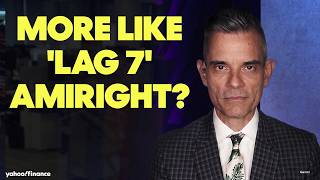

Microsoft is down 35% – Is the AI bubble bursting?
58sChallenging the market's favorite AI stock creates debate and attracts both bulls and bears.
▶ Play Clip"Title promises a big question and delivers a substantive, if sprawling, Wall Street discussion on AI's profitability."
In this market discussion, analysts examine whether the AI-driven rally can persist as the focus shifts from hardware sales to actual profitability. They analyze Microsoft's struggles, the wealth effect from record stock market gains, and the risks of a K-shaped economy. The conversation also covers memory price hikes, OpenAI and Anthropic IPO filings, and the critical role of interest rates.
The market may continue gains, but the conversation shifts from Micron's earnings bubble to whether AI investments, like Microsoft's Copilot and Azure AI, are generating real profits.
Microsoft is down over 20% for the year and about 35% from its high, making it the poster child for whether hyperscaler AI investments will pay off by 2027.
Rising memory prices dominate the quarter; laptop and smartphone makers are buying early to avoid price hikes and demand destruction.
Confidential filings for OpenAI and Anthropic are noted; OpenAI may delay its public debut until next year, which is worth watching.
The key issue is whether companies are not only buying AI software but actually using it to boost productivity, with Microsoft and AWS growth lacking clear AI impact.
AI capital spending supports the economy via wealth effect; US households hold about $75 trillion in equity wealth vs $12 trillion in 2000, boosting consumption despite flat real income growth.
The wealthiest 1% hold 50% of stock, leaving many consumers strained; delinquency rates are near Great Recession peaks, and an AI reversal could create an L-shaped economy.
The big issue is potential rate hikes; the Fed won't cut aggressively, and the slow disinflationary AI productivity boom means rates will be key for EPS growth.
The video highlights that AI's profitability test is still unresolved: while the market celebrates gains, the real proof lies in adoption, productivity, and broad-based consumer participation, with interest rates posing a major risk.
How much has Microsoft fallen from its high watermark?
About 35%.
00:29
What percentage of US stocks do the wealthiest 1% hold?
50%.
04:51
What was household equity wealth at the 2000 dot-com peak?
$12 trillion.
03:40
What is the current household equity wealth?
Around $75 trillion.
03:40
Which two companies have confidential IPO filings?
OpenAI and Anthropic.
02:06
Why are laptop and smartphone makers buying early?
To get ahead of memory price increases and avoid raising prices or sales destruction.
01:53
What risk does the speaker see for the K-shaped economy if the AI trade reverses?
It could become an L-shaped economy where both sides of the K are weak.
05:33
What is the 'big issue' at the end of the year according to the guest?
Rate hikes.
06:58
Microsoft as AI bellwether
Microsoft's decline signals market doubts about AI monetization, setting the stage for the whole discussion.
00:29Wealth effect at record levels
The $75 trillion in household equity wealth is a stark example of how AI capex is stimulative via asset prices.
03:27K-shaped economy as a systemic risk
The inequality in stock ownership exposes a disconnect between AI-driven gains and consumer strain.
04:23Interest rates as the real test
The speaker argues rate hikes, not AI, will determine EPS growth, offering a contrarian lens.
06:58[00:01] we are exiting the second quarter with some big gains at S&P 500 and NASDAQ. Can these gains continue? >> I think they can, but I think that the narrative is going to change a little bit. This is less about the earnings
[00:14] bubble in Micron. God bless those traders. I hope it lasts for another three, four, five quarters. But I think investors are starting to talk about and why we have the mag seven becoming the lag seven is what are people getting for
[00:29] buying all those pickaxes and shovels. Microsoft is down, you know, over 20% for the year, about 35% from its high watermark because it is the most important company in the world. Because if Microsoft can't turn co-pilot and
[00:43] Azure AI into accelerating profits, we have a lot bigger problems going into 2027. They're the poster child of if we're going to get return on, you know, hyper scalers. So, I love that the market is broadening out, but eventually
[00:59] hitting hospitals, manufacturing, banks, and small businesses. I think it can, but the proof is in the pudding. We haven't seen that yet. here. What stood out to you in this quarter? I look, there were a lot of
[01:13] developments, companies coming out with an amazing array of whiz-bang new takeaways is memory prices. I mean, these things just keep going through the >> Yeah, obviously that's kind of the the big to-do right now.
[01:28] build-out. I mean, you can't have one without the other. You know, we're seeing consumers now taking some hits on doing a piece now on what this means for IT spending going into the the
[01:40] couple of quarters ahead. You know, whether or not we saw companies purchase before this was all supposed to land. We've seen companies like laptop makers, smartphone makers, they're buying early, bringing shipments
[01:53] over to get ahead of this so that they wouldn't have to raise prices or at least take that that price bump and then that potential sales destruction. So, thing. The other obviously from the quarter is, you know, I mean, it doesn't
[02:06] impact what's happening necessarily, but the confidential filings for OpenAI and Anthropic, you know, now according to the times, OpenAI may delay its public debut till next year, but we're still waiting on Anthropic. They could
[02:21] that's something that really is is worth watching. And then obviously, you know, the the big kind of now overarching story is what happens with Q2. You know, you kind of you guys were kind of alluding to is,
[02:34] you know, okay, so we have all these these big sales going on with with the What does this mean for for the actual software too? Are people getting the productivity they want? Are we seeing these companies that sell the software
[02:46] growth look like? Because look, they've they've had growth there. We've seen Platform grow. AWS. But what what is the direct impact of AI on that? And then how are other companies using it? So, not just it's
[03:02] being purchased, but is it being used and then that's helping companies become more productive or are they purchasing it and saying, >> Peter, another quarter where AI investments have been really going with
[03:15] reckless abandon. And we come out of this quarter with a lot of these big cap capex than they would when they planned coming into the year. What has been the influence of these investments on the US economy?
[03:27] >> Well, it's been been a very stimulative both because the capital spending itself has supported the economy, but more importantly from the wealth effect, US households currently hold around 75 trillion
[03:40] at the peak of the dot-com bubble in 2000, they held 12 trillion in equity wealth. So, we've gone from 12 trillion to 75 trillion. As a share of GDP, that's about 100% higher today than it was back
[03:56] then. So, households, these those who hold that stock, are feeling emboldened to spend more. Uh the savings rate has fallen to very low levels, and that's held up the economy even in the face of very very
[04:10] stagnant real income growth. Year over year, real income growth is actually year, real income growth is actually flat. Consumption is up about 2% largely >> Here, we've seen and I thank you for doing this because you teed me up for it
[04:23] doing so. Uh the K-shaped economy uh continues to be a focus for a lot of investors where, you know, the higher income is is getting wealthier, lower side of the K. It's not looking good. Does that K-shaped economy continue into
[04:37] should you know, what would that mean to the economy and to the markets if it does? >> Yeah, I mean, keep in mind that that the >> Yeah, I mean, keep in mind that that the wealthiest 1% of US households hold 50%
[04:51] of the stock. So, there are large segments of the population that aren't really benefiting that much from AI. In fact, you can argue that they're being memory when they buy a phone, they're paying more uh
[05:04] for electricity uh because of that data usage that uh data centers require. So, that's that's a problem. And if you look at consumer delinquency rates, they're actually not that far off from where they were at the peak
[05:19] in the Great Recession. That's true for credit card loans, it's true for auto loans. So, large parts of the population are struggling. If the AI trade were to that's going to happen imminently, but if it were to happen, then there's a
[05:33] real risk that this K-shaped economy will end up with an like a looking like an L-shaped economy where both sides of the K are looking very very weak. maybe I shouldn't be amazed. We've been doing this for a while. Uh how the how
[05:47] second quarter, at least if you look at the Nasdaq S&P 400, and it's ignoring income shoppers that throughout the second quarter dealt with higher gas, higher food prices, you name it, and it's just remained so fixated on the the
[06:02] high-income consumer. How long could this last before the market pays population? >> Well, I think it's you know, you come down to is the market structure there. How what size of market cap is Dollar
[06:16] General and Walmart and McDonald's of the the general economy. I would say that when you start looking at it, it might appear structurally that the lower spenders have less exposure to publicly traded company earnings, say in the S&P
[06:32] 500, but eventually this is going to start pressing on us. I think the more important thing versus the lower end consumer, which I think is I think the you're going to need those people to adopt AI. You know, you're going to need
[06:46] those people to keep spending on subscriptions, the things like Netflix and whatever the 20 bucks that you know, that what new AI service they they need to get everybody to spending on to make this stuff profitable, but I think the
[06:58] big issue is going to be the rate hikes at the end of this year. And even if we don't get that, eventually people are going to realize that the Fed is not going to be cutting aggressively. I think we all know that,
[07:12] when you look at companies that were thinking about getting interest rate relief that's going to accelerate EPS going into the end of the think that that's going to be a real issue. Also, we all know that the AI
[07:28] productivity boom is going to be disinflationary, but again, we're slow. Microsoft, as I mentioned earlier, they haven't been getting that uptick in those revenues just quite yet. So, I think interest rates are going to
[07:41] be where it's at and that slowness to see the dishes disinflationary effects. just this week, I got to buy a new laptop for my daughter. I'm wealthy. I could pay 200 bucks, 300 bucks more, but you look at the average consumer trying
[07:57] to buy a new computer for the kid to go to college and they get a 20% hike because, you know, Micron is in an earnings bubble. I think that's really of year. >> Hey, why don't you buy me one while
[08:09] couple bucks. >> I got an expense account.




⚡ Saved you 0h 08m reading this? Transcribe any YouTube video for free — no signup needed.