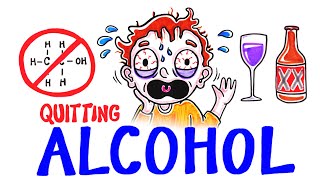

3 Million Die from Alcohol Every Year 🍺
45sOpens with a shocking statistic and reveals a surprising percentage of Americans affected, immediately grabbing attention.
▶ Play Clip"The title promises an explanation of what happens when you quit alcohol, and the video delivers exactly that with scientific detail and timeline. It's informative and matches the content without exaggeration."
This video explains the physical and mental changes that occur when someone quits alcohol, from the first hours to months after. It covers the spectrum of alcohol use disorders, withdrawal risks, and the gradual recovery of the brain, gut, sleep, skin, and cognitive function, backed by scientific studies.
Alcohol kills 3 million people annually and is the leading preventable cause of death. 29% of Americans have had AUD.
The term 'alcoholic' is replaced by 'alcohol use disorder' (AUD), which ranges from mild to severe based on behaviors like inability to cut back or drinking and driving.
After 12-24 hours, quitting can cause delirium tremens with seizures and hallucinations lasting up to 7 days, potentially fatal without medical help.
Dopamine transporters begin returning to baseline after 4 days, marking the start of positive brain changes.
Alcohol disrupts gut microbiome, affecting tryptophan metabolism and causing depression for up to 3 weeks; gut levels out in 4-8 weeks.
Sleep quality improves after 4 weeks, but gray matter recovery may take up to 3 months for optimal sleep.
Skin improvements appear around 5 weeks, including healing of psoriasis and broken blood vessels.
After 6 weeks, cognitive functions like thinking, problem-solving, memory, and attention improve; long-term risks of cancer, stroke, and early death decrease.
Alcohol's Death Toll
Establishes the severity of alcohol as a leading preventable cause of death.
AUD Spectrum
Introduces the modern medical framework for alcohol use disorders.
00:26Delirium Tremens Risk
Highlights the life-threatening withdrawal symptoms that require medical attention.
01:24Gut-Brain Connection
Explains the link between alcohol, gut microbiome, and depression.
05:27Sleep Recovery Timeline
Provides a clear timeline for sleep improvement after quitting.
06:26Cognitive and Health Benefits
Summarizes the long-term benefits of quitting, including reduced cancer and stroke risk.
07:49[00:00] Drinking alcohol kills 3 million people every year, meaning alcohol is the number one cause of preventable death on this diner. Roughly 29% of Americans have had alcohol use disorders at some point in their lives.
[00:14] And strange things happen when you try to stop drinking. So today we are going to explain exactly what happens to your brain and body when you try to quit alcohol. After 6 hours of quitting, you will start to feel unusual things.
[00:26] but this will always correlate with how much alcohol you've been drinking prior to trying to quit. Scientifically and academically, we no longer use the term alcoholic. Let's take it out of the vocab. Instead, what we now say is that people fall on the spectrum of alcohol use disorders,
[00:41] also known as AUDs. For example, you could have a mild alcohol use disorder or a severe one. A series of questions on life experience help academics and medical professionals decide where you fall. For example, trying to cut back and being unable to may infer a mild alcohol use disorder.
[00:58] Continuing to drink, even though it continually causes negative emotions, can infer a moderate alcohol use disorder, whereas consistently drinking and driving constitutes a severe one. There's a lot more detail to it, and we'll put a link in the description below so you can actually take the survey.
[01:12] It could be eye-opening. I think I might have a mild one. It can help you start to understand where you fall, but most of the research that we are going to be talking about today has to do with people who have moderate to severe alcohol use disorders.
[01:24] After 12 to 24 hours is when serious issues can happen. Extreme excitation in the brain from quitting alcohol can lead to delirium tremens, which results in seizures, hallucinations that can last up to 7 days or longer and potentially result in death if not recognized.
[01:41] The rate of mortality from delirium tremens is between 1 to 5%. This is why you or anyone with severe AUD needs to talk to a medical professional before quitting because there are different drugs, medications, or ways that you might have to wean yourself off the alcohol in order to not die.
[01:58] The reason this can happen is because alcohol changes the way your brain and nervous system work. Alcohol is absorbed in the stomach and small intestines where it enters the bloodstream and makes its way to your brain. Here, it suppresses expiratory neurons affected by the neurotransmitter glutamate
[02:13] and enhances inhibitory neurons affected by the neurotransmitter GABA. If I ever become a drag queen, I want my name to be Glutamate GABA. Neurologically you get in theory less excitation and more inhibition which is why you have likely heard that alcohol is a depressant But the reason you may feel euphoric
[02:31] is because the increased GABA inhibition means information in the brain becomes slower and only the largest signals make it through. This clarifies your thoughts. It can make you feel amazed at your own simple ideas,
[02:44] which can lead to serotonin release. But when you stop drinking, the inhibitions in the alcohol stop, and this can lead to the expeditory overload. This is why you might get shakes, seizures, hallucinations,
[02:56] and the tragic delirium dremens that can occur in some people with alcohol use disorders. After 24 to 48 hours of no alcohol, most people start to feel agitated. That surge of serotonin you get from the clear thoughts
[03:09] and the uninhibited experiences of alcohol are no longer happening in your brain. You start to feel worse because there's actually lower baseline levels of serotonin in your brain when you quit. And some people at this point start to drink again
[03:22] because they want to feel better, but it's important to remember that drinking will never make you feel better in the long run. That's sort of the classic tale with this substance that we all seem to be consuming.
[03:34] Two to three days after quitting and your brain has increased corticotropin-releasing hormones, which can cause an increase in cortisol release, which leads to a lack of appetite, increased anxiety, and focused but stressful energy.
[03:47] All this bad stuff is happening, again, because when you are drinking, you are actually physiologically changing the shape of your brain, and therefore when you stop, it has to cope with a lot of those changes.
[03:59] And to be honest, I don't need any more focused and stressful energy in my life. Animal studies, as well as post-mortem brain scans of people with AUD show that exposure to alcohol alters the expression of genes involved in diverse cellular functions.
[04:13] There are literal changes in mRNA coding in the prefrontal cortex, the NAC, the ventral tegmental area of the brain, and another study found that 163 genes in the superior frontal
[04:26] cortex of your brain were altered in people with AEDs. So yes, drinking alcohol literally changes the structure of your brain. Three days after quitting, a menstruatal dopamine-transported binding portion of the brain that was decreased
[04:39] while drinking will stay low and in some cases go even lower than before. This will make it harder for you to feel good in any way while sober two to three days after quitting Dopamine is a very biochemically complicated molecule and a lot of pop science will just let you know yes I feel like a hormone There a lot more to it than that
[04:58] but in this specific context, it may be worth thinking of it like this. But thankfully, on day four is when things start to get better. Day four of quitting and the lower dopamine transporters start to change back to baseline, and the biggest change happens after four days of being sober.
[05:13] This is when you can picture that your brain is starting to alter in a way that is now positively benefiting your health. Three weeks after quitting and your gut is now starting to heal because AOD leads to leaky gut issues.
[05:27] Essentially, it meshes with the bacteria in your GI tract, which can lead to depressive symptoms continuing in the three weeks after quitting. There's growing research between the link between your gut microbiome and the specific enzyme tryptophan dehydrogenase.
[05:41] tryptophan as an amino acid. It's not just a random thing to eat in Turkey. It's synthesized by tyruanine, and this biological process is messed up when you drink because of the way that alcohol is affecting the gut microbiome, and it's this specific reason why you might be
[05:57] feeling depressed after quitting alcohol. It's essentially that you just messed with your microbiome, and now you're feeling the effects as it heals. So in the first three weeks, this gut issue is still happening. You're feeling more depressed, but it's around four to eight weeks
[06:10] after quitting that your gut starts to level out according to two recent studies. Again, this is all about knowledge being power, so you can have sympathy for your body's maybe depressed response to quitting alcohol. Four weeks after quitting and you will be getting way better sleep. 27 studies
[06:26] found you fall asleep faster with alcohol. That sounds good, but it screws with your ability to have high sleep quality once asleep. Drinking before bed increases alpha wave patterns in the brain. So when trying to sleep after drinking, your brain's kind of acting similarly to when you
[06:42] are awake, but only resting on the couch. Sleep disturbances are high in people with AUD, with rapid eye movement and increased slow-wave sleep being altered by the alcohol, and it can take up
[06:54] to four weeks for the issues to start to slow down. Sleep-related regions of your brain vastly overlap with parts of the brain where people with AUD have decreased gray matter. It can take up to
[07:06] three months for gray matter to change in the brain so again after you quit drinking it may take three months to have the best quality sleep you could get after five weeks you will see improvements in your skin looking great but because drinking causes dehydration as alcohol binds to the protein in your body
[07:23] that reabsorbs water back into the body, meaning you pee out excess water while you're drinking. This is the water that your body would have otherwise kept inside you to stay hydrated. Two studies I found, I will be honest, they weren't the best studies, said that this can also
[07:37] lead to decreased collagen levels in your skin. There's much more clear studies about how severe AUD can lead to psoriasis, broken blood vessels in your skin, and these will be starting to heal
[07:49] around five weeks. After six weeks of quitting, three studies found that people who quit alcohol had higher thinking skills, problem-solving skills, memory, and attention than those who did not quit
[08:01] drinking. Also, there's this like big meta-analysis that you could read about how stopping drinking will decrease your ability to get cancer, ability to get a stroke, ability to literally die earlier
[08:13] So I have been making these videos with the most up-to-date scientific research about the neurology, neurophysiology, and biological pathways involved with quitting different things like marijuana or porn. But the alcohol research that I've been doing, I've been doing it honestly the whole time,
[08:28] has been the most intense and scary research. And it's interesting because it's sort of the most common and socially accepted drug. It's kind of pitched to us as you get home from a long day at work
[08:40] and you have a little glass of wine and relax. but it's a slippery slope to a very dangerous future for yourself. People with severe AUD need medical professionals to get off it. Sometimes you need benzos to get off of it, you need antipsychotic drugs to do it safely,
[08:55] which is just like so scary. You're relying on those drugs to get off of alcohol? I didn't know about a lot of these things prior to this research. I'm not going to stop drinking, but what it has done for me is allowed me, when I'm sitting down to have a brew with the boys, or more realistically,
[09:09] realistically like having a martini and like dancing in a gay bar. I'm just a little bit more aware of the impact that that drug is having on me. It's a serious drug whereas before I think I thought of it more as like a kind of weird tasting liquid. It's also important to know that
[09:24] you're at a higher risk of having AUD if someone in your family has had it, if you had a trauma growing up, and also if you started drinking before the age of 15. So go forth with this knowledge and as your gay uncle I am telling you okay hun, drink responsibly.
[09:39] Thank you for watching and subscribe for more science videos. A-sa-peace.



⚡ Saved you 0h 09m reading this? Transcribe any YouTube video for free — no signup needed.