
AI Summary
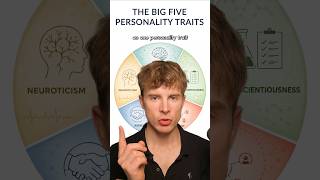
This video explores the link between personality traits and longevity, presenting data from a meta-analysis of seven major cohorts. It argues that conscientiousness is the strongest predictor of a longer life, while other traits like extraversion and neuroticism have more nuanced or negligible effects. The video also discusses the genetic and modifiable nature of these traits and promotes a health community for those seeking to optimize their longevity.
Chapters
Conscientiousness is the personality trait most strongly associated with a longer life. In a meta-analysis of seven large cohorts, people in the top 20% for conscientiousness had about a 34% lower risk of death compared to the bottom 20%. No other Big Five trait showed a consistent link with mortality.
Conscientious people tend to take their medications, get blood tests, sleep on time, drink and smoke less, and follow a plan rather than acting randomly. They engage in 'boring work' consistently over decades, which contributes to better health outcomes.
Neuroticism, particularly health-related anxiety, is associated with an increased risk of mortality. However, health anxiety can lead to more frequent doctor visits and early diagnosis, which may be beneficial. The combination of conscientiousness and neuroticism does not appear to confer any health benefit.
Social isolation is linked to higher mortality risk, but extraversion itself does not reliably predict mortality. The key factor is an active lifestyle—being socially or physically active—regardless of whether one is an introvert or extravert.
Research suggests that a longevity-promoting personality includes high conscientiousness, optimism, activity, emotional stability, social connections, low impulsivity, and low chronic negativity. These traits are partly genetic (40-60%) but are not predetermined; personality can change, and people often become more conscientious with age.
The video promotes a community for the top 1% in health, offering structured protocols for training, sleep, nutrition, and biomarkers, as well as a health assessment that scores individuals as a percentage of normal. It emphasizes structure and social support for becoming more conscientious.
Conscientiousness is the most reliable personality predictor of longevity, likely because it drives healthy behaviors. While genetics play a role, personality is modifiable, and structured environments can help cultivate conscientious habits.
Mentioned in this Video
Study Flashcards (5)
Which Big Five personality trait is most strongly associated with lower mortality risk?
easy
Click to reveal answer
Which Big Five personality trait is most strongly associated with lower mortality risk?
Conscientiousness
00:02
What was the approximate reduction in mortality risk for the top 20% of conscientiousness scorers?
medium
Click to reveal answer
What was the approximate reduction in mortality risk for the top 20% of conscientiousness scorers?
About 34% lower risk of death compared to the bottom 20%.
00:15
Why do conscientious people tend to live longer?
medium
Click to reveal answer
Why do conscientious people tend to live longer?
They take medications, get blood tests, sleep on time, drink and smoke less, and follow a plan consistently.
00:29
Does extraversion reliably predict lower mortality?
medium
Click to reveal answer
Does extraversion reliably predict lower mortality?
No, extraversion does not reliably predict mortality; an active lifestyle is what matters.
01:08
What is the heritability estimate for personality traits like conscientiousness?
hard
Click to reveal answer
What is the heritability estimate for personality traits like conscientiousness?
About 40-60% genetic, but not predetermined.
01:34
💡 Key Takeaways
Conscientiousness cuts mortality risk by 34%
Provides a concrete, data-backed number that underscores the importance of this trait for longevity.
00:15Conscientiousness drives healthy behaviors
Explains the mechanism linking personality to health outcomes, making the finding actionable.
00:29Personality is modifiable
Challenges the notion of fixed personality, offering hope that people can cultivate longevity-promoting traits.
01:34Full Transcript
[00:02] черту характера, которая продлит вашу жизнь, какую бы вы выбрали? Это экстраверсия? У вас общительным? Это открытость к новым впечатлениям? Это невротизм и невротизм, связанный со здоровьем? Данные говорят сами за себя . Это добросовестность. В
[00:15] метаанализе семи крупных когорт было установлено, что у людей, входящих в верхние 20% по уровню добросовестности, риск смерти был примерно на 34% ниже, чем у тех, кто входит в нижние 20%. Ни одна из других пяти основных черт личности не показала устойчивой связи со смертностью. Почему так происходит
[00:29] ? Ну, это довольно очевидно, потому что добросовестные люди — это те, кто лекарства и сдает анализы крови. Они ложатся спать вовремя, меньше пьют и курят , и следуют плану, а не действуют наугад. В основном,
[00:42] они занимаются скучной работой. Они делают это десятилетиями. С другой стороны, невротизм, то есть тревожность и беспокойство по поводу своего здоровья, связан с повышенным риском смертности. Если речь идёт о тревожности, связанной со здоровьем, и вы
[00:55] чаще обращаться к врачу и проходить раннюю диагностику, прежде чем вам поставят диагноз. Однако, сочетание добросовестности и невротизма, по всей видимости, не приносит никакой пользы для здоровья. Таким образом, речь идёт только о добросовестности, а
[01:08] не обязательно о невротизме. А что насчет экстравертов и интровертов? Нам известно, что социальная изоляция связана с повышенным риском смертности. Но означает ли это, что у экстравертов тогда ниже риск смертности? Нет, не существует надежного
[01:20] интроверсия могли бы предсказывать смертность. Согласно исследованиям, дело не в экстравертности или интровертности. Речь идёт об активном образе жизни. Можно быть интровертом и при этом оставаться социально активным или физически активным. Если попытаться выработать
[01:34] покажут следующее: высокая добросовестность, оптимизм, активность, эмоциональная стабильность, социальные связи, низкая импульсивность и низкий уровень хронического негативизма. А вот и важная часть. Эти черты характера частично обусловлены генетикой, примерно на
[01:48] 40-60%, но они не являются предопределенностью. Вы можете изменить свою личность, и люди, как правило, становятся более добросовестными с возрастом. Если вы уже добросовестны, то наше сообщество, входящее в 1% лучших по показателям здоровья, — это место,
[02:00] где это качество наконец-то получит полную отдачу от своих инвестиций. Вы получаете точные протоколы тренировок, сна, питания и биомаркеров. Вам будет предоставлена структурированная оценка состояния здоровья в процентах от нормы, и я предоставлю вам четкие целевые показатели для достижения уровня здоровья, входящего в 1% лучших. Кроме того
[02:12] людей, которые действительно доводят дело до конца. Таким образом, вы охватываете как аспект аспект социальной активности. Если вы хотите стать более добросовестным, это также лучшее место, где можно находиться. Во-первых, вы проходите оценку состояния здоровья в процентах. Во-вторых,
[02:25] показатели вашей долгосрочной перспективе . И, в-третьих, вы получаете структурированную программу, которая поможет вам приблизиться к уровню здоровья, входящему в 1% лучших. Перейдите по ссылке ниже, top 1% health. Check the link down below to join and start the assessment.