
Why Sunsets Are So Colorful
45sExplains the science behind sunset colors in a simple, visually appealing way that makes viewers curious.
▶ Play Clip"Delivers exactly what the title promises — a clear, science-based breakdown of why sunsets vary in vibrancy."
This video explains the science behind why some sunsets are dramatically more colorful than others. It breaks down the roles of atmospheric gases, clouds, and particles in creating vibrant evening skies.
Earth's atmosphere, made of nitrogen and oxygen, causes short wavelengths (blues) to scatter, leaving longer wavelengths behind.
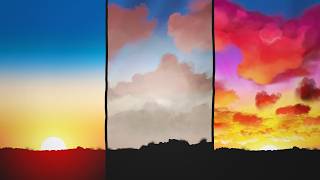
During sunset, light passes through more atmosphere, causing more scattering and leaving deep oranges and reds.
Clouds block sunlight, cast shadows, add contrast, and reflect sunset colors, enhancing the view.
Clouds reflect light even after sunset, and different wavelengths hit different cloud altitudes, producing a range of colors.
High-altitude particles (ash, smoke) bounce colorful light down, making sunsets more vibrant; low-level particles obscure views.
Cleaner air laws have reduced smog, improving sunset visibility in many cities.
Atmospheric gases are key ingredients
Explains the fundamental mechanism of scattering that determines sunset colors.
00:15Clouds enhance sunset quality
Clouds add contrast and reflect colors, making sunsets more dramatic.
00:58Particles affect vibrancy
High-altitude particles boost the effect, while low-level smog obscures it.
01:39Air quality laws improve sunsets
Urban air quality regulations have reduced low-level smog, improving visibility.
02:10[00:00] In most places on Earth, the sun is guaranteed to set every evening, What makes some so much more colorful than others? The main ingredients for a sunset are
[00:15] the gases – nitrogen and oxygen – that make up Earth’s atmosphere. These particles are small, and when sunlight passing through the atmosphere hits them, short wavelengths of light, like blues, tend to scatter away in random directions.
[00:28] This leaves a greater proportion of longer-wavelength light behind. This is why, during the day, the sun looks yellow, and the sky looks blue. light has to pass through a lot more atmosphere before reaching your eyes,
[00:43] so even more of the short-wavelength light gets scattered away, leaving behind a greater and greater proportion of longer-wavelength colors, toward deep oranges and red. This scattering alone can make a pretty nice sunset, assuming you can see the horizon.
[00:58] But to have a great sunset, you also need clouds, which can block sunlight, cast shadows, and add contrast if there aren’t too many of them. Clouds also reflect sunset colors, filling the otherwise blue sky with oranges and reds.
[01:13] clouds tend to be illuminated by sunset light even after the sun sinks behind the horizon. What’s more, since different wavelengths of light reach different parts of clouds – and
[01:26] clouds at different altitudes – they can reflect a range of different colors, Solid particles in the atmosphere – like dust, smoke, smog, and pollen – bounce light
[01:39] around a lot like clouds do, but their overall effect depends on both their size and location. Particles high in the atmosphere – such as ash from a volcano or distant wildfire – will bounce some of a sunset’s colorful light down toward your eyes, making it look even more vibrant.
[01:55] But particles in the lower atmosphere will obscure your view of the sunset, making it look murky. subpar sunsets – although many cities have less low-lying smog today than they did in the past,
[02:10] thanks to laws limiting how many pollutants cars and factories are allowed to spew into the air. So, some places, like beaches, open fields, or mountain ranges, but in the end, all you really need is an evening with the right conditions…
[02:29] then you’re all set.
⚡ Saved you 0h 02m reading this? Transcribe any YouTube video for free — no signup needed.