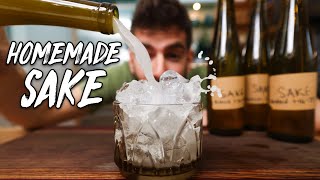

Why Sake is My Favorite Home Brew
42sThe creator's passion and the promise of a full beginner's guide, including a blind taste test, immediately hooks viewers interested in unique fermentation projects.
▶ Play Clip"The title promises an obsession and delivers a thorough guide with a taste test, though it's more informative than obsessive."
The video is a comprehensive beginner's guide to brewing sake (rice wine) at home, covering the entire process from making koji to fermentation and bottling. The creator shares his personal experience, including a blind taste test comparing his homemade sake against three store-bought varieties at different price points.
The creator has been home brewing for a decade and currently favors sake making due to its simple process and outstanding results. A previous short video on sake making generated high interest, prompting this full guide.
Sake in Japanese refers to various alcoholic beverages, but in the West it specifically means rice wine. The video focuses on sake made with four ingredients: rice, koji, yeast, and water.
Alcohol production involves fermenting sugars with yeast. Unlike wine (sugars from grapes) or beer (malted grains), sake uses rice, which requires koji to convert complex starches into fermentable sugars. This process is called parallel fermentation, combining saccharification and alcoholic fermentation.
Koji can be bought online or at Japanese markets, but making it at home yields better sake. Key steps include using the right strain (Aspergillus oryzae for sweeter notes), steaming rice to keep grains separate, and incubating at 85°F for 40-50 hours.
The creator found a simple process from a video by 'brw show' that he repeats. He uses regular white rice (not polished) for home brewing, which is unconventional but works well. The process involves soaking, steaming, mixing with koji and yeast, and fermenting for about 3 weeks.
Getting the right ingredient ratios is tricky. For large batches, the creator follows a blog ratio (specifics in description). He adds hops to prevent bacteria spoilage, similar to citric acid. Fermentation takes about 3 weeks, starting at room temperature and then moving to a cooler area (~60°F).
After fermentation, the sake is strained through cheesecloth to remove solids. The creator prefers cloudy sake but clarifies it for the taste test by refrigerating overnight and separating the clear liquid. He bottles and corks the sake, then ages it in a cellar.
The creator's homemade sake was compared against three store-bought sakes. Results were mixed: one taster ranked it third, another ranked it first. The creator's own blind test ranked his sake first by a mile. He notes the sake has a unique flavor (green apple, bubble gum) but a 'bite' that could be improved with less hops and longer aging.
Sake brewing is an accessible and rewarding hobby that combines science and creativity. The creator encourages experimentation and iteration, emphasizing that fermentation is about being a 'little scientist' and having fun.
What are the four ingredients used to make sake?
Rice, koji, yeast, and water.
01:12
What is parallel fermentation in sake brewing?
The simultaneous process of saccharification (koji converting starches to sugars) and alcoholic fermentation (yeast converting sugars to alcohol).
02:20
Which koji strain is recommended for sweeter, more floral notes?
Aspergillus oryzae.
03:39
Why is rice steamed rather than boiled for koji making?
Steaming keeps rice grains separate, allowing koji spores to fully surround and inoculate each grain.
04:07
What temperature is used to incubate koji?
85°F (about 29°C).
05:12
How long does it take to fully inoculate koji?
40 to 50 hours.
05:39
What is the purpose of adding hops or citric acid to the sake brew?
To prevent bacteria spoilage.
10:13
How long does the sake fermentation take?
About 3 weeks.
10:40
What is the recommended temperature for the second phase of fermentation?
Around 60°F (about 15°C).
11:06
Why is aging sake important?
Aging smooths out the bite of alcohol and mellows the flavor, similar to wine.
13:11
Sake's Unique Fermentation
Explains the parallel fermentation process that distinguishes sake from wine and beer.
01:12Koji Making Essentials
Provides practical tips for making koji at home, including strain selection and incubation.
03:14Ingredient Ratios
Highlights the challenge of getting ratios right and offers a solution for large batches.
09:20Taste Test Results
Shows the subjective nature of sake preferences and the creator's sake's polarizing reception.
13:30Embrace Experimentation
Encourages a scientific, iterative approach to fermentation, emphasizing fun and improvement.
18:08[00:01] home for the past decade or so and I've tried a lot of different types of home brewing projects and currently my favorite one is sake making due to what is a pretty simple process that yields outstanding results now I love making
[00:16] sake but honestly I had no idea what the general interest would be so I just put out a short video a year ago on making it and it turns out that a lot of you want more information and that's what this video is about so today I'm going
[00:29] to be giving you the full beginner's guide to Brewing up this rice wine at home plus at the end of this video I'm going to be putting up my sake in a little battle against three other storv VA sake at different price points to see
[00:43] how it performs in a blind taste test now thanks to this comment right here I now thanks to this comment right here I learned that sake in Japanese actually refers to a bunch of different alcoholic beverages nion is the traditional
[00:56] Japanese term that refers specifically to Rice wine but over in the west we said no actually sake is going to mean rice wine and that just stuck around so when I refer to sake in this video I mean rice wine that specifically is made
[01:12] with these four ingredients rice coji yeast and water now what I think is so unique about sake lies in the science of how it is brewed now alcohol is produced
[01:24] when we take a sugary liquid and we add yeast and that yeast ferments those sugars into alcohol so in the case of wine we have all of these sugars readily available in the grapes that gets fermented into alcohol when it comes to
[01:37] beer it's slightly different we have these starchy grains that first have to be malted or basically germinated in order to access those sugars that can then be converted into alcohol now when it comes to Wine made out of rice we
[01:52] have this grain that's made up of a bunch of complex starches but how do we access the sugars within this grain that's where Co comes into play and if you've watched this channel you know I love Koji I made an entire video
[02:05] dedicated to Koji making and basically Koji is a rice that is inoculated with a mold that's then used to ferment a ton of different things like soy sauce and miso and of course sake and what makes sake Brewing so unique is that two
[02:20] happening at once which is called parallel fermentation number one is the process called sacrification I hope I'm pronouncing right this is the process of the Koji converting those complex starches in the rice into simple
[02:36] fermentable sugars and then when we have those simple sugars available the second fermentation process alcoholic fermentation can occur when we add that yeast and convert those sugars into alcohol and what's great about sake
[02:49] making is you don't have to make your own coji you do currently live in a world where you can buy Koji online or if you have a specialty Japanese market around you they might just sell fresh Koji now of course if you make it
[03:02] yourself I think it's going to lead to a better final sake process and luckily for you coji making is one of my favorite things to do at home so I'm briefly going to go over how I made it for this sake and there are a few things
[03:14] to keep in mind when you're making coji specifically for sake number one being the type of strain you use for your coji spores now Koji spores can be built on Amazon but I like getting them from my friends over at shared cultures they
[03:27] make all types of coji based products out of San Franc Isco and they sell two specific strains of Koji the asperilla soji is going to lean towards more of those Umami notes so great for soy sauce great for miso making you want to look
[03:39] for the aspergillis orai which is going to give you some of those sweeter more floral notes and you can use both long or short grain rice for Koji making I medium grain rice so I'm using something right in between and I'm using 4 lbs of
[03:53] dried rice which is going to give me 5 1/2 lbs of my final Koji product which is exactly what one of these packets of spores is going to be able to make I'll soak my Koji overnight and for the best Koji product you really want to steam
[04:07] your rice that way you get these individual rice grains that the Koji spores can totally surround and inoculate each grain vers a whole clump of rice sticking together where the spores can't get in and I like using a
[04:20] cheesecloth to just keep everything contained and I'll pop in a steamer basket in the bottom of a large pot so the bag doesn't actually boil in that water below and it takes around 45 to 50 minutes total to steam the rice and I do
[04:32] like giving it a flip around Midway so I get even rice cooking and you can see after comes out how that rice is perfectly cooked through yet each grain is completely separated and not mashed together and you want to wait for your
[04:45] rice to cool down to at least 90° F and spores making sure to mix them in evenly tropical based mold so it prefers a hot and humid environment to properly innoc
[04:59] at the rice so to recreate that at home the easiest way that I have found to do this is putting my rice into trays placing a damp towel over the rice then I'll wrap the trays in plastic wrap making sure to poke a few holes in there
[05:12] just for some ventilation so that liquid can release and then I'll pop it in the dehydrator at 85° F if you don't have a dehydrator I've done this right on a heat mat in my kitchen and that works as well to get that temperature up and
[05:26] after 24 hours this is what the rice looks like you can see that white mold starting to spread through the rice grains but not fully covering the grains going to put the trays back in the dehydrator and in total at this
[05:39] temperature it generally takes around 40 to 50 hours to fully to 50 hours to fully inoculate all right 40 hours later we should have Koji it smells incredible it's one of my favorite things about
[05:53] making Koji is the perfume the sweetness the just completely unique Aromas that come off of this stuff when you're making it all right ready this is an exciting reveal [Music]
[06:07] [Music] oo perfect matted Koji so there's some spores being created over here that's the Koji reproduction but overall we have a perfectly even mat check this out W look at that like the whole thing just
[06:23] comes up like that if we break it in half you can see the mold has spread half you can see the mold has spread completely through all of the rice just beautiful ooh smells so good you can't eat this stuff it's amazing already the
[06:36] sweetness that's produced on the rice from the mold that's awesome I'm going to be using a good bit of this for the sake and I'll just save some in the fridge for another project so when I went into making sake for the first time
[06:49] to be honest I was overwhelmed there's not that much information out there and some of the processes I did see were very complex with multiple additions at different times and it wasn't until I found this video from brw show which is
[07:02] fantastic and most importantly the process that he shows in the video is very simple and I tried this out a few times and the product is fantastic so before you comment in saying this isn't like a traditional way to make it
[07:16] find something that's simple enough that I'm going to repeat it over and over again and actually enjoy the process and not just quit and that's what this that's not traditional in the socket world right off the bat when we're
[07:31] talking about the type of rice used to make sake they actually will polish off the outside of the rice kernel which removes a lot of the proteins and fatty acids just leaving that starchy inner core with the goal of giving you like
[07:47] the cleanest tasting sake and they're doing this anywhere from 50 to 70% and actually that percentage of polishing correlates to how high-end the sake is as you can see on this chart but I'm pretty sure that the jaese sake industry
[08:00] is actually the only industry that uses polished rice so it's very unreasonable for anyone to get it at home so I just use regular white rice and the sake comes out great but of course we'll see how it Compares in the blind taste test
[08:13] and I'm using the same rice that I had from the Koji because it's high quality and I had a bunch of it so in total I'm using 10 lb and I'll follow the exact same steps for the Koji soaking the rice overnight straining it off into a
[08:26] cheesecloth I did give it a few washes to get off some of that ex starch and the biggest batch of sake that I ever made so the rice barely fit into the actual pot and I had to use some tin foil to keep in that steam now while
[08:40] important ingredient yeast which is how we're going to develop the alcohol now you can get specific sake yeast drains this one I've used a few times I've linked it below it's a refrigerated yeast and it has to be activated for a
[08:54] few hours but if you can't get this or find this you can certainly make sake with just a simple dried wine yeast which is very easy to find on Amazon now after 50 minutes the rice was steamed so I took that out and I don't have to let
[09:06] it cool this time because I can just add it right to a clean fermenting vessel which will cool things down and if you totally fine you can use a 5 gallon bucket like this to ferment your socket
[09:20] and one thing to keep in mind is you do want to find a container that matches you don't want to be brewing a little bit of sake in a huge container coner where there's so much room for oxygen to build up in that container and I would
[09:33] say one of the trickiest parts about sake making is getting the right ratios of ingredients this is something I'm still learning as I brew batch after batch because there's really not that much information on the internet about
[09:45] home brewing so if you're making a small batch I have found that you can find some great recipes online and you can follow those boom you're good to go but for big batches like this I've had to sort of EXP man a little the best thing
[10:00] I found so far was a Blog that had this ratio right here which I'm going to be following for this batch I'll put all the specifics down in the description help you out on this process so I added in all my filtered water I added in my
[10:13] Koji I added in my yeast and there's one more ingredient that I didn't mention that's just added to prevent bacteria spoilage and a lot of recipes will use citric acid but bruso in his video he used a little bit of hops which will
[10:27] actually do the same thing I did have some hops left over from a recent beer making project so I soaked some of those and poured those in then I'll just pop on the top and what that's going to do is create a nice seal where the CO2
[10:40] built up from the fermentation is going to push out that oxygen creating the perfect environment for proper alcohol fermentation and in total it's going to take around 3 weeks for the sake to ferment I started mine off at room
[10:52] temperature right here in this room so I could easily monitor it and just after could easily monitor it and just after the first day it was super active and
[11:06] transferred my sake down to my fermenting room where the temperatures were a little lower around 60° F where it sat there and finish for the next 2 weeks and I like this little spout so I can taste it along the way and really
[11:20] see how it's fermented so after 3 weeks the sake was tasting nice so I sent it through a cheesecloth to remove all of the solids all of that rice and that the solids all of that rice and that coat so I just had the alcohol left
[11:32] coat so I just had the alcohol left over that smells so good overall it just has a very beautiful floral sake smell but you really you can pick up on the floral of the coji and then you get hit with the alcohol buil in
[11:46] with the alcohol buil in fermentation wow amazing take this by the way it's easier to make a smaller batch than what I did
[11:59] and sake can be served in this state right here I actually like a sake that's milky like this but the next process is going to give us a clear sake which I'm going to give us a clear sake which I'm going to go over
[12:15] straining out the final bits of rice particles but you can really see that half of the original sake was like up to here was just rice this is the final here was just rice this is the final strained alcohol contents now I prefer
[12:30] my sake cloudy I like the taste and the the slight difference in texture but I it would be too obvious since I didn't buy any other cloudy sake so what I'm going to do to combat this is put my sake in the refrigerator overnight and
[12:45] what that's going to do is separate the clear stuff from the Cloudy at the bottom and then I use this clear tube to funnel the sake right into my bottles and then once I filled up a bunch of bottles then I'll mix up the sake to get
[12:57] some cloudy sake which I'll funnel in into the pop top bottles and then I get to do one of my favorite things which is corking these bottles labeling them and then getting them off into the seller to age which is a very important element of
[13:11] sake making just like wine sake will taste better as it ages it starts to smooth out that bite of the alcohol starts to mellow out a bit unfortunately taste test so these bottles just got to age for 2
[13:30] completely different price ranges all of this is chilled because actually one is not a good sake but I had to chill them all hot sake is generally for Shier sake at least in this country that's how sake is consumed no one knows anything except
[13:44] we're going to try them one by one with water in between I want to hear like honest reviews for each sake in the moment there's no way to do this without getting a little bit tipsy yeah basically yeah four shots wonderful
[13:58] everyone start here at one all right go a little bit Che cheers super sweet light knowing what Koji smells like has completely changed my reference of like what this flavor is totally cuz it tastes like tropical
[14:13] fruit but it's Koji does have a fruity quality to it yeah it's really it's nauseating and it's kind of like has like more of a viscous what I think I'm realizing I've had really shitty stuff
[14:27] it's like this is a first this taste this one smells very different much like Greener cleaner than Fruity oh yeah like this one's drier bitterness too it the the other one was much smoother like lighter it tastes
[14:42] like a higher alcohol content than the last one I like this one a lot moving on number is this three number this one like doesn't have much of a smell at all oh that one's really interesting this is the driest one and the lightest one like
[14:54] it's not bcy like it has much more of like a drier mouth feel I'm getting like a a tartness to this one yeah like green apple kind of yeah smells a lot more going to be sweet this one's really good number four it's probably this one's
[15:09] going to probably be the cheapest one though like oh yeah that is really good like less dry than the last one but still like not viscous like the first one definitely more drinkable than two one was much smoother but this is more
[15:21] in that camp than it is the other with the like more acidic or bitter sakeet this one is a lot smoother oh my God so nervous so this is Shen this is Cooper very different so different all right and I'm going to do the reveal so number
[15:37] and I'm going to do the reveal so number one is Brooklyn Kora ah and that's the most expensive one right no second most expensive this was the sweet yeah this drinkable light freshing it's undeniably a delicious a little denied you gave it
[15:53] third place number two Carly do I love cheap socket Carly say you're you're out we don't trust your abilities unsurprising that I love cheap by far the cheapest when I tasted this I thought it
[16:08] tasted like rubbing alcohol personally I get taste test Shane is number good Cooper number three number three I am a little bit sad about this is my sake
[16:21] little bit sad about this is my sake Cooper yeah baby number one Carly you switched it last second well I switched it cuz I realized that hurt my feelings sorry and then that leaves the most expensive one which is funny Shane had
[16:34] the most expensive one say that balances me out had it last well cheapest was my favorite the most expensive was my second all over the place really crazy
[16:46] number one at least you know that we were honest though yeah that's true that's true it's very interesting the fact that Carly picked like that to me tasted so bad and you have a number one which I think it's fasc it shows you how
[17:01] the variety of TDS yeah and and preference total how they put this at the bottom of the list for what it's worth I did my own
[17:14] blind taste test where I just closed my eyes mixed up the cups and my sake for me I had tasted it before of course not the final product it won by a mile then went these two which I thought were very similar and by far the last was the
[17:29] alcohol to me so I would say my sake is a bit polarizing it's either your favorite or your least favorite two things that I think would improve the sake one is less hops I think maybe that was adding to some of the bitterness
[17:42] that Shane and Carly didn't love and then two is just aging it longer I think bite that I think they were talking about when I taste it I just think it has the most unique flavor like it tastes like green apples and bubble gum
[17:55] it's so yummy but I do get what they're talking about with that bite and I think with just aging a lot of that will go away so I'll report back maybe I'll do like a short video on how it ages over time but this is all experimentation
[18:08] that's what fermentation is you got to get in there you got to be a little scientist and experiment and improve every time and have some fun that's all every time and have some fun that's all I got to say
⚡ Saved you 0h 18m reading this? Transcribe any YouTube video for free — no signup needed.