

Why Coaching Businesses Churn Every 6 Months
30sUses a relatable math analogy to expose the flaw in one-time education models, making viewers rethink their business model.
▶ Play Clip"Directly addresses the churn problem with a clear insight on pricing misalignment – no fluff, delivers on the promise."
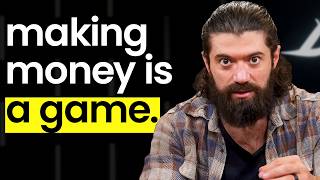
The video discusses the root cause of high churn in coaching businesses: misaligning one-time educational value with recurring payments. It argues that coaching businesses that teach something learnable in one go cannot sustain monthly billing without delivering ongoing consumable value.
The feeling that coaching businesses are capped is actually due to turning out customers every 6 months, not an inherent ceiling.
The problem with the information education space is that they sell one-time stuff but try to build recurring revenue as if it's consumable.
If you teach something like math, once the student learns it, there is zero value in paying for the same content again.
Coaches have valuable education but bill only once by default, but when they try to spread the price monthly, the customer feels the value drops after month one.
Workouts and accountabilities are consumable and can sustain monthly billing because they provide ongoing value.
After the first month, the customer feels guilty paying for what they already received, leading to churn by month three.
The solution is to match pricing to the value the customer receives at the time they receive it.
To reduce churn in coaching businesses, align pricing with the recurring delivery of consumable value rather than billing for one-time knowledge repeatedly.
What is the root cause of churn in coaching businesses according to the video?
Misaligning one-time educational value with recurring payments.
00:15
Why do customers feel guilty paying after the first month?
Because they already received the valuable education and see no ongoing value.
01:09
What type of services can sustain monthly billing?
Consumable services like workouts and accountabilities.
00:54
According to the video, what is the key to reducing churn?
Match pricing to the value the customer receives at the time they receive it.
01:24
How often do customers typically churn in the described model?
By month three.
01:09
One-Time vs Consumable
Clarifies the fundamental mismatch that causes churn.
00:15Consumable Examples
Provides concrete examples of services that work for recurring billing.
00:54Pricing Alignment
Offers a clear, actionable principle for pricing.
01:24[00:02] under. >> It's got itty-bitty tits. I'm just wondering if I'm capping my coaching business. I just get this feeling that coaching businesses are
[00:15] >> It's not that coaching businesses are capped. It's that businesses that turn out customers every 6 months can't grow. >> The issue with the information education space is that they have one-time stuff and then try and build like it's
[00:28] consumable. So, if I say I'm going to teach you math, then why am I going to keep paying you for the same arithmetic after I graduate fifth grade? There's zero value in a course that teaches you something you already know.
[00:41] is think, "Okay, there's some level of education that I have that's incredibly valuable, but I'm only going to bill one time for that because that's how the >> workouts, >> accountabilities,
[00:54] are consumable. The thing is is that this often is priced very differently where people get in trouble. They basically say, "This together is worth $30,000, and so I'm going to bill you monthly for $2,500 a month." Now, the
[01:09] was super valuable for that first thing. But, month two, now they feel guilty for Month three, they're like, "Okay, well, you know, this isn't worth $2,500 even though the first purchase was." And so, it's just better matching the pricing
[01:24] to what the value they're getting when they're getting it.



⚡ Saved you 0h 01m reading this? Transcribe any YouTube video for free — no signup needed.