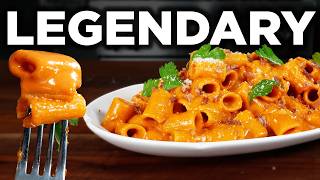

The Secret Roasted Garlic Bomba for Vodka Sauce
57sThe unique spicy garlic 'bomba' is a controversial twist that adds layered flavor, making viewers curious to try it.
▶ Play Clip"Delivers exactly what the title promises—a thorough guide to authentic rigatoni vodka sauce with clear, actionable techniques."
This video reveals the secrets to making a restaurant-quality rigatoni alla vodka sauce at home. The chef explains why many modern versions fail and provides a detailed formula for achieving the silky, flavorful sauce of his childhood.
Many vodka sauces today are pale, one-note, and weak in flavor, lacking the iconic taste from decades past.
An optional but recommended step: speed-roast garlic in oil, then blend with cherry peppers, Calabrian chili, and oil to create a complex, acidic, and spicy paste.
Slice onion from pole to pole for sweetness, and thinly slice garlic. These form the base for the sauce.
1) Tomato concentration (tomato paste + puree), 2) Balancing tomato with cream using color as a guide, 3) Fat from pancetta/guanciale for richness.
Start with roasted garlic oil and butter, render pancetta bits until lightly browned, then remove meat but keep fat.
Cook onions in fat, add garlic, then fry a full tube of double-concentrated tomato paste until it turns from bright red to deep caramelized color.
Off heat, add half a cup of vodka and either reduce or flambé to burn off alcohol, enhancing tomato flavor.
Stir in tomato puree and roasted garlic bomba; cook until thickened slightly.
Add cream slowly while stirring until the sauce reaches a neon orange color—pink means weak, orange means balanced flavor.
Strain the sauce to remove onion pulp for a silky texture, then return to stove.
Cook pasta al dente, finish sauce with pasta water, cold butter, and Parmesan. Toss until glossy and smooth.
Achieving the perfect vodka sauce comes down to technique and visual cues, not magic ingredients. Focus on tomato concentration, cream balance, and fat for a neon orange, silky sauce that recalls the classic flavor.
What is the key visual indicator for the correct cream-to-tomato ratio in vodka sauce?
The sauce should be neon orange, not pink.
07:41
What three elements are crucial for a great vodka sauce according to the video?
Tomato concentration, balancing cream, and fat (pancetta/guanciale).
03:50
Why is the tomato paste fried until dark caramelized?
To develop deep richness and flavor base.
06:32
What ingredient adds both heat and acidity in this recipe?
The roasted garlic bomba made with cherry peppers and Calabrian chili.
02:15
How is the cream added to prevent breaking?
Slowly and stirring constantly to temper it into the sauce.
07:55
What is the purpose of adding cold butter off heat?
To give the sauce a glossy finish and shine.
10:38
What does the color of the sauce indicate?
The level of flavor concentration; neon orange means balanced, pink means weak.
08:08
What type of pasta is used and why?
Rigatoni (or mezzi rigatoni) because it has better lift and appearance on the plate than penne.
04:47
How is the garlic 'speed-roasted'?
By cutting garlic in half, frying in oil on high then low, then cooling in oil to finish cooking.
01:09
What is the purpose of the vodka?
To bring out the flavor of tomatoes, similar to salt.
07:00
Three Pillars of Flavor
Provides a clear framework for balancing tomato, cream, and fat in vodka sauce.
03:50Caramelizing Tomato Paste
Key technique for building deep flavor; time and heat transform the paste.
06:32Cream by Color, Not Measure
Using visual cue (neon orange) rather than precise measurement ensures proper balance.
07:55Cold Butter for Gloss
Off-heat emulsification creates restaurant-quality sheen and mouthfeel.
10:38[00:02] for 40 years now. And contrary to what you might have heard, I've even had it in Italy. And these days, it's rare to find one that has that iconic flavor that you grew up on. Why do they all taste flat? They're pale, one note,
[00:15] [music] weak vodka sauces. I want this video to help you understand the truth behind what makes some vodka sauces a disappointment [music] and turns others into legends. And I'm here to share with you the formula to [music] achieve it.
[00:27] Today we're going to be making the silkiest, most flavorful vodka sauce don't have to travel to get it. This is the classic rietoni alavaka. Now, before we get into it, we need to make a spicy roasted garlic bomba. This is an
[00:42] optional step, but this is going to add complexity. It's going to act as the chili flake that is common in this dish, and it's going to add acidity that's going to create a roundness to the dish. Vodka sauce is all about layered
[00:55] layers. Now, we just kind of want a small pot, and we want enough garlic in there to kind of cover one layer at the bottom of the pan. And I'm going to show you how to speedrun roasted garlic. We're just going to cut the pieces in
[01:09] half and make them smaller. Get all those papers off and then get those into the pot. And we're just going to cover it with about a cup of oil. You just want to get them submerged. So now I just want to get the heat up on high and
[01:22] I want to bring that oil up to like a frying temp. We're going to start these off hot and fast and almost get them to start to kind of develop some color I'm just going to turn the heat down to low. And then once they've cooked for
[01:36] about 10 minutes, they've got some color and they're beginning to soften. Then we're going to just turn the heat off and allow them to just cool down in that oil and finish cooking through. While that cools, we can get our water on the
[01:49] stove and get it up to a boil for our pasta. After a few minutes, it's cooled down a bit. We're just going to strain the garlic from the oil. And it's super soft, just like roasted garlic should be, except we just kind of sped up the
[02:02] process. Cheated a little bit. Now, we're going to take that garlic, add it whatever you got. I'm just going to be using a stick blender here. To this, we're going to be adding two spices. They both add different complexity. some
[02:15] cherry peppers. So, I'm going to go in with probably like a/4 of a cup for than the green, but doesn't really matter. Generally, you put chili flake in this. So, this is sort of replacing [music] that. Then, a tablespoon of the
[02:30] chopped Calabrian chili with some of their oil. We also have to add some of the cherry pepper liquid. Maybe like 2 three tablespoons. And then some of that roasted garlic oil. And then puree. And you're just going to puree until smooth.
[02:43] it's not pureeing quite as smooth as this, then just add a little bit more of the oil until it starts to process smoothly. Now we got our bomba. You could put this on anything. That's going to add complexity for this dish for us.
[02:57] Next up, an onion, small onion or shallots, couple cloves of garlic. For the onion, slice the top and the bottom off. Cut that in half. Then we want to take it and we want to cut it from pole to pole into slices. You can follow the
[03:10] lines that run across the surface of the onion. And then just work your way across the surface of the onion. About a/2 cup of onions. That should be plenty. This is going to bring the sweetness. Then some garlic. Slice it in
[03:22] half. Cut into thin slices. You didn't see my recent video about restoring your out. Look how beautiful mine is. Keeping [music] it nice and clean. Now, if you make a penny alo vodka, you'll notice a lot of pale light pink sauces where the
[03:37] cream to tomato ratio is all out of whack. Haphazardly thrown together as if there's any old way to make good vodka sauce. And much like meatballs, it's not about a secret ingredient, but rather how you bring it all together. And
[03:50] there's three things I want you to focus on when you're making this. The first is tomato concentration. We're using both tomato paste for deep richness and a light refreshing acidic tomato pata. That's going to balance it and add some
[04:05] kind of like fresh complexity to the dish. The second is once you've concentrated the tomato, balancing the tomato with the proper amount of cream. I'll give a range, but we're going to be going by color rather than amounts. The
[04:19] third is fat. We've got the roasted garlic oil, but we need for that classic to make it vegetarian, but you're going to need a pork fat. And puto is the sliced and then cut up into bits. Almost melts into the sauce, but I've got some
[04:35] diced up bits here. Now, if we can bring all of those together in harmony, finish it with a ton of parmyo reo and some cold butter, we're going to get the silkiest, most flavorful vodka sauce you've ever had. And we're not serving
[04:47] it with pennet. We're serving it with rietoni. You know why penet kind of lost favor is it it just doesn't look good on the plate. Retony's got some lift to it. Now focus. Let's lock in and head on over to the stove. Now the first step to
[04:59] creating this full flavored vodka sauce is fat. So in my sauier I'm going to add some of that roasted garlic oil from earlier. A knob of butter. And once that butter melts, we're going to add in the puto. And the fat in that puto is a
[05:13] vital component as far as what I grew up eating. That fat should infuse into the other fats and give off this incredible aroma that elevates the vodka sauce. Once they're lightly browned and the fat is rendered, we're going to take a
[05:27] slotted spoon and remove the puto, keeping all of the fat in the pan. We want to avoid getting them too crispy. We want to have a little bit of meat in the final bite. Now, to the pan, we're going to add these sliced onions. We're
[05:40] want to cook those onions down in that fat on like a medium flame and allow those onions to develop their sugar and their sweetness. We want that aroma to turn sweet rather than a pungent one.
[05:52] And once those onions are almost where we want them, we're going to add in that sliced garlic and allow that about 5 minutes to soften and become fragrant while those onions continue to deepen. Now, the next step is a crucial one, the
[06:05] tomato paste. The amount that you add is going to determine the quantity of the sauce. So for my formula for one pound of pasta, I'm using one whole tub of paste. We're going to season the
[06:18] tomatoes lightly. Vodka sauce needs salt. So we're going to add salt in use double concentrated tomato paste. The secret to vodka sauce is a balance between the concentration of tomato flavor and the richness of cream. So add
[06:32] that whole tube in. And when we need to fry that tomato paste in all of that fat, we want to cook it until the tomato paste transforms in color from that bright red to a deep dark caramelized one. This is the flavor base for what
[06:46] will become our incredible vodka sauce. Now it's time for the allimportant vodka. Turn off the heat and add a half cup of vodka. To me, it's unbelievable anything, but it does. It does to tomatoes what salt does to food in
[07:00] general. Brings out the flavor. Now, you can either turn the heat back on and just reduce the vodka or flambe it. Something I don't do often, but I do of flavor for this recipe. Allow the alcohol to burn off and then get it back
[07:13] onto the stove. Then, we're going to add in about 3/4 of a cup of pata or tomato puree. This is going to add just a bit more depth and roundness to the whole dish. And while I don't want to cook it long, we do want to reduce the moisture
[07:27] out of it until it's thickened slightly. Now to that we can add in our heat and our acidity in the form of our roasted garlic bomba. About 3 tablespoons or more to taste if you want. Stir that in and continue to cook it until the
[07:41] tomatoes have reduced about 5 to 10 minutes. Now of course the most important stage is the cream. Too much and it drowns out the tomato. Too little and it's just a light tomato sauce. Now we aren't going to measure it. I'm not
[07:55] going to give you an amount, but we're going to use color as our guide. We're going to start slowly stirring constantly to almost temper the cream so it doesn't break and [music] emulsifies into the sauce. The color is the guide
[08:08] to the level of flavor concentration in the sauce. And for me, neon orange tells can always add a little bit more cream to lighten it later on, but it's hard to add more tomato to balance it back out. So, if anything, lean on the more orange
[08:24] side and then adjust later if you like it creamier. This is totally optional. I find though I like to get like that really silky texture. I'm going to run it through a strainer. Then all you're really just left with is the remaining
[08:38] onion pulp, which you can obviously keep in, but if you look at this texture, right here, that's our base. From here, we're going to add pasta water, parmyo reo, butter, and all those things are going to go ahead and make this super
[08:53] volume to it. So, if this looks like a little bit altogether, this probably will satisfy about a pound of pasta. But the color shouldn't be pink. Should be the color shouldn't be pink. Should be like a neon orange. Pink is weak. Orange
[09:06] is flavor. Go by look rather than a recipe. And even though I'm no longer a young picky eater, when I was a kid, I hated when this had the onion in it. So, this is homage to my younger self given that I just turned 40. We can finish
[09:21] this up back on the stove. Combine [music] this with our puto. We've got our rigetoni. I use mez rietoni. It's a little bit better, closer to penne. I just measured it onto my platter. Cheese and very cold butter. Now we've got our
[09:34] pot of salted water. I'm going to add the pasta to it and cook it 2 minutes shorter than the package suggests. Now we're going to get back to the sauier to finish our sauce. Spoon a few tablespoons of the vodka sauce into the
[09:46] pot. And then add in a portion of the puto back into the sauce. I'm also going to add another cap full of the vodka, which I find adds a little brightness at the end. Then we're just going to bring it up to a simmer and cook that down
[09:58] while the pasta finishes cooking. We can give the sauce a taste. If the vodka sauce tastes flat at all, that's just a sign it needs salt. Vodka sauce can take it. And after a few minutes, that sauce is looking real nice. It can coat a
[10:11] spoon, but it flows off it easily, [music] and it's the right color, and it tastes full of flavor. By now, the pasta should be ready. Pull out the riatoni add it to the [music] sauce. Continue cooking the pasta in the sauce, adding
[10:25] pasta water as needed until the pasta is nice and al dente. About four more minutes. Give it one final taste for seasoning. And add in a few tablespoons of cold butter off the heat. That butter and that pasta water are what's going to
[10:38] give that sauce that glossy finish and shine that I find is iconic to vodka touch more pasta water just to compensate for the cheese we're about to add. And then that final essential step to the finishing the sauce is a handful
[10:52] of [music] grated Parmesan cheese. Toss that cheese into the pasta until it gently melts and blends with the sauce. That's the texture you're looking for. Sauce clinging to the pasta. It's not clumpy. It's smooth. The pasta and the
[11:06] even going to get cute with it. I'm just going to pour it into a platter. Finish with some puto on top. some fresh leaves of parsley for some color and then finish with more grated palm. Now, that's how you make a great vodka sauce.
[11:20] [music] The kind I remember eating as a kid and the kind that will make you a legend in your family. If the color don't hit you right off the bat, it ain't going to be [music] good. Notice how it shines, glistens in that sauce.
[11:33] Oh boy. Will the real pennet vodka sauce please [music] stand up? It should be taking a round trip around your mouth. complexity, roundness, richness, acidity, creaminess. Now, I know this isn't rocket science, but there is a
[11:46] cannot just make it without tools for greatness. [music] And that sauce is great. Recipes going to be all I got for you today. I'll see you next time. Until then, take care of
[11:58] next time. Until then, take care of yourself and go [music] feed yourself.
⚡ Saved you 0h 12m reading this? Transcribe any YouTube video for free — no signup needed.