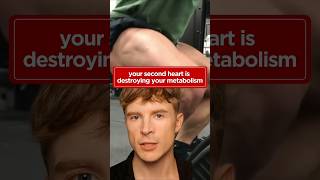

The 'Second Heart' That Controls Your Metabolism
45sReveals a surprising body part that dramatically impacts blood sugar, sparking curiosity and immediate action.
▶ Play Clip"Title promises a metabolic secret and delivers a specific, evidence-backed exercise, though it's padded with a promotional plug."
This video reveals the 'soleus' muscle, often called the 'second heart,' and explains how activating it while sitting can significantly improve metabolic health. It highlights a 2022 University of Houston study showing that soleus push-ups reduce blood sugar spikes by 52% and insulin response by 60%, while also supporting circulation and reducing thrombosis risk.
The soleus muscle, located under the calf, is called the 'second heart' because it pumps blood back to the heart when contracted. Most people are unaware of its existence and its metabolic benefits.
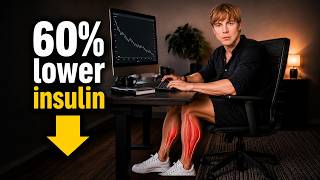
In 2022, University of Houston researchers found that activating the soleus while sitting reduced post-meal blood sugar spikes by 52% and insulin response by 60%.
The soleus contracts to pump blood upward, preventing blood pooling in the legs during prolonged sitting. This reduces the risk of thrombosis and blood clotting.
Soleus activation triggers GLUT4, a protein that helps lower blood sugar. Because the soleus is fatigue-resistant, it can keep GLUT4 active continuously, aiding glucose regulation.
Sit on a chair, lift your heels (a seated calf raise) without squeezing the muscle, and repeat at a speed of 60 to 100 reps per minute. This can be done while sitting anywhere.
Activating the soleus muscle through simple seated exercises offers a powerful, low-effort way to improve blood sugar control and circulation, making it a valuable tool for sedentary individuals.
What is the 'second heart' muscle called?
The soleus muscle.
By what percentage did soleus activation reduce blood sugar spikes after meals in the 2022 University of Houston study?
52%.
00:14
What protein is activated by soleus contraction to lower blood sugar?
GLUT4.
00:52
What is the recommended speed for performing soleus push-ups?
60 to 100 reps per minute.
01:09
52% Reduction in Blood Sugar Spikes
Provides a concrete, impressive statistic that underscores the exercise's effectiveness.
00:14Second Heart Circulation Support
Explains the anatomical reason for the 'second heart' nickname, linking muscle function to cardiovascular health.
00:27GLUT4 Mechanism
Reveals the biological pathway, making the health claim credible and educational.
00:52[00:00] Your second heart is destroying your metabolism and you've probably never even heard about it. Most people don't even know the name of this second heart. It's called the soleus. In 2022, researchers at the University of Houston discovered that activating the soleus muscle while sitting
[00:14] reduced blood sugar spikes after meals by 52% and insulin response by 60%. The interesting thing is that you don't have to stand up. You can do the soleus push-up while you're sitting, when you're stuck in an airplane, on the bus, while driving or when watching TV.
[00:27] The reason the soleus is called the second heart is because it also supports circulation. The soleus sits underneath the calf muscles. Every time it contracts, it pumps the blood back up to your heart again.
[00:39] If you're sitting, the soleus is inactive and your blood can pool in your legs, which can then increase the risk of thrombosis and blood clotting. But when the soleus gets activated while doing the soleus push-up, you prevent that, you support proper circulation.
[00:52] When it comes to blood sugar regulation, that the mechanism comes down to the activation of what's called GLUT4. GLUT4 gets activated when you contract muscles and the soleus muscles are in fatigue which means that you can continuously keep the GLUT4 activated which then lowers your blood sugar. The movement is quite simple. You sit
[01:09] down on the chair and you do a seat calf raise. Instead of squeezing the muscle just lift your heels and repeat it at a speed of around 60 to 100 reps per minute. If you want to discover your own health percentile with various biomarkers, how healthy you are compared to everyone else,
[01:23] then take our health assessment at the top 1% health community, linked down below.
[01:53] you


⚡ Saved you 0h 01m reading this? Transcribe any YouTube video for free — no signup needed.