
YouTube Shorts: 200 Billion Views Daily
30sHuge viewership numbers and promised investment in Shorts will get creators excited and concerned about algorithm changes.
▶ Play Clip"Substantial breakdown of real CEO announcements; delivers on the title with actionable insights."
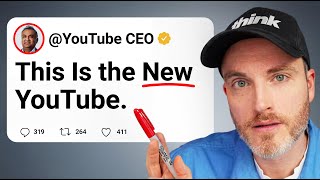
In a recent blog and video, YouTube's CEO outlined the platform's top four priorities for 2026, revealing major changes for creators. This analysis breaks down seven key takeaways from the announcement, covering AI integration, shorts strategy, and the creator economy.
CEO Neal Mohan published a blog and video detailing YouTube's four main priorities for the year: reinventing entertainment, building the best place for kids/teens, powering the creator economy, and supercharging creativity with AI.
YouTube has paid creators over $100 billion in the last four years. The CEO emphasized that YouTube is the world's original and largest creator economy and intends to stay that way, taking the responsibility seriously.
YouTube is winning across short-form (Shorts), long-form, live streams, and podcasts. Over 50% of watch time now happens on television screens, making YouTube the number one streamer in the US for three years running.
Shorts average 200 billion daily views. YouTube is investing more in Shorts, making them the primary discovery mechanism on the platform. New formats like images, text posts, and interactive quizzes may be integrated into the Shorts feed.
In December 2025, over 6 million viewers watched at least 10 minutes of auto-dubbed content. YouTube's AI dubbing allows creators to reach international audiences without extra effort.
Over 1 million channels use YouTube's AI creation tools daily. Tools like AI-powered Shorts generation, AI music, auto-dubbing, and Dream Screen are designed to help creators produce content more easily and avoid burnout.
Creators will be able to make Shorts using their own AI likeness. This capability is expected to launch sometime in 2026, integrated directly into YouTube Shorts, allowing for AI avatars.
The CEO stated that the most important creator in 5-10 years is probably starting their channel today. YouTube remains committed to surfacing new creators, and the next breakout star hasn't shown up yet.
YouTube's priorities: (1) Reinventing entertainment by treating creators as new stars and studios; (2) Building the best place for kids/teens with better parental controls; (3) Powering the creator economy (contributed $55B to US GDP in 2024); (4) Supercharging creativity with AI while safeguarding against misuse (AI transparency, managing slop, transforming viewer experience).
YouTube is building on Content ID to manage use of likeness and supporting legislation like the No Fakes Act. They also aim to combat AI slop and spam to maintain quality.
YouTube is doubling down on AI and Shorts as key growth drivers while reinforcing its position as the dominant video platform. Creators who adapt to these changes—embracing AI tools, leveraging Shorts for discovery, and focusing on quality—will be best positioned for success in 2026.
How much has YouTube paid creators in the last four years?
Over $100 billion.
00:49
What percentage of YouTube watch time happens on TV screens?
Over 50%.
02:47
How many daily views do YouTube Shorts average?
200 billion views a day.
03:30
How many channels use YouTube's AI creation tools daily?
Over 1 million channels.
11:01
What is the 'No Fakes Act' mentioned in the video?
Legislation addressing deepfakes and misuse of likeness.
28:36
$100 Billion Paid to Creators
Quantifies YouTube's massive investment in the creator economy.
00:49TV Dominance
Highlights a shift in viewing behavior that creators should note.
02:47Shorts as Primary Discovery
Indicates a strategic pivot for YouTube's algorithm.
03:30AI Likeness for Shorts
A major new feature that could change content creation.
12:41AI Transparency and Slop Management
YouTube acknowledges the need to protect creators and viewers.
27:21[00:04] The CEO of YouTube just released a brand new blog and video revealing their top four priorities that YouTube has for 2026, as well as a whole bunch of quotes and insights for what to expect, what's new, what's coming, and I've broken this
[00:19] down with seven different takeaways um for you if you want to start or grow a YouTube channel this year, if you want to make money on YouTube. The first one is if you want to build something that lasts, YouTube is still the place to be.
[00:34] So here's what Neil, the CEO of YouTube, said. He said, "We are the world's original and largest creator economy, and we intend to remain that way. YouTube's the king. YouTube is the dominant force." And that was one of the
[00:49] main takeaways. Um, YouTube has paid creators over a hundred billion dollars creators over a hundred billion dollars in the last four years alone. And he said, "Creators depend on us for a living, and we take that responsibility
[01:03] incredibly serious." So, I want to welcome you to today's episode of the Think Media Podcast. My name is Sean Kel and this is the number one podcast for weekly tips for building a profitable channel. Let's get into the second
[01:17] takeaway of seven. YouTube is winning across more formats and screens than any other platform. So he actually said this in a Time magazine interview. He said, "If you have a story to tell, you can do it in a 15-second short, a 15inute long
[01:34] it in a 15-second short, a 15inute long form video to a 15hour live live stream and everything in between. YouTube has all the formats and it is really dominating at all of the formats. If you go to a YouTube channel
[01:49] who's used all of these, like the Think Media podcast, you can see there's a tab Media podcast, you can see there's a tab for videos, shorts, live streams, for videos, shorts, live streams, podcasts, playlists, posts. If you're a
[02:01] music channel, there's a YouTube music aspect of things. And so, YouTube is the only platform where all major video formats actually work. And it works just as well on a TV as it does on your phone. And people can choose YouTube uh
[02:17] are watching YouTube. These are all quotes from the blog posts that the CEO of YouTube put out there for its unparalleled breath of content from music videos to live streams and also
[02:32] YouTube is three years as the number one streamer in the US. So YouTube is the dominant platform bigger than Netflix, bigger than Peacock, bigger than Amazon Prime for consumption in the United States and
[02:47] over 50% of consumption of YouTube happens on television screens. Now I haven't seen this anywhere else. So this is a quote where he's saying now that is a quote where he's saying now that actually the dominant place over 50% of
[03:00] how people are watching YouTube is on TV across the whole platform. Pretty mindblowing. In fact, let me know. Are you watching a lot of content? If you're Do you watch a lot of content from YouTube on your TV, or are you more of a
[03:16] mobile on the-go person? Let's get into my third takeaway. Shorts help new my third takeaway. Shorts help new people find you fast. And YouTube is explicitly investing more in shorts in 2026.
[03:30] He said that shorts continue to be an incredibly fast growing format on YouTube. And in that's an area that we're going to invest in more this year. They revealed that shorts now average 200 billion views a day. And he said
[03:46] that this year will bring even more variety to shorts by integrating different formats into the feed. Now we need to pause here. What does that mean, need to pause here. What does that mean, Neil? And so he's saying the shorts feed
[04:00] is going to integrate different formats. Now I think we can make some educated guesses here. here. And if you have any information, let me know. But could this mean that in the shorts feed, we're not just going to see videos, but we might
[04:13] see images? Will we see textbased posts in the shorts feed? Will there be interactive quizzes happening in the shorts feed? Um, it also would reveal that YouTube is going to be investing more in helping shorts connect to long-
[04:29] form content. Right now, you can do the related video thing and it works okay, but what else are they going to do? And could it be that creators are posting YouTube shorts feed content that are not videos at all? Very interesting as far
[04:46] as what's on the horizon for 2026. Now, he also said that shorts is becoming YouTube's primary discovery layer, not just a short video product.
[04:58] just a short video product. So shorts being the primary way that people are getting discovered on the platform. Are you posting YouTube shorts right now? Do you have a shorts strategy for this year? Are you taking YouTube
[05:11] shorts seriously? But here's a deeper question that is happening in our creator community and that is are YouTube shorts ruining the feed and the homepage? I'm curious your thoughts because a lot of people are reporting
[05:25] that back in the day you could go to YouTube on your desktop and you saw 10 YouTube on your desktop and you saw 10 beautiful long form videos that were right up top and then maybe below that you saw some playlists or some other
[05:39] things and then eventually some shorts. These days sometimes you're seeing shorts first. Maybe you're only seeing three gigantic long- form videos, which this is why some people are like, "Views are down or long form views might be
[05:53] suffering or struggling." Well, the way that YouTube is distributing content is they're putting shorts front and center. They're putting them up at the top. A lot of people are frustrated by that. If they're saying shorts are the primary
[06:05] they're saying shorts are the primary discovery mechanism, you very we all need to be thinking about okay, what is our short strategy and how are we using tapping into that? And then then are we
[06:18] going to do about it? Of course, YouTube does care about the creator community and wants feedback. But it's pretty wild how now you're seeing fewer long form videos being recommended on the homepage, tons of short content on your
[06:31] mobile feed. you might see these tall videos fill the whole feed, you know, 2 by two shorts and then you get into some long form videos. So, I'm curious your YouTube shorts ruining the feed in the
[06:44] homepage? Next, shorts are the main ways people discover new creators on YouTube. So, this is what's coming from the blog that he wrote. He said, "From niche interest to global trends, viewers are finding what they love on shorts and
[06:58] shorts continued to grow incredibly fast. And he said, "We're making it easier to stay connected to your favorite creators on shorts." Now, what could that possibly mean? I don't know. Because you already can subscribe.
[07:12] though YouTube is working in 2026 to make it easier to stay connected to think, you know, it shows that they're investing in shorts. And we're not fully sure what that means because, you know,
[07:27] could it be distribution? How YouTube's recommending things? And the historical was a lack of depth. There was like maybe you even got a subscriber, but how really connected are you to that person? The big takeaway is this. When it comes
[07:44] to YouTube shorts, expect YouTube to continue to evolve in 2026. You got to stay on your toes. You got to keep learning. YouTube success is a moving target. And I think it's important that we don't get romantic because we could
[07:59] get frustrated like I wish it was like it was in the old days. Well, it's not. adapt? You know, I'm kind of frustrated with what's happening on the homepage. Me, too. But what can we do to pivot and adapt? And we we definitely need to stay
[08:13] subscribed because we'll keep you in the know with all the latest information when it comes to YouTube. Now, here's my fourth takeaway of the seven takeaways from this new blog from the YouTube CEO. By the way, we'll cover his four
[08:26] By the way, we'll cover his four priorities at the end, but YouTube now gives creators a real global audience even if they only speak one language. So he said this, "In December alone, we saw more than 6 million viewers that watched
[08:40] at least 10 minutes of autodubbed content." Interesting. So if you have YouTube will do now is you're just posting your video, maybe in English,
[08:52] and YouTube will autodub your content. Pretty powerful AI technology. And now someone could watch your video autodubbed in Spanish, autodubbed in that they've rolled out. And so what he's saying, and by the way, 6 million
[09:08] might sound like a lot. That's not a ton of viewers. YouTube has 2.9 billion monthly active users. 6 million is not a ton, but nevertheless, in December alone, 6 million viewers watched at least 10 minutes of autodubbed content.
[09:24] This is an exciting uh update because it just speaks to the fact that you as a business owner creating content or a content creator really have a chance to reach an internet uh international audience really without doing anything.
[09:36] content and YouTube is going to continue to add these features that allow AI essentially to autodub your content. The fifth takeaway is AI lets more people fifth takeaway is AI lets more people get started on YouTube. So he said, "The
[09:52] goal is to use AI to empower the amazing human creativity that happens on YouTube every single day." And his quote was, "Just as the synthesizer or Photoshop or
[10:04] "Just as the synthesizer or Photoshop or CGI revolutionize sound and visuals, AI will be a boon to the creatives who are ready to lean in." So what does that mean? Well, the synthesizider synthesizer did not replace musicians.
[10:18] It changed how music could be made. Photoshop didn't replace designers. It Photoshop didn't replace designers. It sped up and expanded design. CGI didn't replace storytelling. It unlocked new visuals. And a lot of people are
[10:31] uncomfortable with AI, but at the end of the day, AI is a tool. And quality content still depends on your taste, your style, your branding. It's how you your style, your branding. It's how you use the tool. And make no mistake,
[10:46] YouTube is pro- AAI and they are leaning in to embrace AI even more in 2026. And so he said this in fact that in December over 1 million channels used
[11:01] December over 1 million channels used our AI creation tools daily. Now that's not saying over a million channels use Chat GPT it'd be way bigger of a number than that. But what he is saying is that the
[11:14] tools already that they're giving you as a creator for free on YouTube such as AI powered shorts generation or [clears throat] AI music creation tools [clears throat] AI music creation tools or the autodubbing or dreamcreen and Veo
[11:29] AI clips. those tools that are already on YouTube people are embracing and it was clear that more AI creation tools are coming and one of the biggest ones
[11:43] is that YouTubers will now be able to make shorts with their own AI likeness. The facts are this capability is launching sometime in 2026. We don't know when and we don't really know how it will work, but
[11:59] basically you're going to be able to create an AI avatar of yourself. There's a lot of software that will do this now, different platforms you can use, but I'm guessing this is going to be for free, integrated right into YouTube shorts,
[12:15] and you'll be able to tap into AI avatars. I don't know how you feel about that. I don't know what your thoughts are, but this is a pretty big announcement and we don't know exactly when that's coming, but here's a couple
[12:27] of the things they broke down. Essentially, AI is being framed as a creative amplifier, a tool that lowers friction and not a replacement for your ideas, your taste, or your vision. And so, AI is a massive emphasis. And
[12:41] there's a big myth that like YouTube is not pro- AI. And we'll touch on that a little bit later when we talk in the priorities. They have some very interesting things to say about kind of the dark side of AI, but they're pro AI.
[12:56] If you're using tools to be original and to create good content that adds value, they're going all in on AI in 2026 at YouTube. And this is actually one of the things we're going to be going super deep on on one of our upcoming events.
[13:10] Now, this isn't for everybody, but just heads up if you haven't heard. February 26th and 27th in Las Vegas, we're hosting our next YouTube mastermind. You can apply at think media masterastermind.com. I'll put a link in
[13:24] the show notes. And this is different than anything else we've done. We you'll leave with a strategic content plan with coaching and feedback, smart AI tools, networking and support, and your full system for consistent growth on YouTube.
[13:38] coaches will be in the room with you. You actually get to meet with me, our staff in small groups and we talk all staff in small groups and we talk all about the behind the scenes of how the
[13:50] sausage gets made in the kitchen. Not sure if that analogy worked, but you know, how how how does stuff get done at Think Media and really help you get more views, grow your channel, monetize as a creator-driven uh business or a business
[14:04] And so, if you've been doing YouTube alone, that ends at the YouTube mastermind. Very limited. It's a small group and there's actually only a few spots left for the next one. And so there's a lot of cool things you can get
[14:17] um when you join us in Las Vegas. And so if you want to apply, go to think mediamastermind.com or just click the link in the show notes. And let's get into the next takeaway. Takeaway number six. AI makes
[14:32] it easier to stay consistent without burning out. Here's the quote. We've burning out. Here's the quote. We've rolled out a slew of tools to help make uh to help creators produce content more easily. Now, you might already been
[14:46] can't even keep up with the news. I can't keep up with the AI tools. I don't creating content." But let me just encourage you. AI is separating winners and losers. Why? Because those that are embracing AI are getting their time
[15:01] back. They're being more productive. They're getting more done in less time. They're getting more done in less time. They're able to refine their ideas, you know, create scripts faster, dial in titles, thumbnail generation for AI.
[15:15] It's it's revolutionizing the whole space. And the end goal of all of this is to produce content more easily. Now, of course, creating content takes work, but the big takeaway that I think is legit is AI does make it easier to stay
[15:30] consistent so you don't burn out. Very important. What are your systems? What is your workflow? What are the newest and best tools that could be saving you time when you're doing it the old way and
[15:43] tiring out? So, um, they're going to continue to add new tools. And then I just about waiting for YouTube to be doing things. It's about asking yourself, what are the best AI tools that can actually bring more sanity and
[15:58] peace of mind so I can spend more time with my family or on hobbies and making better content more easy? Now, we'll get into these four priorities in more seventh takeaway. You can still start a YouTube channel and get discovered.
[16:12] Here's the quote. The most important creator on YouTube in 5 to 10 years is probably somebody you've never heard of. they might be starting their channel today. I think that's exactly right. And the cool thing is we know that YouTube
[16:28] is invested in helping people who are starting from scratch or who are brand new get discovered. I know that it doesn't necessarily feel that way and it feels like competition is fierce because it is. 20 million videos are uploaded to
[16:43] YouTube every single day. But you're smart for investing in yourself by listening to content like this. Because if you adapt and pivot and think about how's Discovery working, what's my short strategy, how am I using AI, and simply
[16:57] the fact that longtorm is long form is still alive and well. Future is bright with every upload, figuring out your out your content, the next biggest creator is someone
[17:12] who's probably starting today. And he goes on to say, "From niche interest to global trends, viewers are finding what they love on YouTube." I like that word. It's a discovery word. Viewers are finding what they love. So,
[17:29] how are you tapping into specific niches? How are you tapping into niches? How are you tapping into um uh specific details in terms [clears throat] of what do viewers love? How are you creating content to get
[17:43] discovered? And the bottom line is I know you want subscribers, right? You want to meet people you've never met before and grow a channel from scratch or reach your next subscriber milestone, you need to be found. And so YouTube is
[17:57] investing in that. In fact, if we take these things a little bit deeper, uh recently Neil was interviewed by Time magazine and he was the CEO person of the year, I think, in the business category of 2025. And here's a couple
[18:10] quotes. He said that the creator has infinite possibilities before him or herself. With all of the challenges on YouTube, I like that mindset, the infinite mindset. As you and I are here in this moment on this Think Media
[18:26] podcast, there are infinite possibilities ahead of us. What I love about YouTube is it's a creative canvas. It's a blank slate. What do you want to create? Who do you want to become? What do you want to build? And there are
[18:41] millions of different video ideas you can make next. So, the discipline of what video should I make? And how do I use the resources I have today to create something so that I could earn some money and reinvest that into making even
[18:54] cooler content, expressing more art, more creative ways to grow my business. A lot of opportunities. Now, he also said, "We are serving the creator who decided to upload and hit that upload button earlier this evening for the very
[19:07] button earlier this evening for the very first time." I love that. So, it's still committed. What's this all coming out of? Is that there's there's a whole staff there's a whole division at YouTube that works on discovery and is
[19:20] thinking about how the algorithm works to surface new and beginning creators. He finally said as some of my favorite highlights from the conversation, "Nobody gets to tell you that you don't look the right way." If you have
[19:34] something amazing to share, you can come on YouTube and you can do that. I love it. Nobody gets to say, "No, you can't grow or it's not possible for you or you you're too big or you you're too small or you look this way or that way."
[19:48] YouTube has proven that people from all different backgrounds, ages, ethnicities almost like every excuse has been seeing creators from all kinds of diverse backgrounds and perspectives
[20:01] that are breaking through. And so that was one of my favorite quotes as well. So YouTube is still built to surface new creators, not just reward the ones who have already won. And YouTube still believes the next breakout creator
[20:15] hasn't even shown up yet. Now, I got to tell you these four priorities, but when you think about YouTube in 2026, what is one word that comes to mind? Um, if you drop it in the comments. If you summed it up in one word, are you optimistic?
[20:31] Are you nervous? Are you excited? Are you frustrated? Are you overwhelmed, determined, energized? Let me know. And if you're on podcast. It would mean the world to me. I really appreciate you. going to be
[20:44] bringing you fresh content all year long in 2026. And I know there's not comments on the audio platforms, but please rate and review the podcast. It only takes 30 you do it on Spotify, you can click the fivestar rating. Let's talk about the
[20:59] five the four the four big priorities for 2026 and some very unique insights that came out of these. Now, if we speak to, you know, the very specific things they said are their priorities for this year,
[21:16] these are the exact quotes. I I shared with you kind of the tactical takeaways reading some of the exact quotes, but reading some of the exact quotes, but here are the four big priorities YouTube
[21:28] has for 2026. Number one, reinventing entertainment. creators are the new stars and studios. And they actually mentioned YouTubers are buying studio-sized lots in Hollywood and they
[21:44] are pioneering new formats and they're producing beautifully produced must-see producing beautifully produced must-see TV. The era of dismissing this content as simply UGC is long over and UGC stands for user generated content. So
[21:58] these are what they're saying. They want to help creators tear down the walls between traditional media and new media. And the idea that a show has to be 28
[22:10] minutes and you know some kind of again TV show in a traditional sense. We're as content creators able to redefine everything different media lengths. But I think a big takeaway on this one is also we're going to see in 2026
[22:26] creators like going to another level, making like their next hero video, making their m making bigger swings when it comes to production. And let me challenge creators of all shapes and sizes and budgets, and you're like,
[22:39] "Bro, I don't even have a budget." What would it look like for you though to sit down and not rush out a talking head video, but to really take some time to film and shoot and storytell and make something that is higher quality? I
[22:53] something that is higher quality? I think one of the biggest trends in 2026 think one of the biggest trends in 2026 is quality over quantity. This is not the place to debate that fully. There's a time and place for doing like a 30-day
[23:05] vlog challenge and rushing out a vlog a day. But I think there's something about you asking yourself, what would it look like for me to do a hero video? What just takes more energy, more time, but that's a bigger swing. You might not be
[23:18] that's a bigger swing. You might not be able to, you know, buy or rent a warehouse in Los Angeles in Hollywood, but you certainly could invest in higher quality on your next upload, especially with sweat equity of just your time,
[23:33] your creativity, your editing, your learning new skills. The second of the four big priorities is building the best place for kids and teens. Now, I love place for kids and teens. Now, I love this. Some of the insights said that
[23:46] this. Some of the insights said that a uh Canar study revealed that 93% a uh Canar study revealed that 93% of 18 to 27 year olds in the US agree that YouTube helps them learn new skills. I know that you're listening to
[23:58] the next generation. Maybe you are the next generation about learning, about making the world a better place, about how can you encourage and educate the
[24:10] youth. Um, YouTube is trying to build the best place for kids and teens. And according to an Oxford economic survey according to an Oxford economic survey survey, 79% of US teachers who use
[24:23] YouTube agree it helps students learn. So, YouTube as this place of inspiring and educating the next generation is cool and YouTube is saying that's one of cool and YouTube is saying that's one of their priorities for this year. Um,
[24:37] additionally, they also announced for the parents out there that they're updating and strengthening parental controls. They want parents to have better controls to decide what's right for their family. and you will soon be
[24:51] able to control how much time kids and teens sped spend scrolling shorts, including setting the timer to zero, which is an industry first compared to other platforms. So, if you're a parent and you want to have micro controls uh
[25:08] over what your student is doing or your um child is doing, your teen is doing on the platform. They're committed to beefing up that experience. Now, number beefing up that experience. Now, number three is powering the creator economy.
[25:22] And we covered this a little bit, but they mentioned that they not only are a massive economy in regards to what they're paying creators through the YouTube partner program, 100 billion in the last four years, but also that
[25:36] YouTube itself actually is contributing to the GDP of the United States. and they contributed $55 billion to the GDP in 2024 and supported more than 490,000
[25:50] full-time jobs as creators built businesses and hired employees within their communities. I'm not even really sure how they mention this, but like or how they measure this, but for example, you know, Think Media has 30 employees
[26:02] that that works at our company. And so, we didn't get a survey, so I don't know, did they include us in the survey? Um, would imagine that's directly YouTube actually employs people that work at
[26:15] YouTube. They are creating an economy that creators work at. And even bigger than that, I mean, a business owner, you've got, you know, maybe uh you hire a video editor, you've got a social media manager and via YouTube and your
[26:29] own products and offers. Here's the bottom line. They they just want to keep empowering this whole YouTube economy. And I do think the proper perspective is to see how real the opportunity is and how
[26:41] how real the opportunity is and how bright the future is when it comes to YouTube. Now, they also talked about how they're adding new ways for you to earn into that right now because we actually already covered it on the Think Media
[26:54] podcast. I'll make sure that episode is linked in the show notes, but Nathan and I are breaking down the current subscriber limits or the updated terms for you to qualify for the YouTube partner program. It sounds crazy, but
[27:08] there's like over 20 different mechanisms for earning money from YouTube right now. So, that is a mustwatch episode after this episode. And here's the fourth thing, supercharging and safeguarding
[27:21] creativity. Now, there's like four pieces to this, but what does this even mean? So, their fourth big priority is to supercharge and to safeguard creativity. And essentially what they're talking about is AI. And they said
[27:35] coming straight from the CEO that there are four areas we must get right on YouTube in 2026. Number one, AI creation tools. In this one, they said this is the new creative frontier, and we touched on some of those and new ones
[27:50] that are coming. Secondly, AI transparency and protections. So, built on the foundation of YouTube's a uh content ID system. And the content a uh content ID system. And the content ID system is where if somebody steals
[28:05] sees that and it tells you in your backend analytics. You can actually see, or your video was re-uploaded. Do you want to do something? Do you know that person? So, that's content ID. you know, it can see songs and other things like
[28:21] that. They're going to build on that foundation as it comes to um maybe and things like that because as they go deeper into the second one, there's going to be new tools to manage the use of your likeness.
[28:36] And also, they're supporting a critical leg legislation like the No Fakes Act. So you could look that up if you want, but there apparently is legislation that is moving right now called the No Fakes Act in
[28:51] regards to deep fakes and this whole world of what if somebody uses your likeness, etc. Well, that's one of the things that makes people uncomfortable. What if what if I get deep faked? What if I put myself on the internet? Well,
[29:03] we can't put the genie back in the bottle. That stuff's already going to be happening. What's gonna be the evolution of these social platforms and the internet itself is legislation catching up and in a way AI policing AI and in
[29:19] the same way that a musician if you upload a copywritten song YouTube's like hey we content ID see that you're using this copywritten music there will be tools that will say hey someone's using your likeness and so they're saying we
[29:33] got to get this right we got to get this one right in 2026 of the four areas that they got to get right this year. Now number three is managing AI slop.
[29:45] So this is them saying that they have a responsibility to you the viewer to maintain a high quality viewing experience and so they are going to be building on their established systems which they've
[29:59] said have been very successful. Curious your thoughts on that. But they're established systems like how good are they at getting you know catching spam, catching clickbait, reducing the spread of lowquality repetitive content aka
[30:17] AI slop. And so they're committed to just adding new tools to manage that. just adding new tools to manage that. And um lastly, number four, they're transforming the viewer experience. Now what does that mean? This is this one
[30:31] This is something to dig a little bit deeper into and we'll link to this whole Although this comprehensive breakdown's maybe even deeper than the blog itself, but what they say here is transforming the viewer experience brings up a couple
[30:46] examples. So in December alone, more than 20 million users learned more about the content they watch through the ask tool. So, for example, this is like an AI chatbot built right into YouTube. Have
[31:03] you seen AI summaries of videos? Have you seen the ask tool? Did you know that even exists? If you're a Google Gemini user, across your Google apps, you'll see sometimes this ask tool right up in the upper right hand corner where you
[31:17] the upper right hand corner where you can ask Google Drive what the transcript it'll tell you that? So, if you upload a video to Google Drive, you could say, It's like it'll tell you. So, you can like be talking to YouTube about
[31:31] content, including other people's content, using the ask tool. If you content, using the ask tool. If you haven't tried out the Ask Studio tool inside of your YouTube backend, you can start talking to AI about your channel.
[31:43] Hey, what are uh the opportunities you see on my channel? What can I learn from performing video? It's pretty wild. So, you can kind of have this conversation with AI integrated right into your YouTube channel. But I think there's
[31:56] things might make you a little bit nervous because it's like when it comes to AI summaries, I think this is a big trend. If all you're doing is you're not making a connection where people are engaging with you as your
[32:10] or the brand you're building. You becoming hopefully an experience for people where people are coming to you as someone who brings good information, delivers it in a certain way and then
[32:23] watching your content is an experience as opposed to just pure information because people could summarize videos. There's this thing called, you know, AI summary. And one of the things they said is is you could ask the ask tool, what's
[32:37] the story behind this song's lyrics? So maybe you're watching a music video and then you just start talking to AI about that content and now you're interacting ingredients do I need to make this recipe? So cooking creators, you're
[32:51] ingredients and you're breaking it down. But why someone's watching the video? They're also going to be interacting with AI. conversation for another time, but I mentioned in one of our recent like future of YouTube updates that
[33:05] personal brand is the only differentiator left or that brand is the only differentiator differentiator left because you don't have to necessarily brand. Are people just watching informational content and one-off videos
[33:18] from you or how are they connecting with you? Who are you? What are your values? Are you bringing in some dry humor, a certain style to videos? you're building trust as opposed to just conveying information because if it's just about a
[33:31] list of ingredients, we have to be aware that the consumer could be talking to AI about that. Now, they go deeper in this number four of what does transforming the viewer experience actually mean? And they included such things as um using
[33:49] the the autodub content that we mentioned earlier, that 6 million daily viewers in December alone watched at least 10 minutes of autodubbed content. And so the viewer experience means individuals around the world could in
[34:04] engage with a video in English and watch it in Spanish. So they're adding new it in Spanish. So they're adding new tools. And the big headline was number four transforming the viewer experience. I think social media has always been
[34:20] going to be a moving target. Keep learning. Keep yourself educated. Keep adapting and pivoting. And the future looks bright for those who reinvent themselves, right? Who out out work and out learn and outstrategize and outlast
[34:34] out learn and outstrategize and outlast the competition. And so those are the four areas that YouTube said they must get right in 2026. So I am curious all this information from the CEO of YouTube. When you think
[34:47] about YouTube in 2026, what is one word that comes to mind? If you're on the YouTube version of the podcast, drop that in the comments. If you're on audio, just think about it in your own mind. If you want to join us in Las
[35:01] Vegas, we're doing a two-day YouTube mastermind uh February 26th and 27th. And you can apply at think mediamastermind.com or just click the link in the show notes. And if you want to go deeper on those
[35:15] is the most exhaustive bro break breakdown I've seen. And Nathan and I really go into this piece by piece in a brand new video that we posted an linked in the show notes or or click or tap the screen to watch that video next.
[35:30] building a profitable YouTube channel and I can't wait to connect with you in and I can't wait to connect with you in the future.
[35:46] business owner, then you're already behind. [music] is to grow on YouTube, what is the cost of you not doing this? career. [music] It's been fantastic. >> Because of this mastermind, I walk away
[36:01] with confidence. Being in proximity to like-minded [music] people who are going you to become a higher version of yourself is key to any business you're YouTube. So, thanks so much Sean and the
[36:14] team for putting together this amazing event.
⚡ Saved you 0h 36m reading this? Transcribe any YouTube video for free — no signup needed.