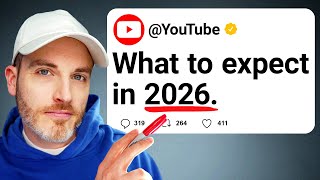

YouTube Is Changing - 3 Shifts You Must Make Now
41sReveals that old YouTube rules are dead and creators must adapt or be left behind, triggering urgency and curiosity.
▶ Play Clip"Delivers on the promise of explaining YouTube's changes, though padded with self-promotion and free class plugs."
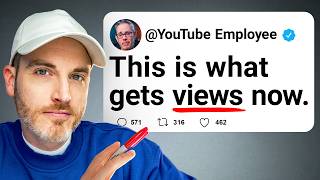
This video unpacks insights from Time magazine's CEO of the Year interview with YouTube CEO Neil Mohan, revealing that while YouTube's opportunity is growing, it's also concentrating. The host breaks down three critical shifts creators must make immediately to succeed in 2026, including mastering video packaging, focusing on income over views, and leveraging personal brand as the only differentiator.
Time magazine named YouTube CEO Neil Mohan as CEO of the year, confirming that YouTube's opportunity is expanding but becoming more concentrated, requiring creators to adapt or fall behind.
Since 2023, YouTube has increased its dominance against competition; it is now the #1 platform watched on TV sets in American living rooms, with 2 billion daily visitors.
Neil Mohan stated that AI will enable creators who lack skills or equipment to start channels, including faceless and AI avatar channels. YouTube is pro-AI, contrary to myths.
Subscribers no longer ensure views. Every video must earn its click-through and watch time, benefiting new creators who can compete without an existing audience.
AI boosts productivity by 40% (Harvard/MIT study), speeds coding by 56% (GitHub Pilot), and could save 300 billion hours globally. Creators who master AI will dominate; dabblers will disappear.
38% of employees receive excessive communications; workers face the equivalent of 174 daily newspapers of information. Clarity and focus are critical to avoid overwhelm.
20 million videos are uploaded daily to YouTube (13,000 per minute). Standing out requires non-negotiable differentiation.
Focus on clients over clicks, quality over crowds, customers over clout, faithful fans over fleeting fame. Measuring success by views alone is dangerous.
Packaging equation: topic + title + thumbnail + hook = first 30 seconds of trust. Case study: Benazadi's channel grew from plateau to millions of views by nailing packaging.
Authenticity plus strategy equals growth. You can film a one-take video in your car with no edits, but you must plan the title and opening hook carefully.
The right views matter more than more views. Case study: Stacy Tuchel earned $30,000 from a live stream with only 736 views ($40.76 per view vs. $0.0074 from ads).
Income is directly correlated to the number of buy buttons on your website. Most creators have a broken bridge between views and sales; fix it to turn content into revenue.
With 20 million daily uploads, content is commoditized. Your unique style, values, and personality are the only things that cannot be copied. Personal brand attracts the right audience and repels the wrong one.
70% of consumers buy from brands that reflect their values; 75% of millennials and 63% of Gen Z would switch to a brand supporting a cause they care about. 84% need shared values to use a brand.
Jamie started with 300 subscribers a year ago, struggled, then applied these shifts. She now earns over $10,000/month with 80,000 subscribers, filming one-take on her phone.
The video emphasizes that despite increased competition and algorithm changes, YouTube remains the most profitable platform for creators who adapt. By mastering packaging, focusing on the right views and business model, and building a unique personal brand, creators can still achieve significant growth and income in 2026.
How many daily visitors does YouTube have?
2 billion daily visitors.
01:48
What is the packaging equation for YouTube videos?
Topic + title + thumbnail + hook = first 30 seconds of trust.
15:12
What percentage of consumers buy from brands that reflect their values?
70% of consumers.
36:35
How much ad revenue did YouTube generate according to the article?
Over $36 billion.
02:14
What is the VLS framework?
Views Leads Sales.
28:44
What was the value per view for Stacy Tuchel's live stream?
$40.76 per view ($30,000 from 736 views).
26:22
How many videos are uploaded to YouTube daily?
20 million videos daily.
11:10
What did the Harvard/MIT study find about AI and consultant productivity?
Top-tier consultants boosted output by 40% after proper prompt training.
06:40
What is the main takeaway about subscribers in 2026?
Subscribers don't guarantee views; every video must earn its own success.
03:52
What percentage of millennials would switch to a brand that supports a cause?
75% of millennials.
36:50
YouTube's Dominance Confirmed
Official confirmation from Time magazine that YouTube is the dominant platform in the attention economy, surpassing even TV.
01:10Packaging as a Core Skill
Breaks down the packaging equation and shows its direct impact on views through a real case study.
14:30Right Views Over More Views
Challenges the obsession with vanity metrics by demonstrating a $40.76 per view example from a low-view video.
22:17Personal Brand as the Ultimate Moat
Explains why personal brand is the only thing that cannot be commoditized in a sea of 20 million daily uploads.
32:01Jamie's Success Story
Inspirational proof that a small channel can achieve $10K/month using the strategies discussed, with no fancy gear.
40:44[00:02] isn't my opinion. Time magazine just named YouTube's CEO, Neil Mohan, their CEO of the year. And in that interview, he confirmed something that I've been
[00:14] seeing on the ground for the last couple of years on YouTube. And that is this. The opportunity on YouTube is growing, but it's also concentrating. And there's a lot of changes. And if creators don't adjust, then the gap gets brutal. And
[00:27] we're going to be unpacking a few insights from that article, as well as breaking down the three big shifts that we need to do immediately on YouTube if you want to grow and get views because the rules that built most channels don't
[00:41] work anymore. And a lot of creators don't want to hear that. Um, but YouTube has been changing and YouTube is rewarding different signals. And so we're talking about the three YouTube shifts that you must make now to win,
[00:55] but also about some of the changes on YouTube in 2026. And I'm not sure if you saw, but Neil Mohan is Times Time magazine's CEO of the year. And in the article, there was a lot of insights that every business owner, creator,
[01:10] entrepreneur needs to know. And they said a couple of things. one since two since 2023 the social platform has increased its dominance of the attention economy against considerable competition and I think that's an important thing to
[01:24] know this year in 2026 YouTube is the dominant platform now you might be like that's already obvious but it's true YouTube is dominant and not just more dominant than Instagram or Facebook or Tik Tok or Snapchat but even more than
[01:37] platforms YouTube is the number one platform watched in Americans living rooms on television sets. This article also confirmed that two billion people
[01:49] visit YouTube every single day. So to put that in perspective, that's two billion with a B daily. That's one out of every four humans on the planet that is showing up today as you listen to this. And so you don't need to go viral
[02:02] to win. You just need to get in front of the right uh sliver of that massive audience. And so if you feel like you've been struggling to reach people on YouTube, um it's because of these shifts. And again, we're going to be
[02:14] tactically going into these in this deep dive episode. Now, advertisers also say that YouTube has generated more than $ 36 billion of advertising revenue. And that is a massive number, right? In fact, YouTube has paid creators hundred
[02:31] billion in the last four years. That's a hundred billion dollars going into the pockets of creators. But this was one of the because Neil in this Time magazine article said that AI will create an
[02:46] entirely new class of creators that today can't do it because they don't have the skills or they don't have the equipment. There's a lot of myths going around about AI like YouTube doesn't like AI and YouTube is shutting down AI
[02:59] channels. And those headlines are true because AI slop channels are getting mass-producing channels, but they're exaggerated because the truth is YouTube
[03:11] is pro- AI. And it's fascinating to hear from the CEO himself that the future create a channel where you don't want to be on camera, faceless channels, even AI
[03:23] avatars. It's a very interesting landscape in 2026. And so the truth is YouTube's healthy. It's growing. It's the most profitable platform to establish your brand on this year. And actually, the broader creator economy is
[03:37] expected to grow by 4x 2032, reaching 848 billion worldwide. So, the next couple years, there's massive opportunity and it's still a great time get into the game. Um, and there's a lot of good news, but there's also some
[03:52] challenges. Let's cover them. Number one, subscribers don't guarantee views one, subscribers don't guarantee views anymore. So, this has been also exaggerated. People say subscribers don't matter. That's not true. You
[04:04] should still get subscribers. You still want to build a targeted audience on YouTube. However, subscribers don't guarantee views anymore. And previously, that subscribe button, you know, click the subscribe button. But I have seen
[04:19] channels, right, that have 50,000 subscribers only getting 50 views. And subscribers only getting 50 views. And I've seen small channels that are able to get 50,000 views if they've got 50 subscribers because every video has to
[04:33] win on its own merits. That's one of the big shifts. Every video has to win on big shifts. Every video has to win on its own merits. You're not entitled to get views even from the audience you build. I'm sorry that's maybe brutal,
[04:46] but even the audience that's following you and that's clicked subscribe, they won't necessarily see your content. Each individual video has to earn its click-through rate, based on the watch time. And so that's a big shift for a
[05:02] lot of established creators, but it's actually good news for brand new creators because you don't need subscribers to get views. You need to master content that can cut through the algorithm, which we're going to talk
[05:14] shifts. But as we go a little bit deeper on the threats, you know, across the platform, you may have saw this video. Um there was a video posted by Lionus views are down and he mentioned that their views were down as much as 75% on
[05:30] some of their videos. Now this is a massive creator that you could also say is doing all the things right but acknowledged that even on their content audience would you know be seeing their
[05:44] subscribe and they start talk they were talking about yes some shifts like maybe ad blockers or the YouTube homepage or how cluttered the YouTube homepage is or you upload there. They had a lot of different theories, but it also came
[05:58] back to this big idea of we need to improve and be more strategic and how do we post content that cuts through the algorithm. We're talking about the five big threats before we get into the good news and the shifts you can use to get
[06:11] immediately. Like this month, you got to apply these changes. But here's threat number two. AI is creating winners and losers. AI is creating winners and losers. Most creators are just dabbling with AI. They're ta they're tossing
[06:25] basic prompts into chat GPT and they're calling it strategy. But AI is evolving calling it strategy. But AI is evolving fast. And if you're not mastering AI, Now, let me share with you three insane stats when it comes to AI. First, 40%
[06:40] boosted productivity. Where does that come from? So at a Harvard and MIT study revealed that top tier consultants were able to boost their output by 40% after
[06:54] able to boost their output by 40% after they got proper prompt training. Are you using AI? How are you using AI? Are you using it smart? Do you really know how to prompt or are you just throwing out generic prompts and lacking the good to
[07:08] tools? Consider that you versus your competitor. Your competitor has gone all all in on AI and you're kind of like, I'm not sure if I understand it. I'm not about the ethical concerns. I'm thinking about all that. Here's the bottom line.
[07:23] advantage. But it goes a little bit deeper. Here's the second stat. 56% faster. GitHub pilots were able to finish coding GitHub pilots were able to finish coding tasks 56% faster.
[07:37] So, the person sitting down to code can code at least 56% faster with AI than the person that's not using AI. Well, Sean, I'm not coding. I'm creating scripting. This applies to editing. This applies to you building out your
[07:53] strategic YouTube videos. So, AI is separating winners and lo loers. And 300 separating winners and lo loers. And 300 billion hours saved. So there was a study done that says AI has the potential to save at least 300 billion
[08:07] hours of global productivity. So that's editing time, scripting time, and and thumbnail design, all this different stuff. So the point is AI is separating winners and losers. What are you doing to level up your AI game in 2026? What
[08:20] to level up your AI game in 2026? What are you doing to improve AI this year as learn how it applies to your YouTube channel? You know, we take this one a little bit deeper. scientific American found that chat GBT's verbal IQ score
[08:33] found that chat GBT's verbal IQ score was 155 which if chat GBT was a human that would place Chad GBT in the top.1% of humans and that was two years ago when they did the study so essentially you have super intelligence at your
[08:49] fingertips that is an assistant to help you grow on YouTube but the problem is most creators really don't know how to use AI most creators really don't know the tools. They're not really sophisticated when it comes to projects
[09:03] sophisticated with all the tools that are out there. Let me just challenge you. This is a massive shift. Like, if you don't start doing this now, you will you don't start doing this now, you will get left behind. And those who master AI
[09:18] will dominate, but dabblers are going to disappear. And so, threat number three, information overload is paralyzing creators. Information overload is paralyzing creators. 38% of employees say they receive an excessive volume of
[09:33] communications at work, messages, alerts, emails. They said it's deafening. Now, you probably get this. 30% of 40% of humans are receiving an excessive volume of communications. When you think about how much content is
[09:47] getting, or how many text messages you're getting, this is important because it's a threat. It's the environment that we are in this year. And then workers face the equivalent of 174 daily newspapers worth of
[10:00] information every day. [snorts] So that's why these shifts that we're going to talk about in a minute are so important because you have to be aware of the bombardment of information that others are getting. And you want to be
[10:14] like, Sean, I get it. I'm stressed, bro. I I get what's going on. Of how much information you're being hit up with every single day. And in 2026, the consume and how you learn and what you listen to and what you don't listen to
[10:30] is more critical than ever before. Because the truth is content creators and business owners face the same struggle. We have information overload and we've got a lot to do. Thumbnails, scripts, SEO, editing, AI tools. It
[10:43] stacks up fast. So the reality check is that all that info isn't bringing clarity. It's bringing confusion and overwhelm. And if you want to win on YouTube this year, you got to be focused and not confused. You want to be clear
[10:56] and not confused. You want to have a step-by-step plan and not just procrastination and paralyzation because there's so much information coming at threats. We'll get to the good news in a second. Number four, competition and no
[11:10] noise are at an all-time high. So, YouTube announced, drum roll please, that there is an average of 20 million videos uploaded daily to YouTube. 20 million videos are uploaded daily to YouTube. That's 13,000 videos every
[11:26] single minute. That's 130,000 videos since I started this live stream and video podcast. So, to put that in perspective, by the time you've watched this, thousands of videos have been uploaded. And so standing out isn't just
[11:40] harder, it's really non-negotiable. You've got to find a way to stand out. And being different isn't optional, it's survival. Threat number five, the wrong scoreboard will kill your business. The wrong scoreboard will kill your
[11:53] business. Now, just to get us all on the same page, I know that when it comes to the Think Media podcast, we have a lot of business owners and entrepreneurs creators that want to monetize, go full-time, turn this into um a side
[12:07] hustle, a main hustle. But all of us, under the sound of my voice, have to think like business owners. So, what does winning look like in your business? What's the scoreboard that you measure? Well, for most YouTube creators, it's
[12:20] like, how many views can I get and how much ad revenue can I get? But the wrong scoreboard will kill your business. For example, clients are a lot more valuable than clicks. Quality is a lot more valuable than crowds. Customers are a
[12:35] lot more valuable than clout. And faithful fans are a lot more valuable than fleeting fame. What do I mean? Are you just trying to get as many views as possible? Or have you productized in some way? Do you have a product, a
[12:49] service? Do you have something deeper even? Is is it a deeper audience that's so focused that brands want to work with you? Faithful fans are a lot more valuable than fleeting fame. Cool. You got 100,000 views on a YouTube short.
[13:04] Even if you got 5 million views on a YouTube short, that doesn't signify depth. So depth matters in 2026. And here's the big idea, though. Measuring your success wrong. Having the wrong scoreboard will
[13:19] kill your business. if we're chasing the wrong things. So, listen, I get it. You like, man, YouTube is a blood sport. And the truth is, it kind of is. It's competitive. It's exhausting. It's unpredictable. But there's a way
[13:33] forward. And when Gary Vaynerchuk spoke at our event called the uh YouTube, it's actually said a quote that's been sticking with myself and our company. And he said, "The current landscape of social media requires more rigor." more
[13:50] rigor. Now, I haven't heard anybody else say that at the dinner table when my family's over. So, what does rigor even mean, right? Well, rigor means strict, thorough, and a disciplined approach. 2026, you want to win on YouTube, you
[14:03] need a strict, a thorough, and a disciplined approach. Here's what rigor implies. It implies a high level of attention to detail, careful planning, consistent effort. In other words, achieving success on social media today
[14:16] requires more than just posting content. It demands a strategic and a meticulous approach. So, how do we apply this? We're going to talk about three shifts We're going to talk about three shifts to win on YouTube in 2026. Number one,
[14:30] master video packaging or get ignored. Master video packaging or get ignored. The first big shift is you got to master video packaging or your content will get ignored. Here's the truth. You can stand out in the sea of sameness of 20 million
[14:47] uploads uploaded on any given day because most of those uploads are garbage. They just are. And most of those uploads and most of those individuals are not subscribed to the Think Media podcast. They played
[14:59] themselves. They made the wrong move. You know, this is the place. Most of those individuals are not sitting down with rigor and a meticulous approach. have the opportunity to do that and to learn these skills. Now, what exactly
[15:12] packaging equation. It's topic plus title plus thumbnail plus hook equals the first 30 seconds of trust in your video and equals your video even getting clicked on in the first place. Topic plus title plus thumbnail plus
[15:26] hook is what is going to get your video to stand out. Let me actually illustrate this. So, Benazadi um joined our program, Video Rake getting started. you know, he hadn't really taken off, hadn't gotten
[15:40] companies, come to some of our events, and he's had a lot of success when he and he's had a lot of success when he first started. Um, he was 80 pounds, took control of his life, and he got
[15:52] He helps people with like keto and sleep and health and all that kind of stuff. But after posting for a while, his channel plateaued. A lot of creators are there right now plateaued and had success kind of with the old rules of
[16:05] YouTube or had success doing what they used to do but then views were going down playing by the old playbook or just kind of rerunning the old plays they used to play but views were going down so he had to reinvent himself kind of
[16:18] strategically when it came to YouTube. And so he faced a And so he faced a choice. Do I stay stuck or do I pivot and do I master new skills? you got to master video packaging or get ignored.
[16:32] Well, if you look at his channel now, he's on fire. It's like NBA Jam. You remember he's on fire and then you you could you could break the backboard in the fourth quarter. That's a niche reference. So, ultimately, uh there is
[16:45] Benazad's channel and if you look at some of these videos, if you're on audio, I'll describe them. Five months ago, he got two million views. And so, he made a video called, "What happens if you only drink water for 72 hours?" But
[16:58] it wasn't just the title. It's also some different design he did using AI with the text in the thumbnail. Body reset showing the result of water and then
[17:10] six-pack abs, the desire of the audience, his facial expression. He had a video three months ago that got almost 4 million views. And check this out a little polarizing, a little bit triggering. The title of the video is 36
[17:25] triggering. The title of the video is 36 dangerous foods RFK Jr. Just banned. Crazy thumbnail. And ultimately, he had a massive what's called an outlier, which mean the video outperformed other videos on his channel
[17:38] by 33 times. The big idea is this. He doubled down on one of the most important modern YouTube skills, which is called packaging. But let's go deeper on his story because he posted a video, no editing, no script, but check out
[17:53] this title. Give me 12 minutes and I'll save you 17 years of trying to lose [snorts] Couple things going on for him there. to sit down and talk about? Because the video that he filmed, he just filmed in
[18:08] video that he filmed, he just filmed in his car. One take, rift through it, and he delivered good information based on his experience. He's developed these skills. He's been doing it for a few years, but no fancy editing. No editing
[18:20] at all. No script. Oh, but mastering packaging. Which means even if you're encourage you to be thinking about that I'd beou encourage you to be thinking about the title before you even press
[18:33] record. And let's talk about why this works. Because you could apply this to your next video. He said, "Give me 12 minutes and I'll save you 17 years of trying to lose weight." This is a time versus outcome hook. We're all so busy
[18:45] think any of us thinks that we're going to lose a lot of weight in 12 minutes, but the point is he's actually describing him teaching the information. The video is 12 minutes. So, in 12 minutes, I'm going to save you 17 years
[18:59] of trying to lose weight. You get it. There's so much happening. It like makes and all these powerful things because it's time versus outcome. We want speed, ultra clear promise, what the video is about. curiosity and urgency and also a
[19:14] about. curiosity and urgency and also a no fluff vibe. There's a big place for editing your content still, of course, and polishing your videos and whatever kind of content you're making. But in 2026, I want to challenge you. Shoot a
[19:26] video in your car. Shoot a video on your phone. No edits. But sit down and package it well and plan it well. Because what we're learning is raw Because what we're learning is raw content works if it's packaged right.
[19:41] Authenticity plus strategy equals growth. Raw content, raw authentic content, pouring out your emotions, pouring out what like you, somebody video in the next 24 to 48 hours is going to break out for you. It'll be an
[19:54] outlier. The authentic raw emotion coming out and what you want to teach or what you want to say or how you want to entertain or the story you want to tell. But the strategy is you're not just necessarily riffing fully off the cuff.
[20:08] you're planning out h how's that kind of structure though? I at least want to know what that title is, what that opening is. By the way, we have an event coming up where we're talking about AI tools to really help you do that. So,
[20:20] thoughts into these tools, and then it'll give you clarity on that packaging. But, let's keep going. And this is the shift. Views aren't dead. packaging. Views are not dead on YouTube, but they're hidden behind the
[20:34] YouTube, but they're hidden behind the right packaging on YouTube. Now, we're of the three shifts we're talking about. But before we move on to the second because where a lot of creators get stuck is wondering, okay, I understand
[20:49] rules are different and I know there's some new changes on YouTube, but Sean, actually one of the most important questions you may be asking or you should be asking. What should I focus on next to grow on YouTube? Why? Because
[21:05] 100% of people listening to this are at different stages. Some of us are just starting. We've never filmed a video before. Some of us are on video 500. lot of success and we're plateaued. Some of us have never had a breakout video.
[21:20] businesses. Some of us don't even know what our business idea is or how we want to monetize. So knowing exactly the stage you're at when it comes to your YouTube success is crucial for knowing
[21:35] which next move you should make. Now that's not the topic of today's uh podcast, but I want to invite you. I'm actually hosting a free online class from side hustle to sustainable success, the fivestage system to reach 10K a
[21:49] month on YouTube. And it actually comes with an assessment guide, a YouTube money plan template. It's a live workshop training and you can register at thinkcreatorclass.com. I'm doing live Q&A. I'm there live. It's gonna be a lot
[22:03] of fun. It's free. It's online. It's at thinkcreatorclass.com or you can use the link in the show notes if that sounds interesting to you to register for that free class. The first shift was m master packaging or
[22:17] get ignored. The second shift is income can still be up even if views are down. income can still be up even if views are down. down. So on YouTube in 2026, the right views
[22:32] are a lot more important than more views. Period. The right views are more important than more views. You know, we mentioned it earlier. Not all views are created equal. I heard a big media
[22:44] company recently talk that their metrics were messed up because they were actually combining shorts views and long form views and it was messing with all YouTube shorts are bad, but not all views are created equal. Like you could
[22:57] get a lot of views on YouTube shorts and have almost no impact or depth. And you also could get a lot of views on certain topics, but it doesn't attract an audience that would maybe want to do business with you. So the right views
[23:12] are a lot more powerful than just more views. And having a smart business model is more important than YouTube ads. You know, for example, a lot of real estate professionals listen to the Think Media podcast and are subscribed to our
[23:25] channel. And of course, they realize that one YouTube view could be worth $1,000. If I'm a real estate agent, if I'm a loan officer and I start even making vertical content on YouTube or across
[23:38] platforms, I might be impressed like, whoa, when my videos got 100,000 views or 500,000 views, and it could lead to zero business. But you also could post one simple video on YouTube, get 77 views, and close a house, and it could
[23:53] lead to thousands of dollars or even tens of thousands of dollars. So, it's a mindset shift. Now, I'm not saying you should apply and uh get your real estate license this year. What I am saying is you should be thinking differently and
[24:08] really answering this question. What business are you actually in or what business do you want to be in? What's going to be the greater business model connected to your YouTube channel? And even if it's the content itself, are you
[24:21] in a niche with high enough RPM? Are you in a niche where you're positioned and you're going to be doing brand partnerships and establishing yourself to be in the right business? Because even if views are down, income can be
[24:36] up. You know, Stacy Tuchel was a part of our one-on-one coaching program and helps small businesses. She's launched multiple dance studios herself and now
[24:48] Operations. And her channel's been growing. I mean, it's doing great now. It's over 6,000 subscribers. But when she, you know, first came to us, she wasn't getting a ton of views. But as she started to apply some of our
[25:01] views. In fact, she did a video, it was actually a live stream, uh, called Annual Planning That Actually Works. And she went for about 55 minutes. And that
[25:13] live stream got 736 views. Not a lot by YouTube standards, to the opportunity to actually book a call with her team. And on that call,
[25:26] there was a $30,000 offer closed. Now, again, she's reaching out to business. crazy." Well, she reaches business owners that are doing a quart million dollars a year. $30,000 is a very reasonable investment for the result
[25:40] that she applies to the right audience. So, the key is who are you actually targeting and who are you actually able to help and what business model could be the other key is you don't have to have $30,000 offers, but if you're just
[25:54] getting paid for YouTube views, you're making like 30 cents. You can make a lot more if you had a $30 offer of some kind or even a $10 book on
[26:07] Amazon or something else that you have to sell or promote. And so let's break this down though because why did this work? Well, it was content offer business owners ready for premium strategic solutions. She got $30,000
[26:22] from just 736 views. The value per view for her was $40.76. If she was just getting YouTube ad revenue, the value per view would be around 74. So how much more did having the right
[26:37] So how much more did having the right business model generate for her? around 7,000 to 40,000 times higher ROI, higher return on investment because again she wasn't just going after YouTube ad revenue. And she
[26:52] because of her YouTube content, her awareness. This is one of the most underrated underrated mindsets and convictions that we need to
[27:05] YouTube in 2026. Brand awareness. Who knows you? Brand awareness. Are you findable? Brand awareness. What happens when somebody looks you up and looks at your YouTube content? I was coaching somebody
[27:19] recently in our elite program on we were doing like group coaching. And they were all year. They knew that. They're like, I like my job. My job is stable. I'm up my YouTube channel. And I said, number one, that's great that you have
[27:32] clarity. So then they said, well, what am I trying to do on YouTube? But I opportunities you have is to establish your personal brand. And your personal brand could lead to promotions in your existing job, could lead to earning
[27:47] more, can position you as a thought leader. The repurposing and strategic use of your content on LinkedIn because as a professional and an executive, this course, you need to know your company's policies as well. In some cases, posting
[28:01] able to do? But she was perfectly positioned to be thinking about, man, I want to build my brand. Why? Because I said, you're cool in your job now. thirsty. How awesome that you could think about, man, I'm using YouTube to
[28:16] build my brand, build awareness, build authority, build a niche expertise, build my network, get to meet people. Most individuals underestimate the second order consequences of consistent YouTube content positioned well,
[28:29] packaged well. So she's like, "Yeah, direct sales happen through, you know, my YouTube channel, but my primary focus is brand awareness and YouTube has been engagement we're building is invaluable for long-term growth." And I've learned
[28:44] consistency is key. That's what Stacy said. And so, here's a quick framework that um we use inside of uh one of our programs, and it's called the VLS framework. And this is why views can be
[28:59] up even if income is down. And it's pretty simple. It stands for views leads pretty simple. It stands for views leads sales. And if you want to get off the island of broke and get into the land of prosperity when it comes to YouTube, you
[29:13] want to be thinking about what views are you getting? Are you getting the right views? How are you capturing and turning those into leads? And then how are you generating sales? And what we've learned and we do diagnostics with our clients
[29:26] and we do diagnostics with our clients is that this bridge is broken oftentimes getting views, you're getting the wrong views. They might be getting leads or a lot of leads are falling into the sea. Like if you picture a bridge and if the
[29:40] bridge from one island to another island is incomplete, if someone started missing a section, they're driving into the ocean. 99% of people listening to driving into the ocean and they're drowning. Kind of dark, kind of morbid,
[29:55] but because the bridge is broken. And so from views to leads to sales, there's so many pieces in that process that you can improve, fix, set up for the first time. uh, a mentor once said to me, "Hey, Sean, your income is directly correlated
[30:13] to the amount of buy buttons you have on your website." And it took me a second. I was thinking about the sentence. My brain was was like, "My income is directly correlated to the amount of buy buttons
[30:26] that I have on my website." And then here are my following thoughts. like my [laughter] first thought. I was like, "Shoot, buy buttons. I don't even like, "Shoot, buy buttons. I don't even have a website." Okay. Secondly, I don't
[30:40] have any buy buttons because what would the buy button go to? Like, and so just that one statement caused me to be like, "My bridge is broken." Like, there's no where do the views, where do they go, and what do they do next? And by the
[30:54] way, you know, that even works for affiliate marketing. It even works for you promoting somebody else's stuff as an affiliate. Like, too many times I see diagnostics, right? We like click on the links, it could go to somebody else's
[31:08] link is dead, right? Or it goes to the wrong place, right? or that the place that it lands on is horribly optimized or like there's so many other pieces. This isn't meant to stress you out. is just to reveal the YouTube bridge
[31:22] framework that if your bridge is broken, people are falling into the sea and you it's working and that the then it's eventually well paved and it's safe and then you might open more lanes of traffic so that it's a super highway
[31:36] from obscurity and from the island of broke to the world of YouTube prosperity, the YouTube bridge framework, views, leads, and sales. Here's your action item. You want to figure out the business you're building,
[31:49] not just the content you're making. What business are you building when it comes to your YouTube channel? The third strategic shift is this. Your personal brand is the only differentiator left. Your personal brand is the only
[32:01] differentiator left. Earlier we learned that there are 20 million daily uploads on YouTube. So content is commoditized. Therefore, So content is commoditized. Therefore, you are the only differentiator.
[32:16] So what does that mean? It mean it means you. It means your style, your unique point of view, your packaging. It means your clothes, your the way you talk, the
[32:28] way you look. You you you are the only you. And so your personal brand is the only differentiator left. If I just want some boring information to answer a simple question, I'm going to get that on AI in 2026. But people still want
[32:43] people. People want humans. People want connection. People are looking for mentors and guides and individuals with perspectives and experiences and Your personal brand is the only differentiator left. And actually a
[32:59] fascinating story is that years ago, people actually warned me about a couple me when I was creating YouTube content is they they warned me about bringing up
[33:11] brand. And I'm going to be honest, they were partially right because, you know, this this channel, this podcast is all about helping you grow on YouTube, for any length of time, at some point I eventually like bring up my faith or I
[33:25] bring up the Bible, by the way, because it's just who I am. It's not some like, you know, tactic. It is an overflow of who I am. Here's my question for you. Who are you? What do you believe? What are your values? What are your
[33:40] convictions? What's interesting is I was warned about that and people were partially right because I did lo lose followers or I offended a few people and I definitely polarized some people. However,
[33:53] it resonated with others. And in a world where there's so many different options, you are harming yourself by over sanitizing your content.
[34:06] Like we got to go Baskin Robbins on this strategy. Your content can't just be vanilla like everything else. You need a little flavor, a little bit of color, a difference. Maybe not everybody likes Rocky Road, but Rocky Road is liked by
[34:20] chocolate chip mint or not everybody likes some niche Ben & Jerry's flavor. likes some niche Ben & Jerry's flavor. Coffee with sandal lace, [laughter] Coffee with sandal lace, [laughter] coffee with sandal rubber and mint. Why
[34:34] know. Some people are into it. And so I go a little bit deeper though. I made a video and it was called three YouTube tips from the Bible that will work for every creator. Now, I mean, you could research it even today
[34:47] I mean, you could research it even today on on YouTube. I want to say that in a world of like billions of YouTube videos, literally no one in the world had made this video because I combined the thing I'm doing, the niche that a
[35:00] lot of people are doing, but with something that's just authentically me. and in doing so created a unique angle, a unique point of view on my niche.
[35:12] And so in doing so, did I lose followers? Yeah, a couple unsubscribes. But what did I gain? Deep connection and also gained a reputation. Like, oh, that's the guy. Like, he's a little bit too passionate about his faith. So,
[35:26] okay, cool. Here's my here's my challenge for you. You know what's real? brand is it doesn't just attract, it actually repels the wrong people so that the right people can go deeper. And so I want to challenge you in 2026.
[35:41] Your personal brand is the only differentiator left. And you know, we actually have an event coming up in Vegas in a couple uh months. It's called our uh Think Media Mastermind. In that event, it's one of the things we do
[35:54] event, it's one of the things we do deeply over a few days is really dig values? What are your core beliefs? unpacking those aspects of your identity. And what we found is a lot of individuals and creators are actually
[36:08] It's kind of like a lack of self-awareness. It's kind of like sometimes it's just hard to see the forest from the trees. And so myself and our coaches like this is this is like the game is how do we unpack your smart
[36:22] content ideas that can be unique to you? The Think Media brand to content system, those unique parts of your brand and your personal brand. and then and then package and position those so your content can stand out online. But
[36:35] listen, this isn't just my opinion. Let's dive into some stats that talk only differentiator left. Did you know that 70% of consumers say they buy from brands that reflect their values? Are your values written down? 75% of
[36:50] millennials and 63% of Gen Z would change to a brand that supports a cause they care about. What causes do you care about? What do you stand for? And then 84% of people globally report they need to share values with the brand to use
[37:03] it. So when you say competition is so fierce, fine, true. But also when you actually look at the landscape, there's just a lot of difference. People got different ethnicities, different backgrounds, all kinds of different
[37:17] things. Your challenge is how do I amplify that, codify that? And also remember that it's not about you. It is about the listener, the end user and the viewer and helping them achieve a result
[37:30] and helping them achieve a transformation. and why will they resonate with you and how will they decide if they want to follow you or not? How does someone decide if they want to drive a Subaru or
[37:43] a Tesla? How does someone decide if they want to wear Patagonia or Supreme? These want to wear Patagonia or Supreme? These brands have values and stand for brands have values and stand for something and have differences to do to
[37:56] really quick, let me be clear. This isn't about putting your religion or I'm actually not suggesting that you're like, "Shoot, bro, I was just doing gardening. Do I have to now like really get all into the fire of politics that
[38:10] is happening right now?" I'm not saying that. However, a portion of individuals little bit more outspoken if that's authentically you because again, I'm not people might think I am, but like into my content, I am just literally a Bible
[38:27] geek. Like 2026, every year I read the Bible cover to cover. This year I'm reading the John Maxwell Leadership Bible, NIV translation. Excited to to hit this one this year. Last year I did the NLT wide margin. what's the point?
[38:42] Like it's just kind of an overflow of something that is authentically me and I share that as an illustration for you to ask the question, what is that for you? Because you're actually like one thing away from breaking out on YouTube this
[38:57] this year. Actually, some of you are like 36 things away from breaking out on YouTube this year. But what I mean is like if you're kind of like doing a lot of things right, the the brand piece could be the piece that you're like,
[39:09] "Oh, it's clicking now cuz I figured out my voice and I figured out my difference and I figured out that thing and now people are resonating with me and I about that thing or to weave that thing in my content where some people are
[39:22] others could say, "They're they're my person. They're the person I want to learn from. They're the person I want to go deeper with." So you don't have to put in religion or politics, but you should really be
[39:35] thinking about how personal brand is the only differentiator left. And so here's one, master video packaging or get ignored. Number two, your personal brand is the only thing that can't be copied. And number three, income can still be up
[39:49] even if views are down. But let me leave you with this. Everything we covered today, the shifts, the threats, the trend trends, it's all pointing to one better time to get views and build influence and monetize on YouTube if you
[40:02] have the right strategy. And if we're just meeting, but I don't know if I introduced myself. My name is Sean Kel, your guide to building a profitable YouTube channel. And I've been on YouTube like 18 years. And if you look
[40:14] didn't have the gear. I didn't have the confidence, but I was committed. And what I've learned is now what we teach that hasn't just helped me, but it's impacted. Our students have now generated 29.2 billion views
[40:30] following our frameworks. And this reveals it's still a great time to start on YouTube. And I want to prove it to you. So Jamie came to us with around 300 subscribers and she started about a year ago. So
[40:44] late. You can't break through now. It's like, no, yes, you can. People are doing doing it every day. People are going to start new YouTube channels as a result of listening to this podcast. And a year from now, you might be where Jamie is.
[40:59] So, it's she started right around a year ago, not with 3,000 subscribers, not ago, not with 3,000 subscribers, not with 30,000, 300 subscribers. And she was struggling to get consistent views. And that part matters because some of
[41:13] some didn't. But instead of quitting, she kept learning. She kept working on her packaging. She kept working on her clarity and she kept getting aligned. It was definitely helpful. She, you know, linked arms with us and we helped her
[41:27] get clear and helped her master these skills. Well, today her YouTube channel generates over $10,000 a month across multiple income streams. And a year later, she's over 80,000 subscribers. And check this out. This is why I wanted
[41:39] to share this story with you. She shoots on her phone one take with a That doesn't mean that's the way you got to do it, but it's not about the gear.
[41:52] It's about clarity and it's about for Jamie is she didn't need more motivation. She needed clarity about what to focus on next. So, we covered a lot in this episode, but I want to make
[42:07] YouTube this year, join me on thinkcreatorclass.com, the free online class. It's all about from side hustle to sustainable success. We're talking about the five stages to reach 10K months on YouTube
[42:23] and it's about knowing where you are so you can know what to work on next. One of the biggest pitfalls that people fall into is they're imitating what somebody that's years ahead or more sophisticated or that somebody that if you're trying
[42:37] to do exactly what some business owner or content creator is doing that you're following that has like a staff of 10 people and is way further ahead in their bad, it's that their advice could be bad for you for where you are right now. So
[42:51] created and this class that's coming up is so powerful. So, anyways, totally free. If you want to register, I'm going to be there live doing Q&A. Um, thinkcreatorclass.com. And also, if you're watching this on
[43:05] YouTube and this was valuable, smash like, leave a comment, and if you're on the audio podcast, let me encourage you or ask you or plead with you, can you leave a review this year in 2026? Can you review the Think Media podcast? At
[43:19] least give it a star rating on Spotify. My name is Sean Kel, your guide to building a profitable YouTube channel. Future looks bright 2026 Think Media Podcast. I can't wait to connect with you in a future episode.
⚡ Saved you 0h 43m reading this? Transcribe any YouTube video for free — no signup needed.