
YouTube AI Labels: New Rules Explained
38sQuick, clear summary of major platform change affecting all creators sparks curiosity and immediate relevance.
▶ Play Clip"The title accurately describes the content: YouTube is streamlining AI labels for clarity."
YouTube is updating its AI disclosure labels to make them more intuitive and prominent. The label will now appear just below the video player for long-form content and as an overlay on Shorts, ensuring viewers immediately know if realistic-looking content was AI-generated. Starting in May, YouTube will also automatically apply labels when its systems detect undisclosed AI use, though creators can correct mislabels.
The AI disclosure label moves from the description to below the player for long-form videos and becomes an overlay on Shorts for immediate visibility.
Viewers will instantly know if photorealistic or meaningfully altered content was made with AI.
YouTube will use internal signals to automatically apply the label if significant photorealistic AI is detected and not disclosed.
Creators can correct incorrectly applied labels via YouTube Studio, except for content made with YouTube's own AI tools or files with generative metadata.
The labels are purely informational and do not affect video recommendations or earning potential.
YouTube's new AI labeling system balances transparency with simplicity, giving viewers immediate context while keeping creators in control. The labels are informational only, not punitive.
Where will the AI disclosure label appear for long-form videos?
Just below the video player.
Where will the AI disclosure label appear for Shorts?
As an overlay on the video itself.
When will YouTube start automatically applying AI labels?
Starting in May.
00:30
Can creators remove an automatically applied AI label?
Yes, they can update the status in YouTube Studio, except for content made with YouTube's own AI tools or files with generative metadata.
00:45
Do AI disclosure labels affect video recommendations or monetization?
No, they are purely informational.
01:00
Label Placement Update
Moves disclosure to a more prominent location for immediate viewer awareness.
Automatic Labeling
YouTube will proactively label undisclosed AI content, reducing reliance on manual disclosure.
00:30No Penalty for Labels
Clarifies that labels are informational and do not harm creator reach or revenue.
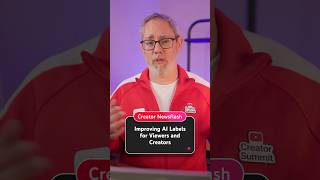
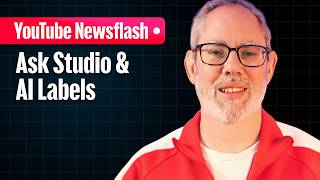
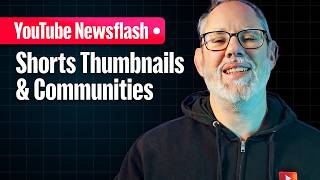
01:00[00:00] Starting today, YouTube is streamlining how AI labels work to make them even more intuitive for everyone. I'm Renee Ritchie, a long-time creator working inside YouTube, and here's what's up. You've told us you want transparency, but you also want the process to be simple. So, we're moving the disclosure label for photorealistic or meaningfully altered content. For long-form videos, the label is moving from the description to a prominent spot just below the player. And for shorts, it'll be
[00:24] an overlay right on the video itself. The goal here is context at a glance. If it looks real, but was made with AI, viewers will know immediately. We're also making disclosure a bit more seamless. While you're still required to manually disclose realistic AI use, starting this May, YouTube is rolling out internal signals to help. If YouTube systems detect significant photorealistic AI, and it hasn't been disclosed, we'll now apply that label automatically. If you think that the
[00:49] system has gotten it wrong, don't worry. Creators are still in control. As this technology continues to improve, if a label is applied incorrectly, you can jump into Studio and update the status yourself. The only exceptions where the label does stay permanent are if you used YouTube's own AI tools like VO or Dream Screen, or if the file contains metadata proving it's fully generative. Most importantly, for creators, these labels alone do not affect how our videos are
[01:13] recommended or whether they can earn money. This is purely about giving viewers the right information at the right time. Let us know what you think in the comments.
⚡ Saved you 0h 01m reading this? Transcribe any YouTube video for free — no signup needed.