
Aspas's Secret: Move Between Every Shot
44sReveals a counterintuitive mechanical tip from a top pro that viewers can immediately practice.
▶ Play Clip"Delivers on the promise with specific, actionable tips from each pro, though some sections are padded with coaching promotion."
This video analyzes the playstyles of five top Valorant professionals—Aspas, Nats, Forsaken, Brox, and Mako—to extract actionable tips for players. Each pro represents a different role, and the video highlights specific techniques that can be implemented to improve gameplay.
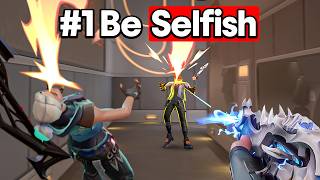
Aspas, the best duelist, excels due to his constant movement between shots. He uses small strafes to maintain accuracy while dodging, creating a difficult target. Practice with a metronome at 100-160 BPM to improve strafe timing.
Aspas plays aggressively, taking unexpected angles and pushing at odd timings. He saves his dash for aggressive peeks rather than retreating, allowing him to punish enemies.
Nats, the best Sentinel, relies on patience and discipline. He conditions enemies by using utility in the same patterns, then exploits their expectations. He lurks and rotates based on macro awareness.
Forsaken is the best flex player, playing every role aggressively. He uses utility to enable his own aggression, treating it as a tool for personal plays rather than just team support.
Brox revolutionized the Odin by wall-banging key spots for chip damage. He reads enemy macro movements and switches positions to avoid predictability. This playstyle is effective in ranked.
Mako, the goat controller, plays inside his smokes aggressively, using them for misdirection. He pushes into smokes to catch enemies off guard, especially in post-plant scenarios.
The video provides actionable tips from top pros, emphasizing movement, patience, aggression, and utility usage. Implementing even one tip can improve your gameplay significantly.
What is Aspas's key mechanical trait?
He moves between every shot, using small strafes to maintain accuracy and dodge bullets.
00:41
What BPM range is recommended for practicing strafe timing with a metronome?
100 to 160 beats per minute.
02:00
How does Nats condition enemies?
He uses the same utility patterns until enemies take them for granted, then exploits their expectations.
05:58
What is Forsaken's secret weapon?
He plays aggressively in every role, using utility as support for his own plays.
07:29
What change did Riot make due to Brox's Odin play?
They nerfed multiple maps to nerf the Odin spray.
09:16
How does Mako use smokes in post-plant?
He places aggressive smokes and plays inside or around them to catch enemies off guard.
11:36
Aspas's Movement
Highlights the importance of movement between shots for duelists.
00:41Nats's Conditioning
Shows a strategic approach to utility usage that can be applied by any player.
05:58Forsaken's Aggression
Challenges the traditional passive role of sentinels and controllers.
07:29Brox's Impact
Demonstrates how a single player can influence game balance.
09:16Mako's Smoke Play
Provides a concrete strategy for post-plant situations.
11:36[00:02] Some pros are famous for being amazing at their role. After hitting radiant and coaching thousands of players, I've noticed a pattern. Most players try to copy flashy plays from these pros, but ignore the
[00:16] simple decisions that make those highlights possible. So my goal for this video is to help you implement at least one actionable tip from five of the best Valorant pros in the world. And I'll be going over one pro for each role. You'll
[00:28] learn exactly what separates these goats from everyone else and what you can actually steal from them. So let's begin with the undisputed duelist goat, Aspas. Aspas is arguably the best duelist Valorant has ever seen. And if not for
[00:41] his crazy KDAs, you wouldn't know exactly why that's the case. What most players often overlook and what makes him so mechanically insane is actually his speed. If you take a look at some of Aspas's greatest plays and specifically
[00:54] look at his mechanics, you'll notice that he moves in between every single shot. He moves so often that his strafes have to be very small in order to keep up with these constant [music] taps and bursts. Anyone who plays against Aspas
[01:06] will be bombarded with precise taps from a target who constantly moves and dodges bullets. So let me explain this with a real game scenario. This clip shows clearly see how he's constantly side stepping in between single or double
[01:19] taps during each gunfight. And notice the stutter stepping. Two taps on Kesnat, immediate side strafe, two more taps, strafes again, and so on so forth. post plant clutch. His crosshair placement is almost robot and he usually
[01:32] doesn't flick that much because he lets his movement handle part of these small speed with your movement while staying accurate with your shots is not easy. speed is [music] by gradually increasing the rate of your taps in between your
[01:46] steps. Before we get into training this, you have to start with a simple setting graph. This will allow you to see exactly where you're misstepping or you're strafing. And next, we're [music] going to go into the range and practice
[02:00] this idea of using a metronome. You can use a web browser, your favorite song, or whatever else to keep track of the beat, but generally, you want to start between 100 to 160 beats per minute. The goal here is to use the bots or targets
[02:12] outside to practice your strafes while being accurate and shooting the bots while mixing up your strafe patterns. You can also apply the same concept to your DMs. However, it won't be as easy to maintain your rhythm since the fights
[02:24] themselves are less predictable. While Aspas' movement was a key part of his play style as a duelist, I also have another bonus tip. The bonus tip that >> [music] >> and as a result, play aggressively
[02:37] without dying. Specifically, he's incredible at taking unexpected angles and pushing aggressively in seemingly impossible scenarios. For example, instead of dashing away and playing safe, he closes the distance at stupid
[02:49] timings [music] from spots that enemies completely ignore. Take a look at this clip. He kills one enemy from a secret, and then he does something literally no one could ever [music] expect. He jumps up on the small kiosk with his op and
[03:01] peeks out of the asterol. I mean, who'd ever push with the op and take a no-scope shot on three enemies that are pushing? Well, Aspas would. And in fact, his enemies had no clue what was about to happen because Aspas is one of the
[03:13] something like this and get away with it. So, how can we be so aggressive and punish enemies [music] as an Aspas-style duelist? At the end of the day, the secret is all about your movement ability. For example, instead of popping
[03:26] your jet dash early, keep it available and look for opportunities to play aggressively after the first pick. And that's exactly how Aspas stays a safe position, and instead of [music] dashing away, saves it for a second more
[03:39] aggressive peek. Now, if after watching many of my guides, and you're still struggling to escape your rank, our team of Radiant and VCT coaches can give you personalized feedback inside our premium 10-week coaching program. Our average
[03:52] student gains about 500 RR in just 10 weeks, and you can see the results right here. We offer over 100 plus hours of personalized hands-on coaching with one-on-one VOD reviews, hands-on custom mechanic drills, and coach-facilitated
[04:05] 10-man scrims. We're so confident in our coaching that if you don't rank up at least 500 RR in 10 weeks, we'll give you a full refund. So, if you'd like to see use the link down below to book a free call with one of our coaches. Now, for
[04:19] the Sentinel role, Nats is arguably the best Sentinel player Valorant has ever seen. The reason for that is his discipline, specifically with his lurks and rotation. Unlike Alfajer, who thrives on firepower, Nats is a big
[04:31] timings. If you've watched him play, you might have noticed that he's never rushing or forcing bad fights. And in fact, Nats's secret weapon is his patience. If he has to wait an entire round for his moments, he'll wait. Most
[04:43] Sentinel players, on the other hand, overcommit to lurks and rotations. But Nats's lurks work because he trusts his intuition and never overreacts. When he's attacking, he gets utility plays for flanks as early as possible, ideally
[04:55] in the pre-round. Then, he takes space methodically and only pushes up when defenders commit to another part of the map. And he keeps track of the pressure that his team is making elsewhere, as well as where enemies tend to play round
[05:07] by round. Plus, he's also changing his patterns to avoid being predictable. And on defense, you'll see him rotate or anchor depending on the situation. If site is weaker, he won't even waste a
[05:19] that the first info comes in. And if you notice that the enemies are throwing lots of fakes, or the other site has a lot of stopping power, he'll even wait sees that the enemies are actually pushing as five. Now, we could go over
[05:33] every single setup Nats uses, but that would be kind of pointless because these setups are all situational, and if your game sense is not up to par, you won't understand what setup you need for each scenario. So then, how do we achieve
[05:45] it is constantly thinking about the macro movements of all the players on the map and testing what you can and can't do in ranked. The other part is studying what pros like Nats does in terms of their timing and rotations.
[05:58] But, there's one very effective simple trick Nats uses that you can copy that's conditioning the enemy team. That means using your utility the same way until enemies take it for granted. If you use the same utility multiple times,
[06:11] defenders become conditioned to it, which is smokes, sova arrows, or cages at the [music] same place each round. If you keep placing it, they react the same expectations. They'll assume you're putting utility up for pressure, which
[06:24] allows you to punish them or silently lurk elsewhere instead. And the best lurk, enemies will be forced to constantly watch for him, which makes you a much harder opponent to deal with.
[06:36] his unexpected lurks force the enemies to always have to keep an eye on him, even when he's not there. So, his patience combined with smart utility setups creates the goat sentinel playstyle that consistently wins through
[06:49] someone who's famous [music] for being able to play anything. Forsaken is seen by many as APAC's best player. He's also considered the world's best flex because of his insane versatility. This guy can literally play any role at an insane
[07:04] level. If you ask pros why he's so good, they point to how he can IGL on any agent while maintaining crisp mechanics and adapting instantly to any scenario. Most flex players are just fill players who perform decently across multiple
[07:16] agents. But, Forsaken hits insane numbers on duelists, initiators, sentinels, and even controllers, often even switching roles mid-series. And his secret weapon is pretty simple. Play aggressively in every role. Most players
[07:29] playing sentinels or controllers. But, Forsaken proves you can carry on any role. He basically plays every role like a duelist with utility as support for himself. To steal Forsaken's playstyle, you should treat your utility as tools
[07:43] ranked. For example, on Sky, don't just flash for your duelist, but you can try to keep one flash for yourself and swing with it. And not only that, Forsaken Breach, he flashes himself into sites instead of waiting behind his team. And
[07:56] on Cypher, he anchors off angles with trips as backup while staying ready to push. The pattern is always the same. He relies on any utility to make gunfights stick to your main agents, but completely change how you use them. A
[08:10] good goal to become more aggressive is forcing yourself to be first or second contact, and depending on the role, three rounds per half. And keep this in mind, your utility must enable your aggression. It's not just for the team,
[08:22] there's one thing that you shouldn't copy from Forsaken, and that's his agent pool. Trust me, you don't want to copy Forsaken by playing every single agent. every different agent, and your consistency will go down. So, unless
[08:35] you're at the top of the top, just try to simply steal his mentality and treat And this shift from a passive team player to an aggressive playmaker on your main is what separates Forsaken
[08:47] [music] Now, a recent up-and-comer, and arguably one of the people who recently changed Valorant, is Brox. But let me explain why his play style is actually broken and not just cringe. Brox is a goat initiator because he not only uses
[09:00] utility well, but he also revolutionized the game by mentally breaking enemies year, most players thought the Odin wasn't that useful. But the reality is nobody has mastered it like [music] Brox. I mean, after Champs 2025, Riot
[09:16] literally changed multiple maps to nerf the Odin spray because of Brox. And that's actually insane. Some spams have been nerfed, and even if you might think that the Odin is cringe, I still think this gun [music] is broken in ranked.
[09:28] Brox. First, you need to understand that you don't necessarily need to kill enemies. [music] The Odin is great at dealing chip damage by wall banging key spots where the enemies must cross. For example, look at A main on Haven.
[09:40] safely while they cross. Just don't hang around too long because after a while, [music] the head once they push out. And on Bind, when we're playing defense in U-Hall, spamming anywhere along this wall allows you to get some easy and
[09:54] safe chip damage on the players rushing short. And there's a ton of spots like this. You can test every new spot by shooting the wall and checking if the bullets pass through, then it's wall-bangable with the Odin. But the
[10:06] reason Broke gets so much value out of this [music] gun is not that he knows every spot that you can spam, but it's because he's amazing at reading enemy [music] macro movement. He watches for patterns, mini-map timings, and prefires
[10:18] And [music] the key here is to focus on enemy movements across the map and Plus, it's also very important to switch your position every round to avoid being correctly, the enemies might peek expecting to be safe, then they eat
[10:33] unexpectedly. And to find these spammable walls, there's also tons of VODs that you can watch. And trust me, nothing makes enemies tilt like getting if you're an initiator main and you combine it with a reveal, you'll be a
[10:46] nightmare for the whole enemy team. [music] And finally, we move on to the goat of controllers, Mako. This one tip that he uses a lot won't just win you more post-plants, but it'll help you storm up the ranks. So, let's get into
[10:58] controllers in Valorant. What separates him from average smokes players is how he plays inside his utility. Sure, he's a consistent and strong mechanical player, but what many people don't
[11:10] realize is that Mako changed the game. Back in 2021, he pioneered playing the Judge with smokes. No matter how much utility defenders threw at him, Mako got kills or delayed the push long enough for the bomb to expire. The key here is
[11:23] that he smokes aggressively, far up, and plays right in and around his smokes. That way, he can catch enemies is off guard while they attempt to retake the site. So, here's how to steal that post-plant aggression. Instead of
[11:36] playing passive behind your smoke, wait for the enemies to use their drone or any kind of reveals, and then push up to the smoke to hold funky off angles that enemies won't check. So, instead of using smokes as cover, use it as an
[11:50] opportunity for misdirection. All you have to do is place the smokes to block simply sit inside of them or right outside of them. And you need to keep in mind that your smokes are a distraction. When enemies focus on the smoke, you
[12:03] shoot from an unexpected angle, and they won't know how to react. For example, look at how Mako smokes aggressively in this 2v1 against Less and Soda. Instead of holding default or close to the bomb on the post-plant, he actually pushes
[12:17] into the smoke himself, which catches both players off guard, and he's able to clutch. Notice how he uses a smoke not to hide, but to force enemies to peek him predictably while he's actually repositioning. When an enemy sees a
[12:30] smoke, especially in a 2v1 scenario, they'll feel pressured and forced to clear you. This is because they can't reliably diffuse the spike without the fear of you being inside of it. So, to practice this in ranked, [music] try
[12:42] placing aggressive smokes to close the distance on post-plants and create chaos. And after planting the spike, smoke the main retake, then immediately put yourself in an odd position. If you're defending, after confirming that
[12:55] place your smoke and play in corners like this to surprise the enemy. What makes this play style even stronger is if you're using a Judge or Bucky on eco rounds. Those guns are made to play closer range around smokes. So, if you
[13:09] behind your own smokes, you'll be delaying retakes like the goat controller himself. That's it for this video. Thanks for watching.
⚡ Saved you 0h 13m reading this? Transcribe any YouTube video for free — no signup needed.