
Stop Forcing Fights – Patience Wins Duels
42sChallenges a common impulsive playstyle with a counterintuitive tip that resonates with competitive players.
▶ Play Clip"Delivers 20 solid tips with actionable advice, though some are common knowledge and the program plug adds fluff."
This video presents 20 practical tips for improving at Valorant, focusing on mechanical skills, game sense, and mental consistency. The advice covers everything from fight selection and crosshair placement to communication and warm-up routines, aiming to help players rank up faster.
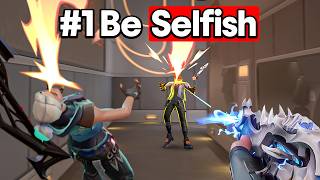
Learn when to take fights and when to relax. Fighting on your own terms wins duels; if no context forces a reaction, reset and create a better timing.
Most players lose duels because they overthink and overflick the final shot, panicking near the head. Practice smooth aim to reduce panic.
Crosshair placement breaks down when moving or repositioning. Every time you come out of a strafe or finish a peek, reset your crosshair to avoid losing duels.
Generic deathmatch practice is bad practice. Identify your specific weaknesses (e.g., crosshair drift direction) and drill them directly.
Information controls rotations and enemy reactions. Sometimes the most valuable thing is to hold a position, survive, and share what you see.
Check the mini-map during the round, not just after death. It helps you see rotations, avoid tunnel vision, and inform gunfights.
Footsteps, reloads, utility, and movement noise give free information. Slow down and listen; different agents have distinct step sounds (e.g., Brimstone's are firmer).
Familiarity is not mastery. Learning one agent deeply improves timing, positioning, utility value, and matchups, improving fundamentals faster than switching roles.
The spike plant location changes the entire post-plant setup. Plant with intention to create better angles and safer retakes.
Economy wins games. Know when to save, force, or full buy, always with the team in mind. Emotional spending causes lost rounds.
Once the round is won, don't chase extra kills. Overextending gives the enemy free exits or trades, turning clean rounds into messes.
Ults are stronger when layered. Communicate before using them; planned ults create momentum swings, while random ults are less effective.
Watch high elo and pro play to learn where to stand. Positioning gives easier fights before aim matters, plus escape routes and crossfires.
Adapt when your first plan fails. Recognize shifts early, change pace, reposition, or look for a different angle to turn a bad round playable.
Your rank often shows map weaknesses. Study maps where you consistently lose instead of treating all maps equally.
Sensitivity is rarely the main issue. Constantly changing it hurts consistency. Pick a controllable sense and stick with it.
Short, clean callouts are more useful than long panic sentences. If dead, give the cleanest possible info without backseating.
Don't queue ranked cold. Even 10 minutes of deathmatch prepares aim, movement, focus, and reaction time, preventing sluggish early games.
Consistency wins more games than highlight plays. Build the habit of being dependable, hitting a solid percentage of shots every game.
Stay flexible each game. Adjust to different paces or roles; players who can't adapt become easy to read. Best players stay consistent while changing details.
Improvement in Valorant comes from deliberate practice, smart decision-making, and consistency. Focus on specific weaknesses, communicate clearly, and adapt to each game to climb the ranks.
What is the main reason most players lose duels according to the video?
They overthink and overflick the final shot, panicking when close to the head.
00:56
What should you do every time you come out of a strafe or finish a peek?
Reset your crosshair to avoid taking fights with it slightly off target.
01:22
Why is generic deathmatch practice considered bad practice?
Because it doesn't target your specific weaknesses; you need to identify and drill the exact areas you're bad at.
02:00
What is the most valuable thing you can do in a round besides getting kills?
Hold a position, survive, and share information you see.
03:33
How can you use sound to gain information without peeking?
Listen for footsteps, reloads, utility, and movement noise; different agents have distinct step sounds.
04:12
What is the difference between familiarity and mastery in agent selection?
Familiarity is not mastery; learning one agent deeply improves timing, positioning, and utility value, while switching roles prevents deep understanding.
04:54
Why does the spike plant location matter?
It changes the entire post-plant setup, affecting angles and retake safety.
05:21
What are the three economy decisions you need to know when to make?
When to save, when to force, and when to full buy.
05:58
Why should you avoid overextending after winning a round?
Chasing extra kills gives the enemy free exits or trades, turning a clean round into a mess.
06:25
How can ults be made more effective?
By layering them together and communicating before using them; planned ults create momentum swings.
06:53
What is the benefit of watching high elo and pro play?
It teaches you where to stand in situations you wouldn't figure out on your own, giving easier fights and better positioning.
07:35
What should you do when your first plan gets shut down mid-round?
Adapt: recognize the shift early, change pace, reposition, or look for a different angle.
07:49
Why is constantly changing sensitivity harmful?
It hurts mental consistency and makes aim feel unstable; the real issue is often positioning or crosshair placement.
08:57
What is the recommended warm-up before queuing ranked?
At least 10 minutes in a deathmatch to prepare aim, movement, focus, and reaction time.
10:04
What wins more games: consistency or highlight plays?
Consistency wins more games because it gives your team dependable performance.
10:44
Fight on your own terms
Emphasizes patience and resetting over forcing fights, a core principle for winning duels.
00:15Deliberate practice over reps
Highlights that targeted practice of weaknesses is more effective than generic grinding.
02:00Information as a resource
Shifts focus from kills to information, a key differentiator for high-level play.
03:07Mastery over familiarity
Argues that deep agent mastery improves fundamentals faster than playing many agents.
04:54Consistency beats highlights
Reinforces that dependable play wins more games than flashy moments.
10:44[00:02] One day you're hitting a new peak, and the next you're losing games no matter struggling to rank up, here are 20 tips you can start using today to improve faster and keep climbing. Let's get into it. The first thing you need to learn is
[00:15] when to take a fight and when to relax. A lot of players think they need to best players know that fighting on their own terms is what wins duels. Imagine if the angle, [music] that kind of fight becomes worth taking. If no circumstance
[00:30] or context is happening to make you react, then you are better off resetting creating one at a later timing. Because [music] that difference in patience and will save you a huge number of unnecessary deaths. So, stop forcing
[00:44] fights or plays when you could be holding for easier kills. Understanding patient fights mean nothing in the face of poor aim. But to help out that aim, let's first address a core issue players have with duels. Most players still lose
[00:56] duels because they [music] overthink and therefore over flick the final shot. A second because they panic when they get close to the head. So, to practice smooth aim and rid yourself of that tiny bit of panic in your flicking, start by
[01:09] when you're in the range or your DMs. Then you'll be more consistent than even some of the faster aimers in your own games. And even if your flicks improve, you can still lose good fights you choose correctly and steadily. Why
[01:22] exactly is that the case? It's because your crosshair placement breaks down the consciously reset it. Most players practice aim while they are standing when they are swinging or repositioning. That's where a lot of hidden mistakes
[01:35] happen. Every time you come out of a strafe or finish a peak, you need to away. And if you don't, you end up taking fights with your crosshair slightly off target and losing duels you know you should have won. Once you start
[01:48] moving more deliberately, the next question becomes whether your practice is actually fixing the part you are bad at. Most players go into death match and just hope they are better by playing more. But the problem is that generic
[02:00] practice is bad practice. You probably already have a direction your crosshair drifts with your passive aim or side where your tracking falls apart when you strafe. Find that weakness on purpose and drill it directly. If you always
[02:12] you're just teaching your brain to stay bad at it and avoid it at all costs. better than just reps themselves. And between players who improve quickly and players who stay stuck. That is also why
[02:27] so many players struggle to rank up even when they watch guides, play death They're putting in the time, but they don't always know what the real problem is. That's where the Immortal Road Map program comes in. Inside it, our team of
[02:39] radiant and VCT coaches can help you identify your biggest bottlenecks and provide a clear road map to rank up 500 RR in 10 weeks guaranteed or your money highest level of Valorant coaching available, click the link in the
[02:53] assessment call where one of our coaches will check your tracker and see if you're a good fit. Now, once you know what to practice mechanically, the next should create value [music] inside of the round. And this is where tip number
[03:07] five comes in, playing for information. Information controls rotations. It controls how the enemy has to react. If you give up your life for one random remove your own ability to influence the rest of the round through information.
[03:20] A lot of players underestimate how much a single piece of information can change someone who stayed alive long enough to share it. Not every round needs to be about getting kills. Sometimes the most valuable thing you can do is hold a
[03:33] position, survive, and say what you see. Even if your comms are clean, you're still missing a huge amount of free information if you aren't checking the map properly. Most players only glance at the mini map after they die, which is
[03:45] information tool, and if you check it during the round, you can see where your rotate. It can also help you avoid tunnel visioning and keeps you aware of round to better inform your gun fights. Quick glances don't have to break your
[04:00] aim either. They just need to be a part of your routine to better fuel that aim itself. The mini-map helps, but it is only part of the picture because sound gives you another layer of free information. Footsteps, reloads,
[04:12] utility, and movement noise all give away information that you can use without even peeking. Sometimes the best play is not to run in and check, but to slow down and listen. If you hear someone nearby, that information can
[04:24] fight. Players who listen well get free reads that other players never even notice. A unique tool you can utilize is how different agents steps sound. For example, Brimstone's steps sound a lot more firm
[04:39] more firm compared to someone like Sage. give your team a lot of help in figuring out the overall direction of the round to, or trying to fight you from. Once you start reading the round better, the
[04:54] handicapping yourself with too many agents under your belt. A lot of players [music] will make them more well-rounded, but familiarity is not the same as mastery. If you learn one agent deeply, you start understanding timing,
[05:08] positioning, utility value, and match-ups at a much higher level. That much cleaner because you're not guessing every time you press an ability. usually improves your fundamentals faster than jumping around between
[05:21] roles. Agent mastery helps you take space, but if your plant spot is sloppy, you can still throw a whole round on your attack side. The spike plant is not round. The location you choose changes the entire post-plant setup for your
[05:33] team. If you plant poorly, you limit your team's options and make the retake plant with intention, you can create better post-plant angles, safer defenders retaking. That's why good teams think about post-plant spots
[05:46] before the spike even goes down. And even with intentional post-plant, none of it matters if your economy planning is wrecked for the next few rounds in order to go for these crazy [music] post-plant scenarios. Economy wins games
[05:58] round. You need to know when to save, when to force, and when to full buy. And that decision should always be made with your team in mind. A bad buy now can create an unwinnable round later, which is why emotional spending causes so many
[06:11] round. You're buying for the next two or three rounds as well. If you ignore weapons at the worst possible time and throw away rounds you could have easily won with a stronger weapon if you chose to save. Buying properly protects your
[06:25] future rounds, but a lot of players still throw away a one round by chasing extra kills for no reason. Once you have the round won, there's no need to overextend and give the enemy free exits or free trades. Reset, buy properly, and
[06:38] rare cases where chasing makes sense, economy or build toward an ultimate, but most of the time greed just turns a clean round into an unnecessary mess, especially if your team is low on money.
[06:53] >> [music] >> are more important than the kill. If you stop doing that, your ult economy starts to matter a lot more, especially when become much stronger when they are layered together. A single ult can win a
[07:06] completely break the enemy setup. That is why communication before using them matters so much. If your fatal, Raze, or Gekko ult is used in a smart sequence almost unwinnable for the enemies. Random ults are fine, but planned ults
[07:21] are what actually create big momentum swings. Once your ult usage starts to where strong players actually choose to stand. Watching high elo in pro play can teach you where to stand in situations you would never figure out on your own.
[07:35] exactly, but you do need to understand why certain positions work under the positioning gives you an easier fight before aim even matters. It can also give you an escape route, stronger crossfires, or a timing that the enemy
[07:49] wrong, you need to adapt [music] mid-round instead of forcing the same idea over and over. Sometimes your first plan gets shut down immediately. Sometimes the enemy is reading your pace, or the space you thought you had
[08:03] moment where a lot of players lose control of the round because they keep [music] even after the situation has changed. A good player can recognize that shift early, change the pace of the round, reposition, or look for a
[08:16] different angle before the enemy fully locks them out. The faster you can turning a bad round into something playable. Part of adapting is being weak, especially when certain maps keep exposing themselves as [music] your same
[08:31] problems. Your rank often shows you your map weakness more than your overall skill. If you're consistently losing on certain maps, you should study those instead of treating every map as equal practice. Some maps expose weak
[08:44] rotations, bad utility, uncomfortable angles, or poor sight holds much more clearly than others. When you identify those problems, targeted study becomes much more effective than random grinding across every map. Map weaknesses are one
[08:57] the wrong settings instead of fixing the real issue. Sensitivity is not usually the main problem when players are losing duels. Most of the time, the real issue is positioning, crosshair placement, movement, or decision-making. Constantly
[09:11] mental consistency and makes your aim feel unstable even when the real problem is elsewhere. Pick a sense that feels controllable, then stick with it long rhythm on it. Warm up the same way before you play, give your aim time to
[09:25] settle, and only change your sense if you have a real mechanical reason. If bad session, you never give yourself the chance to build consistent aim in the first place. Sticking to Do proper sense is important, but it doesn't matter much
[09:37] are calling. Short, clean call outs are way more useful than long panic sentences. Saying "A main to pushing" tells your team [music] exactly what thinking usually creates more confusion than help. If you are dead, your job is
[09:51] not to sound emotional and backseat. It's to give the cleanest possible act on it. Good communication makes the round easier for everyone and allows you to win more RR as a result. Once your settings are feeling good, the next edge
[10:04] comes from making sure you're not queuing ranked cold. Warm-up matters because cold starts lead to bad early games. Even 10 minutes in a deathmatch difference when you queue your first match. The point is not to grind aim
[10:17] mindlessly. It is to prepare your aim, movement, focus, and reaction time warm-up puts you in the right headspace and keeps your early ranked games from feeling sluggish. Warm-ups help you start well, but the real goal is being
[10:31] every game. That means building same way, taking cleaner fights, and resetting after every death instead of chasing one big play. A player who hits a solid percentage of their shots every
[10:44] who occasionally pops off, then Consistency wins more games than highlight plays because it gives your don't get me wrong, flashy moments look good, but disciplined gameplay and smart
[10:58] decisions are what actually make you climb. If you want to improve for real, build the habit of being dependable first. Once consistency becomes the goal, bigger skill is staying flexible each game. Some games will force you
[11:11] into a different pace or a different role than one you expected. If you can't adjust to that, you become easy to read. A lot of players get stuck because they even when the match is clearly asking for something else. The best players
[11:24] consistent while still changing the details around it. That kind of flexibility is what keeps you effective over a full game instead of only looking good when everything is going your way. And that's the 20 tips. If you take
[11:36] specific areas, you will soar up the ranks in no time. [music] That's it for ranks in no time. [music] That's it for now. I'll catch you in the next one.
⚡ Saved you 0h 11m reading this? Transcribe any YouTube video for free — no signup needed.