
The S&P 500 is just big tech in disguise
45sShocking revelation that 'diversified' index funds are actually concentrated bets on a few tech giants.
▶ Play Clip"Title accurately reflects the content, though the video is brief and lacks depth."
The video explains that the S&P 500 ETF is heavily concentrated in a few large tech companies, with Nvidia, Apple, and Microsoft alone making up a significant portion of the index. It compares the performance of the market-cap-weighted S&P 500 with equal-weight ETFs over the past decade, showing that concentration has historically boosted returns. The video aims to inform investors about what they actually own when they buy an S&P 500 index fund.
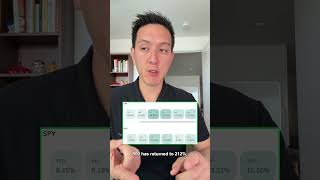
The S&P 500 ETF is weighted by market cap, so larger companies have a proportionally larger share. Nvidia, Apple, and Microsoft make up 7.41%, 6.74%, and 4.62% of the index respectively.
Owning the S&P 500 is often considered diversified, but in reality, it's a bet that big tech continues to perform well due to the heavy weighting of a few companies.
Equal weight ETFs give each company the same allocation of dollars, avoiding concentration. However, over the past 10 years, the standard S&P 500 returned 212%, while the equal weight version returned less, indicating concentration boosted returns.
The concentration in the S&P 500 didn't hurt investors in the past decade; it actually improved returns compared to equal weight alternatives.
The video is informational, not a recommendation to switch funds. It aims to show what you own when buying the S&P 500. If the tech concentration makes you nervous, you can consider alternatives, but these companies are not the worst to invest in.
The S&P 500's performance is heavily influenced by a handful of tech giants, and while this concentration has historically benefited investors, it's important to understand the actual risk profile of what you own.
What percentage of the S&P 500 is held by the top 7 companies?
30%
00:01
Which three companies have the highest weight in the S&P 500?
Nvidia, Apple, and Microsoft
00:14
What is the difference between market-cap-weighted and equal-weight ETFs?
Market-cap-weighted gives larger companies more weight; equal-weight gives each company the same allocation.
00:29
What was the 10-year return of the standard S&P 500 vs equal weight?
Standard S&P 500 returned 212%, equal weight returned less.
00:41
Why is owning the S&P 500 considered a bet on big tech?
Because a few tech companies make up a large portion of the index, so performance depends heavily on them.
00:14
S&P 500 Concentration
Reveals that the index is not as diversified as commonly believed.
00:01Equal Weight Comparison
Shows that concentration has historically boosted returns, contrary to diversification intuition.
00:29Performance Data
Provides concrete numbers (212% vs lower) to illustrate the point.
00:41[00:01] S&P 500 ETF, almost 300 of that is going companies. The ETF is weighted by market cap, so companies with higher market capitalizations make up proportionally more of the index. So, as you can see
[00:14] here, Nvidia, Apple, and Microsoft, they make up 7.41%, 6.74%, and 4.62% [music] of the weighting, and so on. So, when people say they're diversified by owning the S&P 500, they're really just betting that big tech continues [music] to
[00:29] perform well. Now, there are equal weight ETFs, which means that of your gets the same allocation [music] of dollars. But, here's the thing, if you go with that option, over the past 10 years, the normal S&P 500 has returned
[00:41] 212%, while the equal weight version returned So, the concentration didn't hurt you in this time period, it just made you more switching funds, it's more of a video to let you know what you actually own if
[00:55] you buy the S&P 500. If that much tech makes you nervous, you can always they're not the worst companies to invest in. Just my opinion.




⚡ Saved you 0h 01m reading this? Transcribe any YouTube video for free — no signup needed.